

Monsoon Martin’s Open Letter of Grievance to the Drivers of Baltimore - Part Four
My plantive cyber-remonstration concludes…
The Blazing Bringer of Blindness. Plenty of cars come standard with these floodlights—the blue-white LED headlights that shine much more brightly than halogen headlights. Halogen headlights shine at around 1500 lumens, whereas LED headlights emit 60,000 lumens of retina-searing light. (OK, that number may be high. I think it’s actually around 4000 to 6000 lumens. But still!) Note: I realize people often don’t have a say in what headlights they’ll have. I still hate them. Did I say every item on this list would be rational? Indeed, I did not. (And when the driver retrofits or modifies the headlights illegally, it only serves to deepen the intensity of my white-hot incandescence of my OH MY GOD I CAN’T SEE SHIT.)
The Jalopy. This is the car that stopped being roadworthy several years ago, and yet it still, somehow, runs. I’ve seen cars with no front or rear bumper, no headlights, one windshield wiper, one or more flat tires, severe chassis damage, a significantly cracked windshield, and a profound will-to-live deficit. Aside from trying to extend the life of a car for financial considerations, the principal reason for this parade of wretched wrecks is that in Maryland, a car needs to be inspected when it is first registered—and never again. (Only yearly emissions testing is required to maintain registration.)

The Drifter. No, this isn’t a reference to a transient person. It refers to vehicles that drift near or across the yellow line (or seem to drift in and out of their chosen lane, apparently at will). My outcry when encountering these drifters: “Pick a lane, Dickshirt!” (Sometimes I am so flummoxed by the outrageously bad driving that I actually begin to lose the power of coherent speech.)
The “I Shan’t Deviate From My Chosen Lane” Mulish Driver. This mulish meathead refuses to pull over to the next lane if someone is stopped on the shoulder of a highway.
Corollary: The self-absorbed suck-lord that doesn’t yield the roadway to emergency vehicles—or barges into funeral processions. Or don’t pull over for emergency vehicles, barge into funeral processions, or don’t stop—or even slow down—when a school bus is stopped with the red lights on. This variety of traffic turdlet apparently believes that neither life nor death shall supercede their own convenience.
The Zoomer. My time is more important than yours! In fact, my time is more important than your life!!

Monsoon Martin’s Open Letter of Grievance to the Drivers of Baltimore - Part Three
My exercise in road rage catharsis continues…
The Inconsiderate Parker. This is the narcissistic dick who patks athwart two (or even three! or four!!) spaces. Some Brits call them Parking Wankers (there’s even a hilarious Instagram page devoted to shaming such transgressors).

The People-Pleasing Courtesy Hound. Something between a doorman and a doormat. This is the driver who lets car after car go ahead of them in bumper-to-bumper traffic, presuming that all the drivers behind them are glad to cede the road. Sometimes they are almost aggressive in insisting after you. Disrupts the flow of traffic and doesn’t feel like kindness. Prepare to feel the wrath of my huffy, protracted horn.
Stupid-Assed Cyber Trucks. Self-explanatory, really. Every time I see one, I make a face as though I have unexpectedly eaten a mushroom. I have, out of decency, refrained from making you look at a picture of one.
The Turn Signal Disuse and Misuse Corps - aka The Misdirection Squad. This is a proud and ceaselessly creative group, comprising:
Drivers who seem to have forgotten that the turn signal is there
Drivers who give the turn signal a perfunctory flip just as they’re beginning their turn, helping no one
Drivers who inexplicably deploy the turn signal as they are about to commit an infraction noted elsewhere (e.g., the weaver, the zipper merge jagoff, and the middle-lane abusing shitbird)

The Bicyclist on a Rural Road, where hills and bends make it difficult for a driver to pass them. (In fact, I just learned that the typical hobby bicyclist is called a MAMIL—middle-aged man in Lycra—and I am here for the dismissiveness and incisiveness of this term.) Even worse: a pack of these grinding tryhards taking up an entire lane. (Yes, I know that bicyclists have a right to be on the road, blah blah blah, but they fill me with rage. I—with no hyperbole or histrionics—hate them.)
The “I Will Kill Us All to Avoid Missing My Exit!” Tom-Fool. This highway menace realizes at the last moment that they are in the wrong lane, so they cut across (however many it takes) lanes to make it.
Corollary: The Forking Idiot. This is when someone thinks they may have missed their exit, but they’re not sure, so they stop right at the crotch of the exit ramp. In extreme cases, this person will pass the exit by 200+ yards and then reverse on the highway or careen down the grassy knoll to take the proper exit.

Monsoon Martin’s Open Letter of Grievance to the Drivers of Baltimore - Part Two
My list of complaints continues…
The Unrepentant Off-Cutter. You cut me off by pulling out in front of me—so suddenly, in fact, that I have to apply my brakes vigorously. Rest assured, I will be applying my horn quite vigorously as well. This is particularly maddening when there is no one behind me for at least a quarter mile and that person could have waited 1.5 seconds, then pulled onto the roadway after me.
Related: my nana was a verbal wizard, especially when it came to traffic commentary. My favorites: “Where’d you get your license, Pep Boys?!” and “Blow it out your ass!” and “Get bent, ya crumb!” Maximally concise, yet breathtakingly incisive.
The Drivers (Riders? Straddlers?) of Motorcycles and electric bikes (and even scooters) creating their own lanes, flouting most traffic laws and generally behaving as though the rules of the road don’t apply to them.
The Zipper Merge Jagoff. Two lanes narrow to one. Plenty of notice. The sensible thing to do: stay in your current lane, then zipper merge in an orderly and civilized fashion. Instead, Turd Ferguson next to you is jockeying for position like it’s the Indy 500. Untwist your knickers, Turd. Do you really need to get there 2.67 seconds sooner?
Corollary: the shoulder jammer. In one of these zipper merge situations, there’s often a daredevil who decides that the shoulder is an extra lane. They zoom up, bypassing car after car, until they are thwarted by one of these Highway Justice dingleshits who feel it’s their duty to patrol the shoulder and block transgressors.
The Extreme Tailgater. Especially charming on one-lane roads. Where do you want me to go? I shall proceed at the pace I feel I can safely navigate. You can gesticulate and crowd me all you want. Also, your mom. Note: I often say “Hey, why don’t you just climb inside my asshole!” when encountering this situation. Another common yawp: “Get fucked, bumper humper!” (Disclaimer: I never said my responses to these rage-inducing driving behaviors is mature, advisable, or child-appropriate.)

The Distracted Driver. I have seen drivers engaging in the following activities whilst driving: texting, watching videos, eating, applying makeup, reading, playing cards, flipping through a large CD carrying case, yelling at children in the back seat, using a woodturning lathe, playing a video game, and sleeping. Shit you not. (Alright, shit you a little. I made up the lathe. But all others I have seen with my own two eyes.) How many times have you been behind a car at a red light and they don’t budge once the light turns green? In fact, how many times today? The frightening truth is that driving a potentially lethal weapon often garners the least focus and attention from drivers.
Related: When my “gentle nudge” beep comes out as a “testy bellow,” I look in my rear-view mirror as if to say, “What impatient pissypants has just breached the aural peace (and rules of etiquette) by sounding the horn so aggressively?” So if the person in front of me (at whom the nudge was directed) looks back indignantly, they will see me looking back indignantly and assume it was someone behind me.

The Red Light Optional Brigade. I have seen many drivers for whom a red light is a traffic convention from which they are exempt. And I’m not just talking about folks who see a yellow light, speed up, and careen wildly through the intersection. I’m talking about the light is RED RED and I’m watching agape as these speed demons just sail on through. I generally respond with “I guess he was in a hurry” or “slow down, speed demon!” or “muhhh-thaaaa-ffffucka.”


Monsoon Martin's Open Letter of Grievance to the Drivers of Baltimore - Part One
Hello, Baltimoreans. I have driven among yous for several years now. To quote Frank Costanza, “I've got a lot of problems with you people, and now you’re gonna hear about it!”
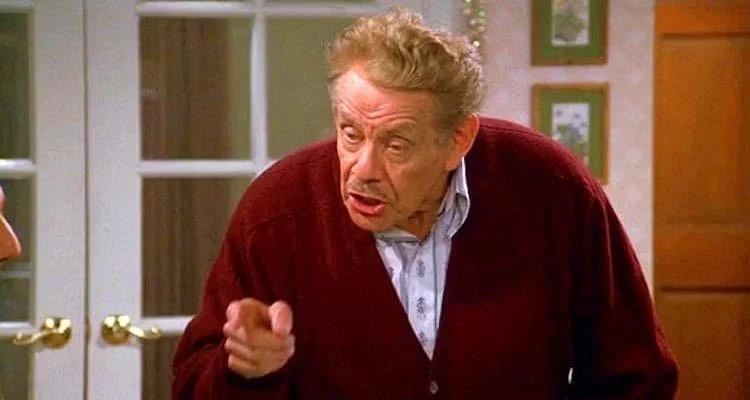
I have found the people of Charm City to be, by and large, lovely and welcoming. But the same person who will hold the door open for you at Wawa - smiling broadly - will also, once driving, cut you off and unleash a shitstorm of profanity toward you. Often, that is also done while smiling broadly.
I present to you my list of grievances, many of which rise to the level of irrational loathing, and regarding which I have been told by mental health professionals, "When something is out of your control, the thing you can control is your reaction to it."
This is a worthy goal, my pursuit of which has been, to date, an utter failure. A work in progress, I suppose.
The list:
The Weaver. This is a driver who thinks he (let's face it, almost always a male) is playing a first-person rally car video game. This driver cuts it razor-close, but is long gone once I lay on my horn and gesticulate wildly as if to say, "What the fuhhhhh??!!" (Note: often accompanied by actual words and coarser gestures to that effect.) The weaver gives no shit. He is engaged in a road race with his friends (real or imagined) and we are all NPCs.
Corollary: Road Racers. These are packs of 4-5 numbnutses who believe that they are engaged in a high-stakes contest, whose winner earns glory and a handsome prize. In reality, they are just knuckle-dragging knuckleheads in shitty cars terrorizing other drivers.
Corollary: Car Farts. Some of these addle-pated blunderbusses actually modify their cars so that they produce deafening backfires, accompanied by jarring showers of sparks. The backfires sound very much like gunfire—especially when they happen right as one of these cars passes, as happened to me. Damn near soiled my pants, I did.
Note: This is a lengthy video. But it’s cued up to the right spot. (In case it isn’t, watch from about 2:40 to 3:10.)
The Maddeningly Polite Weaver. This is a conventional weaver, but with the addition of conscientious use of turn signals. Why does this aggravate me? If you're going to be an asshole, lean all the way in. Adding turn signals to narcissistic, unhinged driving is like shoving someone down the stairs and yelling “Sorry!” as they tumble along.
The Sociopathic Double Parker. This craven douchenozzle has stopped their car in the middle of the road—and if we’re lucky, put on the hazards as an irrelevant nod to traffic decorum. This driver is particularly infuriating when there’s an open area at the curb where they could have parked without disrupting traffic. Most infurating is when a driver double parks on a one-way street (or a street only wide enough for a single lane of traffic. No one can get by, and the sociopathic double parker give zero shits.

The Shitbird who treats the middle turn lane of a busy road like it's the shitbird’s own special onramp. This happens often on roads like Reisterstown, where you typically have two lanes going each direction and a center lane to assist with left turns. The lane is there to facilitate left turns leaving the roadway—not as your own personal onramp to help you make a left turn onto the middle=lane road.
Corollary: Ding-dongs who use the middle lane as an extra travel lane to become a bonus passing lane. I’ve seen several accidents that stemmed from center turn lane misuse.
The Backer-in. Friends, this list is not in any order—but if it were, I’m sure this infraction would be near the top of the list. This spree of sociopathy is particularly infuriating when deployed in a busy, crowded parking lot. Some dingus seems to have driven past a spot, but then suddenly throws it into reverse. Now every other car behind the dingus has to wait while said dingus executes this operation.
Corollary: the dinguses who do this are very often the least skilled at driving in reverse, necessitating several passes—each accompanied by fiddling ineffectually with the side mirrors—before the car is safely ensconced.
When I see a driver back into a spot that could have easily been a pull-through, it takes a great deal of restraint not to accost them and confiscate their license.
People who don’t have any idea how to act when encountering a blinking yellow (slow down and proceed with caution, yielding to other vehicles already in the intersection) or blinking red light (treat it exactly like a stop sign).
Monsoon Martin's "The Wire" - episode 60 notes and analysis
The Wire episode 60 – Series Finale Notes and Analysis
“-30-”
Tagline: “…the life of kings.” – H.L. Mencken
[Note: Unlike in many of my other posts about “The Wire” episodes, I’ve made no effort to be a completist here in my recap. I’m going to comment below on interesting scenes, quote memorable lines, and say farewell to some of the most complex, authentic characters ever brought to screen.]
First, to discuss the meaning of the episode’s title: “-30-” is used to indicate the end of an article. Its origin is murky, but among other guesses, it has been suggested that it stems from the “XXX” Roman numeral once used to indicate the end of handwritten copy (X marked the end of a sentence, XX the end of a paragraph, XXX the end of the article); a reference to supposed article quota for Associated Press reporters; or the use of telegrapher’s shorthand “30” to end the first articles, which were transmitted by telegraph.
I should have known from the opening scene in which Carcetti stammers in bewildered rage and Norman gets the giggles that the show would be a celebration of institutional absurdity—and that nothing would, or ever could, really change. As he notices Norman laughing, Carcetti booms, “Hey Norman, this is my ass here.” Norman barely contains his snickers as he plays the contrite aide: “That’s true, boss … but it does have a certain charm to it. They manufactured an issue to get paid; we manufactured an issue to get you elected governor. Everybody’s gettin’ what they need behind some make-believe.” After some more backroom wrangling and the departure of a stunned and steaming Daniels and Pearlman, Norman can’t resist punctuating the moment: “I wish I was still at the newspaper so I could write on this mess. It’s too fuckin’ good.”
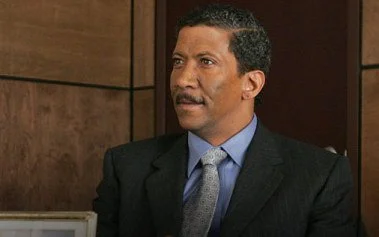
It’s been made clear by Steintorf and Carcetti that the fabrication will be buried at least until the November elections, and Daniels is indignant. Few actors I’ve ever seen can pull off such an accomplished, seething slow burn better than Lance Reddick. “McNulty, Freamon, Sydnor—anyone who has the smell of this on ‘em should be gone by the end of business today.” But after a chat with Pearlman, Daniels realizes that her career will be ruined if he reveals what’s been going on. He will play along—for now.
In the next scene, Fletcher is seen hawking the paper he writes for while Bubs sits reading his article. It’s very much against the guidelines of good journalism to show a subject the piece beforehand—the danger being that the subject might exert influence to control what will be published, tarnishing the profession. But Fletcher clearly has such respect for Reginald that he wants to ensure that his subject is completely comfortable with its contents before the article runs. Bubs has reservations, though: “What good is a story like that … what good do any of that do to put in the newspaper?” Fletcher’s response is straight out of J-school, and sounds like it might have been uttered by David Simon himself when he was a cub reporter for The Sun: “People will read it, think about it. Maybe see things different.” It’s a million miles from the striving, bottom-line ethics of Whiting and Klebanow, who are after prizes and profits rather than journalism that matters. Later in the newsroom, Gus tells Fletcher that he loved the piece, and Fletcher cautions Gus that he has yet to receive final go-ahead from the subject on publication. Fletcher says he wants to feel “clean” about the article. Gus mutters, “I remember clean,” as he casts a steely glare in the direction of Scott’s desk. At the end, Bubs sees his article, which has garnered a “Sunday front” and is titled “The road home,” and he’s at peace with its publication. In the closing montage, we see Bubs at long last joining his sister and her child upstairs for dinner. Trust and love, it seems, can be rebuilt from the ruins.
Never before in the history of the series can I recall shady political deals being brokered with such wantonness and nakedness. First, Steintorf and Carcetti pressure the police brass to sit on the McNulty fabrication. Then Steintorf tells Rawls to hold back his leverage and he will be rewarded with the position of State Police Superintendent when Carcetti is governor (and by the end, sure enough, Governor Carcetti is anointing Rawls thus). And despite Grand Jury Prosecutor Gary DiPasquale’s admission that he is dirty, Levy somehow continues to have all the power. It was nice seeing him sweat as Pearlman played the recording of him talking to DiPasquale, if even for a moment. In the end, Pearlman forces Levy accept life without parole for Chris Partlow, who will plead to all the murders, and 20 years for Monk. Marlo, for his part, walks scot-free—but he must leave “the game” because his case, which will be consigned to the Stet Docket (inactive case register), can be reactivated after the elections.
And finally, on the subject of deals, Daniels stands up again as a man who is unwilling to bend further to political will. Daniels tells Steintorf that “the stats are clean, and they’re going to stay clean.” Steintorf goes to Nerese (who, as Mayor Campbell, is seen in the closing montage naming Valcheck police chief). Nerese has the file containing Daniels’ dirt; she goes to Marla, who then goes to see her ex-husband to try and talk some sense into him. She insists that he can bend without breaking, but he insists, “if you bend too far, you’ve already broken.”
Duquan’s fate was sealed last week, I suppose, when Michael dropped him off; still, it was difficult to see him lie to Prez, who still clearly has such affection for him. (A nice moment, though: when Prez firmly scolds one of his students, Duquan says, “Looks like you got the hang of it!”) When Duquan returns to the junk man with $200 from his former teacher, the junk man remarks, “Damn! Teacher must love your black ass!” In the closing montage, Duquan is injecting himself with heroin, it appears, and we can anticipate his emergence as another Bubs. It’s disheartening, and serves to temper the optimism with which we’ve watching Bubs’ transformation into Reginald this season.
After McNulty asks an exasperated Landsman to reduce manpower on the homeless case, Bunk observes wryly: “Shit is like a war, isn’t it? Easy to get in, hell to get out.” The parallels to Bush’s war in Iraq are obvious, but I don’t know that we’re meant to extend the metaphor beyond this. The scene made me smile because it almost seemed as though David Simon was saying to critics of this season, “Oh yeah? You don’t like the homeless serial killer subplot because you don’t think it’s ‘realistic’ enough? How about a lie that’s resulted in tens of thousands of civilian deaths, three thousand-plus US servicemember deaths, and untold billions of American money?”
The scene in which McNulty slinks into the elevator next to Daniels is a classic because of what can be said with little or no dialogue: we know these characters so intimately that what isn’t said is almost more powerful than what could have been spoken in that moment. Daniels’ chilling parting words—“To be continued…”—would have made me befoul my drawers were I in McNulty’s position, without question.
Soon thereafter, when another “serial killer” murder is found, McNulty is summoned in to the “box” with Rawls and Daniels. While Rawls rants, Daniels glowers. “You’re not killin’ ‘em yourself, McNulty; at least assure me of that,” he demands. McNulty, who looks as if is paralyzed, manages to shake his head. At the end of the scene, Rawls sums up the relationship between him and McNulty wonderfully: “If you’re half the detective you think you are, you’ll put this one down fast and take us all off the hook.” Fortunately, he solves it quickly and further damage is averted.
In the newsroom, as always it’s the details that make this storyline so authentic, and I say that in defiance of all the critics who have blasted it as ham-fisted and too broad. An editor is saying plaintively, “Just because it happened doesn’t mean it’s news. There’s always a salmonella outbreak somewhere. Why do we have to write about this one?” Regional Affairs Desk Editor Rebecca Corbett (Sara Quick) points out to Gus that Scott has written a front-page article in which the paper is crediting its own coverage of the serial killer story with changing the governor’s mind. “I’m already to the jump and there’s not a quote from anyone crediting us with anything of the sort,” she says. In other words, she has reached the jumpline—the point at which a front-page article is continued to a page deeper in the section—and has no quotes, no attribution. It is complete self-congratulation, a story where none exists, which should be anathema to good and serious journalism. Rebecca says that Whiting “can smell” a Public Service Pulitzer; sure enough, Scott is seen in the closing montage accepting his Pulitzer at Columbia University, Whiting and Klebanow by his side, all three wearing the shit-eatingest grins I’ve ever seen.
“The Wire” universe is one of juxtapositions, of obsessive attention to detail. One such moment that stood out to my wife (but I missed) was when McNulty was pretending to attack Beadie’s kids with a “crab claw” (his hand). In the very next scene, Bubs is eating a crab claw while Walon advises him on whether the article should run. It’s the little things that give the most pleasure…
In that scene, Walon shares a Franz Kafka quote with Bubs (who calls him “Fonzie Kafka”) and while neither man has read the Czech author, they seem to derive profound meaning from his statement: “You can hold back from the suffering of the world; you have free permission to do so and it is in accordance with your nature, but perhaps this very holding back is the one suffering you could have avoided.” It is an interesting paradox to consider in terms of the themes of the show.

When approaching the finale, I think I was most interested in the fate of Gus Haynes, whom I was almost sure would end up quitting or in a different job by the end. After Scott fabricates yet another aspect of the case—a man in a gray van has supposedly tried to abduct a homeless man right in front of The Sun building—Gus explodes in Klebanow’s office: “Our job is to report the news, not to manufacture it,” which gets a hearty “Fuck you, Gus,” from a storming-out Scott, and that in turn elicits a “Nice” from a fed-up Gus. He ends his meeting with Klebanow by saying, “Maybe you win a Pulitzer with his stuff … and maybe you gotta give it back.” As Gus leaves at Klebanow’s request (“This has gotten really personal between you two”), Templeton shouts, “It’s in my notes!” Once Scott again storms away, Alma looks at Scott’s reporter’s notebook and discovers it empty. She reports this to Gus later, but he does nothing with it; she takes it to Whiting herself, and an unwanted and punitive transfer to the Carroll County Bureau—where she’ll be miserable, and wasted—is all the thanks she gets.
When he later bids farewell to Alma, Gus sums up the newspaper storyline neatly: “Look around. The pond is shrinking, the fish are nervous. Get some profile, win a prize. Maybe find a bigger pond somewhere.” Scott will get his Pulitzer, Gus correctly predicts. “Me? I’m too fuckin’ simple-minded for all that. I just wanted to see something new every day and write a story with it.” It could have been spoken by David Simon himself, fifteen years ago. Behind Gus on the wall of The Sun’s lobby appears a quote by H.L. Mencken that provides the final episode’s tagline:): “As I look back over a misspent life, I find myself more and more convinced that I had more fun doing news reporting than in any other enterprise. It is really the life of kings.” The quotation is surely meant ironically and with shades of sarcasm that only Simon himself truly comprehends. Check out my previous post about episode 53 for more on Mencken and his connection with Charm City.
In the closing montage, Gus has been demoted to the copy desk, while Fletcher has been promoted to the city desk. As Fletcher calls out to Zorzi for copy ahead of the rapidly-approaching e-dot deadline, Gus looks up from his copy sourly, then a small smile breaks across his face; as pissed off as he is with the turn of events, he’s proud of his young protégé. (I have to admit to being a little disappointed here in the way this storyline was wrapped up; I would have liked to see more coverage of what exactly transpired when Gus brought the evidence of Scott’s fabrications to Whiting and Klebanow, for example.)
Soon after Scott’s hissy fit, McNulty and Bunk are seen in the “box” with a homeless man who is apparently confessing to the two most recent murders, but although the man will likely agree to whatever number they wish, McNulty will not compound his offense by trying to get him to cop to all six supposed murders. Outside the box, Rawls states very clearly that he wants McNulty and Bunk to get the mentally unstable man to admit to all six murders; “if he’s NCR [not criminally responsible], either way they’ll tie his arms and feed him green Jell-O.” McNulty refuses again, though: “I know what I did. … and I’m not doing this.” Rawls’ final line in “The Wire” is a beaut, and set me on a roar: “Motherfucker. You are a cunt hair away from indictment and you see fit to argue with me?” I’m reminded of Rawls’ two-fingered salute to McNulty in one of the series’ earliest episodes, and some of the best, most unbridled vulgarity throughout the show’s run.
McNulty’s scene with Scott in one of the Homicide offices is brilliant, and it alone should qualify Dominic West for Emmy consideration—but we all know not to hold our collective breath on that one. In the scene, he shows utter contempt for Templeton, and also seems to be “working through” (in psychological parlance) his own self-loathing over what he’s done. “There’s no gray van, and he didn’t call you on the phone either, did he?” McNulty challenges. He goes on to admit that he called Scott, and sent the photos—but curiously fudges the details of the abducted man, claiming he was McNulty’s cousin sent up to Atlantic City for a few weeks. “You know why I can tell you all this?” he goes on, really steaming now. “Because, you lying motherfucker, you’re as full of shit as I am. And you’ve gotta live with it and play it out for as long as it goes, right? Trapped in the same lie”—the only difference being why each man did it. “You’re not serious…” asks a stunned Scott. “No, I’m a fuckin’ joke. And so are you,” McNulty replies. “Now get the fuck outta here.” (Later, back in the newsroom, Scott is clearly still reeling from this encounter. “My stomach…” he moans to Klebanow and scoots out to regroup.)
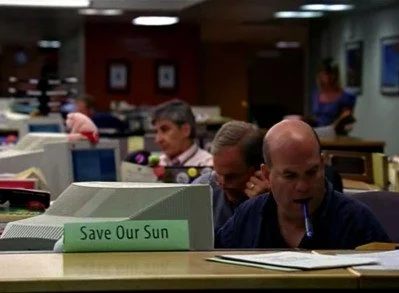
To wrap up the newspaper storyline: David Simon’s Hitchcockian cameo was brilliant. There he sat, pen in mouth, typing away furiously, with a “Save Our Sun” sign on top of his cubicle wall. Lest we forget the mastermind behind this massive ensemble of writing, directing, and acting talent, it was nice to get a glimpse of the man in the last episode of the finest work he’ll ever create. (He may find this to be a depressing thought, the suggestion that he’ll never top “The Wire,” but I really don’t see how it can be surpassed.)
“The Wake” (as it will likely be known forever in the lore of this series) is one of the best in a long line of memorable scenes in “The Wire.” Held at Kavanagh’s, where I believe Bob Colesberry’s wake was also held in season three, it encapsulates the camaraderie, the loyalty, and the profanity that made the show so outstanding. I’ll quote liberally from Landsman’s tremendous speech with McNulty laid out “on the felt” (on the pool table). “What do you say about this piece of work? Fuck if I don’t feel myself without the right words. … He was the black sheep, a permanent pariah; he asked no quarter of the bosses, and none was given. He learned no lessons, he acknowledged no mistakes; he was as stubborn a Mick who ever stumbled out of the Northeast parishes to take a patrolman’s shield. … He brooked no authority, he did what he wanted to do, and he said what he wanted to say. And in the end, he gave the clearances. He was natural po-lice.”
As the camera pans to McNulty’s face, Landsman cries, “But Christ, what an asshole!” and the “deceased’s” eyes fling open in a guffaw. “I’m not talking about the ordinary, gaping orifice that all of us possess,” Landsman goes on. “I mean an all-encompassing, all-consuming, out-of-proportion-to-every-other-facet-of-his-humanity chasm, from whose bourn, to quote Shakespeare, no traveler has ever returned.” It’s a fascinating allusion, since it’s from Hamlet’s famed “To be or not to be” soliloquy; in it, Hamlet considers death at some length and wonders at its inscrutable mysteries: “The undiscover’d country from whose bourn / No traveler returns, puzzles the will / And makes us rather bear those ills we have / Than fly to others we know not of.” What mysterious country is being explored by the likes of Omar, Wallace, D’Angelo, Snoop, Stringer, and all the rest—if any? And for that matter, what uncertainties await McNulty in his new life as he flees the ills he has, perhaps for those he knows not of?
Lester comes in with Shardene, and it’s nice to see them still together (and making each other deliriously happy, based on what the closing montage suggests); soon Landsman is wrapping it up by getting rather somber in observing that McNulty gave thirteen good years, was “a true murder police,” and that when he was good, there was no one better. Amen.
The “street” plots are given relatively little attention in this 93-minute finale, but the previous several episodes has made up for that. The arrogant Cheese (played very well by Method Man) pulls a gun in a petty dispute with a fellow “co-op” member as they discuss raising the funds to purchase the “connect” as offered by Marlo at a cool $10 million. “Ain’t no nostalgia to this shit here,” he says, but Slim Charles drops him with the shot to the head as Cheese is in the middle of a sentence. “That was for Joe,” he says. “This sentimental motherfucker just cost us money,” another man laments.
It occurs to me watching Marlo—out of prison with no charges, but having to avoid the “game”—that he is living out Stringer Bell’s fantasy. Stringer always aspired to shun the drug trade and become a legitimate businessman (or as legitimate a businessman as one could be associating with the likes of Maury Levy), but could never break out of the “game.” Marlo finds himself at a swanky party being introduced to major real-estate players, and he bolts back to streets, where he seems almost pleased to get into a violent confrontation with two corner boys. He’s stuck between worlds, now, and though it seems he’s borne no responsibility, he is truly in a hell of his own creation.
And finally, Michael seems to have developed into a vigilante of sorts, and though he’s quite naturally an outcast, I don’t know if having him slip into the “Omar” role is entirely realistic. He does deliver one of the funniest lines of the episode, though, as he robs Vinson. When he bursts in with a shotgun and a sidekick, Marlo’s former money man protests, “But you’re just a boy!” Michael blasts him in the patella and, as Vinson collapses in pain on the floor, says calmly, “That’s just a knee.”
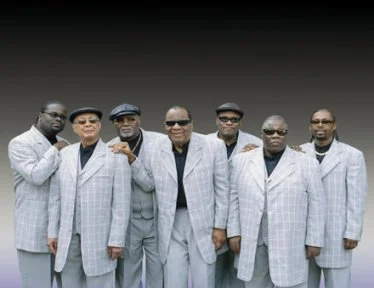
McNulty goes to pick up Larry, the poor schmuck who he stashed in Richmond, and bring him back to Baltimore. Suddenly he stops on the bridge and gets out of the car, looking wistfully across the Potomac, and the closing montage begins. Many of its details have been mentioned earlier, but I have to say that the Blind Boys’ “original” rendition of “Way Down in the Hole” was a perfect fit here. His final words—and the last in the series—are, “Larry, let’s go home.”
Daniels was always, for me, another of the moral centers or main characters of this show, and I was happy to see him resign rather than bend to Steintorf’s demands, even in light of Daniels’ shady past. The scene in the courtroom during the montage was interesting for its contrasts: Pearlman was given a judgeship riding on the influence of Carcetti, given that Steintorf promised her she would benefit if she made the dirty case on Marlo go away; Daniels is a practicing attorney after refusing to play the game. (Incidentally, it seems to me that he’s a defense attorney, since he’s standing to the right and he’s right next to the accused; this is somewhat surprising to me, as I thought he’d be more interested in prosecution.)
Recurring themes: repetition for effect has always been one of the touchstones of “The Wire,” and this episode was no different. The line “keep my name out of it” is spoken both by Ruby when presenting the evidence of Scott’s dirty reporting and Sydnor near the end when asking Judge Phelan to authorize further investigation of the wiretap case.
Finally: I literally cheered during the closing montage when Kennard was seen being led away in bracelets, presumably for the murder of Omar. That little shit, I thought. Serves him right.
Before I wrap up my favorite moments in the show, I do have to air some grievances about scenes or moments in the finale that didn’t ring true, or loose ends that I feel should have been more completely wrapped up:
There was never any reconciliation or apology between Bunk and Jimmy, though Bunk was an enthusiastic participant in Jimmy’s “wake.” Given all that they’d been through, I was disappointed to see them keep their distance straight through to the end.
On a related note, I’m not sure it was entirely realistic that Jimmy would have forgiven Kima when she reveals her role in their downfall outside the bar. Though he’s clearly relieved to have this whole nightmare concluded, his statement to her seemed too flip, too easy: “Detective, if you think it needed doin’, I guess it did.”
Around the hour mark, there were some shots that seemed gratuitous: daytime shots of the neighborhoods, a nighttime shot of the harbor; dusk in the business district, etc.—it seemed disjointed and unnecessary.
What kind of work will McNulty do? Will he stay in Baltimore? It would seem that he and Beadie will be OK now, and the tender little scene in which she leans on his shoulder conveys that. But what kind of job will be fulfilling to an iconoclastic genius who is obsessive about finding meaning in his work and must utilize his analytical skills? Private detective? (SPINOFF!!) I’m at a loss here.
The closing scene when McNulty stops on the bridge seems contrived. Why did he stop there? Is he leaving Baltimore? Was he going to drop Larry off there, but changed his mind?
And just what in the hell ever happened to Brother Mouzone?
But these are mere nitpicks in a finale that was very satisfying, intense, and engrossing. We’re left to ponder the big questions (Did everyone get what they deserved? Did anyone?) and small (Will Fletcher face the same frustrations as Gus in the position of city editor?); the philosophical (Who is the most virtuous character here? Does anyone emerge unsullied?) and the mundane (What happened to Valchek’s van?). It was a television series that allowed no easy answers, and asked questions many people were not ready to address. It was exquisite, and its equal will not likely be seen anytime soon.
In 40 years, dreck like “According to Jim” and “Two and a Half Men” will be utterly forgotten; shows like “Desperate Housewives” and “CSI” will be recalled only as kitsch pieces by nostalgia buffs. The disposable contrivances of “reality” TV will doubtlessly fade into pop culture oblivion. But “The Wire” is among the very few television shows that will endure on its own merits as an artistic achievement—it will be studied, deconstructed, celebrated, and perhaps even emulated. And most of all, especially to us Wireheads, it will be missed.
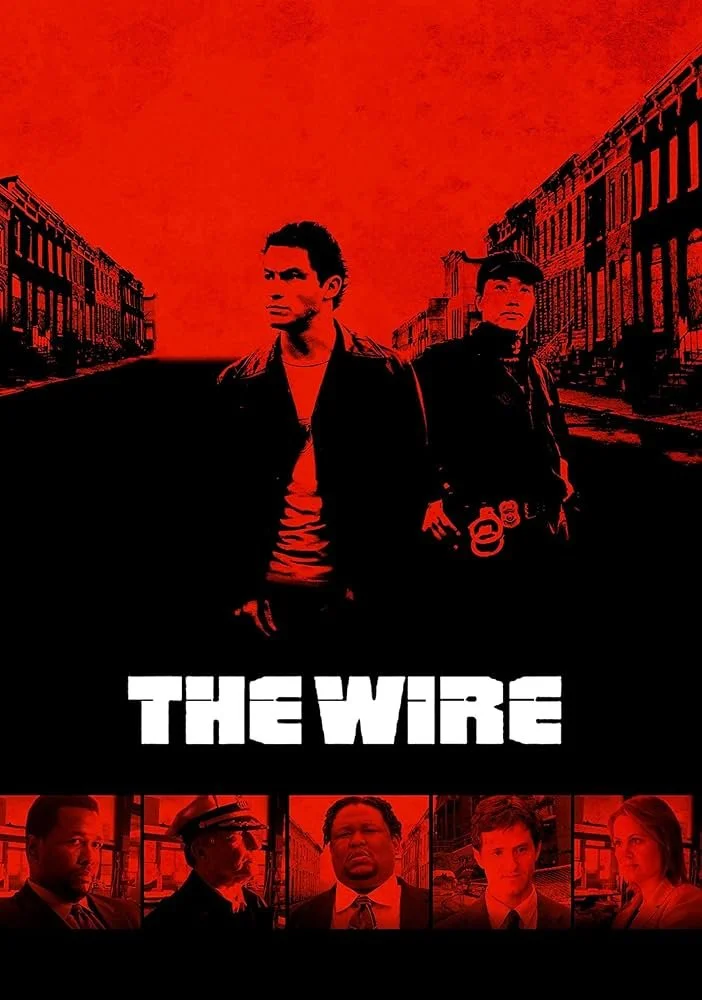
Goodbye.
END OF EPISODE 60 NOTES
Monsoon's "The Wire" episode 59 notes and analysis
“The Wire” notes and analysis for Episode 59 – “Late Editions”
Please note that this episode is available only at HBO On Demand and has not yet aired; it will premiere on HBO on Sunday, March 2nd. Also be forewarned that as “The Wire” contains adult language and themes, my post will reflect these elements; reader discretion is advised.
Finally, this post contains spoilers about episode 59; please do not read further if you have not yet seen it and do not want details about this episode.
S
P
O
I
L
E
R
S
P
A
C
E
The penultimate episode of “The Wire” is one of its best ever. It opens with Lester carefully examining a large bulletin board with the city maps, overlaid and surrounded with images of clock faces taken from the cell phone intercepts. Soon he receives a transmission indicating map 44, grid G-10—and then another, and then another. Since this is an out-of-the way industrial area, it seems to signal a big meet. Lester calls Sydnor and sends him down there, then McNulty, and before long he’s out the door himself. The illegal wiretap, it seems, is about to pay off in a big way.
The episode’s tagline is “Deserve ain’t got nothin’ to do with it.” – Snoop. Now at the warehouse, several teams have gathered there and are assessing what’s going on. Marlo was there, but left. Chris just went inside a warehouse door opened by “some white boys.” Lester jumps in his car suddenly, realizing he’s going to need more police to take down the warehouse if it contains what he thinks it does. “Where you going?” asks Sydnor. “Time to ‘fess up,” answers Lester.
In the next scene we join a meeting in progress at Levy’s office, with Herc, Snoop, and a “Mr. Hill,” the young dealer who took a bullet in the leg and is now going to take the gun charges for the Stanfield organization. When the dealer complains about how much water he’s having to carry for Marlo—especially after having been shot—Snoop has a great line: “Go down Wal-Mart or some shit and see if they take care of you while you laid up for a while.” It’s a brilliant swipe at the retail behemoth’s abysmal record on benefits and living wages, and Herc offers an appreciative smirk (unintentional rhyme there).
At the warehouse, oblivious to the phalanx of surveillance teams (and soon, SWAT teams) that surround the building, it’s business as usual: three men who seem to be Russians open the back of a small delivery truck containing several iceboxes, each of which is filled with at least 40-50 bricks of heroin. The transaction is made with Chris, and the product is loaded into Monk’s trunk (rhyme unintentional, again), among other places.
Meanwhile, setting the stage for the show’s inevitable climactic denouement—the unmasking of McNulty’s bullshit, Scott Templeton’s reckoning, Marlo’s collapse—Gus is meeting in a pub with a former colleague named Robert Ruby (The Sun’s former Foreign Editor, who seems to be playing himself). They’re bemoaning the corporate culture at The Sun and so many other papers—“These newspaper chain guys just don’t give a fuck, do they?” Ruby asks—and Gus asks him to discreetly check out Scott Templeton’s body of work. Ruby knows instantly why Gus is asking him. “Man, I hope you’re wrong,” he says. “Of course you do,” Gus replies. Gus and Ruby adhere to the “old school” of the newsroom, for lack of a better phrase: loyalty to one’s fellow reporters to the bitter end. As we know, Scott’s lies are bound to—and in fact, are actually beginning to—come out. Soon Ruby is at The Sun greeting old friends and making a cautious inquiry into Scott’s articles.
Duquan , now working with the junk vendor, climbs over a barbed wire fence into the lot of a construction company, or a demolition site. Perhaps life as an apprentice junk man isn’t the glamorous existence it had initially seemed?
In Rawls’ office, Carcetti’s chief of staff Michael Steintorf (Neal Huff) is meeting with Rawls and Deputy Ops Cedric Daniels (Lance Reddick) to carp about the record increase in violent crime during Carcetti’s tenure. He wants results—more police, more visible presence, etc.—and Daniels is deflated by his insistence that he preside over the same old political game. After all, Daniels says, “I was told by our mayor at the outset that there would be no more Band-Aids, no more stat games.” Not so, Steintorf informs him: the mayor wants to see a 10% drop in violent crime in the next quarter. Reform can be addressed, he adds, if Carcetti is in Annapolis (as governor), and he can’t get there unless he’s got more workable crime stats. It’s an endless cycle of manipulation, compromise and futility that, in “The Wire” universe (and, it would seem at times, in our own) will never end. Being privy to the “war room” discussions between Carcetti and his staff, we know he’s selling all but his soul to ensure a shot at the governor’s mansion—and there’s little reason, despite his fiery rhetoric and the high-minded ideals he espoused in the third season, for us to think he’ll suddenly make things right if he gets there.

Lester , for his part, is coming clean to Daniels—sort of. He doesn’t spill the grand duplicity, but lets Cedric in on enough of the detail—the surreptitious wiretap, the surveillance, the warehouse, Bunk’s delayed warrant on Partlow—to ensure that Daniels will provide him with the firepower he needs. As he’s talking to Daniels, Lester gets a call from Sydnor, who has just pulled over Monk with “eight keys of the raw” in his trunk—and his phone, with all its evidence. Daniels is taken back by Lester’s revelations, but seems more bemused than angry. He calls Rhonda Pearlman: “Ronnie dear, are you sitting down?”
Soon a SWAT team vehicle smashes through the gate and its members storm in to the warehouse, arresting everyone in sight. Lester arrives and sees the refrigerators loaded with heroin, then he’s off to the playground, where Marlo is among those arrested. (I have to admit, seeing Marlo and his crew manacled and kneeling on the concrete makes me feel in some small way that Omar may not have died in vain.) Lester picks up Marlo’s cell phone, looks the drug lord in the eyes knowingly, and strolls away. He finds the clock that had been used in the picture messages, holds it thoughtfully in his hands, and looks down the line of arrestees to Marlo, whose expression is memorable: “But just how in the fuck did he…?” he seems to be thinking. A great, gratifying scene.
It’s press conference time, and Carcetti is at his self-congratulatory best after a seizure of $16 million in heroin, all told. (A cute little throwaway line from the young Mr. Hill as he, Michael, Snoop, and the few other Stanfield associates not arrested watch the coverage on TV: “Does this mean I still gotta take that charge for y’all?”) Carcetti crows, “We did not give up on that investigation, just as we do not give up on trying every day to address ourselves to the task of making this city safe and vibrant again,” after which the camera shows Bill Zorzi rolling his eyes. He knows—though not in the detail available to us—what a falsehood that is. Carcetti has a stern warning for those drug dealers who still operate in Baltimore’s neighborhoods: “A day like this is coming for you.” Zorzi mutters sarcastically, “Oh, you are so butch.” The world-weary court reporter sees through is empty posturing—as do we.
After the news conference, Daniels will only give a perfunctory quote to Alma—“A good day for the good guys”—and when pressed, says he doesn’t like being misrepresented in the paper. “Something about stabbing someone in the back,” he says, referring to Scott’s fabricated quote attributed to Nerese in episode 53. Scott’s shenanigans not only will end up harming his own career—we can only hope and assume—but it harms the credibility of everyone else in the profession. Perhaps that’s a lesson with which both McNulty and Templeton will be forced to come to terms by the series’ end.
Marlo and his crew have been arrested and locked up for processing, and many of them sit in a large holding cell, trying to decipher what went wrong. (I wondered during this scene if it’s entirely plausible that these known associates—who did not seem to have been questioned yet—would have been placed together in a communal holding cell, given the possibility that they’d have the time and opportunity to get their “stories” straight.)
Monk angrily deconstructs recent events and mentions that Omar had been calling Marlo out on the street. Marlo’s reaction is pure rage: “He used my name? In the street?” The look on Chris Partlow’s face reminds us that Chris and Snoop had deliberately decided to keep this from him—“The man’s got too much on his plate,” Chris said at the beginning of episode 58—and so Marlo never heard of Omar’s repeated challenges. “My name was on the street? When we bounce from this shit here, y’all gonna go down to those corners and let those people know: word did not get back to me. Let ‘em know Marlo’ll step to any motherfucker—Omar, Barksdale, whoever. My name is my name.” The tightly controlled, bloodless Marlo believes intimidation is the only real power he has to wield, and if he was “called out” and failed to answer that call, his reputation is worthless. One has to wonder not if, but how Chris will be brought to account by Marlo for his sloppiness.
In the Homicide unit, McNulty sits working placidly at his desk when he is approached by Jay Landsman (Delaney Williams), who conspicuously praises Bunk for his solid, deliberate police work. Then he turns on Jimmy: “From everything we’ve given you, fire should be shootin’ outta your ass. But no. There you sit like a genital wart.” He wants results.
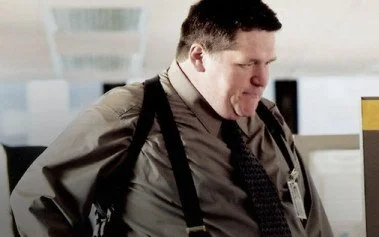
(A note here about Landsman’s locutions and manner of speech: it is possibly the most colorful and lyrical of any character on this show, or any show. His scatalogical and crude metaphors are magnificent. And his sentence constructions—“there you sit” instead of “you just sit there”—recall Shakespeare’s language. It’s a delight hear him speak, minor character though he is; it would be interesting and not a little bit amusing to compile some of his most memorable lines over the years.)
After Landsman stalks away, Kima asks a clearly tortured McNulty where this is all going to end. There will be no more calls and no more killings, he tells her, and the effort will all fade away. He tries to accentuate the positive by reminding her, “Marlo is in cuffs.” “Fuck Marlo,” she replies, and bores through him with a look of pure disgust. “Fuck you.”
(I guess I understand Bunk’s anger at Jimmy’s actions, as much as I understand why Bunk never told anyone what was going on. But I’m not sure Kima’s fiery reactions here necessarily ring true. She has undeniably given her life to police work—to the detriment of what seemed like a promising relationship with Cheryl—and most certainly her body, when she was shot in season one. But Greggs has been as stymied and frustrated at times by the bureaucracy and its ineffectual nature as much as McNulty himself. Surely she’s been shuttled around from one special unit to another enough to understand some of what McNulty’s motivations are. Would she reasonably have the extremely negative and lingeringly furious reaction she’s had—and would she reasonably take the drastic actions she’ll take later in the episode?)
The newsroom is humming along busily while Scott is in a meeting with Klebanow, Whiting, and Metro editor Steve Luxenberg (Robert Poletick) about potential Pulitzer submissions. Whiting, who reveals that he’s been on a few Pulitzer committees in his day, says the graphics have to be “clear and professional” for an article or series to be considered for the prestigious prize. Klebanow says it’s vital to cover the reaction (among city agencies, government, police, etc.) to the homeless coverage. But Luxenberg asks, “What do we want to say exactly with our coverage? What do we want to say about the homeless?” He adds that no one would argue that homelessness is terrible, “but isn’t it actually symptomatic of a much greater dynamic?” It seems here that Luxenberg wants the paper’s coverage to get into the societal and economic ills that lead to homelessness—like inadequate wages, disappearance of the manufacturing base, and flaws in the school system, to name a few.
But Klebanow, predictably, isn’t having any of it: they need to “examine the tragedy underlying these murders.” Scott, their willing lapdog, fawningly interjects, “the Dickensian aspect.” A broad, shit-eating grin spreads across Whiting’s face; it’s the self-satisfied smile of a man who’s been paid homage by having his own words parroted back to him. Besides being the title of episode 56, the phrase was used in a budget meeting in episode 52 to underscore the desired tone for the paper’s planned Pulitzer-baiting series on the school system. One wonders if Klebanow and Whiting will be drooling quite so heavily over Templeton when his fakeries are exposed—or whether their blind devotion will in fact prevent them from seeing the truth of his actions. One thing seems sure: either Scott Templeton or Gus Haynes will no longer be working for The Sun by season’s end.
McNulty and Lester are shown out by the railroad tracks—near where Jimmy and The Bunk had wound up many a late night earlier in the series—celebrating the arrests of Marlo and his crew. Well, at least Lester is celebrating, having had more than a few drinks. But McNulty stands aloof, empty and somber, refusing a drink. He’s unable to take any satisfaction from what his duplicity has accomplished in the long run, perhaps because he sees how many people he’s hurt in the interim; though he says little, his expressions convey it all. Lester insists that if McNulty will not join him for a drink, he needs to at least chauffeur him home. As Freamon dances drunkenly away, he practically sings, “Shardene better be awake, too, ‘cause I do believe Lester Freamon’s in the mood for love.”
After the holding cell conversation, Marlo is convinced that he has a snitch inside his organization who told the police about the cell phones. (After all, since the wiretap was illegal, the official police reports refer to a nonexistent “source” who told them about the picture messages.) In a later scene during which Marlo meets with Levy, Marlo insists that only he, Chris, Monk, and Cheese knew about the code. It’s ironic that because of the illicit manner in which the evidence was gathered, a CI (confidential informant) had to be invented, which will lead to chaos and more violence within the Stanfield organization. The newest member of his inner circle, the one always asking questions, seems to be the easiest scapegoat. It quickly becomes clear that Michael has a target on his back, and when Snoop visits him to ask that he kill Walter—telling him not to bring a gun because she’ll give him one later with the serial numbers filed off—Michael is instantly suspicious.
In a complete change of venue, we see a smartly-dressed, ponytailed young man at a podium speaking passionately about the AIDS epidemic in Africa. Behind him is a large banner indicating that this is a competition sponsored by the Baltimore Urban Debate League (BUDL), which is an actual organization that has been in existence since 1999. The voice is familiar, but its tone—erudite and persuasive rather than smart-alecky and coarse—is unmistakably different. It’s Namond Brice (Julito McCullum), and as he speaks, Bunny Colvin (Robert Wisdom) and his wife look on proudly. Bunny’s expression sours, though, when he notices Carcetti and his entourage enter the auditorium from the rear. Colvin has no love for Carcetti, who last season (as councilman and mayoral hopeful) made a scapegoat of Bunny and his Hamsterdam experiment in an attempt to expose the corruption of Mayor Royce and grease his path to City Hall. This is evident when Carcetti later breaks away from a news conference to talk with Bunny, who is standoffish and closed-off to Carcetti’s awkward attempts to reconnect with the disgraced former Lieutenant. (I’m not really sure what Carcetti’s motivation would be here, anyway. It could be that he’s genuinely sorry for the smear campaign he conducted to attain his position, but since so few of his actions or impulses seem authentic anymore, that’s hard to believe.)

Back to Gus’s quest to unmask Templeton’s lies, we see Gus having lunch with Nerese. He brings up Daniels (in a circuitous manner, so as not to arouse her suspicions that she’s being pumped for information) and asks Nerese if she thinks he’s ready to be commissioner given all the backstabbing he’d engaged in. Nerese answers, “Daniels wasn’t even on my radar,” and her responses make it abundantly clear to Haynes that Templeton likely piped, or fabricated, that quote.
The body of a beaten-to-death homeless man has been found, and McNulty must examine it for signs that would link it to his fake serial killer. The detective, to whom McNulty refers as “Rook,” says there are no bite marks or ribbons to be found. The ensuing exchange is classic David Simon:
Rook: “This fuckin’ guy stinks.”
McNulty: “He probably evacuated.”
Rook: “What, he left and he came back?”
McNulty: “No, he shit himself.”
This is not only funny on its face, but also because it recalls the scene in episode 51 in which Gus changes Alma’s “the people were evacuated” thanks to Jay Spry’s (Donald Neal) correction.
Gus is off to Walter Reed Medical Center to meet with the Marine whose hands were blown off in the Terry Hanning story. When Luxenberg asks what he’s doing, Gus replies, “scratching an itch.” When he arrives, he begins talking to the man who was in Terry’s unit, and he shows Gus his prosthetic hands, which have rotating thumbs and multiple grips. “Brave new world,” says Gus, marveling at the technology. (The phrase derives most recently from the 1930s Aldous Huxley novel Brave New World, which envisions a World State controlled by reproductive and conditioning technologies; it originates, though, from the play The Tempest by William Shakespeare, which contains the line, “O brave new world that has such people in it!” It’s almost certainly a stretch, but in some sense with this comment Gus might be mourning the loss of authenticity in the modern world.) Gus asks the man if Terry could have exaggerated his story to Scott, and the man says it’s not possible. “He ain’t lie, y’all did. Sorry to say,” he says, echoing Terry Hanning’s insistent statements from last episode, though in less strident terms.
Carver and Herc share a cigarette and some suds once again (with Tom Petty’s “Refugee” playing in the background), and Herc says he became “fully erect” when he heard of Marlo’s arrest. But it soon becomes obvious that he’s working Carver for information about the details of their investigation. This is confirmed when Herc later meets with Levy, his boss, and says Carver all but admitted there was an illegal wiretap used to gather evidence on Marlo’s crew. Herc, who has had moments of redemption this season, seems to have settled back down to the level of craven weaselhood here.
A nice update on Bubbles’ situation (aka, Reginald Cousins)—and, I suspect, maybe the end of his storyline altogether—appears later in this episode. In the first scene, Bubs and Fletcher are chatting in his basement when Bubs’ sister comes home with some items for him. He tells her his anniversary (of sobriety) is coming up and he wants her to attend the ceremony, but she declines. “My sister, she good people,” he explains to Fletcher. “She been through a lot, though, you know.” It seems harsh at first blush that she will allow him to inhabit only her basement and never come upstairs, but on plenty of previous occasions she allowed him to stay with her, he made promises, and then he stole and pawned her belongings for drugs.
Later on, Bubs arrives looking rather spiffy for his anniversary ceremony, Fletcher in tow. Walon (Steve Earle), Bubs’ sponsor, warmly greets Fletcher but reminds the reporter not to take notes or record the proceedings: “What happens in that room stays in that room.” Walon’s reaction when Fletcher says he’s doing an article on Reginald is priceless: “I’m his sponsor and I don’t believe I’ve ever gotten a Christian name out of him!” Inside, as Bubs walks to the front of the room and begins, we can sense something is different about him; he appears poised to break free of his shame and his guilt once and for all. “My name is Reginald,” he emphasizes, and we sense that he’s almost having a rebirth. “’Round the way they call be Bubbles.” He talks about a recent afternoon when he was walking down the street and a strong craving hit him; he tried to call his sponsor, Walon, but he wasn’t around, and no one else called him back either. (One woman says she would have definitely called him back, hinting at a possible romantic interest for Bubbles, which would be wonderful.) But he did not get high that day, he says, and the implication is clear: he’s learning to depend on, and control, himself. He also, finally, brings up Sherrod, and though he doesn’t go in to specifics about what happens, it’s cathartic for him to even utter his name again. “Ain’t no shame in holdin’ on to grief,” he winds up, “as long as you make room for other things too.” This is one of the most moving scenes I can remember in “The Wire,” which doesn’t often make room for redemption or hope among its crushing stories of hypocrisy, apathy, and betrayal.
The fruits of Lester’s threatening encounter with Clay Davis are clearly paying off, as we see the two having drinks and Clay spilling prodigious amounts of information about where the money leads. Clay insists that in “following the money,” Lester must focus on the lawyers—particularly Levy, who not only provides legal advice but also elaborate money laundering for his drug clients, routing the money through developers, community foundations, and politicians like Clay himself. Lester pushes Clay to reveal more, and he finally relents: Levy has a contact at the courthouse, who has been buying papers (sealed affidavits and other confidential legal documents) and “selling them to whoever needs an early look.” He advises Lester to focus on people “hanging around the Grand Jury” in his search. Hopefully this information will find its way to the State’s Attorney’s office, solving the mystery of the court documents found in Prop Joe’s desk.
As noted earlier, Kima is incensed by McNulty’s revelation that he conjured the homeless serial killer out of thin air. At first, it seems she’s going to tell Carver, but she just wants some advice. She asks him how he felt when he spoke up on Colicchio, who dragged a teacher out of his car and beat him in episode 54, then remained unrepentant. Carver admits he felt “like shit,” but in the long run, he’s “OK with” his decision. Kima feels it’s in her best interest, that of the department—and that of the city itself—that she tells someone what she knows. As the episode winds down, she appears nervously at the door of Deputy Ops Cedric Daniels, and their exchange takes place offscreen. Daniels then tells Pearlman, who cannot believe what he is telling her.
They go off to the evidence room—where Daniels bumps into someone from his past named “Augie,” or Augustus Polk (Nat Benchley), who I believe was involved in the season one wiretap detail—to examine the cell phone from the pier. As Pearlman dials the number in the wiretap and the cell phone rings, I’m left wondering why Sydnor would have entered that phone into evidence rather than destroying or hiding it. Whatever the reason, Daniels and Pearlman now realize they have a full-scale catastrophe on their hands, and it’ll be intriguing to see how they play it (bury it, realizing what could happen if they don’t, or allow it all to unravel) in the final episode.
Snoop picks up Michael as scheduled for the hit on Walter, and Michael is soon asking questions about why Walter needs to be killed. “Does he deserve it?” Michael asks. “Deserve ain’t got nothin’ to do with it,” says Snoop, providing the episode’s tagline. (I wonder if this has some larger meaning in terms of what will become of those most responsible for the messes this season: namely, McNulty and Templeton. Is there real justice, or even “karma,” that informs the outcomes of these situations?) Michael asks Snoop to pull into an alley, pulls a gun, and Snoop asks how Michael knew. “You always told me—get there early.” In a heartbreaking scene, Michael asks Snoop what he did wrong; why was he being targeted? “It’s how you carry yourself. Always apart. Always askin’ why when you should be doin’ what you told. You was never one of us. You never could be.” Snoop then calmly takes one last look in the car’s side mirror. “How my hair look, Mike?” she asks. “You look good, girl.” Such an odd, tender, and almost pedestrian exchange given what’s about to so unavoidably happen. The camera pans back from the truck and Michael fires the gun. Snoop is dead.
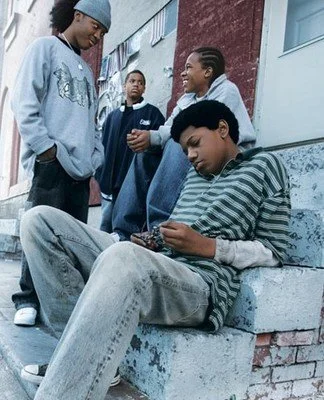
Michael then must deal with the aftermath of his actions, and his future is uncertain to say the least here. When he comes into the house, Duquan is watching Showtime’s “Dexter” and he enthuses to Michael that it’s a show about “a serial killer that only kills other serial killers!” Michael tells them to pack—they’re all leaving. He takes his brother, Bug, to his aunt’s house, along with a bag of money for her to use to raise him.
The goodbyes here are heart-rending, as is the (presumably) final scene between Duquan and Michael. Duquan tries to bring up a bit of mischief from last season—maybe to remind his friend that they were children, once, and can be again. The exchange made the “Wire” soundtrack CD (…and all the pieces matter: Five Years of Music from The Wire, track 34), and its poignancy is undeniable. Duquan says, “You remember that one day summer past, when we threw them piss balloons at them terrace boys? You remember—just before school started up again. You know, I took a beat-down from them boys. I don’t even throw a shadow on that. (chuckles) That was a day. Y’all bought me ice cream off the truck. … Remember, Mike?” After three or four full beats, Michael replies, barely audibly, “I don’t.” It’s a whisper suffused with so much meaning—Michael is stunned by his lost innocence, and how rapidly and inexorably everything has changed for him.
And we share his pain; despite ourselves, we hoped for positive outcomes for all four of the young men we met in season four—Namond, Michael, Randy, and Duquan. Now it seems that the most incorrigible of the four, Namond, is the only one whose future holds any degree of optimism: Randy is a cold, hardened teen at the group home, betrayed by a system that promised to help him; Michael has just killed someone and has nowhere to turn; and though it wasn’t clear at the end (at least to me), Duquan appears headed either to stay with the junk man or the drug-addicted family members who “raised” him.
The 90-minute finale—for which I will have to wait two full weeks, and watch it on Sunday, March 9th with everyone else!!—looks to be phenomenal. In the previews, it looks like heavy damage control is in order, a bearded Prez makes an appearance, McNulty and Scott seem to be arguing about who is more stunningly full of shit, and all hell generally breaks loose. Can’t wait for Episode 60, yet I’m really very sad about the end of this series that draws an array of superlatives from critics and fans alike, and rises above them all.
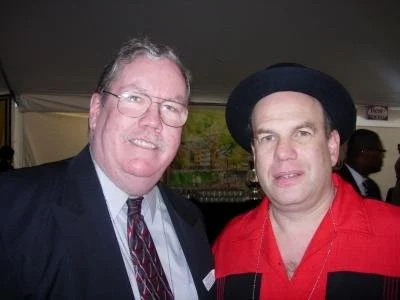
I guess I’ll spend the next couple of weeks thinking of questions to ask David Simon for the Q & A set up in March! I know it’s been said before, but thanks again to Jim King for moderating the Yahoo group, maintaining a kick-ass Wire site at http://members.aol.com/TheWireHBO/ and setting up Q & A exclusives with Dominic West, Wendell Pierce, Clark Johnson, and of course, Simon. (That’s Jim King on the left and Simon on the right in the picture below.)
END OF EPISODE 59 NOTES
"The Wire" notes and analysis for Episode 58
“The Wire” notes and analysis for Episode 58 – “Clarifications”
Please note that this episode is available only at HBO On Demand and has not yet aired; it will premiere on HBO on Sunday, February 23rd. Also be forewarned that as “The Wire” contains adult language and themes, my post will reflect these elements; reader discretion is advised.
Finally, this post contains spoilers about episode 58; please do not read further if you have not yet seen it and do not want details about this episode.
S
P
O
I
L
E
R
S
P
A
C
E
Episode 58, “Clarifications,” takes it name from the “Corrections and Clarifications” that appear in the newspaper, usually on an inside page, addressing errors or omissions from previous editions. Here, the word refers to individuals clarifying their actions or intentions (McNulty to Kima, McNulty to Beadie, Scott to Gus), clarifying their futures (Carcetti, Duquan), or unexpectedly bringing clarity to an otherwise muddy and frustrating situation (Sydnor, Kennard, Bunk). It had some shocking content, so I’ll say again that if you don’t want to know, stop reading now.
[A note: on the Wire message board early today, it was alleged that as of this episode, “The Wire” had “jumped the shark.” This phrase, derived from the “Happy Days” episode when Fonzie literally jumped the shark on waterskis, refers to the moment when a previously hip or outstanding program becomes irretrievably cheesy or poor. I’m not sure why folks may be feeling this way, though a couple of developments in this episode will be upsetting to many. A show like this, which depends on a vast ensemble of writers, directors, crew, and actors, cannot easily “jump the shark.” I think there have been plot contrivances that stretch credulity (homeless murders, among others) but over all it’s been a solid season and has not diminished my love for the program.
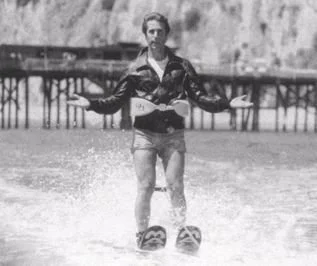
In fact, in another strain of discussion on the message boards, someone brought up the question of how “The Wire” stacks up against the greatest works of literature in the history of human expression. It’s apples and oranges to get into comparing “The Wire” with Richard Wright’s Native Son, or any written work, really. But I think the thing about the show that gets people thinking along these lines is its universality. “The Wire” is about Baltimore, but it could be about any city—or really, any time, or any place. It’s about hypocrisy, cynicism, thirst for power, change, violence, incompetence, passion, apathy, corruption, despair. It’s about life, and the skill with which it’s all wrought places it in the pantheon of artistic achievement for me.]
Episode 58 opens with McNulty briefing an array of police brass, including Rawls and Daniels, as well as Carcetti. Though he is clearly nervous—nearly everything he has to tell them, after all, is a fabrication—he handles himself pretty well. Rawls has a nice little snarky comment: “I mean, I’m all for a little kinky shit now and then, but chewin’ on a homeless fella?” The ensuing laughter seems a little knowing—as if some in the room may actually know that Rawls really is “all for a little kinky shit.” McNulty takes his opportunity to ask for surveillance teams (organized by Carver) to keep an eye on the “persons of interest” questioned at Pier 5, as well as sex offenders.
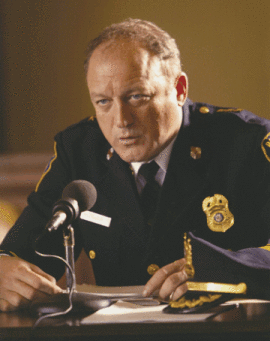
Carcetti asks, “What are we doing to protect people?” and McNulty further sees his opening to ask for undercover cars, since the fleet they have is not being repaired in a timely manner. Carcetti’s response as he leaves the room is, “Go to Avis if you have to … Hertz. I don’t give a shit. People are disappearing—they’re dying, for chrissakes. You do what you have to do.” We get the sense that now Lester is going to finally get the sustained surveillance he needs to crack Marlo’s code.
Rawls closes the meeting after Carcetti’s departure with another of his wry observations: “Bad news, gentlemen, is that we’re actually gonna have to catch this motherfucker. Good news is, the mayor finally needs a police department more than he needs a school system.”
Opening credits roll (I still don’t like Steve Earle’s version of “Way Down in the Hole” and fast-forward through it); tagline is “A lie ain’t a side of the story. It’s just a lie.” – Terry Hanning. Hanning, the homeless Marine that Scott profiled in The Sun, will make an angry return later in the episode.
But the tagline calls to mind one of the great fallacies of journalism: the “both sides” approach. Since news reporting is always supposed to be objective—free from bias or agenda of any kind—it is often said that a reporter must represent “both sides” of an issue equally (presenting pro-life and pro-choice viewpoints in an article about abortion laws, for example). But there are two problems, as I see it, with this approach. First, it assumes that both sides of an issue are equally valid, and that reporters have no right or ability to favor the more reasonable or widely held of the two. (This is the case in articles about the so-called “intelligent design” theory of biology, which is but a baby step beyond creationism. When some religious zealots begin pushing ID on a school district, as they did in nearby Dover School District in York, PA, the attendant coverage is obsessively “fair” in covering both the ID and evolution “sides” of the issue. But evolution is widely accepted and supported by overwhelming evidence, while ID is a trick of fantasy supported by no evidence, but rather by faith. When a reporter, in seeking to be “objective,” affords equal coverage to both evolution and ID, he or she lends undue credence to the weaker of the two positions.) The other problem with the “both sides” approach is that it implicitly assumes that there are only two sides to any given story. This is a short-sighted and parochial point of view that limits the breadth of coverage that can be applied to an issue or event.
Back to the episode, though…we see Duquan wandering around the city throughout the episode inquiring if any positions are open and coming up mostly empty. His first stop is Foot Locker, where he encounters Malik “Poot” Carr (Tray Chaney), who has apparently given up slinging for the black-and-white stripes. “Yeah, I just got tired, you know?” Poot explains of his decision to ultimately leave the game. “Shit got old.” Duquan’s turned down repeatedly throughout the episode until finally he sees a junkman, helps him out, and lands $10—it’s not the best prospect he’ll have, and it certainly doesn’t utilize his brainpower, but it’s keep him out of a drug game for which he’s sorely underequipped, and he seems like a weight has been lifted from his shoulders.
On to McNulty, who is obviously the feature player this season. It’s been nice to see him back at the center of the Wire universe after being a peripheral player last season. He’s meeting with Carver about the surveillance he needs, and when he closes the door conspiratorially, I think at first he’s going to spill everything to a sergeant, which would be a wildly risky move. Carver predicts that it’s going to be “some fucked-up McNulty shit,” but McNulty limits his disclosure, telling Carver only that so much has been allocated to the homeless murders, McNulty can’t use it all. Carver seems uneasy at first, but eventually admires (what he knows of) McNulty’s ability to work the system. When Carver asks about vehicles, McNulty replies, “Departmental account at Enterprise downtown.” We later see some detectives in a new rental car on surveillance, fiddling with the GPS unit and satellite radio like kids in a candy store.
Health Care for the Homeless (an actual organization that’s been around for more than 20 years, as we’d expect from “The Wire,” built as it is on authenticity) has asked the mayor’s office for permission to use city hall’s steps for a candlelight vigil for the homeless victims of the serial killer, and to raise awareness of homelessness in general. The mayor’s office agrees, on one condition: that Hizzoner can then use the event for political gain, giving a speech during the vigil.

Carcetti is running into trouble from “P.G.” (mostly black Prince George’s County) because he has not been meeting with black leaders; now an African American contender or two may be emerging for the Democratic gubernatorial nomination. “I gotta kiss a ring, don’t I?” Carcetti asks Norman, who replies with a grin, “More than a ring, actually.” Later in the episode Carcetti finds himself meeting with Nerese and Clay Davis, damn near begging for their support. “Maurice Dobey? For governor? Of my state?” demands Clay. “Sheeeeeeeeeit. That’s some cynical politics right there.” Clay also laments the “shameful” fact that Dobey was playing the “race card,” a statement whose irony is so thick it scarcely needs comment.
Out by the loading docks of The Sun, Gus is having a smoke with Bill Zorzi and Jeff Price (Todd Scofield). “It’s weird shit, I gotta say,” Zorzi muses to Gus. “Talking to a psychopath like that.” Price quips, “I interviewed Dick Cheney once.”—great line.
Zorzi asks Gus, “Are we hyping this thing, or is Templeton writing it as it lays?” His question derives from a golf term “to play it as it lays,” meaning to hit the ball based on where it lands, and not where you might have liked it to land. He’s asking whether Scott may have been massaging the facts or inciting some of the events, but Gus, despite the reservations we know he has, says it all plays pretty well. “I guess we’ll have homeless stories till December,” Zorzi says. When Price asks why they’ll stop in December, Gus reminds him (surely he’d already know this, having been to journalism school) that Pulitzer Prize submissions are for the calendar year. “Anything a newspaper cares about at Christmas, they give a fuck about by New Year’s,” Gus cynically observes.
Michael is seen meeting with Chris and Snoop; he’s clearly anxious about Omar’s rampage and still reeling from his narrow escape in the confrontation on the stoop in the previous episode. Chris and Snoop are preoccupied by Omar’s actions and even seem a bit worried, as is evidenced by their snippy responses to Michael’s questions. “That nigga gonna get got,” Snoop assures him, but there seems to be more anger than confidence in her voice.
Omar , for his part, is continuing his campaign of upsetting Marlo’s world by raiding his corners, his stash houses, and dropping the drugs down the sewer. He even approaches a surveillance team (sitting in a rented car) and tells them the location of the drugs and money at a corner down the block. “You workin’ a Stanfield corner,” he shouts at one point after chasing away the corner boys and robbing the stash house, “which means you workin’ for a straight-up punk. You feel me?” But no matter how vociferously Omar tries to call out Marlo, it doesn’t seem likely that Marlo will respond.
While Omar walks through a vacant lot, we see (but he hardly seems to notice) a group of boys apparently torturing an alley cat. As the boys see Omar, they all scatter—all except Kenard (Thuliso Dingwall), who gives Omar the stinkeye as he continues to pour an unidentified substance on the yowling cat. After last episode, which Kenard was clearly unimpressed with the mythical Omar, this seems like further foreshadowing that Kenard may go after Omar.
Back in the Homicide unit, Bunk prepares paperwork for DNA analysis of the murder of Michael’s father and presents it to McNulty for his signature—he’s finally going to avail himself of the glut of resources being thrown at a nonexistent case. He’s clearly not happy he has to resort to this, which is clear when McNulty grins sheepishly—but triumphantly—up at him. “Just sign the motherfucker and shut the fuck up,” he says. Soon he’s down to the medical examiner’s office asking for Lowenthal and presenting him with the order for DNA analysis. Near the end of the later scene, Bunk’s phone rings, and the ringtone is “You’ll Never Find (Another Love Like Mine)” by Lou Rawls, whose voice is actually rather similar to Bunk’s. I love these revealing little touches on “The Wire.”
In the next scene, we see Omar buying a pack of Newports (“soft pack”) at a Korean-run grocery store. The pedestrian nature of the scene gives it a sense of foreboding—why else would we need to watch him buy cigarettes? And then it happens: Kenard comes in (obviously dismissed with barely a glance by Omar, who only sees a little kid) and drops Omar with one shot to the back of the head. Kenard, who seems shaken by what he’s done, drops the gun and flees at the Korean shopkeeper screams desperately. Omar is gone. (And the internet rumors, based on an apparently leaked video clip, were right in both the timing and manner of his death.)
I gasped and froze when Omar was shot—it just didn’t seem possible. As I digest it, I wonder if he had to die in the service of the story (and we know that “The Wire” and David Simon have always elevated story over character, hence the earlier deaths of popular characters like D’Angelo and Stringer). His reckless pursuit of vengeance against Marlo certainly cried out for repercussions. Flushing drugs down the toilet and dropping them down the sewer is not going to affect Marlo; he controls the flow of drugs to all of Baltimore now. And Marlo is too smart and well-insulated to allow himself to be drawn down into a street battle with Omar. But I so enjoyed him driving off into the sunset with Reynaldo last season. Perhaps he could have hobbled into the path of Lester or McNulty and helped bring Marlo down (which he still might, from the grave). As much as I am devastated by Omar’s death, I can see why it happened—and why it happened the way it did.
In terms of upsetting scenes in the history of “The Wire,” I would put it just below Wallace’s murder at the end of the first season. Omar, after all, had dodged this fate with increasing improbability throughout the series; Wallace was a relative innocent, a child, and it was one of the first murders of a character on “The Wire” we had gotten to know well.
After Bunk gets the news of Omar’s death, we head to the paper’s conference room and a meeting between Terry Hanning (the homeless Marine who had been the subject of Scott’s article) and Scott, moderated by Gus. Hanning insists that Templeton invented additional details about a firefight surrounding the circumstances of Hanning’s story in Fallujah. Scott, who is getting quite agitated, asks to be permitted to tell his side of the story. “A lie ain’t a side of the story,” Hanning corrects him, providing the show’s tagline. “It’s just a lie.” Scott tries to mollify Hanning by saying, “I believe that you believe,” but his attempt at conciliation is nakedly patronizing. “I wrote what Mr. Hanning told me,” Scott tells Gus.
Outside the meeting room, Gus tells Scott to call Hanning’s Marine unit, reach out to the guys he served with and see what can be confirmed. “If it went down the way you said, we’ll let it be,” meaning his original piece will stand. “But if not, we’ll chalk it up as a misunderstanding.” Despite his suspicions, Gus is admirably protecting his reporter. But he’s also protecting his own ass, and the collective ass of The Sun: either way, the paper will print a correction. Scott is incredulous.
Bunk, who has been summoned to the crime scene by Norris and Crutchfield because Bunk “knew this mope,” is intrigued by the killing. He seems to well up as he looks at Omar’s body, and when watching this I was reminded of the two really powerful scenes Omar and Bunk shared in previous seasons. Bunk has to be feeling like everything is changing—two fixtures of the game, Prop Joe and Omar, have now died, his best friend Jimmy has gone apeshit and made up a serial killer, and even the level-headed Lester has gotten himself involved. According to the Korean shopkeeper, Omar was shot by a “short little fella with a big gun.” Bunk pulls a list out of Omar’s hand—why hadn’t it been taken by the area hoppers who raided his body looking for souvenirs?—of members of Marlo’s crew. Each name—Marlo, Chris, Monk, Cheese, Snoop, O-Dog, Cherry, and Vincent—was accompanied by an intersection. “On the hunt again, were you,” Bunk mutters.
The next scene illustrates how much can be accomplished with the right equipment and manpower: Sydnor gives instructions to a group of eight or nine police, each of whom will be assigned (some in pairs) to various members of Marlo’s crew.
Marlo summons Chris and Snoop to a meet, and when the two arrive, Marlo is all smiles. “I thought you were going to tell me,” he says. Omar is “bagged up.” Chris and Snoop, for their part, are stunned.
Gus is hard at work line editing Fletch’s homeless article (“in at 30 inches”). On his computer is taped a headline: “Many are Trapped for Hours in Darkness and Confusion.” It’s a headline that was used for an article about the 1993 World Trade Center bombing, but it’s unclear why he has the headline taped there; perhaps it’s to remember an event he covered when he was a reporter, and perhaps it’s because it describes the climate of the newsroom on many days. Fletch talks to Gus about his “tour guide” under the bridge, who is named Reginald Cousins (and nicknamed “Bubs”). It’s strange to know his full name, but it is hopefully a sign of good things to come for him. Fletch feels as though Bubs is the story, and he wants to do a profile on him. This has the potential to make Fletch’s emerging career and at the same time allow Bubs to purge some of his guilt and shame about Sherrod’s death and move on with his life.
Gus is wrapping up the Metro Digest, an area in the Metro section in which several briefs (blurbs of three or four paragraphs each) appear, usually focusing on mayhem (fires, traffic accidents, murders, robberies, etc.). He calls to Dave Ettlin (a former Sun reporter playing himself, apparently) that “we’re shy one brief in the Metro Digest. Four paragraphs should do it.” Due to space restrictions, the murder of a 34-year-old black male in a convenience store will be scratched. Despite being the talk of the Black community—and despite its importance to city and us, the viewers—Omar’s death will likely never merit even a passing mention in The Sun.
Kima and McNulty have traveled to Quantico to discuss the personality profile on their serial killer. On the way, they talk about their respective relationships, and Kima admits that it was her own fault that the relationship died, not Cheryl’s. Kima also says she’s got “too much dawg” in her to settle down!
The scene in which the FBI agent reviews his profile is a classic. The serial killer is a white male in his late 20s to late 30s who “has never been to college, but feels nonetheless superior to those with advanced education.” He is “likely employed by a bureaucratic entity” like civil or public service, has a problem with authority, and harbors a “deep-seated resentment of those who he feels have impeded his progress professionally.” Finally, he has a problem developing lasting relationships and is probably a high-functioning alcoholic. Jimmy is openly squirming during this litany, since it actually describes him with cutting precision. As they’re leaving, Kima asks McNulty what he thinks of the profile. “They’re in the ballpark,” he says, unnerved.
Speaking of McNulty’s character flaws, he comes home to a note from Beadie, who has taken the kids and left him. Her note reads: “Jimmy – One possible future. Be back tomorrow or the next day. Or not. Think about it. B.” He’s upset by this—but could he reasonably be surprised? His own out-of-control actions, he obfuscations, his absences have virtually guaranteed this result.
Dismayed at the relative ease with which Clay Davis slipped the charges brought and prosecuted by Bond, Lester takes the case to the FBI hoping for a Federal prosecution. He runs into the FBI special prosecutor who’d had a run-in with Carcetti earlier in the season, who says, “After you city sons of bitches have managed in a single week to transform Clay Fucking Davis into Martin Luther King Jr., you now come to me with this?” A “whiter” jury in a Federal case would likely have been less readily swayed by Clay’s playing of the “race card,” but his answer in an unequivocal no. Lester will have to “come at” Clay another way.
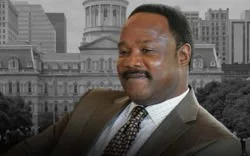
Speaking of coming at things a different way, Bunk’s DNA analysis is back—and Chris Partlow’s blood is all over the crime scene in the killing of Michael’s stepfather. Bunk shares this news with McNulty and also gives him the paper listing Marlo’s people found on Omar. Could Omar actually end of helping to catch Marlo and his crew posthumously? In the coming attractions, Marlo appears to be in the “box,” so it could be so. (I’m staying away from spoilers and rumors on Ain’t It Cool News and other online locations that purport to have definitive information about the last two episodes. This is the last time I’m ever going to have the opportunity to be surprised, shocked, and moved by new “Wire” episodes, and I’m going to leave that potential intact.)
Kima has gathered information about sex offenders and is about to review their case files and begin canvassing—work that will take her away from her own triple murder for days. McNulty, who cannot bear to see this happen, takes her into the “box” and tells her about what he’s done. “It ain’t right,” she tells him. “You can’t do this,” she says several times. She is clearly not fine with any of this. Coupled with a scene later when she chastises Lester and Sydnor for going along with McNulty’s fabrication, I’m beginning to wonder if her conscience may prod her to reveal this to someone.
On the flip side, as Sydnor orchestrates his far-flung surveillance, he has to consult a Baltimore city atlas (or is it southern Maryland, since it includes places outside Baltimore?). While looking up a street, he breaks the code Marlo and his crew have been using to communicate. On the clock faces, the second hands represent the page of the map (for example, 35 seconds is the east side, and indicates that Cheese will be involved in the meet), while the hands correspond to the points on the grid where the meet will take place.
At the Health Care for the Homeless vigil, Carcetti gives an incendiary speech about the scourge of homelessness and how it demands our attention. As a result of the current Republican gubernatorial administration and its policies, he asserts, “more and more of our fellow citizens found themselves living life at the broken edges, in the street.” The connection is clear, and wholly benefits his gubernatorial campaign: the current governor doesn’t care about ordinary folks. “Well I say that this is not only tragic, it is unforgivable,” he adds to thundering applause as we see Scott Templeton taking notes. The homeless, Carcetti insists, will no longer be invisible.
Lester sees Clay in a bar-restaurant and decides to blackmail the senator with the threat of a Federal probe Lester knows is never going to materialize. It seems Lester is hoping Clay will either provide further information that will enable Lester to bring him down, or—more likely—that Clay will lead Lester “up the chain” to see who is really behind all the dirty dealings.
Meanwhile at the newsroom, Scott has filed his piece covering the homeless vigil and Gus is discussing Scott’s lead with Metro editor Steve Luxenberg (Robert Poletick). Both Gus and Steve agree that Scott’s anecdotal lead is inappropriate, and Gus calls Scott over to tell him that he’s “spiking” (deleting, reworking completely) the lead because it contains anecdotal material attributed to an anonymous source. At such an event, where the homeless in attendance have come voluntarily and could reasonably expect media coverage, Gus argues that there should have been plenty of homeless individuals who would have allowed The Sun to use their names. But “it’s a perfect quote,” Scott whines. “Better than I could ask for, and that’s my concern at this point,” Gus replies.
When an editor is seeing perfect quotes over and over—polished, insightful, and succinct—from anonymous sources, an editor has every good reason to worry. The vast majority of real quotes a reporter gets from real people are in some way inarticulate, meandering, or coarse, but Scott’s a spot-on every time, fitting wonderfully into the narrative strain he’s created.
Scott angrily replies, “To hell with you if you think I made it up.” Gus, who remains calm and eminently reasonable throughout the exchange, states, “We have a standard that we follow here. And I’m gonna follow it.” Scott stomps back to his desk and punches his desk chair, which attracts the attention of the fawning Managing Editor, Thomas Klebanow (David Costabile). Soon Klebanow is heading over to Gus to demand answers: “You’re retopping Scott’s vigil piece?” he asks, referring to Gus’ planned replacement of Scott’s lead. “Anonymous attribution in a public setting – there’s no need for it,” Gus says, as if he’s reading out of The Sun’s style manual. “We have a sourcing policy here and I know it, and I do not feel comfortable bending the rules in this instance,” he informs a silenced Klebanow as Gus gathers his things and leaves for the evening. Those in the newsroom who resent Scott’s hot-shot style, the favoritism shown by the editors toward him, and the suspicious elements of his work, are impressed with Gus’s outburst. The matter is unresolved as the scene ends, and the viewer is left to assume that once again, Klebanow will move to support Scott and reinstate the anecdotal lead.
At Beadie’s house, Beadie finally comes home and informs McNulty on her doorstep that next time he’s out, because after all it’s her house. She asks him who is going to be at his wake—surely not the buddies he drinks with or the women he sleeps with, since they don’t know his last name. It’s family that’s most important, she says. She’s clearly gotten to him because he tries feebly to explain himself, then blurts out that he made up the homeless serial killer. His meandering explanation of this indefensible act mentions his uncontrollable anger, the good it’s doing in diverting resources to other departments, etc. “How dare you?” asks Beadie. “This is my life too.” McNulty stammers, “You start to tell the story, you think you’re the hero; and then when you get done talking, you—” and he’s cut off by Beadie, who has gone inside and slammed the door.
The show’s final scene is a bit cryptic, but I think what happened is this: someone in the morgue notices that the ID tags on Omar’s body and that of an older white man who died have been mixed up, and corrects the error. Omar Little’s body bag is zipped up, and that chapter of “Wire” history is closed, or seemingly so.
It may have been deliberate, but when Beadie asked McNulty who would come to his wake, that question lingered with me when I was watching Omar be zipped into the body bag in the morgue. Who will come to his funeral? Butchie and Donnie are dead, having been killed by Marlo’s crew. Reynaldo? It’s not clear where he is. Who else does he have? I’d say it’s a sure bet that Bunk will be there, and it’s bound to be a poignant scene.
The previews for Episode 59 look pretty intense, and everything’s coming to a head. Does Michael commit a murder? Is that Marlo in the box?
Speaking of speculation—which I’ll engage in more fully before the final episode—I recall hearing at some point during production that there was a police funeral near the end of the season, perhaps in the last episode. (If anyone else recalls hearing that, let me know.) I’ve been wondering who that could be—McNulty, particularly given what Beadie said to him about his wake? Bunk, brought down somehow mistakenly by McNulty’s bullshit case, and McNulty has to live with that? Kima, same thing?
I can’t wait for the final two episodes…
END OF EPISODE 58 NOTES
Monsoon's "The Wire" notes and analysis for Episode 57
“The Wire” notes and analysis – episode 57, “Took”
Please note that this episode is available only at HBO On Demand and has not yet aired; it will premiere on HBO on Sunday, February 16th. Also be forewarned that as “The Wire” contains adult language and themes, my post will reflect these elements; reader discretion is advised.
Finally, this post contains spoilers about episode 57; please do not read further if you have not yet seen it and do not want details about this episode.
S
P
O
I
L
E
R
S
P
A
C
E
This episode (Tagline: “They don’t teach it in law school.” – Pearlman) was directed ably by Dominic West and features a few surprises and even a rare “Wire” throwaway cameo, but mainly bridges previous and future episodes, building suspense for the final three installments of the series.
Episode 57 opens with Lester connecting some wires and whispering conspiratorially with McNulty. It soon becomes clear that McNulty, with the help of voice modulation equipment, is poised to place his first call to Scott Templeton at The Sun from the “serial killer.” McNulty delivers a rambling statement (he’s been admonished by Lester to “stick to the script”; I can only imagine the twisted fun the two of them had coming up with it) about biting and the like to a flummoxed Scott, who bumbles through the office in search of witnesses and guidance. (After all, this is the first actual call he’s gotten from the “killer.”) A picture message is then sent through of the old homeless man (his real name is Lawrence Butler, I believe), with a red ribbon tied around his wrist.
In the ensuing meeting, Scott is genuinely shaken by the call he’s received—real life tends to be jarring when it intrudes upon our carefully crafted and maintained fantasies—as he is briefed on what to do next. “Oh Christ, that was … that was him,” he stammers, and hastily adds, “again.”
Meantime out by Pier 5, Sydnor stands with the cell phone that actually placed the call, rerouted through Lester’s sham wiretap in a manner I do not even fully comprehend. Soon police have converged on the area after the signal is traced, confiscated cell phones and demanding cooperation of folks enjoying a leisurely afternoon on the waterfront. The camera pans back to reveal that a helicopter and a boat have also joined the hunt for the killer. It’s a brilliant shot—unusual for “The Wire,” which typically focuses on the minutae and leaves us to construct the broader picture in our own heads—and underscores the scope of the fraud that’s been perpetrated by McNulty. The media, the mayor’s office, the police have all been taken—or, in the colloquial construction of the episode’s title, “took”—by an elaborate ruse that’s by now spiraling out of control.
A great McNulty moment happens when Landsman and the detective who was present when the call came through, along with some six or seven others, are having an animated discussion about what to do next. A supposedly unknowing McNulty looks wide-eyed at the flurry of activity and asks, “Hey—what’d I miss?”
The Clay Davis fiasco turns in another brilliant bit of guest casting when Clay goes to see Billy Murphy, the prominent and controversial Baltimore criminal defense attorney who has been referred to as “Johnny Cochran east” by admirers and detractors. He’s well-known for successfully defending boxing promoter Don King in a Federal fraud trial and winning multimillion-dollar verdicts for (frequently African American) clients suing the likes of Wachovia. More recently he sued the city of Baltimore on behalf of an African American man who was paralyzed while in police custody when his head was slammed into a wall, winning the largest police brutality verdict—$44 million—in American history.
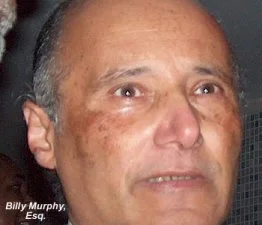
In the “Wire” universe, Clay is begging Murphy to represent him. Murphy insists on a $200K fee and, well knowing his new client’s slippery reputation, warns Clay, “Don’t fuck me.” Clay opines that for all the front-page coverage Murphy’s firm will get should make him jump at the chance to represent Clay: “For all that profile, sheeeit partner, you should be payin’ me.”
Back in the conference room of the newspaper, McNulty is there again, this time meeting with Whiting, Klebanow, Gus, the publisher, and Scott Templeton. McNulty asks Scott, “Was it the same voice as before?” Scott replies, “Oh, right – yeah. No, actually. I mean yeah, it was the same, but this time I noticed he had a real thick Balmore accent—real thick.” Gus looks sidelong at Scott, seeming to note how odd it is that Scott, who was relatively blasé about his first contact with the killer, seems shaken to his core by this, supposedly the second contact. Klebanow wants to run the photo sent by the “killer,” which plays right into McNulty’s game. Before he leaves, Jimmy tries to reassure Scott: “I wouldn’t worry—he’s just using you. He needs you.” Scott says, “I kinda resent that, actually.” McNulty takes a subtle, winking jab at the cookery in which he knows the self-aggrandizing Scott has been engaging: “I don’t know – it’s workin’ out pretty well for both of you, right?”
Omar makes several appearances in this episode, some with his crutch, and some without. In his first “appearance,” he doesn’t actually appear, but two of Marlo’s soldiers stumble upon Manny and Vince in the stash house. Manny seems to have been killed, but Vince (I think that was the name I heard; I think he’s from the rims shop) was merely tied up and given another message to relay to Marlo: That Omar will not rest until he successfully calls out Marlo to the streets. Omar also flushes lots of the product (was it four kilos?) down the toilet to punctuate the notion that it’s not about money anymore.
Carcetti is busy making fundraising calls for his gubernatorial campaign and seems to be raising record cash. Soon Norman rains on his parade by informing him of the call that came in to The Sun from the purported serial killer; Carcetti springs into action, determined not to let the opportunity embodied in this story pass him by.
Judge Phelan authorizes the additional computers so picture messages can be tapped, and so McNulty’s charade rolls on.
As the mayor gets involved, it quickly becomes clear that it’s a full “red ball”—Balwmer police lingo for a top priority case that has everyone available working on it. Bunk refuses Landsman’s order to go meet with Daniels about the case, and his rage about McNulty’s shenanigans is close to boiling, as it does a bit toward his boss. I’m beginning to see the possibility of Bunk reaching a point at which he must “blow the whistle” on what Jimmy and Lester are doing. Later, while Lester and McNulty are discussing the case and Bunk learns that Kima has again been pulled off her triple murder, he hisses, “Shame on y’all, I mean it.”
The ensuing scenes are fascinating in the way that they are intercut: Daniels addresses 15-20 Homicide detectives and other officers while Gus Haynes addresses some 12 to 15 reporters in the newsroom. Gus says that Alma will stay with the investigation and that Scott should not “go home before checking for updates before the e-dot and double-dot editions.” (These are the next-to-last and final editions, as noted in an earlier post discussing Episode 51.) In additon to Alma and Scott, Mike Olesker will be writing a column on the case, Fletch will be in charge of homeless react (reaction quotes and reporting from the homeless regarding the case) as well as “interviewing advocates and experts talking up the problem.” Melody is to get “on the phone with the white coats at Clifton T. Perkins or some place” for a sidebar about “why a wack job would kill people” and then talk to a reporter about it. Perkins is a mental hospital outside Baltimore. A sidebar is a smaller article that accompanies a larger piece and explains some aspect of the topic, providing context or elaboration where needed. For example, an article about a man who was killed after being stung 100 times by bees might well feature a sidebar about beesting allergies, how common they are, and how they work.
As for Scott, Gus acknowledges that he’s “in the middle of this” because the killer is contacting him, and Alma will be interviewing Scott for a separate piece. As such, Scott’s article will necessarily be in the first person (i.e., using words like “I,” “me,” and “my” that would typically be absent from a straight news piece). Gus concludes by emphasizing that the reporters “need to be on the street” and that doing reporting by phone “won’t cut it.” “For once I am assured that they resources we need to work this story will be there for us. So let’s surround this mess and report the hell out of it.” Scott remarks to Alma as they scramble to work, “This one’s got legs.”
Daniels in the squad room is echoing what Gus says in a typically self-conscious “Wire”-ish attempt at parallelism: they need to be out on the streets, canvassing; McNulty will be heading things up and choosing staff; keep the media as part of the equation; and investigate thoroughly to make sure it’s not a hoax (at which point McNulty looks around nervously). He ends with a statement that, according to the mayor, there will be “no overtime restrictions or staffing limits on this.” Kima remarks to McNulty as they’re dismissed, “Police work – whaddaya know?” The key here with both settings is that this single case is galvanizing the institutions that had been falling apart, cutting back, and making excuses. The dramatic irony (which occurs in the theater when the audience has information certain characters do not) is that this is all being brought about thanks to the prevarications and manipulations of two men, primarily: Jimmy McNulty and Scott Templeton.
Duquan has seemingly given up trying to fit in on the corners and is scouring the classified section of The Sun for jobs, only half-jokingly. Carver swings by to pick up Michael Lee, who is delivered to Bunk for questioning in the murder of Michael’s stepfather. Bunk ushers Michael in to the first interrogation room and shows him photos of his stepfather’s badly beaten face, which we know was carried out in a blind rage by Chris (with Snoop looking on, mystified). Michael is stoic, though, and refuses to give Bunk anything useful.
Next we see Kima arriving at the home of one of the “murder” victims, outisde of which broadcast media outlets are set up. “Vultures,” she mutters. Inside, Kima conducts one of many interviews with the parents of the “murder” victims. They had let their son go because of his persistent problems, but were horrified to learn what had happened to him. Later in the program, Kima returns to the office exhausted and demoralized after having completed interviews with all of the families of the “murdered” homeless men. As she describes the turmoil these families are undergoing, these parents who have often been estranged from their troubled children, McNulty’s face reveals that he realizes what he’s done—despite all the “good” that has come from his charade, like fully funded policing, he’s inflicted needless harm on families who otherwise would have learned the truth about their loved ones’ deaths. His actions, though unintentional, were careless, and the burden of that is clearly beginning to weigh heavily on him. Based on the previews of Episode 58, it seems that McNulty may ultimately be forced to bring Kima in on his charade—I wonder how Kima will react to all that?
Fletch (full name Mike Fletcher, played by Brandon Young) is reviewing his piece with Gus and acknowledges that there’s a formulaic quality to it: “anecdotal lead, nut graph, desk quote.” An anecdotal lead is often used in a complex feature article as a way to lure the reader in. It shares a brief story, personalizing the issue, then gets into the “meat” of the story by presenting the nut graph or a sentence or two containing the main idea. In a “hard news” piece the nut graph and lead are often one and the same, but anecdotal leads are used as alternatives to this formula. I’m not sure about “desk quote”; I might have heard him wrong…
Gus urges Fletch, a young, eager reporter he has clearly taken under his wing, to spend time with his topic without always looking for quotes or anecdotes. “Sometimes the weakest stuff in a story is the shit with quotation marks around it.” He wants Fletch to learn to “tell the story in moments” and get to the essence of the subject. “I’m not interested in what can be quoted … I’m interested in what feels true.” Meanwhile Alma’s produced 30 column-inches and Scott, who tells Gus he’ll have his copy ready in five mintes, is warned of the approaching first-edition deadline and adjusts the time frame to three. The newsroom is humming, people are working on a story with “legs,” and Gus is clearly invigorated by all this activity.
Soon, though, Gus seems deflated by the extent to which Scott seems intent on placing himself at the center of the story—and the extent to which Klebanow and Whiting seem to be congenitally unable to find fault with anything Scott turns in. “First person is one thing,” Gus concedes as he scans Templeton’s copy, but he’s bothered by Scott’s implication that he’s “sharing the darkest corners with [the homeless].” Whiting corrects Gus that “he’s writing more as an essayist.” This signals a dangerous blurring of the lines in journalism—is he a reporter, a columnist, a memoirist, or what? Though it hasn’t been mentioned, sales of The Sun have to be experiencing a significant jump since the homeless serial killer story broke, and Whiting giddily allows his star reporter—now nationally known—to shine as brightly as he cares to.
“We’ve got a column from Olesker,” Gus insists, that will be on the front page of the Metro section. “It’s pretty powerful without being purple.” Purple prose is writing that is overly sentimental or manipulative in its use of pathos or flowery language. The implied contrast he’s drawing here is that Scott’s piece is, in fact, purple. “But this stuff that Scott’s written … makes it sound like he’s been living with the homeless for weeks,” when in reality he spent an evening talking to them, and an afternoon at a soup kitchen, Gus notes. “It ain’t exactly Studs Terkel,” he remarks dryly. Studs Terkel, of course, is the broadcaster and folk historian who is most readily associated with his work in compiling massive, sprawling oral histories by exhaustively interviewing people who had experienced the Great Depression.
Gus’s problem with Scott’s article is that the reporter is too much in it, implying that he’s been pounding the volatile streets of Baltimore mining for these stories. “This is my city,” Gus insists, “not Beirut,” referring to the war-torn capital of Lebanon. Klebanow says he “respects” Gus’s opinions—when your boss tells you that, he’s about to overrule you—and says he’ll take personal responsibility for editing it. He’s going to run it “as is.”
Later, when Gus sees Scott’s piece in the paper, he is utterly disaffected. The article, featured on the front page above the fold, is headlined “To walk among them…” and has a subhead of “The street odyssey of the reporter who has provoked the rage of a serial killer.” It’s accompanied by a picture of Scott. The phrasing here—“among them”—is particularly demeaning, insinuating that “we” (the comfortable readers of The Sun) and “them” (the homeless) might as well be two different species. Gus tosses the paper in the trash.
Next we see Daniels and Pearlman at home; Rhonda is going over the Clay Davis case file to make sure she can support the state’s attorney, Rupert Bond (Dion Graham) in court. It’s a brief scene, but it’s nice to see that the two of them are still together, and apparently happy; it also shows us the extent to which Rhonda takes here job home with her—literally.
At the trial, it’s evident from the start that it’s going to be a circus. Clay steps out of his car with Billy Murphy in tow. Bill Zorzi from The Sun is covering the trial and spots a book in Clay’s hand. He asks, “What are you reading, Senator?” and touches off a response that I think is one of the funniest scenes ever on the show. Clay, who is conspicuously holding the book Prometheus Bound (that’s pronounced pro-ME-thee-us) written by Greek dramatist Aeschylus (that’s ESS-ke-lus) about 2500 years ago, replies that he’s reading Promathis Bound (as he pronounces it) and explains, “This book by Asillyus is about a simple man horrifically punished by the powers that be for the terrible crime of trying to bring light to the common people. I cannot tell you how much consolation I find in these slim pages.” Clay finally pronounces the moral of the tale to be—as if he’s quoting directly from the text—“No good deed goes unpunished.” Clearly this would depend on the perspective, and an oversimplification of the moral here. (This martyrish statement, by the way, is attributed to twentieth-century politician and socialite Clare Booth Luce.) Zorzi looks on, amused.
Prometheus was a titan, and an exceedingly clever deity who, in Aeschylus’ version of the tale, stole fire from the gods and gave it to man. Zeus, who had forbidden that humans be given fire, chained Prometheus to the rocks as a result of what the titan had done. Though he knew well what he was doing was a transgression, he argues strongly that this punishment is excessive considering the crime. The implication here is clear: Clay Davis was simply taking money from the wealthy and distributing it to his people, and he’s being persecuted for it. This line of thinking clearly informed their defense as well.
McNulty is anxiously talking with Lester in the illegal wiretap room again, fretting about how unwieldy the case has become. Other homicide detectives have gotten wind that McNulty’s case has brought in a windfall of manpower, resources, and overtime—more than he could possibly use for the homeless case. At first, Jimmy is pleased to share the wealth and help detectives bring in real cases; soon, though, the demands wear on him and he begins to resent it. “This thing’s bigger’n I ever thought it would be,” McNulty laments, then implores Lester, “Get me out of this, Lester. As fast as you can.” The first message Lester intercepts from Marlo’s phone is a picture of an analog clock set to 5:50. He sends Sydnor out to observe Monk’s movements at that time, but comes up with nothing. Later in Episode 57, Lester is seen with an array of pictures taken from Marlo’s cell—all analog clocks set to varying times. Lester is determined to crack the code, but the image symbolically stresses the fact that the little ruse he and McNulty have been enacting is quickly running out of time—and they may be running out of luck.
Back to Fletch, who is visiting the soup kitchen where Bubs works, just as Scott did. Bubs strikes up a conversation with the young reporter and seems genuinely interested in helping him. It was thrilling when he introduced himself to Fletch—like two pieces of the puzzle just fit together, and the outcome can only be good. After Bubs takes Fletch to talk with some homeless folks he knows, Fletch offers to pay Bubs for his help, but Bubs refuses. “It ain’t about that. Just … write it like it feels.” Meant to echo Gus’s advice (“what feels true”), Bubs’ guidance here is both gentle and prodding, and the viewer is left with a strong sense of hope that Fletch is becoming the kind of reporter the entire community can be proud of.
At a local bar, we’re treated to a cameo by Munch (Richard Belzer), who has now played the character in eight different television series since originating on “Homicide: Life on the Street.” As amusing as it was to see Munch chastising the bartender and talking about how he used to own a bar, it also kind of shatters the “Wire” illusion: the show is such a hermetic little universe that a throwaway cameo endangers its mystique.
The real reason for the scene is Gus’s chat with Mello (he’s Carver’s boss, Lieutenant Dennis Mello, played by the “real” Jay Landsman) as Gus begins to unravel Scott’s lies.
Toward the end of the episode, Omar sends another series of messages, this time stronger. First he limps up to Savino (Chris Clanton) who is one of Marlo’s “muscle,” and has a brief but vital conversation with him. Savino, whom Omar recalls from Savino’s days with the Barksdale organization, assures Omar that he wasn’t there when Butchie was killed, but Omar asks him what he would have done if he had been there. When he hesitates, Omar—who had been simply planning to send another message for Marlo—decides to pop Savino. It seems Omar is becoming more reckless in “calling out” Marlo.
In his final Episode 57 scene, Omar hobbles (this time using a crutch) up to Michael’s corner and plants his gun in the nape of Michael’s neck. It’s striking that Omar still induces fear even when clearly debilitated by a severe injury from his fall. His message this time is, “I’ma drop all his muscle” and that he wants to confront Marlo one-on-one, which Marlo is unlikely to allow to happen. (It’s also worth noting that “Ayo,” a Baltimore house tune by Bossman that appears on the “Wire” soundtrack CD, plays in the background in this scene.) When Omar leaves, Michael is relieved that Omar did not recognize him from the apartment shootout; otherwise, Michael may have been his next victim. Kennard, the little, foul-mouthed hopper, though, is unimpressed by the mythical Omar. “That’s Omar?” he asks incredulously (but quietly) as Omar approaches Michael. As Omar walks away, Kennard derisively observes to the others—still clearly shaken by Omar’s visit—that Omar is “gimpy as a mu’fucker.”
But the real surprise of the show, and one I didn’t necessarily see coming, is the trial of Clay Davis. I should have known something was awry when Lester testified about Clay’s transactions on the stand but Murphy declined to cross-examine him. When Clay gets on the stand, he is a virtuoso, portraying himself as a community hero, a man of the people. The money he gets from a variety of sources goes to individuals in the community who need help with everyday expenses, he insists, and it’s impossible to account accurately for all that. He says that when he leaves his office with cash, by the time he’s made it through the neighborhoods he represents, his pockets are empty (which he illustrates by standing up and turning them inside out, causing a minor uproar). At the end of his slippery testimony, Clay receives applause from those observing the trial in the courtroom, and is quickly acquitted by the jury on all charges. As a broadly smiling Clay emerges from the courthouse to address his loving supporters, Pearlman and Bond stand to the side, agape. Bond asks, shellshocked, “What the fuck just happened?” Pearlman’s reply—for she seems far more savvy than he, but still surprised—provides the show’s tagline: “Whatever it was, they don’t teach it in law school.”
The very next scene is Gus in the newsroom gleefully sending the article he’s copyedited—presumably Zorzi’s—to the desk: “45 inches of Clay Davis playing not just the race card but the whole deck, coming atcha!” Gus sees things for what the truly are and seems less and less able to be surprised. A female reporter (or is she a copyeditor?) comes by his desk to commiserate on Scott’s above-the-fold article. Gus laments, “I understand the hype, but I just can’t trust the guy” and she wonders if Scott is manipulating his information to “make a story better than it ought to be.” Gus can’t shake the feeling that Scott’s article about the African American kid sitting outside Camden Yards in a wheelchair just doesn’t add up—he’s a fan of baseball, not basketball; he only gave a nickname. But Gus insists, and I believe, that “I don’t want to call another reporter a liar. … I really don’t.” Gus still views himself as a reporter and has the utmost loyalty for those who ply his trade, even when he suspects they’re unethical. When considering the previews of Episode 58, in which Scott’s article about the homeless former Marine seems to fall under scrutiny, it seems obvious that things are heating up for the serial fabricator.
This frenetically paced episode concludes with a touching and reflective scene in which Kima holds Elijah, who can’t sleep. “Let’s say goodnight,” she says as the look out the window. The lazy litany begins much as Margaret Wise Brown’s classic children’s book, but quickly takes a turn that makes it both more poignant and more authentic:
Goodnight moon…
Goodnight stars…
[a squad car, sirens blazing, drives by]
Goodnight po-pos…
Goodnight fiends…
Goodnight hoppers…
Goodnight hustlers…
Goodnight scammers…
Goodnight to everybody…
Goodnight to one and all…
END OF EPISODE 57 NOTES