
Monsoon Martin's Desert Island Discs, Vol. 2
Well, I’m back to share my top tier Desert Island Discs with you (the ten absolutely essential albums I’d need to have with me in the case of sudden stranding).To remind you: I limited myself to studio albums, eliminating live recordings, greatest hits packages, and the like.
Before I reveal the top tier, though, we have a winner in the contest announced in the last posting!There were several good entries, but one reader in particular emerged well ahead of the pack.This reader correctly guessed two albums in the list below—and three of the other guesses named the correct artist, but the wrong album. Impressive, Megan King! You have now earned the right to select one CD to receive free from among my 20 Desert Island Discs.
[I can’t resist listing the albums that almost made the cut for my 20 D.I.D.s: The Who, Who’s Next; Cream, Disraeli Gears; Stevie Wonder, Innervisions; Miles Davis, Kind of Blue; Sly & the Family Stone, A Whole New Thing.]
Alright, without further ado...
John Coltrane – Africa/Brass, Volumes 1 and 2 (1961)
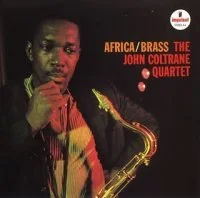
Coltrane’s first release for the Impulse! label is also the most searing and accomplished of his career.For the album, Coltrane’s backing quartet—which included McCoy Tyner (piano), Elvin Jones (percussion), Reggie Workman (bass), and Art Davis (bass)—was joined by a fifteen-piece brass section that included such luminaries as trumpeter Freddie Hubbard, trombonist Britt Woodman, and Eric Dolphy on the reeds.The compositions were arranged by Tyner and Dolphy, which contributes to the staccato (Tyner) and avant-garde (Dolphy) quality of the music.
In the liner notes for Africa/Brass (Volume 2 was released posthumously, and included alternate takes and an unreleased track), Dom Cerulli wrote, “John Coltrane is a quiet, powerfully-built young man who plays tenor saxophone quite unlike anyone in all of jazz.His style has been described as ‘sheets of sound’ or as ‘flurries of melody.’But, despite the accuracy, or lack of accuracy, of such descriptions, it is a fact that Coltrane’s style is wholly original and of growing influence among new tenor players.”
The notes go on to describe Coltrane as a restless artist, always seeking to expand his musical palette and explore his influences—Cerulli remarks that Coltrane had immersed himself in the rhythmic character of Africa and had been studying folk musical traditions as well, and on Africa/Brass this is wholly evident.Two of the cuts are Coltrane/Tyner arrangements of traditional songs: “Greensleeves” and the elaborated Black Code spiritual, “Song of the Underground Railroad.”In the first, Coltrane uses a languid time signature to create plenty of space for the saxes and piano to open up; the latter becomes a propulsive hard-bop masterpiece, with goosebump-inducing brass swells and interplay between Tyner and Coltrane.
The Coltrane originals in the Africa/Brass sessions are “Blues Minor” and “Africa.”The former is solid but unremarkable in the Coltrane canon, but the latter is breathtaking.In “Africa,” John Coltrane takes full advantage of everything before him in the studio—the brass section, the work of Tyner in adapting his piano voicings for the orchestra, Dolphy’s artistry, and his own fearless improvisation, not to mention his own tireless investigation of African rhythms, aided by Nigerian percussionist Babatunde Olatunji—and brings it to bear.The music is by turns austere and florid, as Dolphy’s reed work seems to mimic human wails and joyful noise.And while listening to Africa/Brass, I can never shake the neatness of this fact: Coltrane sought to incorporate African musical elements into an art form that itself had already incorporated so many of those elements—jazz.
Crowded House – Time on Earth (2007)
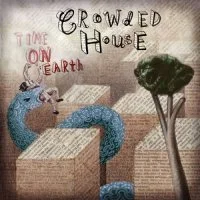
I wrote about this outstanding album in a review post last summer, so I’ll just direct you to that page on my weblog for the details—standout songs, a bit about the band, and more.
The album has only grown more appealing since I wrote that piece.What is most remarkable about this fact, going back to my introductory remarks in Vol. 1, is that the album hangs together as a coherent musical statement despite the fact that part of it was conceived as a Neil Finn album and part for Crowded House.
The Jimi Hendrix Experience – Electric Ladyland (1968)
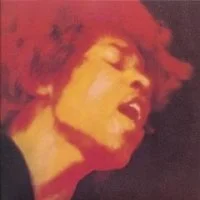
This is the one.On the BBC Radio show, the host typically asks the guest to name the one album (of the eight Desert Island Discs) he or she would select if only one could be taken.For me, the last album released by The Jimi Hendrix Experience would be that one disc.
The recording of Electric Ladyland began in fits and starts during the summer of 1967, but wrapped up in earnest during the spring and summer of 1968; the double album was released in September 1968, two years before Hendrix’s death of an apparent drug overdose.
The Electric Ladyland sessions are the stuff of legend, not only in their scope and the number of guest performers/devotees/hangers-on that packed the studio, but also in terms of Hendrix’s perfectionism.Not only did he record take after take of each song—“Gypsy Eyes” is said to have run through more than 40 takes before Hendrix could be convinced that the song was album-ready—but he also laid down the bass tracks (using a right-handed guitar) on the frequent occasions that Noel Redding became frustrated at the pace of things and stormed out to have a pint.The recording process is the subject of a documentary in the Classic Albums series and countless articles.In short, it’s been done.So let me more on and tell you a little bit about why I love this album so much.
First, the liner notes (or “Letter to the Room Full of Mirrors”) by Hendrix are a study in psychedelia (or more to the point, psychotropia) that can’t help but make one wonder what kinds of narcotics may have helped him envision this sonic landscape and make it a reality. A sample: “That sound was from those cellophane typewriters—exactly, constantly from the south side of those carpets.”It sounds profound, almost poetic, until one realizes that it doesn’t make a damned bit of sense.
The first cut is the trippy instrumental piece “...And the Gods Made Love,” replete with backward vocals, reverb, echo, and speed-release effects that Hendrix himself called “a 90-second sound-painting of the heavens.”This song is followed by the lovely title track, which sounds like a somewhat more fully realized version of “Little Wing,” and for which Hendrix himself performed both the lead and backing vocal parts.After the disarmingly straight ahead (but in reality, marvelously multilayered) “Crosstown Traffic,” Side A concludes with the 15-minute blues jam “Voodoo Chile.”Much of the track consists of an electrifying musical interplay between Hendrix’s guitar wizardry and Stevie Winwood of Traffic on the Hammond organ.It’s one of those perfect creations that demands the listener’s full attention.I can remember taking my dad’s copy of the album over to Mark Shewchuk’s house and playing this song; we just sat in dumb awe as every last second of “Voodoo Chile” washed over us.
Here’s a video of a performance the JHE at BBC in 1969.
[A note: I am a proponent of the vinyl experience in general, but for most music, there’s little discernible difference to the casual listener. I’m telling you, though: you haven’t heard Electric Ladyland—not really—until you’ve heard it on vinyl.It’s like the difference between seeing a very good color reproduction of Thomas Eakins’ The Gross Clinic and seeing the piece—with its brushstrokes, its subtle shadings, its minutest details—in person, as I did a couple of years back after it was acquired by the Philadelphia Museum of Art. It’s worth the effort.]
I could go on, and on. Other standouts on this double album include the melancholy “Burning of the Midnight Lamp” and “1983 (A Merman I Should Turn To Be)”; the reprises of “Rainy Day, Dream Away” and “1983”; and a furious reimagining of Bob Dylan’s “All Along the Watchtower.”Side D closes with “Voodoo Child (Slight Return),” a composition that calls to mind indigenous creation stories and may connect to Hendrix’s own part-Cherokee heritage.“Voodoo Child” begins with liberal use of the wah-wah pedal and intersperses spare, iterant lyrics with Hendrix’s taut solos, which veer from the left audio channel to the right and back again: “Well, I stand up next to a mountain / And I chop it down with the edge of my hand / Well I pick up all the pieces and make an island / Might even raise a little sand.”
Jethro Tull – Stand Up (1969)
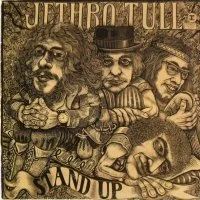
“Some new songs for you.”So ran the opening of the spare liner notes for the band’s second album, written by bandleader, principal songwriter, flutist, organist, mandolineer, and lead vocalist Ian Anderson.Stand Up was Tull’s first release with its most accomplished lineup—Anderson; Martin Barre on guitar; Clive Bunker on drums; Glenn Cornick on bass—and marked a revolutionary moment in rock.
[A note: I almost selected Tull’s Aqualung for the list, but ultimately decided that Stand Up is the stronger album, and the one I return to more often.And there just seemed to be something a little bit hinky about having a work that begins with the lyrics “Sitting on a park bench / Eyeing little girls with bad intent” on my D.I.D. list...]
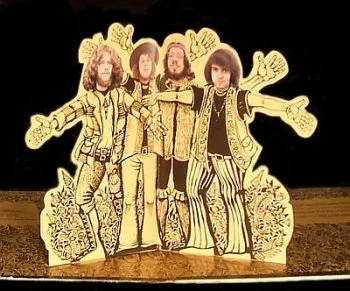
The album kicks off with the propulsive blues “A New Day Yesterday,” which mixes Barre’s guitar artistry with Cornick’s progressive drum signatures and Anderson’s trademark flute.Other standouts on the release—whose original gatefold cover revealed a “pop-up” image of the band’s members—are “Bourée,” a reimagining of Bach’s classic piece; and “We Used to Know,” a minor-key rock ballad that reportedly inspired the Eagles’ “Hotel California.”
Two folk-inflected ballads, though, are the real centerpieces of this album.First, “Reasons for Waiting” is a celebration of love and how, in the best of cases, it can transcend space: “Came a thousand miles / Just to catch you while you’re smiling.”
“Look into the Sun” is one of the most evocative songs ever written, and is actually my dad’s favorite of all time.Its lyrics are an astonishing balance of loss and hope, bitterness and circumspection: “I had waited for time to change her / The only change that came was over me / She pretended not to want to love / I hope she was only fooling me / So when you look into the sun / Look for the pleasures nearly won...”
[Here’s Jethro Tull performing “Nothing is Easy” at the Isle of Wight, 1970.]
Branford Marsalis – Royal Garden Blues (1985)
When one hears the name “Branford Marsalis,” one might think of his membership in a famed New Orleans musical family; the pretensions of his older brother Wynton, self-appointed guardian of jazz authenticity; or Branford’s brief stints as a member of Sting’s group or as bandleader on Jay Leno’s “The Tonight Show.”But the criminally underrated Branford Marsalis is one of the most exciting saxophonists working today, and has a mean body of work to back it up.
On his second solo album—the first was the very good “Scenes in the City,” built around a reworking of the kaleidoscopic title track by Charles Mingus—Branford stuck to the classics while paying homage to the Crescent City that gave him musical life.It opens with the taut “Swingin’ at the Haven,” with Branford’s father Ellis—the composer of the tune many years back—on piano. Here’s a video (audio only) of that track.
The two most moving tunes on this warm, accomplished album are ballads composed by pianists. Larry Willis’ “Shadows” (on which he also plays piano) ebbs and flows and features a brush-wielding Smitty Smith playing at his most restrained. But it’s Kenny Kirkland’s “Dienda,” one of my favorite songs ever, which truly sets the album apart.
I always end up feeling some kind of way when I listen to this song, as I am doing now.It’s not sad, exactly—it’s wistful, reflective.Branford’s soprano saxophone takes the melody laid down in Kirkland’s piano intro and imbues it with new depth and color.It’s one of the most terribly beautiful songs I have ever heard.
Rest in peace, Kenny.
[Here’s a 1987 performance of “Dienda” – the video and audio are slightly out of sync, but it is a fantastic rendition.]
Minutemen – The Punch Line (1981)
For those unfamiliar with the peculiar post-punk stylings of the Minutemen, the best place to start is probably the 1998 compilation Introducing the Minutemen, a 35-track retrospective covering much of the band’s roughly five-year career (which ended following the death of lead singer and guitarist D. Boon is a van accident).But its finest single release is not the uneven, somewhat meandering Double Nickels on the Dime—though there are great songs like “Corona” and “History Lesson – Part II” on that double-album—but the trio’s debut LP, The Punch Line.
An outstanding documentary about the band’s history was produced a few years ago. It’s called We Jam Econo (in reference to the band’s penchant for reusing recording tape and recording songs in the order in which they’d appear on an album, as they reportedly did on The Punch Line) and the film includes interviews with contemporaries as well as both Watt and Hurley.
The Minutemen’s sound is difficult to describe: Mike Watt’s two-fingered bass plucking and husky-voiced singing, George Hurley’s frenetic drumming, D. Boon’s high-treble guitar and hollered lyrics.At least at the beginning of the band’s career, few Minutemen songs reached beyond a minute, but the band could pack more insight and authenticity into 40 seconds than many bands could squeeze out of an entire album.
Here’s a video to acquaint you with this incredible band: it’s the Minutemen performing “Joe McCarthy’s Ghost” in 1983.
Indeed, the album’s 18 songs clock in at little more than 15 minutes, and each of the three members sings vocals on the album, though in later years only Boon and Watt handled the vocals.Standouts include the instrumental “Song for El Salvador,” “Straight Jacket,” “Tension,” and “Static.”
The best song on The Punch Line is the title track, a deliciously revisionist account of Custer’s Last Stand: “I believe when they found the body of George A. Custer / Quilled like a porcupine with Indian arrows / He didn’t die with any honor, dignity or valor / I believe when they found the body of George A. Custer / American general, patriot, and Indian fighter / That he died with shit in his pants.” Here’s a video (audio only) of this song being played live in 1981.
Ozomatli – Ozomatli (1998)
“O-zo-mat-li / Ya se fue / Ya se fue!”So goes the chant as Ozomatli leaves the stage at the end of one of its live shows (it means “Ozomatli have left”) and continue to play as the band members wend their way through the crowd.The best way to experience this multicultural Latin/funk/hip-hop collective from Los Angeles is live, in concert, during one of its rare appearances on the east coast.Mrs. Monsoon and I have seen them six times—once with Jon and Megan, once with just Megan (what what!), both at the World Café Live—and I’ve been lucky enough to meet some of the band’s members.
Ozomatli’s constantly evolving lineup finds as few as eight or as many as twelve musicians onstage, but the “original six” (who have been with the band since its formation in 1995) are Asdru Sierra (vocals, trumpet); Wil-Dog Abers (bass, vocals); Ulises Bella (reeds, guitars, vocals); Justin “Niño” Porée (percussion, rap vocals); Raúl Pacheco (guitar, vocals); and Jiro Yamaguchi (percussion).
The band’s members met through their involvement with the Peace and Justice Center in L.A., and Ozo continues to be politically engaged on behalf of the rights of indigenous peoples, eradicating racism, and other causes.(Wil-Dog just sent me information through Facebook about an L.A.-based organization called Encompass, which develops and implements programs to eliminate homophobic bias from school classrooms.)
Ozomatli has released four studio albums, but its self-titled debut still stands as its sharpest and most engaging.Ozomatli is built around the band’s seamless blend of cumbia, funk, rock, hip-hop, reggae, and Middle Eastern elements, with Spanish and English lyrics—sometimes in the same song.Many of the cuts are punctuated by sections rapped by Chali 2na, who left the group after this album to join the hip-hop collective Jurassic 5 (but recently rejoined Ozo for its autumn and spring tours).There’s not a weak cut on the disc, but highlights include the infectious “Cumbia de los Muertos”; the strident “Chota,” a Spanish-language song of resistance to police brutality; and “Aquí No Sera,” which is a remake of Enrique Ramirez’s protest song against U.S. intervention in El Salvador.
[Here are two videos from the BBC show “Later with Jools Holland,” both of which are performances by Ozomatli from 1998, the year Ozomatli was released. In the first video, they perform “Como Ves”; in the second, they perform “Super Bowl Sundae.”]
The Roots – Do You Want More?!!!??! (1995)
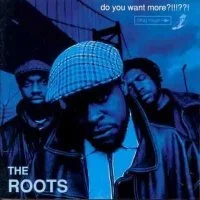
Back in May 2008, I wrote an open letter to The Roots asking them to reconsider their championship of the noise-rock outfit Deerhoof.
While The Roots regrettably ignored my pleas, I received plenty of feedback from those who also attended An Evening with The Roots or The Roots Picnic and wondered what in sunny hell they had done to earn the aural assault of Deerhoof.Now, sadly, it’s too late.The Roots’ downfall happened more rapidly than even I anticipated: as of March 2009, The Legendary Roots Crew has been working as the “house band” for Jimmy Fallon’s late-night talk show.Yes, Black Thought is now a third-rate Doc Severinsen. (Breathtakingly afroed drummer Ahmir “Questlove” Thompson playing in and out of commercial breaks on an after-midnight chat show is a little like Miles Davis sitting in a corner and playing the “Jeopardy” theme while the contestants record their responses during Final Jeopardy.It hurts just to talk about it.)Hip-hop is dead.Not to be dramatic or anything.
But hey! Let’s talk about what The Roots accomplished during a 15-year recording career before they sold out.Their strongest album is The Roots’ major label debut, Do You Want More?!!!??!Though 2002’s Phrenology and 2004’s The Tipping Point came close, ultimately I had to choose Do You Want More?!!!??! for my Desert Island Discs list.
Again here, I am drawn to The Roots because they bend and blend genres deftly, as did A Tribe Called Quest in the same era.Present on this album are the boastful rhymes, beat-boxing, and heavy beats one would expect to find on a hip-hop release—but what listeners also found were a jazz sensibility; live instrumentation; bagpipes (!) on the title track; and the graphic, uncompromising spoken-word poetry of Philadelphian Ursula Rucker.The album begins with Black Thought’s announcement that “You are all about to witness some organic hip-hop jazz,” and the listener is transported from there.
It’s an unforgettable and impressive album from beginning to end.Outstanding tracks include “Proceed” and “Distortion to Static.”“Silent Treatment,” a lost-love lament, is superior even to later, more well-known Roots songs of that ilk like “You Got Me” and “The Hypnotic.”Longtime Roots collaborator Dice Raw makes his debut (at the tender age of 15) on “The Lesson, Pt. 1.”
[Check out The Roots’ first music video, for the song “Proceed.”]
U2 – The Joshua Tree (1987)
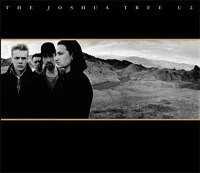
Each U2 album—particularly through to the early 1990s—has its own tone, its own heart, so it was difficult to select one for my D.I.D. list.In the end, the roots majesty of The Joshua Tree beat out the atmospheric anthems of The Unforgettable Fire and jaded reinvention of Achtung Baby.
The Joshua Tree was bigger than an album; it was a phenomenon. It made the world take notice of U2 and turned even casual popular music fans into devotees of the quartet from Dublin.
In a post earlier this year, I wrote extensively about this album specifically, and in general about my love for this band.There’s not really a whole lot I can add to that, as there’s not much that hasn’t already been said or written about The Joshua Tree.It’s a masterwork.
Incidentally, I consider the seven songs on B-sides to the “I Still Haven’t Found What I’m Looking For,” “With or Without You,” and “Where the Streets Have No Name” 45-rpm singles to be legitimately part of The Joshua Tree, as the album was originally conceived to be released as a double album.I’m just saying.
Every single song is great, and the songs themselves are really hard to consider outside the context of the entire album—a testament to its cohesion.The album as a whole is quite a bit darker than one might realize at first: its songs deal with heroin addiction (“Running to Stand Still”), bellicose U.S. foreign policy (“Bullet the Blue Sky”), and death squads in San Salvador (“Mothers of the Disappeared”).The words that most haunt me, though, are at the conclusion of the swelling, shattering “Exit,” the tale of a desperate man driven to violence by his own demons: “The hands that build / Can also pull down / The hands of love.”
Here’s a video (audio only) of one of my favorite b-sides from this era: “Walk to the Water.”
Bunny Wailer – Blackheart Man (1976)
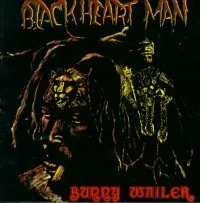
The lilting strains of Tommy McCook’s flute on the opening title track welcome the listener deep into the Jamaican hillside, and one feels instantly transported to a back-to-nature Rastafarian commune. Blackheart Man is the first solo album by Neville Livingston, aka Bunny Wailer, one of the original Wailers (with his half-brother Bob Marley, as well as Peter Tosh). Following the international success of the Wailers, Bunny began to feel marginalized as Bob’s was featured more prominently as the leader of the band—he also disliked leaving his homeland and became more entrenched in the Rastafari faith—and so both Bunny and Peter left in 1974 to begin successful solo careers.
Blackheart Man is a masterpiece, and surely one of the finest reggae albums of all time.Subtitled on the album jacket The Ten Messages, its ten songs elaborate on mystical Rasta teachings, Biblical messages of deliverance, and on the struggles of the African diaspora against oppression.Bunny is backed by most of the Wailers band, not to mention Peter Tosh on rhythm guitar and backing vocals and the Skatalites’ Tommy McCook on horns and woodwinds.Bob Marley even shows up to contribute backing vocals on the album’s richest, most redolent track, “Dreamland,” a fantasy of African repatriation: “We’ll get our breakfast from the tree / We’ll get our honey from the bee / We’ll take a ride on the waterfalls / And all the glories, we’ll have them all...”
[Here’s the song “Dreamland” as uploaded to YouTube—no video, just the song and a series of still images of Bunny Wailer.]
____________________________________________________________
Whew.This list of Desert Island Discs was more difficult to write than I’d anticipated.It’s hard to articulate why I love something that reaches me on such a pre-verbal level.Why does Edge’s guitar leave me in awe?Why does Coltrane’s “Song of the Underground Railroad” make the hairs on my arm stand up?Why do I well up sometimes when I hear “Dienda”?These are matters of emotion, of subconscious association, and it’s best just to accept them and enjoy.
I’ve had lots of musical mentors throughout my life—Mark, Amy, Rob, Dave, and others—who have introduced me to new bands discovered great music with me.
But I might not have so deep an appreciation for music—nor would it likely be such an integral part of my life that it’s impossible to imaging existing without it—if not for my dad.From the time I was very young, his massive record collection and patient indulgence of my curiosity have guided me in discovering my own musical preferences.He has never been hemmed in by labels and has never confined himself to one specific genre; his record collection includes classic and progressive rock, jazz, bluegrass, comedy, classical, fusion, blues, folk, metal, and so much more.The extent of his musical palate continues to amaze me to this day.
I always caution my students to avoid ending their work with someone else’s words, but in this case, I’ll break my own rule.In the last scene of the must-see film Almost Famous, fifteen-year-old William Miller finally gets an interview with lead guitarist Russell Hammond after following his band, Stillwater, around on tour.Sitting in William’s bedroom at the end of a poignant exchange, Miller thrusts a tape-recorder microphone at the rock star and asks, “So Russell ... what do you love about music?”Russell considers the question, settles in for a long response, and says, “To begin with ... everything.”
Monsoon's New U2 Album Review
As U2 releases its latest studio album, No Line on the Horizon, tomorrow, I got to thinking about how long I’ve been a fan of the band.It turns out it was spring 1984 when I first heard and saw them—it was a clip from Under a Blood Red Sky, their concert film.I was immediately hooked, and have been a devotee for 25 years now.
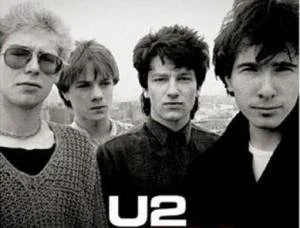
Twenty-five years.In that time—more than two-thirds of my life—U2 has been there with me for events great and small.(Perspective: only a handful of the very first students I taught were alive when I became a U2 fan.)In the 80s I purchased my U2 albums on cassette (supplemented by vinyl records), and in the 90s I bought it all (including what I’d previously gotten on cassette) on CD.Now I’m in the process of ripping the CDs to mp3 files for the computer and (someday) an iPod.
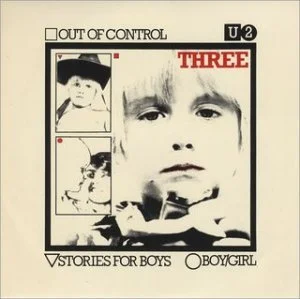
Before I provide a brief review of their new album, I thought I’d share some reminiscences of how U2 has impacted my life...
I heard “Pride (in the Name of Love)” when it was released in 1984, and was changed.It wasn’t just the music—soaring, sweeping, passionate—it was the discovery.Thanks to my dad and his legendary vinyl collection, I had already been steeped in the music of the 1950s and 1960s in myriad genres: from the Beatles to the Mothers of Invention, from Cream to Captain Beefheart, from Black Sabbath to Jethro Tull, from Jimi Hendrix to the Mahavishnu Orchestra.And my friend Mark Shewchuk had begun getting me into the Red Hot Chili Peppers and punk bands like Black Flag and the Dead Kennedys.But U2 was, for me, a discovery.I felt as though I had stumbled onto something truly unique, something transformative.In a middle school Industrial Arts class during a printmaking unit, when we had to choose a mast to print at the top of a notepad, I blocked out “U2 – Bono Vox.”My teacher, Mr. Eckel, was as perplexed then as he was when I just couldn’t seem to figure out how to make a goddamned jewelry box.
I bought The Unforgettable Fire as soon as it came out in late 1984 and was captivated by its moody soundscapes, interspersed with epic compositions like “Pride,” “Bad,” and “A Sort of Homecoming.”I listened to the cassette constantly, and I can vividly remember sitting alone on the balcony of our motel in Ocean City, NJ in the summer of 1985, looking out at the sea on a gloomy day, listening to the album’s atmospheric, instrumental cuts on my Walkman as though something heavy was on my mind.I was emo before there was emo, baby.
When The Joshua Tree was released in 1987 to rave reviews, wild popularity, and eventually a Best Album Grammy award, I was ecstatic.It was like a brilliant, talented friend had finally gotten the recognition he deserved.I consumed every bit of U2-alia I could: magazines, books, interviews, b-sides.(The b-side singles released with this album are among the best b-sides I’ve ever heard—songs like “Spanish Eyes,” “Silver and Gold,” and “Walk to the Water” could have made on The Joshua Tree or even Rattle & Hum.)The album is not only the best in U2’s impressive catalog, it’s one of the best ever made—the deepest, the most resonant.Two of my favorite songs from the album are lesser-known: “Red Hill Mining Town” and “Trip Through Your Wires.”The former is special because I remember excitedly playing the song for my father—who grew up in Red Hill, PA, though the song is about a Red Hill in Ireland—during a particularly difficult time for our family.And I remember stating with absolute certainty while playing the latter for my mom, “This is the first U2 song to ever feature harmonica.”(I think that’s so, but still—what a dork.)
In 1988 when U2 released the Rattle & Hum album, I remember going to the movie theater with a huge group of people to see the film.It was like a concert, with people singing along and hanging around for a long while afterward.
U2 left the stage for a few years to, in Bono’s words, “dream it all up again.”In 1991 they released the long-awaited Achtung Baby.My new roommate at Albright, Dave, and I had bonded over our mutual love for U2, so we hurried out to the record store on the day it was released (I believe it was Record Revolution in Reading, R.I.P.) and brought it back to the dorm room to give it a listen.From the first treble-heavy, feedbacking guitar riffs, we knew we were in for something different.We looked at each other quizzically as we forwarded from track to track to track, searching for something familiar, something that was instantly recognizable as U2.The only song that was instantly palatable to both of us was one of the great U2 songs of all-time, “One.”
Soon, though, we both came to love the album for its daring cosmopolitan flavor, and went to see them in concert (with the Trabants hanging from the rafters).Dave “slept out” for tickets at Boscov’s with his girlfriend at the time.Four of us went to the concert—Dave and his girlfriend, and her friend, and me.(I was already “attached” to my beloved by then, so it wasn’t a double date.)I remember that the four tickets we got were in different parts of the same section—two here, two there.Instead of sitting with his girlfriend, Dave sat with me, leaving his girlfriend and her friend to spend the concert in bewildered exile in another part of the section while Dave and I belted out song after song side by side, basking in each other’s friendship and the headiness of the night.
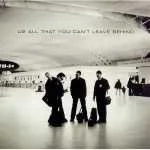
Subsequently, U2 had some strange experiments (Zooropa; Passengers) that had as many moments of self-indulgent bombast as they had moments of brilliance.They went back to straight-ahead rock in 2000’s All That You Can’t Leave Behind and 2004’s How to Dismantle an Atomic Bomb, the stronger of which, by far, was Atomic Bomb.
U2 has been there, marking life—its passage, its meaning, its milestones—in many more ways, ways I haven’t even considered.Sure, I’ve sometimes cringed a bit when Bono seems to linger a bit too long in his superhero tights.But for twenty-five years, I have found them to be the most captivating band there is.(That, and I think I would honestly pee in my pants and scream like a little girl if I ever met Bono.)
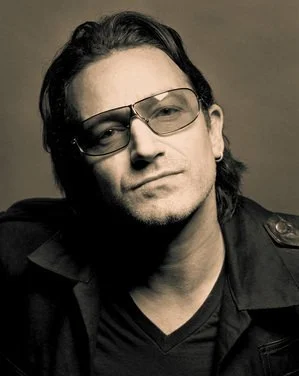
A little “brush with greatness” tale with a twist: a few years back my mother-in-law returned from Hershey, where she had traveled for a conference and stayed in a nice hotel. She said, “Oh yeah, hey, I rode up the elevator with that guy you like.What’s his name—Boner?”I don’t recall if I ever peeled myself off the ceiling long enough to explain this to her, so: Con, it’s “Bono” (nee Paul Hewson) and he’s only the lead singer of the greatest band in the world!!!
For now, allow me to present my exclusive Monsoon Martin ranking of the U2 oeuvre from most accomplished to least (and the lowest U2 album is still better than most of the rest of what’s around):
1. The Joshua Tree (1987) – as I said above, this is one of the best albums of all-time.From the first chiming notes of “Where the Streets Have No Name” to the furious “Bullet the Blue Sky” (which has only gotten better in concert), from the rueful “Running to Stand Still” to the infectious “In God’s Country,” this is a classic.
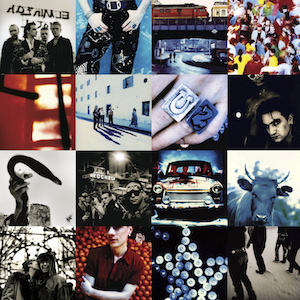
2. Achtung Baby (1991) – Bono was at his peak lyrically here, and the band took chances by incorporating sparer compositions and more distortion of the instruments. The risks paid off, with some of their greatest songs: “One,” “Love is Blindness,” “Mysterious Ways,” “Until the End of the World,” and on.
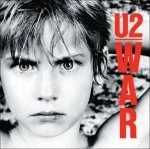
3. War (1983) – it was close for second place between Achtung and War.This album saw the lads find their voice as rockers with a conscience.Best songs are, of course, “Sunday Bloody Sunday” and “New Year’s Day,” but lesser-known but no less accomplished are “Drowning Man” and “Two Hearts Beat as One.” There’s not a stinker in the bunch.
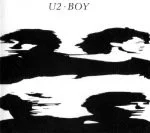
4. Boy (1980) – U2’s first studio album; best songs, “Out of Control,” a celebration of youthful exuberance, and “Shadows and Tall Trees,” which takes its name from a chapter in William Golding’s Lord of the Flies.
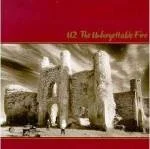
5. The Unforgettable Fire (1984) – it was critically panned, but I liked it, and still do—mainly because it’s the first studio album of theirs I bought.It’s when they first collaborated with Brian Eno to expand their sonic landscape, and the effect was uneven, but tremendous.There are well-known cuts from their catalog like “Bad” and “Pride,” but songs like “Homecoming,” the title track, and “Indian Summer Sky” stand the test of time too.(The 1985 EP Wide Awake in America had nice live versions of a couple of Unforgettable songs, as well as two very good b-sides, “Love Comes Tumbling” and “The Three Sunrises.”)
6. How to Dismantle an Atomic Bomb (2004) – this album is a burst of furious energy—creative, musical, lyrical—from a band that had been together already for 25 years.“Sometimes You Can’t Make It on Your Own” is a moving, riveting song; “City of Blinding Lights” was used by the Obama campaign right after his nomination speech; “Miracle Drug” and “One Step Closer” are other standouts.Even rollicking flirtations with 100+ beats per minute like “Vertigo” and “All Because of You” are gratifying.And the concert I attended (again with Dave) when they were touring in support of this album is one of the best I’ve ever seen.

7. No Line on the Horizon (2009) – see review below.
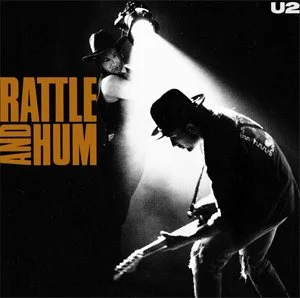
8. Rattle & Hum (1988) – it came off as too self-congratulatory and redundant to be a classic U2 album, but there are highlights here.“Van Diemen’s Land” showcases the Edge’s strong (and underused) tenor, and live versions of “Silver and Gold” and “All Along the Watchtower” are stirring.“Angel of Harlem” is a nice one, too.And two of my favorite U2 songs of all-time are “Heartland” and “All I Want is You,” either of which would have been right at home on The Joshua Tree.
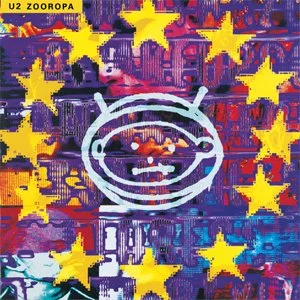
9. Zooropa (1993) – this bit of euro-trash contains the only U2 song I always fast-forward past: “The Wanderer” featuring Johnny Cash. It also contains Bono’s ill-advised extended foray into falsetto (“Lemon”) and the silly, monotone “Numb.” High points include “Dirty Day,” “The First Time,” “Stay (Faraway, So Close!)” and the title track.
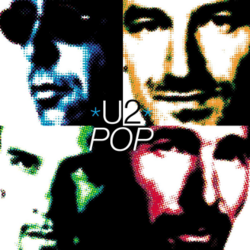
10. Pop (1998) – this is the nadir of the band’s glitzy Mephisto period, and on this tour they emerged from a giant, mirrored lemon onstage.They’d lost control of their own caricatures.There are some high points—“Gone” and “Do You Feel Loved” among them—and some interesting ideas like “Miami” and “Please,” but over all, they blew it.(I’ll also comment here on Passengers: Original Soundtracks I, which was an avant-garde release that contained music predominantly by U2.I remember reading somewhere that drummer Larry Mullen was particularly peeved about this foray into Eno-land.There are a couple of good songs—“Miss Sarajevo” and “Your Blue Room”—but otherwise it’s an amorphous, incoherent waste of time.)
11. October (1981) – this album was a rush job during a turbulent period for the members of the band—spiritually and interpersonally.Best songs are “I Threw a Brick through a Window,” “Tomorrow,” and the sparse piano-and-vocals piece “October.” Almost every U2 song has a special place in my memory, but you can safely skip “I Fall Down” and “Is That All,” which are subpar.
12. All That You Can’t Leave Behind (2000) – I can’t really explain what I don’t like about this album.It does have its finer points, like “Beautiful Day” (in moderation) and “Walk On” (there’s a remix that’s better than the album version).But for an album that was, according to Bono, U2’s application for the job of “best band in the world,” it felt a little forced and designed for broader appeal.Songs like “Wild Honey,” “Kite,” and “Grace” seem intentionally harmless and lack the “bite” of the best U2 work.
The new album, No Line on the Horizon, is an interesting departure of sorts for the band.On the one hand, it’s very different from the taut, straight-ahead commercialism of the previous two albums this decade.On the other hand, its elements are unmistakably U2, just bent in a different direction.There are high and low points, as with any album. The ridiculously titled “I’ll Go Crazy If I Don’t Go Crazy Tonight” and “Get on Your Boots” are subpar, with too modern and derivative a sound, and they're almost out of place on this mostly meditative, sweeping album.“Stand Up Comedy” is a delightful surprise with witty lyrics like “stop helping God across the road like a little old lady.”“Fez – Being Born” begins with sound samples and little too much Eno, but becomes something lovely and piano-driven (like a lot of this album).The title track marries the guitar riff from “The Fly” with the slinky philosophy of Atomic Bomb’s “Original of the Species” to interesting effect.
But the best four songs on the album are the ambitious, lovely “Magnificent”; “Unknown Caller,” which sounds as though it could have been lifted from October but with a sharper, distorted guitar; the spare, folk-inflected, Mark Knopfler-esque “White as Snow”; and “Cedars of Lebanon,” the almost spoken-word final song describing the life of a journalist in a war-torn area.The lyric “this shitty world sometimes produces a rose” is at first blush heavy-handed, but has a resonance in this song that delves beneath the hackneyed.It also contains what might be Bono’s best lyric of the decade: “The worst of us are a long, drawn-out confession / The best of us are geniuses of compression.”
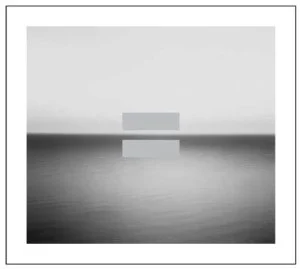
So am I recommending No Line on the Horizon? Of course; it’s a U2 album. Which edition—the digipak, the CD only, the magazine, the box set? It’s all bells and whistles. Just get the bonus tracks and skip the DVD film by the pretentious, overblown Phil Joanou (I haven’t seen it, but he directed Rattle & Hum, so one can only imagine). The cover image alone—by Japanese artist Hiroshi Sugimoto—is a gorgeous, minimalist achievement.
Enjoy!