
Monsoon Martin's Desert Island Discs, Vol. 2
Well, I’m back to share my top tier Desert Island Discs with you (the ten absolutely essential albums I’d need to have with me in the case of sudden stranding).To remind you: I limited myself to studio albums, eliminating live recordings, greatest hits packages, and the like.
Before I reveal the top tier, though, we have a winner in the contest announced in the last posting!There were several good entries, but one reader in particular emerged well ahead of the pack.This reader correctly guessed two albums in the list below—and three of the other guesses named the correct artist, but the wrong album. Impressive, Megan King! You have now earned the right to select one CD to receive free from among my 20 Desert Island Discs.
[I can’t resist listing the albums that almost made the cut for my 20 D.I.D.s: The Who, Who’s Next; Cream, Disraeli Gears; Stevie Wonder, Innervisions; Miles Davis, Kind of Blue; Sly & the Family Stone, A Whole New Thing.]
Alright, without further ado...
John Coltrane – Africa/Brass, Volumes 1 and 2 (1961)
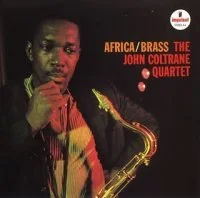
Coltrane’s first release for the Impulse! label is also the most searing and accomplished of his career.For the album, Coltrane’s backing quartet—which included McCoy Tyner (piano), Elvin Jones (percussion), Reggie Workman (bass), and Art Davis (bass)—was joined by a fifteen-piece brass section that included such luminaries as trumpeter Freddie Hubbard, trombonist Britt Woodman, and Eric Dolphy on the reeds.The compositions were arranged by Tyner and Dolphy, which contributes to the staccato (Tyner) and avant-garde (Dolphy) quality of the music.
In the liner notes for Africa/Brass (Volume 2 was released posthumously, and included alternate takes and an unreleased track), Dom Cerulli wrote, “John Coltrane is a quiet, powerfully-built young man who plays tenor saxophone quite unlike anyone in all of jazz.His style has been described as ‘sheets of sound’ or as ‘flurries of melody.’But, despite the accuracy, or lack of accuracy, of such descriptions, it is a fact that Coltrane’s style is wholly original and of growing influence among new tenor players.”
The notes go on to describe Coltrane as a restless artist, always seeking to expand his musical palette and explore his influences—Cerulli remarks that Coltrane had immersed himself in the rhythmic character of Africa and had been studying folk musical traditions as well, and on Africa/Brass this is wholly evident.Two of the cuts are Coltrane/Tyner arrangements of traditional songs: “Greensleeves” and the elaborated Black Code spiritual, “Song of the Underground Railroad.”In the first, Coltrane uses a languid time signature to create plenty of space for the saxes and piano to open up; the latter becomes a propulsive hard-bop masterpiece, with goosebump-inducing brass swells and interplay between Tyner and Coltrane.
The Coltrane originals in the Africa/Brass sessions are “Blues Minor” and “Africa.”The former is solid but unremarkable in the Coltrane canon, but the latter is breathtaking.In “Africa,” John Coltrane takes full advantage of everything before him in the studio—the brass section, the work of Tyner in adapting his piano voicings for the orchestra, Dolphy’s artistry, and his own fearless improvisation, not to mention his own tireless investigation of African rhythms, aided by Nigerian percussionist Babatunde Olatunji—and brings it to bear.The music is by turns austere and florid, as Dolphy’s reed work seems to mimic human wails and joyful noise.And while listening to Africa/Brass, I can never shake the neatness of this fact: Coltrane sought to incorporate African musical elements into an art form that itself had already incorporated so many of those elements—jazz.
Crowded House – Time on Earth (2007)
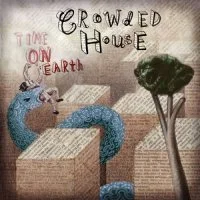
I wrote about this outstanding album in a review post last summer, so I’ll just direct you to that page on my weblog for the details—standout songs, a bit about the band, and more.
The album has only grown more appealing since I wrote that piece.What is most remarkable about this fact, going back to my introductory remarks in Vol. 1, is that the album hangs together as a coherent musical statement despite the fact that part of it was conceived as a Neil Finn album and part for Crowded House.
The Jimi Hendrix Experience – Electric Ladyland (1968)
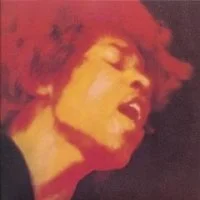
This is the one.On the BBC Radio show, the host typically asks the guest to name the one album (of the eight Desert Island Discs) he or she would select if only one could be taken.For me, the last album released by The Jimi Hendrix Experience would be that one disc.
The recording of Electric Ladyland began in fits and starts during the summer of 1967, but wrapped up in earnest during the spring and summer of 1968; the double album was released in September 1968, two years before Hendrix’s death of an apparent drug overdose.
The Electric Ladyland sessions are the stuff of legend, not only in their scope and the number of guest performers/devotees/hangers-on that packed the studio, but also in terms of Hendrix’s perfectionism.Not only did he record take after take of each song—“Gypsy Eyes” is said to have run through more than 40 takes before Hendrix could be convinced that the song was album-ready—but he also laid down the bass tracks (using a right-handed guitar) on the frequent occasions that Noel Redding became frustrated at the pace of things and stormed out to have a pint.The recording process is the subject of a documentary in the Classic Albums series and countless articles.In short, it’s been done.So let me more on and tell you a little bit about why I love this album so much.
First, the liner notes (or “Letter to the Room Full of Mirrors”) by Hendrix are a study in psychedelia (or more to the point, psychotropia) that can’t help but make one wonder what kinds of narcotics may have helped him envision this sonic landscape and make it a reality. A sample: “That sound was from those cellophane typewriters—exactly, constantly from the south side of those carpets.”It sounds profound, almost poetic, until one realizes that it doesn’t make a damned bit of sense.
The first cut is the trippy instrumental piece “...And the Gods Made Love,” replete with backward vocals, reverb, echo, and speed-release effects that Hendrix himself called “a 90-second sound-painting of the heavens.”This song is followed by the lovely title track, which sounds like a somewhat more fully realized version of “Little Wing,” and for which Hendrix himself performed both the lead and backing vocal parts.After the disarmingly straight ahead (but in reality, marvelously multilayered) “Crosstown Traffic,” Side A concludes with the 15-minute blues jam “Voodoo Chile.”Much of the track consists of an electrifying musical interplay between Hendrix’s guitar wizardry and Stevie Winwood of Traffic on the Hammond organ.It’s one of those perfect creations that demands the listener’s full attention.I can remember taking my dad’s copy of the album over to Mark Shewchuk’s house and playing this song; we just sat in dumb awe as every last second of “Voodoo Chile” washed over us.
Here’s a video of a performance the JHE at BBC in 1969.
[A note: I am a proponent of the vinyl experience in general, but for most music, there’s little discernible difference to the casual listener. I’m telling you, though: you haven’t heard Electric Ladyland—not really—until you’ve heard it on vinyl.It’s like the difference between seeing a very good color reproduction of Thomas Eakins’ The Gross Clinic and seeing the piece—with its brushstrokes, its subtle shadings, its minutest details—in person, as I did a couple of years back after it was acquired by the Philadelphia Museum of Art. It’s worth the effort.]
I could go on, and on. Other standouts on this double album include the melancholy “Burning of the Midnight Lamp” and “1983 (A Merman I Should Turn To Be)”; the reprises of “Rainy Day, Dream Away” and “1983”; and a furious reimagining of Bob Dylan’s “All Along the Watchtower.”Side D closes with “Voodoo Child (Slight Return),” a composition that calls to mind indigenous creation stories and may connect to Hendrix’s own part-Cherokee heritage.“Voodoo Child” begins with liberal use of the wah-wah pedal and intersperses spare, iterant lyrics with Hendrix’s taut solos, which veer from the left audio channel to the right and back again: “Well, I stand up next to a mountain / And I chop it down with the edge of my hand / Well I pick up all the pieces and make an island / Might even raise a little sand.”
Jethro Tull – Stand Up (1969)
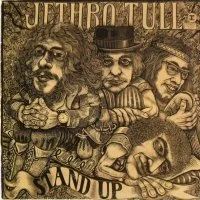
“Some new songs for you.”So ran the opening of the spare liner notes for the band’s second album, written by bandleader, principal songwriter, flutist, organist, mandolineer, and lead vocalist Ian Anderson.Stand Up was Tull’s first release with its most accomplished lineup—Anderson; Martin Barre on guitar; Clive Bunker on drums; Glenn Cornick on bass—and marked a revolutionary moment in rock.
[A note: I almost selected Tull’s Aqualung for the list, but ultimately decided that Stand Up is the stronger album, and the one I return to more often.And there just seemed to be something a little bit hinky about having a work that begins with the lyrics “Sitting on a park bench / Eyeing little girls with bad intent” on my D.I.D. list...]
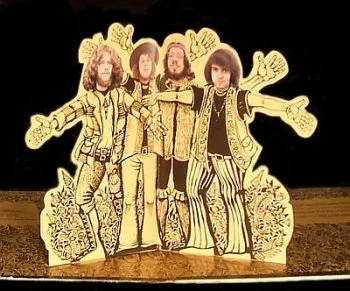
The album kicks off with the propulsive blues “A New Day Yesterday,” which mixes Barre’s guitar artistry with Cornick’s progressive drum signatures and Anderson’s trademark flute.Other standouts on the release—whose original gatefold cover revealed a “pop-up” image of the band’s members—are “Bourée,” a reimagining of Bach’s classic piece; and “We Used to Know,” a minor-key rock ballad that reportedly inspired the Eagles’ “Hotel California.”
Two folk-inflected ballads, though, are the real centerpieces of this album.First, “Reasons for Waiting” is a celebration of love and how, in the best of cases, it can transcend space: “Came a thousand miles / Just to catch you while you’re smiling.”
“Look into the Sun” is one of the most evocative songs ever written, and is actually my dad’s favorite of all time.Its lyrics are an astonishing balance of loss and hope, bitterness and circumspection: “I had waited for time to change her / The only change that came was over me / She pretended not to want to love / I hope she was only fooling me / So when you look into the sun / Look for the pleasures nearly won...”
[Here’s Jethro Tull performing “Nothing is Easy” at the Isle of Wight, 1970.]
Branford Marsalis – Royal Garden Blues (1985)
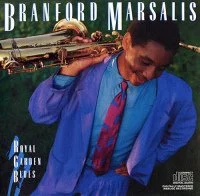
When one hears the name “Branford Marsalis,” one might think of his membership in a famed New Orleans musical family; the pretensions of his older brother Wynton, self-appointed guardian of jazz authenticity; or Branford’s brief stints as a member of Sting’s group or as bandleader on Jay Leno’s “The Tonight Show.”But the criminally underrated Branford Marsalis is one of the most exciting saxophonists working today, and has a mean body of work to back it up.
On his second solo album—the first was the very good “Scenes in the City,” built around a reworking of the kaleidoscopic title track by Charles Mingus—Branford stuck to the classics while paying homage to the Crescent City that gave him musical life.It opens with the taut “Swingin’ at the Haven,” with Branford’s father Ellis—the composer of the tune many years back—on piano. Here’s a video (audio only) of that track.
The two most moving tunes on this warm, accomplished album are ballads composed by pianists. Larry Willis’ “Shadows” (on which he also plays piano) ebbs and flows and features a brush-wielding Smitty Smith playing at his most restrained. But it’s Kenny Kirkland’s “Dienda,” one of my favorite songs ever, which truly sets the album apart.
I always end up feeling some kind of way when I listen to this song, as I am doing now.It’s not sad, exactly—it’s wistful, reflective.Branford’s soprano saxophone takes the melody laid down in Kirkland’s piano intro and imbues it with new depth and color.It’s one of the most terribly beautiful songs I have ever heard.
Rest in peace, Kenny.
[Here’s a 1987 performance of “Dienda” – the video and audio are slightly out of sync, but it is a fantastic rendition.]
Minutemen – The Punch Line (1981)
For those unfamiliar with the peculiar post-punk stylings of the Minutemen, the best place to start is probably the 1998 compilation Introducing the Minutemen, a 35-track retrospective covering much of the band’s roughly five-year career (which ended following the death of lead singer and guitarist D. Boon is a van accident).But its finest single release is not the uneven, somewhat meandering Double Nickels on the Dime—though there are great songs like “Corona” and “History Lesson – Part II” on that double-album—but the trio’s debut LP, The Punch Line.
An outstanding documentary about the band’s history was produced a few years ago. It’s called We Jam Econo (in reference to the band’s penchant for reusing recording tape and recording songs in the order in which they’d appear on an album, as they reportedly did on The Punch Line) and the film includes interviews with contemporaries as well as both Watt and Hurley.
The Minutemen’s sound is difficult to describe: Mike Watt’s two-fingered bass plucking and husky-voiced singing, George Hurley’s frenetic drumming, D. Boon’s high-treble guitar and hollered lyrics.At least at the beginning of the band’s career, few Minutemen songs reached beyond a minute, but the band could pack more insight and authenticity into 40 seconds than many bands could squeeze out of an entire album.
Here’s a video to acquaint you with this incredible band: it’s the Minutemen performing “Joe McCarthy’s Ghost” in 1983.
Indeed, the album’s 18 songs clock in at little more than 15 minutes, and each of the three members sings vocals on the album, though in later years only Boon and Watt handled the vocals.Standouts include the instrumental “Song for El Salvador,” “Straight Jacket,” “Tension,” and “Static.”
The best song on The Punch Line is the title track, a deliciously revisionist account of Custer’s Last Stand: “I believe when they found the body of George A. Custer / Quilled like a porcupine with Indian arrows / He didn’t die with any honor, dignity or valor / I believe when they found the body of George A. Custer / American general, patriot, and Indian fighter / That he died with shit in his pants.” Here’s a video (audio only) of this song being played live in 1981.
Ozomatli – Ozomatli (1998)
“O-zo-mat-li / Ya se fue / Ya se fue!”So goes the chant as Ozomatli leaves the stage at the end of one of its live shows (it means “Ozomatli have left”) and continue to play as the band members wend their way through the crowd.The best way to experience this multicultural Latin/funk/hip-hop collective from Los Angeles is live, in concert, during one of its rare appearances on the east coast.Mrs. Monsoon and I have seen them six times—once with Jon and Megan, once with just Megan (what what!), both at the World Café Live—and I’ve been lucky enough to meet some of the band’s members.
Ozomatli’s constantly evolving lineup finds as few as eight or as many as twelve musicians onstage, but the “original six” (who have been with the band since its formation in 1995) are Asdru Sierra (vocals, trumpet); Wil-Dog Abers (bass, vocals); Ulises Bella (reeds, guitars, vocals); Justin “Niño” Porée (percussion, rap vocals); Raúl Pacheco (guitar, vocals); and Jiro Yamaguchi (percussion).
The band’s members met through their involvement with the Peace and Justice Center in L.A., and Ozo continues to be politically engaged on behalf of the rights of indigenous peoples, eradicating racism, and other causes.(Wil-Dog just sent me information through Facebook about an L.A.-based organization called Encompass, which develops and implements programs to eliminate homophobic bias from school classrooms.)
Ozomatli has released four studio albums, but its self-titled debut still stands as its sharpest and most engaging.Ozomatli is built around the band’s seamless blend of cumbia, funk, rock, hip-hop, reggae, and Middle Eastern elements, with Spanish and English lyrics—sometimes in the same song.Many of the cuts are punctuated by sections rapped by Chali 2na, who left the group after this album to join the hip-hop collective Jurassic 5 (but recently rejoined Ozo for its autumn and spring tours).There’s not a weak cut on the disc, but highlights include the infectious “Cumbia de los Muertos”; the strident “Chota,” a Spanish-language song of resistance to police brutality; and “Aquí No Sera,” which is a remake of Enrique Ramirez’s protest song against U.S. intervention in El Salvador.
[Here are two videos from the BBC show “Later with Jools Holland,” both of which are performances by Ozomatli from 1998, the year Ozomatli was released. In the first video, they perform “Como Ves”; in the second, they perform “Super Bowl Sundae.”]
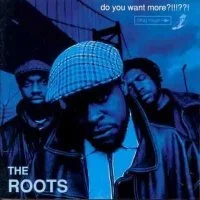
The Roots – Do You Want More?!!!??! (1995)
Back in May 2008, I wrote an open letter to The Roots asking them to reconsider their championship of the noise-rock outfit Deerhoof.
While The Roots regrettably ignored my pleas, I received plenty of feedback from those who also attended An Evening with The Roots or The Roots Picnic and wondered what in sunny hell they had done to earn the aural assault of Deerhoof.Now, sadly, it’s too late.The Roots’ downfall happened more rapidly than even I anticipated: as of March 2009, The Legendary Roots Crew has been working as the “house band” for Jimmy Fallon’s late-night talk show.Yes, Black Thought is now a third-rate Doc Severinsen. (Breathtakingly afroed drummer Ahmir “Questlove” Thompson playing in and out of commercial breaks on an after-midnight chat show is a little like Miles Davis sitting in a corner and playing the “Jeopardy” theme while the contestants record their responses during Final Jeopardy.It hurts just to talk about it.)Hip-hop is dead.Not to be dramatic or anything.
But hey! Let’s talk about what The Roots accomplished during a 15-year recording career before they sold out.Their strongest album is The Roots’ major label debut, Do You Want More?!!!??!Though 2002’s Phrenology and 2004’s The Tipping Point came close, ultimately I had to choose Do You Want More?!!!??! for my Desert Island Discs list.
Again here, I am drawn to The Roots because they bend and blend genres deftly, as did A Tribe Called Quest in the same era.Present on this album are the boastful rhymes, beat-boxing, and heavy beats one would expect to find on a hip-hop release—but what listeners also found were a jazz sensibility; live instrumentation; bagpipes (!) on the title track; and the graphic, uncompromising spoken-word poetry of Philadelphian Ursula Rucker.The album begins with Black Thought’s announcement that “You are all about to witness some organic hip-hop jazz,” and the listener is transported from there.
It’s an unforgettable and impressive album from beginning to end.Outstanding tracks include “Proceed” and “Distortion to Static.”“Silent Treatment,” a lost-love lament, is superior even to later, more well-known Roots songs of that ilk like “You Got Me” and “The Hypnotic.”Longtime Roots collaborator Dice Raw makes his debut (at the tender age of 15) on “The Lesson, Pt. 1.”
[Check out The Roots’ first music video, for the song “Proceed.”]
U2 – The Joshua Tree (1987)
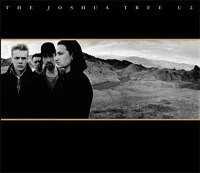
Each U2 album—particularly through to the early 1990s—has its own tone, its own heart, so it was difficult to select one for my D.I.D. list.In the end, the roots majesty of The Joshua Tree beat out the atmospheric anthems of The Unforgettable Fire and jaded reinvention of Achtung Baby.
The Joshua Tree was bigger than an album; it was a phenomenon. It made the world take notice of U2 and turned even casual popular music fans into devotees of the quartet from Dublin.
In a post earlier this year, I wrote extensively about this album specifically, and in general about my love for this band.There’s not really a whole lot I can add to that, as there’s not much that hasn’t already been said or written about The Joshua Tree.It’s a masterwork.
Incidentally, I consider the seven songs on B-sides to the “I Still Haven’t Found What I’m Looking For,” “With or Without You,” and “Where the Streets Have No Name” 45-rpm singles to be legitimately part of The Joshua Tree, as the album was originally conceived to be released as a double album.I’m just saying.
Every single song is great, and the songs themselves are really hard to consider outside the context of the entire album—a testament to its cohesion.The album as a whole is quite a bit darker than one might realize at first: its songs deal with heroin addiction (“Running to Stand Still”), bellicose U.S. foreign policy (“Bullet the Blue Sky”), and death squads in San Salvador (“Mothers of the Disappeared”).The words that most haunt me, though, are at the conclusion of the swelling, shattering “Exit,” the tale of a desperate man driven to violence by his own demons: “The hands that build / Can also pull down / The hands of love.”
Here’s a video (audio only) of one of my favorite b-sides from this era: “Walk to the Water.”
Bunny Wailer – Blackheart Man (1976)
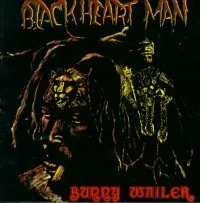
The lilting strains of Tommy McCook’s flute on the opening title track welcome the listener deep into the Jamaican hillside, and one feels instantly transported to a back-to-nature Rastafarian commune. Blackheart Man is the first solo album by Neville Livingston, aka Bunny Wailer, one of the original Wailers (with his half-brother Bob Marley, as well as Peter Tosh). Following the international success of the Wailers, Bunny began to feel marginalized as Bob’s was featured more prominently as the leader of the band—he also disliked leaving his homeland and became more entrenched in the Rastafari faith—and so both Bunny and Peter left in 1974 to begin successful solo careers.
Blackheart Man is a masterpiece, and surely one of the finest reggae albums of all time.Subtitled on the album jacket The Ten Messages, its ten songs elaborate on mystical Rasta teachings, Biblical messages of deliverance, and on the struggles of the African diaspora against oppression.Bunny is backed by most of the Wailers band, not to mention Peter Tosh on rhythm guitar and backing vocals and the Skatalites’ Tommy McCook on horns and woodwinds.Bob Marley even shows up to contribute backing vocals on the album’s richest, most redolent track, “Dreamland,” a fantasy of African repatriation: “We’ll get our breakfast from the tree / We’ll get our honey from the bee / We’ll take a ride on the waterfalls / And all the glories, we’ll have them all...”
[Here’s the song “Dreamland” as uploaded to YouTube—no video, just the song and a series of still images of Bunny Wailer.]
____________________________________________________________
Whew.This list of Desert Island Discs was more difficult to write than I’d anticipated.It’s hard to articulate why I love something that reaches me on such a pre-verbal level.Why does Edge’s guitar leave me in awe?Why does Coltrane’s “Song of the Underground Railroad” make the hairs on my arm stand up?Why do I well up sometimes when I hear “Dienda”?These are matters of emotion, of subconscious association, and it’s best just to accept them and enjoy.
I’ve had lots of musical mentors throughout my life—Mark, Amy, Rob, Dave, and others—who have introduced me to new bands discovered great music with me.
But I might not have so deep an appreciation for music—nor would it likely be such an integral part of my life that it’s impossible to imaging existing without it—if not for my dad.From the time I was very young, his massive record collection and patient indulgence of my curiosity have guided me in discovering my own musical preferences.He has never been hemmed in by labels and has never confined himself to one specific genre; his record collection includes classic and progressive rock, jazz, bluegrass, comedy, classical, fusion, blues, folk, metal, and so much more.The extent of his musical palate continues to amaze me to this day.
I always caution my students to avoid ending their work with someone else’s words, but in this case, I’ll break my own rule.In the last scene of the must-see film Almost Famous, fifteen-year-old William Miller finally gets an interview with lead guitarist Russell Hammond after following his band, Stillwater, around on tour.Sitting in William’s bedroom at the end of a poignant exchange, Miller thrusts a tape-recorder microphone at the rock star and asks, “So Russell ... what do you love about music?”Russell considers the question, settles in for a long response, and says, “To begin with ... everything.”
Monsoon Martin’s Open Letter to The Roots re: Deerhoof
Dear Legendary Roots Crew,
Have you heard of “tough love”? It’s when a friend or family member sits you down, fixes a grave stare upon you, and initiates a frank discussion about some shortcoming you have or some baffling behavior you’ve engaged in.
And before we get to the “tough” part, let me—as one should in any intervention that hopes to be successful—talk about the love I have for you.
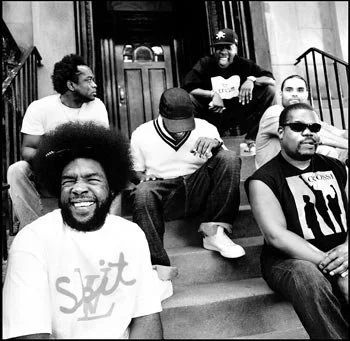
I have been a rabid fan of your Grammy-winning, authentic hip-hop selves since hearing your song “Proceed II” with jazz institution Roy Ayers on the Red Hot + Cool compilation way back in 1995. I bought your first major-label album, Do You Want More?!!!??!, and instantly loved Black Thought’s flow and witty rhymes, ?uestlove’s inventive percussion, and the organic sound of it all. At a time when hip-hop was succumbing to widespread sampling and stale, programmed backing music, The Roots burst on the scene with live instrumentation, a multiplicity of influences, and fierce talent.
When you released your second major label album, Illadelph Halflife, I was at the release party at the now-defunct HMV Records in Philadelphia at midnight on September 24th, 1996.
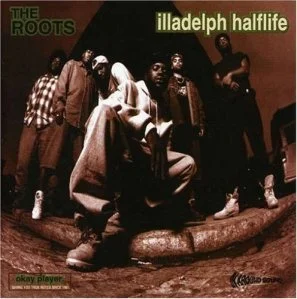
Ahmir “?uestlove” Thompson, I’m sure you recall greeting us at the door and shaking my now-wife’s hand as she gaped at your massive, Afro-topped frame—6’ 5”, with the Afro 6’ 9”, apologies to Fletch. I’m sure you also recall that I excitedly notified my then-girlfriend as we walked away, “That was a Root!” (for I was not yet a dedicated enough fan to know the name of each band member). And you might finally recall—and who could blame you?—thinking to yourself at that moment, “White people.”
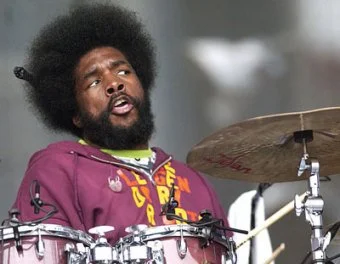
You played for free that night and rocked that store off its foundation with songs like “Concerto of the Desperado” and “Clones,” among others. Rahzel, the human beat-box who was in your employ for a time, was particularly outstanding during this intimate performance.
[For those of my readers who are unfamiliar with The Roots, might I direct you to two videos on YouTube—which you’re free to explore further to find other Roots treasures—that exemplify their artistry and energy in concert. In the first they are performing the song “Game Theory” from the album of the same name; the second video is a recent performance of one of their original hits, “Mellow My Man.”]
We followed you loyally from record label to record label, through band departures (Malik B., Hub) and additions (Kamal, Captain Kirk), through awards, critical successes, and disappointing sales, and popular breakthroughs.
But Roots (here comes the tough love part), What in funkless hell is up with Deerhoof?!!!??!
Deerhoof is an avant-indie-rock band based in San Francisco and has been described by the otherwise competent and reliable music critic Ben Ratliff of The New York Times as “one of the most original rock bands to have come along in the last decade.”
I was blissfully unaware of Deerhoof before I attended my next Roots concert. Billed as “An Evening with The Roots,” the show was held on September 15th, 2005 at the Kimmel Center’s Verizon Hall. I had noticed a full roster of at least five opening acts—none of whom I had heard of—but thought little of it. I had an outstanding ticket, having splurged on a box seat, and would see The Roots in a state-of-the art venue in their (and my, sort of) hometown. I was psyched.
I arrived midway through the “lesser” opening acts, which consisted mainly of local acts, close friends of the band, and other up-and-comers. The two most prominent openers for The Roots were TV on the Radio and Deerhoof. TV on the Radio was quirky but decent, though their set went a little long, and we (along with the overwhelming majority of the crowd) were anxious to see the headliners.
And then, Deerhoof came onstage.

My friends, I like many types of music and have been known to embrace unorthodox or experimental acts in my time. I remember listening to my dad’s Mothers of Invention and Captain Beefhart albums with a perplexed awe. Some of my favorite artists of all-time—Minutemen, John Coltrane, Jethro Tull, Fela Kuti, Rage Against the Machine—are artists who are notable for having blended genres, changed the rules, taken a stand, and dared to be distinctive. I am not some kind of musical ingénue who only likes to hear three-minute pop songs or something with a good beat. I like some goofy shit that ostensibly no one else does.
But I say this to you now: Deerhoof was the most upsetting aural experience of my lifetime.
Onto the stage stepped three slender, indistinctive white dudes who looked like they could have been plucked from any suburban high school’s A/V club. Accompanying them was a short Japanese woman, who appeared from her position onstage to be the bassist and vocalist.
The drummer, Greg Saunier, stepped to the microphone and offered a brief, endearing introduction to the band that went something like: “We’re Deerhoof, and we came from California. We hope you’ll like the sounds we make for you.” It was the very last moment I felt anything but fury toward Deerhoof.
And then they began to play.
Saunier instantly became a human Herky Jerk, playing spastic runs that sounded like snippets from a free-form drum solo, never really falling into any recognizable pattern or tempo whatsoever.
The other two guys held guitars and summoned tuneless, often distorted rock chords and the occasional tortured, miserable single note from them, and looked as if they believed they were playing actual music. Their guitar sounds seldom matched the percussive seizures that were happening behind them at the drum kit, as if they were isolated in some sort of invisible soundproof room. (If only I could have found such a room at that moment.)
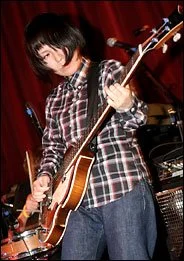
And then there was the band’s diminutive singer/bassist, Satomi Matsuzaki. Dressed in what appeared to be pajamas, the Japanese-born Matsuzaki—who apparently speaks little English—flailed away inexpertly at her bass guitar, further adding to the musical cacophony. She also sang unintelligible lyrics in a high, gibbering, childish voice devoid of any attempt at consistent pitch.
The aforementioned Ben Ratliff of The New York Times described her thus: “Ms. Matsuzaki, who also plays bass in the quartet, never sang or played an instrument before joining the group 10 years ago, and her thin voice is an acquired taste; many of the English lyrics she sings do not use stresses where normal speech puts them, which can make them nearly impossible to understand.” This is all a very learned, affected way of saying, “The singer is atrocious, but those of you who are so shallow as to demand talent from your musical groups are too unsophisticated to comprehend what Deerhoof is all about.”
What she actually sang about is anyone’s guess. At one point she seemed to be crying, “Don’t eat meat! Don’t eat meat!” as if it were some kind of vegan manifesto, but she could also have been saying “Dominate!” or “Mosley Street!” or almost anything else at all. The lyrics of a song they sang that night, entitled “Flower,” run in part: “Flower, flower, flower / Power, power, power / I come over / I take over!”
[I admit that even my purple, overwrought prose may not be able to convey the actual sounds that confronted us that night when Deerhoof performed, so here are two videos from YouTube of their live performances. The first is entitled “Panda Panda Panda” and encapsulates pretty much all that is wrong about Deerhoof; the second is a live performance of “Flower,” some of whose lyrics are transcribed above. I want you all to check out at least one of these videos, but I must also apologize in advance for the adverse reactions—skin rashes, ear bleeding, and vertigo are not out of the question—you may experience from doing so. I feel like a man who has eaten a bite of a putrid sirloin steak, turns to his dining companions and says, “There’s something hinky about this. Try it.”]
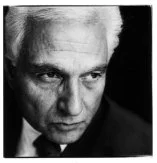
The collective effect of a Deerhoof performance is the musical equivalent of postmodern philosopher Jacques Derrida: inscrutable, pretentious, and infuriatingly obtuse. The sounds stop and start jarringly; the noise threatens fleetingly to fall into an actual meter, then veers wretchedly off into oblivion; and overlaying it all are the Minnie Mouse-like screechings of its lead vocalist, indecipherable and ridiculous.
I looked on with an ever-deepening, bewildered despair that I shall never forget as each song set new standards for unlistenability and horridness. At one point I tried to insist that even though the cumulative effect was horrific, I could tell that the drummer in particular was actually quite an accomplished musician; my companion glared at me with such betrayal in her eyes that I quickly realized any attempts to mitigate or elucidate this auditory travesty would be foolhardy.
I looked around at the diverse crowd that had assembled in Verizon Hall to hear their hip-hop heroes, The Roots: hardcore hip-hop fans; WXPN types who had been turned on to the band by their young urban professional friends; fans ranging in age from teens to fifties, easily. I saw everything from tautly polite expressions to gawping outrage, from bitter resentment to trying-to-make-sense-of-this confusion, from naked rage to blissed-out euphoria.
Wait—“blissed-out euphoria”? Yes, there they were: two art-school types, clearly dedicated Deerhoof fanatics, bopping along and gyrating to the strident din being blasted forth at the audience from the stage. They, I said to myself, and probably to my companion, are goddamned insane.
As I endured the hideous din onstage—which by now was calling to mind the irregular, heaving kecks of a vomiting mule—I fully expected one of The Roots to come onstage, halt the performance, and offer profuse apologies for its lack of quality. But unforgivably, and unforgettably, no such Root forthcame.
Deerhoof’s unceasing, blaring racket stretched on and on, seemingly for days, and I began to wonder why you, The Legendary Roots Crew, would have felt it necessary to inflict this desolate clamor upon your loyal and true fans. Have we—who came to support your joyous homecoming, your ascendancy to Philadelphia musical royalty, your acceptance by polite society—have we failed you in some fundamental way? Is this a punishment of some sort? (And if so: message received.)
The other possibility—and this one was almost more painful to consider—is that you guys actually like Deerhoof. And it’s this potentiality that brings us here to this intervention.
Roots, please hear me: Deerhoof is not, as its fans and some critics have asserted, deconstructing traditional structures and eliding the foundations and boundaries of popular music. Deerhoof is not delightfully turning the industry on its head, interrogating accepted paradigms, or meaningfully subverting compositional rules.
Deerhoof is sucking. That is all they are doing. They are sucking, and they are doing it hard. The sooner you come to terms with this, the better off you (and your fans) will be.
The one bright spot during Deerhoof’s set—aside from its eventual conclusion—occurred immediately following a rousing “tune” that featured Satomi Matsuzaki on cowbell, when a member of the audience bellowed, “More cowbell!” alluding to the “Saturday Night Live” sketch about a Blue Oyster Cult recording session.

Happily, you, the Legendary Roots Crew, played a blistering, two-and-a-half-hour set that night at Verizon Hall and I even met Black Thought—which, again, I’m sure you recall vividly—so the Deerhoof unpleasantness receded into the background of my memory. You came into the room led by a New Orleans jazz band (whose members had been displaced by Hurricane Katrina, and whom you—The Roots—had actually invited to stay at your homes), you had great guests like Dice Raw and even a surprise appearance by the incredible, incomparable Jill Scott.
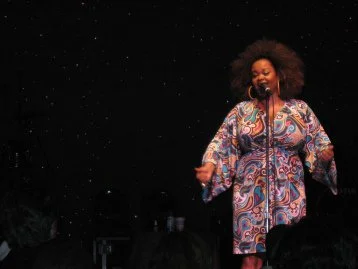
Since that night, I have tried many times to explain to my friends the horror of—and explain to myself the appeal of—Deerhoof, who evidently has quite a cult following. I have a theory I regard as strong, and—as I am anxious to put the whole Deerhoof matter behind me, as one would any trauma—I will share it here and move on with my life. Deerhoof has set itself up as a truly alternative artist in a world of supposedly “alternative” acts that sign with major labels and “sell out.” Critics have decided that Deerhoof is operating on a more complex and urbane musical level than the average person can really get his or her mind around. The net effect of all this is that music critics or indie fans are afraid to not like Deerhoof because they fear being exposed as Beyoncé-loving troglodytes who are incapable of appreciating dense, intricate music.
No one—not even their fans and fawning critics—understands Deerhoof because Deerhoof is unknowable. It is impossible to derive meaning from the nonsensical, just as it’s proverbially futile to try and get blood from a stone. Deerhoof is a stone that has been thrown at my earholes repeatedly, and I want it to stop.
And this brings me to the renewed sense of urgency that necessitated this little talk, my dear Roots.
Last month, I learned that you would be hosting The Roots Picnic at the Penn’s Landing Festival Pier in early June, which promised to be a wildly entertaining show. I was even looking forward to seeing your co-headliner, Gnarls Barkley.
But as my eyes rested on the third name on the billing for this show, I gasped (literally, audibly; I have a bit of a tendency for the dramatics): Deerhoof. And all the old questions came rushing back: Why do you, my beloved Roots, keep wreaking this dreadful band on your fans? How have we forsaken you?
Again, I understand that Deerhoof has opened for plenty of well-known bands, whose devotion to Deerhoof has been described as “evangelical”: Sonic Youth, Wilco, Radiohead, and The Flaming Lips among them. The only explanation I have for any of this is that there’s been a massive psychotic break in the music industry, and that the members of these bands—and yours—are afraid of not seeing the “genius” in Deerhoof, as I posited above. It’s the only explanation I can live with.
Legendary Roots Crew, my plea to you is this: cease and desist any association with the band Deerhoof and drop them from your June show at Penn’s Landing so that I, and legions of your true hip-hop fans, might again feel able to come and see your concerts without fearing exposure to the rancid, devoid musical stylings of Deerhoof.
Sincerely,