
Monsoon Martin’s Definitive Taste Test of Carbonated Soda Alternatives (Mostly Sparkling Water)
Friends,
I find myself in the throes of a gustatory overhaul - I can no longer drink most of the beverages I had been drinking (OJ, POM, lemonade, etc.). And of course, my beloved Pepsi, which I’d been drinking for decades.
For years I regarded sparkling water (and its aficionados) with something between pity and scorn. Well before I had ever tried it, I heard people describe the taste of sparkling water as “like TV static,” “like drinking static electricity,” and “like hitting your funny bone.” My favorite is something to the effect of, “it’s like quietly invoking the name of a fruit whilst someone else is aerating water down the block.”
Once it became clear that I needed to at least try to become a consumer of sparkling water, I decided I needed a colossal taste test to separate the FOHs from the MEHs from the GR8s. My methodology was simple: taste as many of these drinks as I could, rate them with an overall score (out of ten), and share these findings (and my anecdotal observations) with you fine people.
Several points of order I want to discuss before we dive in to the list:
In everyday conversation, we often use the terms “seltzer” and “sparkling water” interchangeably. But did you know there’s definitely a difference?
Seltzer is purified/filtered water that is artifically carbonated. It has no mineral content, often has a sharper or harsher taste/mouthfeel, and is present on the palate only fleetingly before it up and vanishes like a fart in the wind.
Sparkling water is water sourced from a spring or well and containing carbonation that may be naturally occurring and/or artificially aerated. Sparkling water has rich mineral content, which produces a milder—and many feel, more pleasant—mouthfeel and smoother taste.
Throughout the course of this taste test project, I have come to loathe the obfuscations that many sparkling water purveyors employ to expand their share of this lucrative market. These will be noted throughout, and the transgressors shamed.
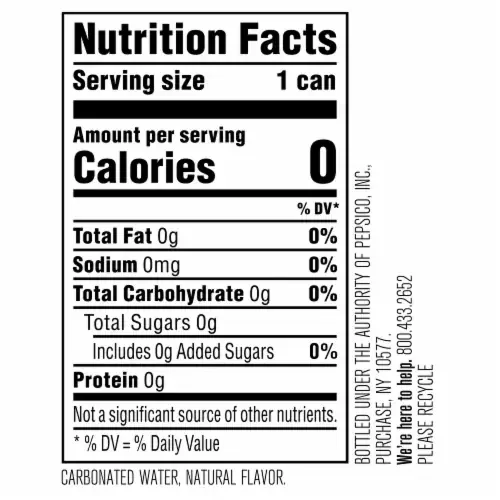
The most healthful products are those whose entire ingredient list reads something like “Carbonated Water, Natural Flavor.” The Nutrition Facts label can also help ensure that it has 0 calories, 0 fat, 0 sodium, 0 carbs, 0 total sugars, 0 added sugars, and 0 protein (see below). The can also typically boasts of “0% juice” content as well as no caffeine.
I tried sparkling waters from various brands in various flavors (including plain). I decided to also try prebiotic/probiotic sodas like OLIPOP and POPPI, whose advertisements claim that they offer a new kind of soda—one which tastes great and helps fortify the body’s digestion system.
What I did not include on this list: zero-sugar versions of popular soft drinks like Pepsi (which I hate because they contain artificial sweetners); and carbonated energy drinks like Celsius and Bloom (which I have tried, rejected, and moved on with my life). Beverages in those two categories in particular contain not insignificant doses of caffeine, and I’m not looking to get re-addicted to a substance that makes me (even more) jittery and anxious.
As you’ll see throughout the list, I was duped a few times—not realizing a product contained artificial sweeteners, which are so nasty that my considerable powers of histrionics and hyperbole fail me here. Anywho, for those of you who scan ingredient lists, here’s a list of artificial sweeteners to avoid if you wish to:
Acesulfame potassium (Sweet One, Sunett)
Advantame
Aspartame (NutraSweet, Equal)
Neotame (Newtame)
Thaumatin (Talin)
Saccharin (Sweet ‘n Low)
Sucralose (Splenda)
And now, the taste test results. I’ll be starting from 50 (the worst!) and working my way up to 1 (the best!). Each beverage comes primarily in a 12oz. can, unless otherwise noted. Enjoy!
50. OLIPOP Vintage Cola. Tastes like someone spilled a can of off-brand soda onto a dirt track through an overgrown meadow, then scooped the soda (and dirt, rocks, branches, dead bugs, etc.) back into the can. And then sealed it up and shipped it off. 0/10.
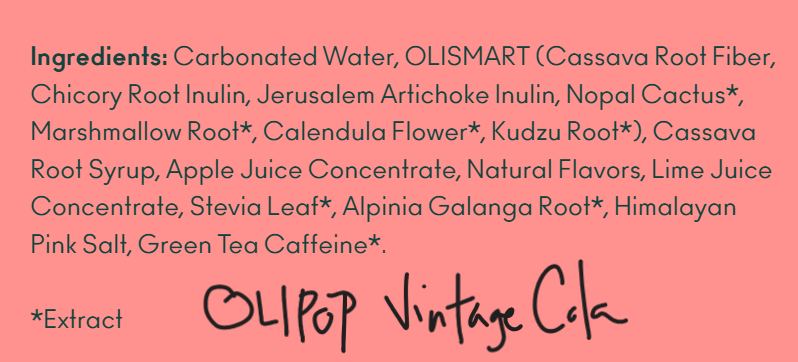
49. OLIPOP Classic Grape. Tastes vaguely (and almost inoffensively) of grape, but right on the grape taste’s heels is a kind of black licorice/fennel taste that made me nearly spit out the ghastly concoction. 0.2/10.
48. POPPI Classic Cola. Tastes just like a skunky Pepsi (one that has sat around in its case too long and has acquired a musty, stale flavor. Inadequate fizz, too. Not remotely potable. Dreadfully vegetal. And frankly, unforgivable. 0.2/10.
47. POPPI Lemon Lime. Tastes like a Sprite if it had been homemade by a sullen vegan who has never tasted Sprite, but who has heard rumors. Unfortunately, the sullen vegan was not listening carefully, and the rumored recipe is filled with half-truths and vague, alarming AI proclamations. 0.225/10.
46. OLIPOP Classic Root Beer. Tastes only vaguely like root beer and has very little carbonation to boot. An unholy, resinous mélange of ill-advised ingredients and wholly unearned hubris. Gross. Is there sulfur in here? Months-old romaine? 0.225/10.

45. Wegmans Wonder Pop (prebiotic soda), Grape. So many strange flavors have been assembled in an attempt to recreate grape soda. These efforts were in vain. There is the passing hint of (artificial) grape flavor, but not nearly enough to save this. Not by a long shot. 0.4/10.
44. Wegmans Wonder Pop (prebiotic soda), Lemon Lime. My best guess at the manufacturing process: they took five or six off-brand Wet-Naps, added some AJAX lemon-scented dishwashing liquid, and let them soak in a vat of tap water for 72 hours. The resultant potion was then robustly flatulated into—thereby creating its carbonation—then it was adjudged ready for comsumption. 0.425/10.
Friends, I have to interrupt myself here and tell you that I was excited to try these new prebiotic/probiotic sodas, as they have low sugar and are relatively low in calories. (And they’re everywhere, suddenly.) But these entries from 44-50 are the nastiest beverages I have ever had the misfortune of ingesting. 🤮🤮🤮🤮🤮 They are—with no hyperbolic or theatrical flourishes—quite simply a crime against humanity. Additional note: these prebiotic/probiotic sodas are supposed to be great for gut health, but instead often cause bloating, gas, and abdominal pain.
Now back to the list!
43. Splash refresher (wild cherry). Here is the first of several duplicitous sparkling water-adjacent frauds. It is called “refresher” (rather than sparkling water), but shares shelves with legit sparkling water, so it was promising. Sadly, I neglected to read the ingredients. For true sparkling water, the ingredients should be carbonated water and natural flavors (or, if it’s plain, just carbonated water). Had I read the ingredients, I would have realized it had sucralose before I tasted it and was rendered mouth-sad by its artificial, engineered sweetness. Gross. 0.475/10.

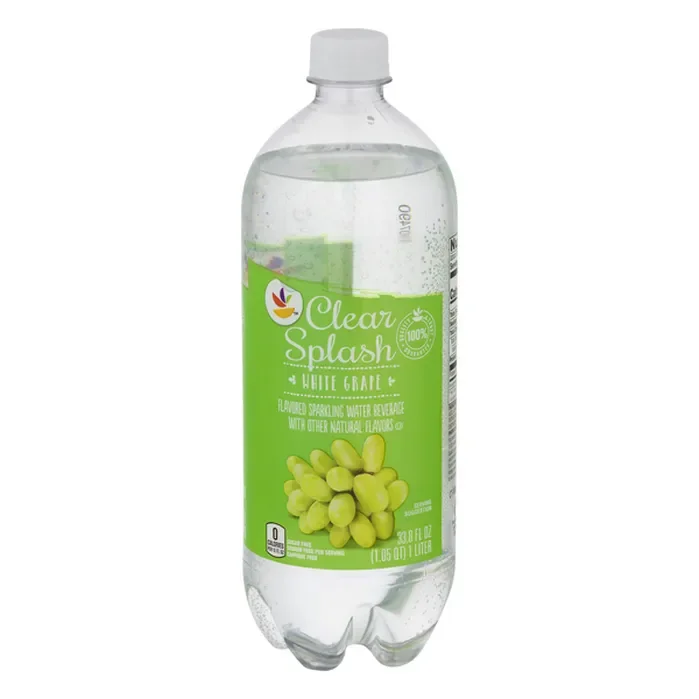
42. Giant Clear Splash white grape sparkling water beverage. (1-liter plastic bottle.) Again, I missed the harbingers of faux-sparkling water calamity: the fact that it’s called “sparkling water beverage” and its ingredient list containing aspartame. This product comes in one-liter bottles that stand athwart legitimate sparkling water, entrapping the negligent browser. In my notes for this product, I wrote that it “has aspartame in it and is therefore unequivocally nasty as shit.” 0.475/10.
41. Wegmans blueberry nectarine sparkling water. (In addition to cans, most Wegmans Sparkling Water flavors are also available in 1 liter and .5 liter bottles.) Wegmans makes some respectable sparkling water (forthwith and hereafter abbreviated as “SW”), but this is not one of them. This unholy alliance presents with an acrid taste, then devolves into a caustic assault on the taste buds (and, I dare say, common decency). 0.6/10.
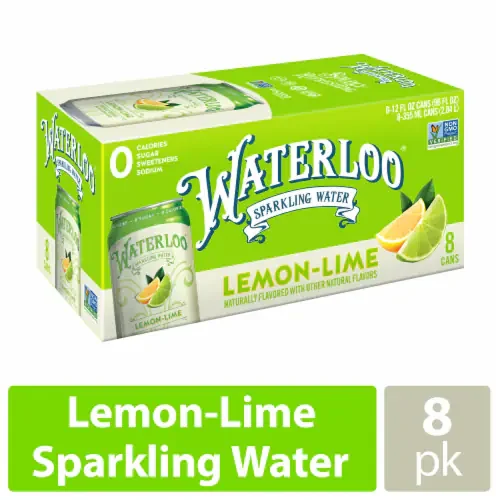
40. Waterloo lemon lime. Tastes like a (bad) chemical approximation of citrus that is—despite the fact that it’s water—dry. “I do not want this is my mouth,” I said. “That’s what she said,” I replied. 1.1/10.
39. Bubly lime. Phenolic notes with harsh mouthfeel. And a soapy aftertaste(?). Bubly makes some outstanding SW, but this is not one of them. Hard pass. 1.5/10.
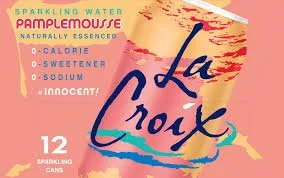
38. LaCroix Pamplemousse. Right off the bat, the name pisses me off. It’s fucking grapefruit. Cut the shit. The taste is an acrid, faux-cirtus abomination that somehow also manages to taste musty. 1.7/10.
37. Giant lemon lime. Tart faux-Sprite that is both tasteless and overwhelming. A true contradiction. Also, a contraindication, in the immortal words of Claudius: “Gertrude, do not drink.” 1.8/10.
36. Giant lemon. Nearly indistinguishable from Giant lemon lime. Tastes like lemon meringue icing on a gas station snack cake that expired several months ago. 1.8/10.
35. Wegmans lemon. (In addition to cans, most Wegmans Sparkling Water flavors are also available in 1 liter and .5 liter bottles.) Why does he keep trying lemon SW if he hates it so much? you may ask. Because he is ineducable, I reply. This reminds me of getting a n unwanted nasty-ass lemon wedge on the rim of my water glass in a grimy diner. I also recorded in my notes: “this tastes like Pledge smells.” 2/10.

34. Bubly blueberry pomegranate. Here’s another disappointing Bubly offering—far less tasty than either of its flavors might be on its own. Like medicinal cardboard. 2.1/10.
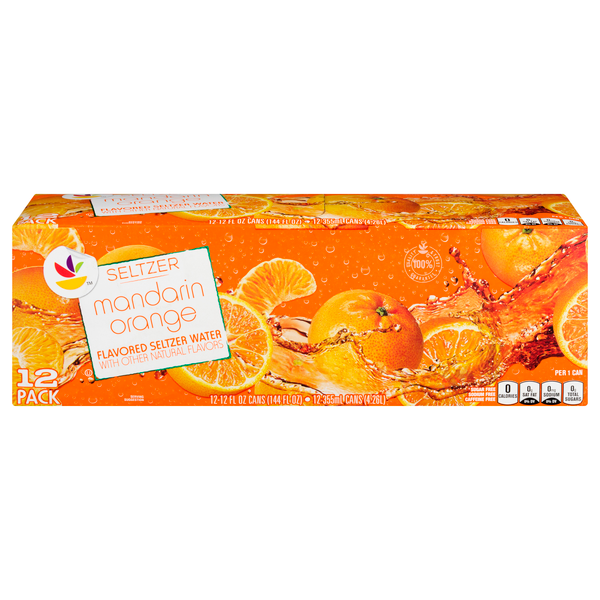
33. Giant mandarin orange. Not terribly different from other mandarin orange SWs, but I do not like this flavor, so I spurn it. 2.2/10.
32. Wegmans grapefruit. (In addition to cans, most Wegmans Sparkling Water flavors are also available in 1 liter and .5 liter bottles.) No. Marginally better than the Pamplemousse horseshit, but still not quite pleasant. 2.3/10.
31. Wegmans mandarin orange. (In addition to cans, most Wegmans Sparkling Water flavors are also available in 1 liter and .5 liter bottles.) See #33 above. This at least approaches the general region of a drink that could—in some minor, almost accidental way—quench my thirst. 2.75/10.
30. LaCroix strawberry peach. No, the flavor clash is unexpected and devastating. I love strawberries but hate peaches, so there we are then. 2.8/10.
29. LaCroix tangerine. Tastes like tangerines and plastic. I hate tangerines but often dig the smell of new plastic. So it’s a conundrum. 2.8/10.
28. Good & Gather (Target brand) tropical cherry. Tastes unlike any other SW I have tried. Not in a good way, but in a profoundly hinky way. 2.8/10.
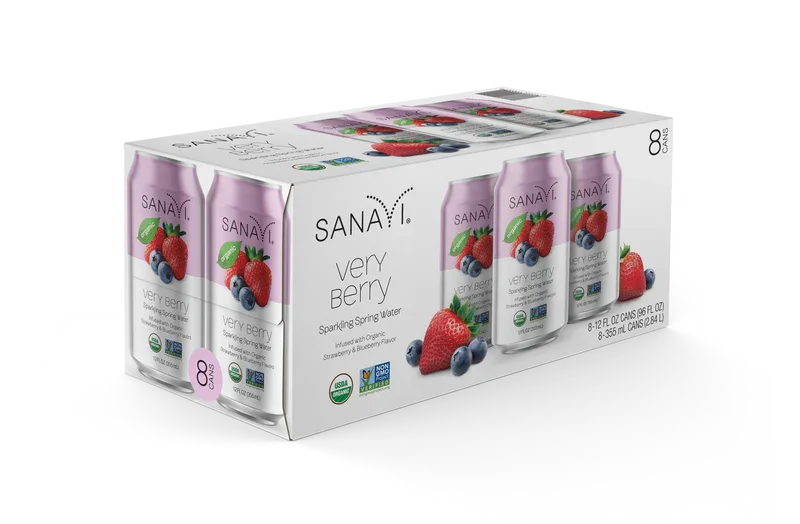
27. Sanavi organic sparkling spring water (Very Berry flavor). This is a hoity-toity, ludicrously overpriced SW whose only claim to fame seems to be the use of only organic natural flavors. The mouthfeel is right, with pleasant carbonation, but its taste is too reminiscent of cough syrup to be something I’d reach for. If there are no other liquids available, I’d deign to drink this. 4.6/10.
26. Vintage Seltzer pomegranate. (Sold in 1-liter plastic bottles.) It’s decent, but has far too harsh a mouthfeel. Nah. 5.2/10.
25. Polar Seltzer Jr. Yeti Mischief. (Sold in teensy 7.5-ounce cans.) This one tastes like fizzy Hawaiian punch, so the nostalgia factor makes this almost desirable. 5.6/10.
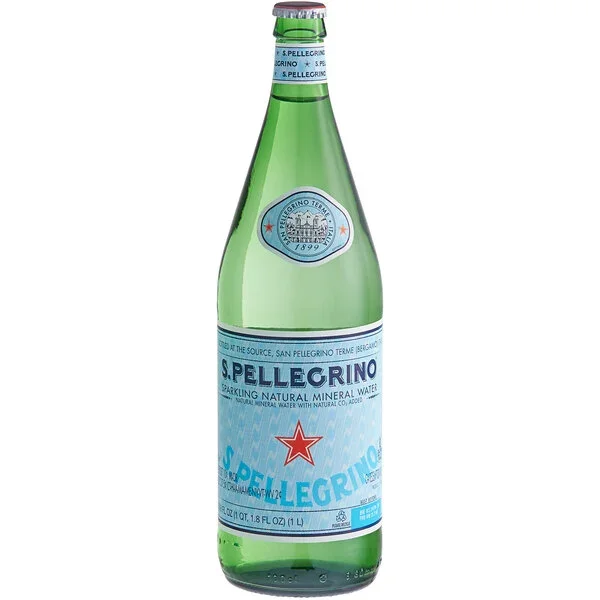
24. San Pellegrino Sparkling Natural Mineral Water. (Sold in 25.3-ounce glass bottles.) The bottle is cool-looking. But it’s downhill from there: such a dearth of fizz that it was almost imperceptible. The taste is slightly salty with a dry finish and an astringent aftertaste. And there’s 20mg of sodium per bottle—not excessive, but why is sodium in there at all? 5.7/10.
23. Topo Chico carbonated mineral water. (Sold in 600mL plastic bottles, 12-ounce glass bottles, and some are available in cans.) This is fine. I had heard that this brand, produced exclusively in Monterrey, Mexico, would change my life. My socks are still on. 5.9/10.
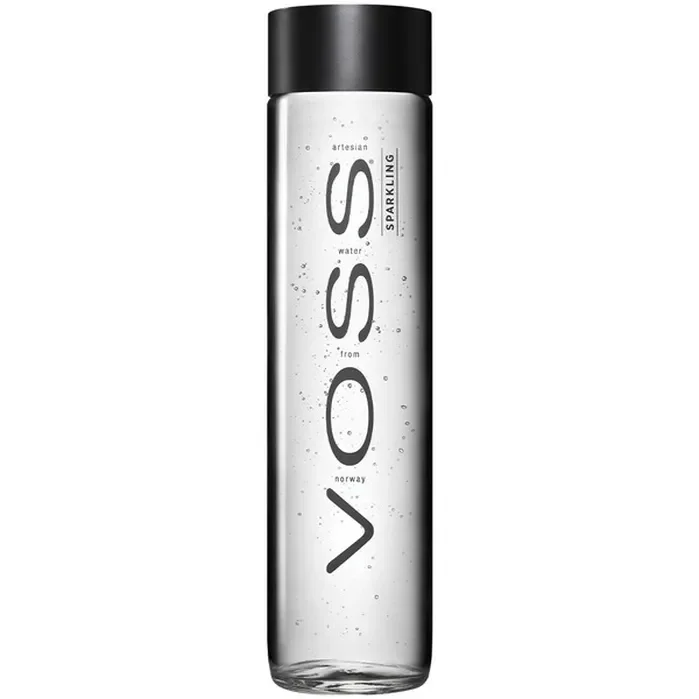
22. VOSS Sparkling Artesian Water from Norway. (Sold in 27.05-ounce glass bottles.) This one was a major disappointment. VOSS in its still form is pure perfection: a crisp, clean, and completely refreshing elixir. This sparkling version—while still housed in the iconic cylindrical bottle that’s a triumph of Scandinavian minimalism—has small, angry bubbles that dissipate quickly; by the third sip, the carbonation had all but abandoned this forlorn libation. It lacked the smooth self-assuredness of VOSS in still form. And it has 35mg of sodium per bottle, which isn’t going to break most diets, but—why is it there? 5.975/10.
21. Wegmans green apple. (In addition to cans, most Wegmans Sparkling Water flavors are also available in 1 liter and .5 liter bottles.) It’s acceptable in a pinch. I almost want more. Almost. 6/10.
20. Wegmans cranberry apple. (In addition to cans, most Wegmans Sparkling Water flavors are also available in 1 liter and .5 liter bottles.) This is a seasonal concoction that boasts a nice flavor combination, but fails to distinguish itself in any meaningful way. 6.2/10.
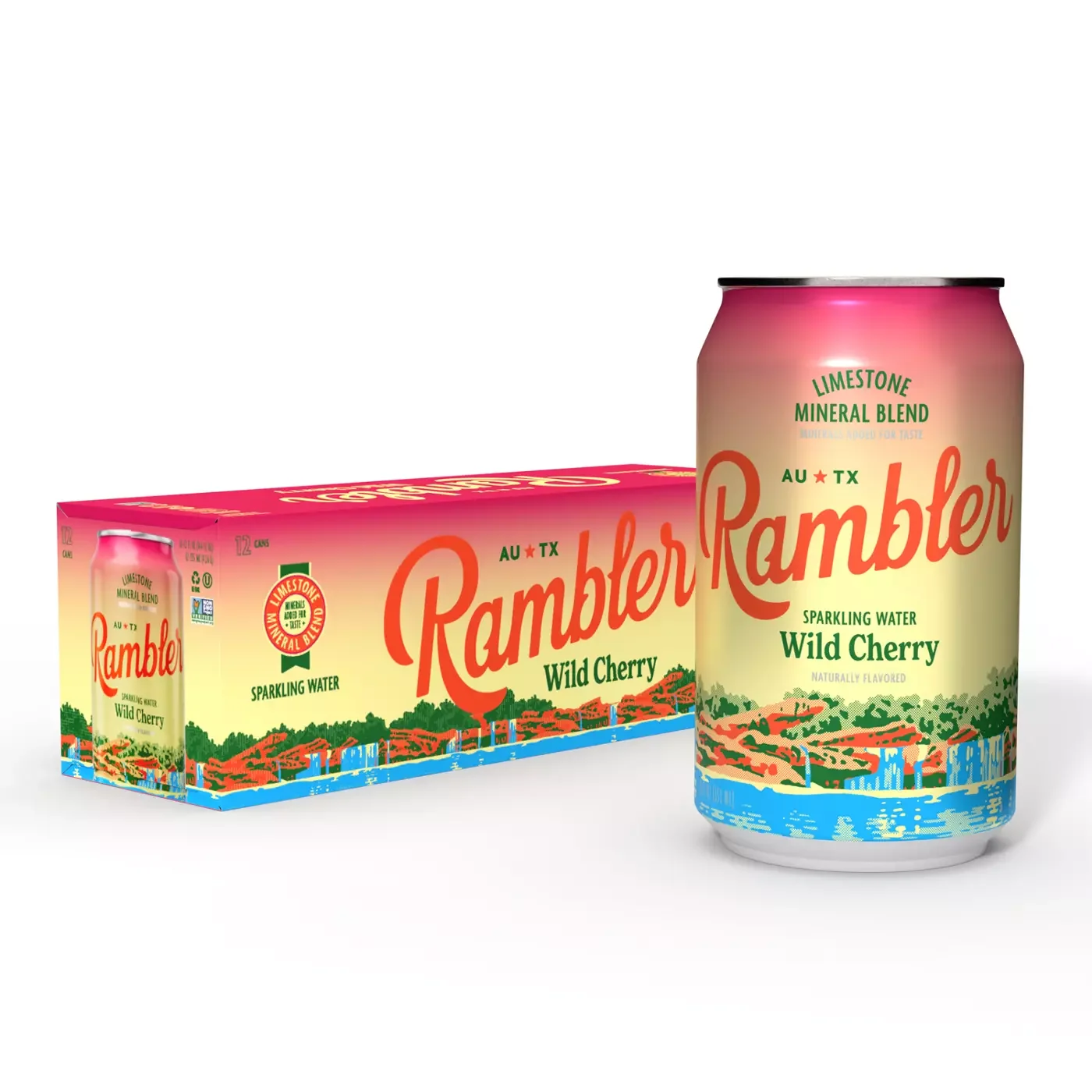
19. Rambler Wild Cherry sparkling water (limestone mineral blend) is made in Austin and is the subject of much adulation among SW drinkers. It was not bad, but the taste is ultimately uneven and a tad harsh. Bottom line: didn’t change my life. Another strike against it: Rambler is only available at one retailer—Walmart. 6.4/10.
18. Waterloo black cherry is aight. The flavor is a bit too thin—and the carbonation a bit too aggressive—to make this a staple. Not a huge fan of Waterloo as a brand, and rearranging its component parts gives it a revealing, and more accurate, name: LOO WATER. 6.5/10.
17. Wegmans black cherry vanilla. (In addition to cans, most Wegmans Sparkling Water flavors are also available in 1 liter and .5 liter bottles.) This SW tastes more like vanilla than cherry; it’s decent, but I’d really have to be in the mood for this specific taste. 6.8/10.
16. Wegmans orange pineapple. (In addition to cans, most Wegmans Sparkling Water flavors are also available in 1 liter and .5 liter bottles.) The pineapple balances out the overpowering citrus flavor profile. It’s like mayochup: it’s a mash-up that has no earthly business working, but it god damn does. I liked this more than I thought I would. 7/10.
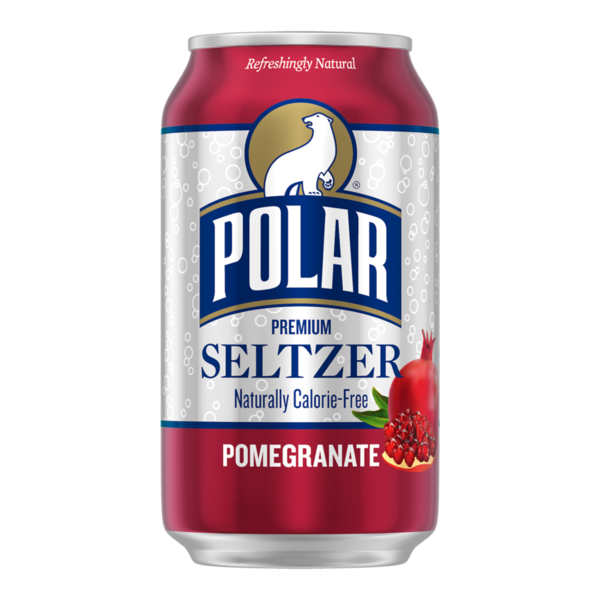
15. Polar pomegranate. (Many Polar SW varieties are available in 1-liter plastic bottles in addition to 12oz. cans.) This hard-to-find flavor is not exciting enough to warrant the effort it took to procure it. Harsh with a generic taste. 7.2/10.
14. Wegmans raspberry. (In addition to cans, most Wegmans Sparkling Water flavors are also available in 1 liter and .5 liter bottles.) This is OK, but a bit harsh. I don’t want my taste buds to be jostled around in a mosh pit. I want them to be coddled and refreshed. 7.2/10.
13. Wegmans mixed berry. (In addition to cans, most Wegmans Sparkling Water flavors are also available in 1 liter and .5 liter bottles.) Similar to polar pom: unremarkable, but serviceable. The mayonnaise of SWs. This SW is suffering from an identity crisis. 7.3/10.
12. Wegmans passion fruit. (In addition to cans, most Wegmans Sparkling Water flavors are also available in 1 liter and .5 liter bottles.) This variety is fine, but it has a faint but noticeable peachy aftertaste that I would find periodically objectionable. Mood-dependent. 7.3/10.
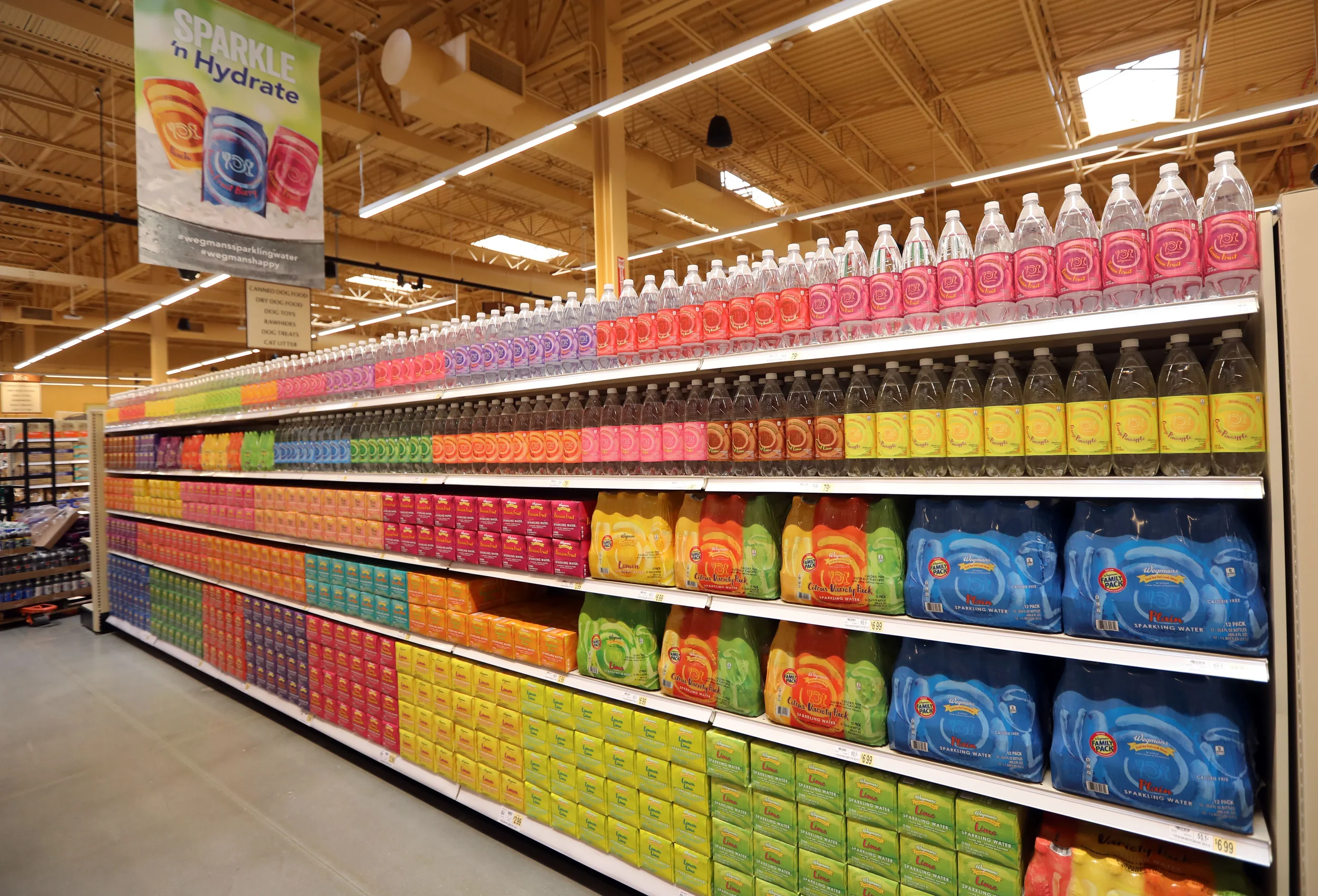
11. Wegmans plain SW. (In addition to cans, most Wegmans Sparkling Water flavors are also available in 1 liter and .5 liter bottles.) I think the absence of flavor will be a nice change of pace now and again. No-frills, old-fashioned, competent SW. 7.7/10.
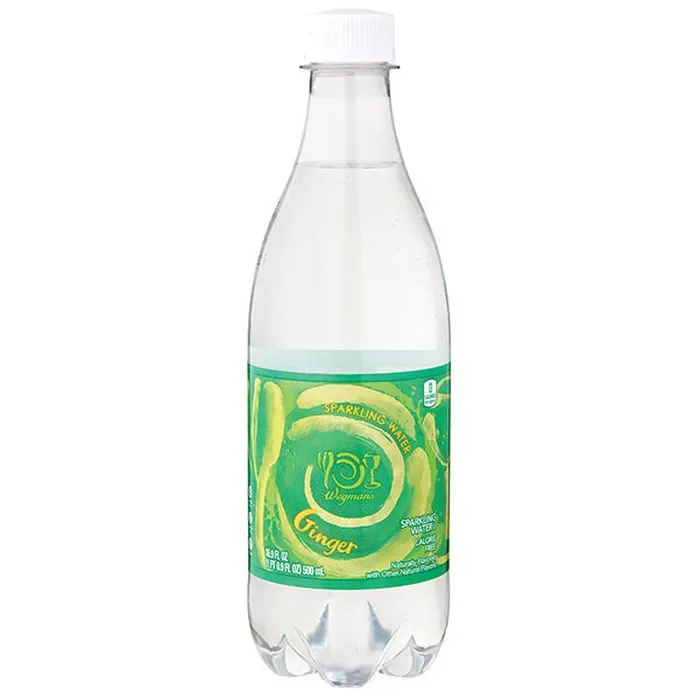
10. Wegmans ginger. (In addition to cans, most Wegmans Sparkling Water flavors are also available in 1 liter and .5 liter bottles.) Has a nice, piquant after-dinner flavor—heady, but with just a touch of mellow smoothness. (Bonus points if you can place the movie reference.) Honestly, I can’t distinguish this from the plain. 7.7/10.
9. Polar black cherry. (Many Polar SW varieties are available in 1-liter plastic bottles in addition to 12oz. cans.) Milder and tastier than the Loo Water version. 7.85/10.
8. Maison Perrier Ultimate unflavored. (Sold in 11.15-ounce cans as well as 16.9-ounce plastic bottles.) Delightfully neutral taste and mouthfeel; has a bit less carbonation than I’d prefer, but it’s a solid option. 8/10.
7. Maison Perrier forever strawberry. (These come in 11.15-ounce cans.) This delicate wonder has milder carbonation and a subtler strawberry taste than its American cousins. Oui, I dig it. 8.2/10.
6. Bubly blackberry. This is pretty, pretty, pretty good. 8.3/10.

5. Bubly srrawberry. I really like this one. Crisp, refreshing, and authentically evokes the flavor of my favorite fruit. 8.8/10.
4. Bubly cherry. Even a hair better than the strawberry. The flavor is rich but not overpowering. In the same way that grape flavoring tastes nothing like actual grapes, cherry flavoring tastes nothing like actual cherries. It matters not. WTG, Bubly. 9/10.

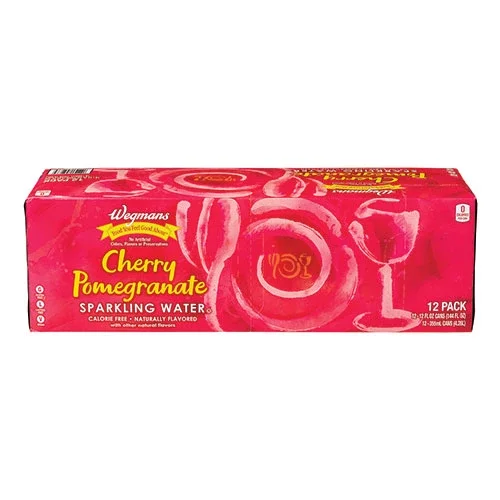
3. Wegmans cherry pomegranate. (In addition to cans, most Wegmans Sparkling Water flavors are also available in 1 liter and .5 liter bottles.) This SW is the quintessence of the age-old idiom “Greater than the sum of its parts.” I don’t like it; I love it. 9.8/10.
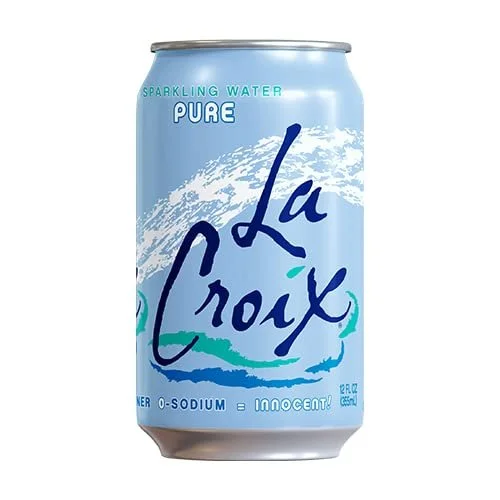
2. LaCroix Pure (plain) SW. This SW is nigh flawless: clean, refreshing, and delightfully effervescent. The carbonation is spot-on. 9.9/10.
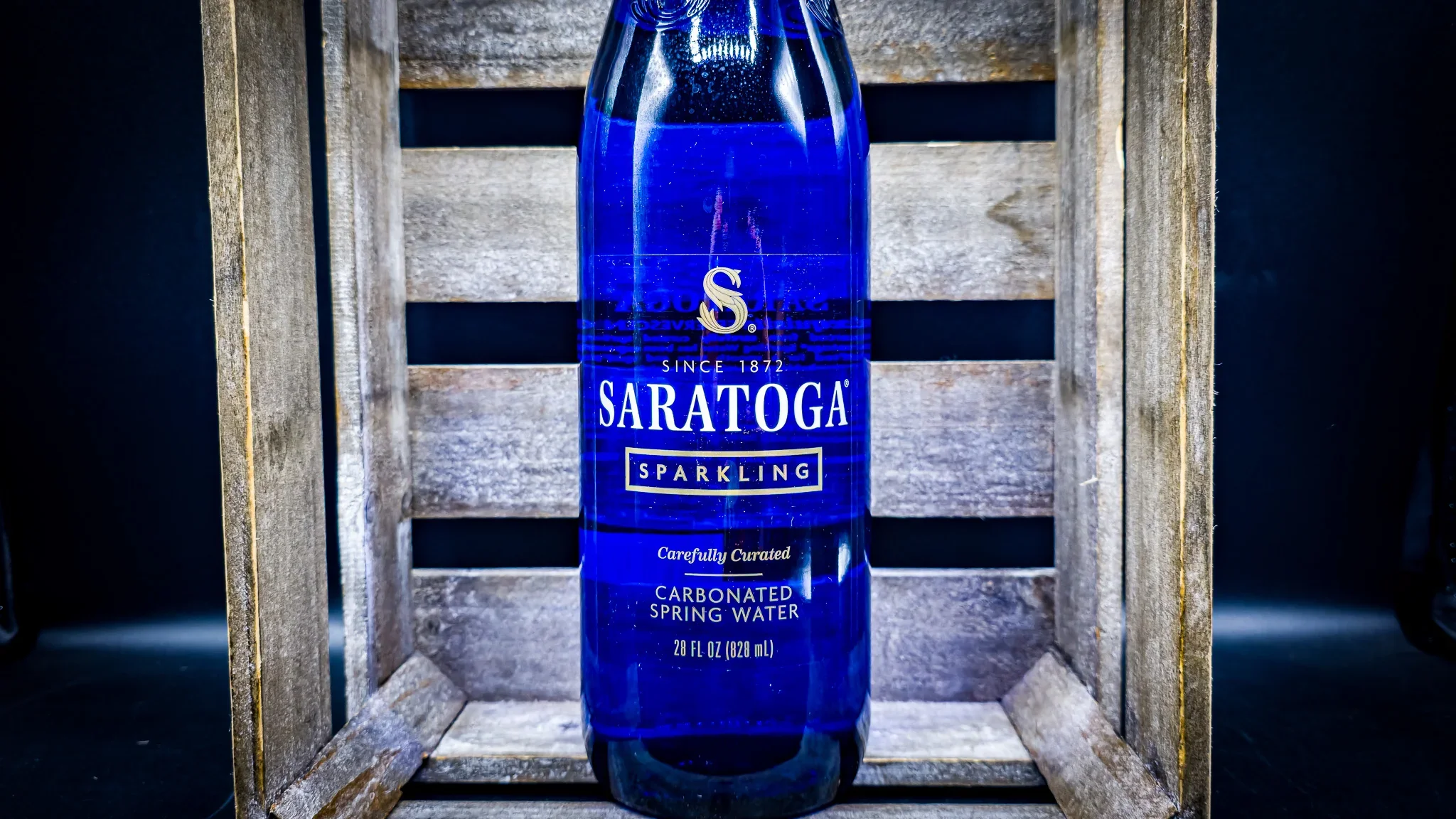
1. Saratoga Sparkling Carefully Curated Carbonated Spring Water. (Sold in 28-ounce glass bottles as well as 28-ounce, 16-ounce, and 12-ounce plastic bottles.) Friends, I was just itching to hate this one because of the pretentious mouthful of a name. But that pretentious mouthful of a name has been fully earned. Hold on to your tighty-whities, because this shit is TRANSCENDENT. Perfection itself. The carbonation is potent but not overpowering; the SW is almost preternaturally crisp and refreshing (nay, that’s too pedestrian a word; revivifying is a better adjective). A positively enchanting libation. The nectar of the gods. 10/10 no notes.
So where do I go from here? I’ve heard good things about Canada Dry Original Sparkling Seltzer Water and Trader Joe’s sparkling water, so I intend to try them. Aldi’s SW brand, called Belle Vie, has its fans and its detractors.
And there’s a very hard-to-find Saratoga flavored sparkling water called Untitled Berry No. 3. I have procured this, and am practically vibrating with anticipation.
And you, Dear Reader - please send me an email (or leave a comment here) if you have a carbonated soda alternative that you love. I will try it!
Monsoon's "A Tall, Cool (Expensive) Drink of Water" Blind Taste-Test
In the past 10 to 15 years, bottled water has become as ubiquitous in our culture as cell phones, play dates, and Britney Spears. As George Carlin observed in an early-90s routine, “What happened in this country that now, suddenly, everyone is walking around with their own personal bottle of water? When did we get so thirsty in America? Is everybody so dehydrated they have to have their own portable supply of fluids with them at all times? Get a drink before you leave the house!” And yet, in more recent appearances, Carlin typically totes along a water bottle of his very own.
Much has been made of the fact that the human body (like our planet) is about two-thirds water, and we replenish up to 90% of our water each day. Undeniably, it is far more healthful to reach for water than for a cola or fruit drink to quench our thirsts. Given these factors, and the fact that convenience has been elevated to the status of a universal human right in our society, bottled water isn’t likely going anywhere anytime soon.
And though I try to be environmentally conscientious, I have taken a liking to a bottled water or two in my day. In the English planning room, we have a water cooler that uses Crystal Spring water in reusable jugs that are delivered biweekly. Encouragingly, the water in these jugs is bottled locally, cutting down on travel time and pollution.
It occurred to me, though, that this multibillion-dollar bottled water industry had sprung out of nothing in the past 20 years at most. It’s one of the rarest triumphs in free-market capitalism: creating a perceived need among consumers where none at all existed before. The question for most consumers is not “Will I purchase bottled water?” but “Which bottled water will I purchase?” Since one of my fondest pursuits in life is sticking it to The Man—or to thwart The Man in his efforts to stick it to me—I thought I’d conduct a blind taste test of various available waters and see if these bottled waters were all they claim to be. I have no illusions that I will be forever able to kick the bottled water habit, but maybe the results of my wildly unscientific study will give me (and, just possibly, you, dear reader) pause before grabbing for that next bottle of water.
I lined up six different water sources—some popular, some more obscure—and poured them in glasses so that I could not tell which water I was drinking. Then I forgot which water was in which glass, so I had to start over and label the glasses with a code, and I was on my way. The six contestants: Deer Park, Voss, Dasani, Iceland Spring, Fiji, and of course, good old municipal Adamstown tap water.
(I eschew flavored waters like Dasani with raspberry and kiwi and the like because if I want a freaking fruit juice I’m just going to get a freaking fruit juice, not some watery confection; vitaminwater, which is seen everywhere in my school—perhaps because there’s a machine selling it in the cafeteria—but has as much caloric and sugar content as a typical glass of fruit juice; and other permutations. I was only interested in water that claimed to be “pure” or unadulterated in some way. I am also aware that there are about 5,000 other brands of water out there, including Evian, Dannon, Aquafina, Pure Choice, and many more. Finally, I know there are products like the Brita filter that create purified water from tap water, but we used to have one of these and it was a pain in the arse. So I chose these as what I feel is a representative sample.)
Below are my findings…
VOSS artesian water from Norway, which sells at local Turkey Hill markets: $1.59 for a half-liter. (“Artesian” means simply that its source is an underground aquifier whose groundwater rises to the surface rather than having to be pumped out.) The label says it’s “naturally pure water, free of sodium, low in minerals, and incomparable in taste.” The sodium bit is an obvious swipe at the likes of Dasani, which adds sodium to its product (more on that later). It comes in an ingeniously designed bottle that looks like a hairspray canister with a red stripe and a gray top. One of the most outstanding design features is the bottle’s wide mouth, which seems to be about 50% bigger than standard bottles, allowing for bigger gulps and more comprehensive palate coverage.
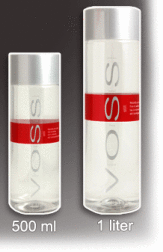
I found Voss, in the blind taste test, to be clean, crisp and totally refreshing. There is a very slightly bitter aftertaste—the purity of the water is too much, no doubt, for my coarse palate—that I find eminently pleasing. When I take a swig of Voss, I feel as though I am gliding contentedly down the glacial fjords of Norway’s northern coast.
There is an internet rumor that Voss (as has been suggested about other “pure” bottled waters) is actually just Norwegian tap water. This is an ugly and unfounded allegation, and I reject it. Ranking: 2nd of 6
ICELAND SPRING natural Icelandic spring water, which also sells at Turkey Hill, among other places: $1.09 per half liter. It’s filtered through lava, says the label, in the mountains of Iceland, and bottled in Reykjavik. The label also trumpets its low mineral content and notes that Icelanders, who have the highest life expectancy of any nationality in the world, credit this water for their longevity. The bottle is of the typical contoured plastic design, but also includes opaque and craggy sections that call to mind mountainous terrain or an iceberg.
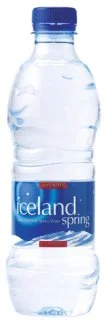
I found Iceland Spring to be fine, but not as smooth as Voss. On the second and third gulps I became aware of a harsh aftertaste, and actually a pretty unpleasant during-taste as well. The absence of flavor is jarring. When I drink Iceland Spring, I feel as though I am sailing down a glacial river in Iceland much like the idyllic fjord of Voss—but this time I am seized, my head is dunked violently underwater, and then I am returned to the safety of the boat. Ranking: 6th of 6
FIJI natural Artesian water can be purchased at many grocery and convenience stores, usually for roughly 99 cents for a half-liter (less per liter for larger sizes or cases). Fiji, which is bottled on the Fiji islands, takes great pains on its label to associate the water with an earlier, cleaner time. Fiji water flowed through the mountains before the Industrial Revolution, it insists, and is therefore untouched by pollution. (Despite my love for the product, I find this claim logistically dubious.) Fiji also trumpets its silica content, which is said to promote smoothness. Its bottle has flora and fauna to suggest a sense of place, evoking a tranquil, tropical paradise.
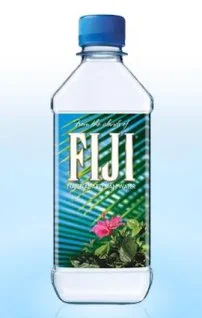
Fiji was my first dalliance into “exotic” bottled waters, and far and way my favorite. It’s got a nice, markedly softer taste than either Icelandic or Voss. It has some of the flavor of tap water without being gritty or unpleasant. Drinking Fiji makes me feel as though I am lounging blissfully on a tropical beach, utterly refreshed—OK, wait. No, that’s not a nice milieu. I’d be too hot on a tropical beach, and the sand (fine and milky though it might be) would throw me into a pissy-pants tizzy and a frantic search for a Wet-Nap, and set off my OCD in the most obnoxious way. So instead: it makes me feel as though I am in an air-conditioned room, looking out the window at a lush, tropical paradise. Ranking: 1st of 6
DEER PARK (“…that’s good water”) can be purchased at any number of places, and is also available for home or business delivery, much like Crystal Springs mentioned above. Its cost is considerably lower than the “exotics” above: $1.19 per gallon typically. It is bottled at a variety of locations, but primarily originates from springs deep in the Appalachian Mountains of western Maryland. Deer Park’s containers have changed of late to more “environmentally friendly” designs, and the largest available jug has recesses built into one side, making it much easier to pick up.
Deer Park somehow manages to be both more filling and more bland than the other contestants thus far. It has a silty aftertaste not present with the others. There are clearly more minerals here—and perhaps, more contaminants—but they don’t add to the taste appreciably. Ranking: 5th of 6
DASANI is Coca-Cola’s water, and easily the most popular of the “plain” bottled waters; it is for sale everywhere, and a one-liter bottle costs 99 cents. Dasani is tap water that has been purified using a process called reverse osmosis. The label also indicates that it’s been “enhanced with minerals for a pure, fresh taste” and contains magnesium sulfate, potassium chloride, and salt (for taste).
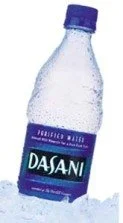
The sodium and mineral content in Dasani is evident from the first sip, though the label insists the salt is “negligible.” I can’t help but wonder if this is part of Dasani’s marketing strategy: consumers will drink Dasani to be refreshed, but that modicum of salt will leave them with a bit of unexplained lingering thirst, leading them to reach for another bottle of Dasani. The taste of this water is full-bodied, but also artificial in an indefinable way. Ranking: 4th of 6
ADAMSTOWN MUNICIPAL TAP WATER is available exclusively in Adamstown, Pennsylvania. The cost of this water for Adamstown residents is $21.85 for up to 3000 gallons, or less than a penny per gallon. It is gotten from wells in the Hammer Creek formation and is tightly controlled by the EPA (unlike most bottled waters), having been certified fit to consume. Tap water typically contains small amounts of chlorine, fluoride, aluminum sulfate, hydrogen sulfide, and nitrates.

This tap water is most definitely less “pure” than the likes of Icelandic or Fiji; it looks positively chunky by comparison. But there is a pleasing and unmistakable flavor here that’s missing from those waters that boast low mineral content. I can feel it on my tongue, and it is quite nice. Ranking: 3rd of 6
Over all, I am impressed with how well tap water stacked up against the spring and purified waters—and when the cost disparity is calculated, it’s staggering. Some bottled waters are more than twice as expensive per gallon as gasoline, and yet few us of turn on the tap (for a lousy penny per gallon) when we’re thirsty.
To be sure, there are those who would point out problems with tap water. Present in tap water are bacteria, radioactive isotopes, pesticides, and even antibiotic traces that have invaded our streams, rivers, lakes, and groundwater. And libertarians get so indignant about the fact that fluoride is infused into municipal water supplies (ostensibly as a dentifrice) that anti-fluoridation movements have sprung up, calling the addition of fluoride “compulsory mass medication” and a governmental intrusion into our lives. Now, I love a good conspiracy theory as much as the next schmo—probably a whole lot more—but god damn. I’m willing to believe that our government is tapping our phones, manipulating what we read—it may have even staged the moon landing, or faked a catastrophe or two. But messing with us by putting fluoride in our water? I just don’t see it.
The key to keep in mind regarding the argument about tap water containing bacteria and other contaminants is that independent studies have routinely found that some bottled waters contain more of these contaminants than municipal tap water! This is because the content of tap water is much more tightly controlled than that of bottled water, which has been tested and sometimes discovered to have higher (and actually rather dangerous) bacteria levels than tap water.
No matter if we choose tap or bottled water, then, it’s not easy to ensure that we’re getting a substance that’s “pure” or healthful at all. In this case, we have to look at other factors to break the tie. It all comes down to the environment.
A case in point is Fiji (where my favorite water in the world comes from). On these islands, clean drinking water is unavailable for a portion of the population, yet thousands of gallons of Fiji spring water are shipped away each day. And the Fiji water that’s made it from the islands to my grocery store has traveled roughly 6,000 miles by ship, plane, and truck—all of which use fossil fuels, and all of which have devastating effects on the environment. Using water like Crystal Spring or Deer Park at least can be defended on the grounds that it has a relatively short trip from source to your refrigerator. But keep in mind as well that only 20% of plastic beverage bottles are ever recycled, adding immeasurably to already-overcrowded landfills and releasing dangerous chemicals into the ground.
Many cities, notably the San Francisco bay area, have initiated programs like “Think Outside the Bottle” to educate people about the environmental impact of bottled water and encourage them to turn on the tap when they’re thirsty.
“Ever wonder about those people who spend $2 apiece on those little bottles of Evian water?” George Carlin once asked. “Try spelling ‘Evian’ backward.”

For my part, I’m going to start making an effort to kick the habit, but I’m not promising anything (sorry, Earth).
Below are some provocative articles on the bottled water controversy—well worth a read:
“Don’t Be Duped By Bottled Water” - http://www.commondreams.org/views05/1012-30.htm
“The Real Cost of Bottled Water” - http://www.commondreams.org/views07/0218-05.htm
$10 a gallon versus 49 cents a year” - http://www.argusobserver.com/articles/2008/02/24/news/us/doc47c13a11a550a689404593.txt
“Bad to the Last Drop” - http://www.nytimes.com/2005/08/01/opinion/01standage.html
Monsoon