
Penn Cinema Announces Heart of Lancaster Presents 2008 Fall Season
My friends,
I'm excited to annouce that my favorite movie theater has announced its Fall 2008 lineup for The Heart of Lancaster Presents! (If you do not recall from my earlier post, this film series presents one vintage film each Monday night at 7pm. The cost is $9.00 per person.)
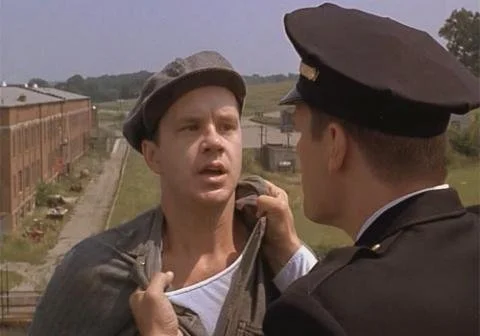
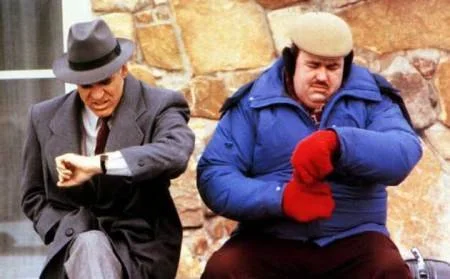
The list of fourteen films actually includes two of the films I had suggested in my previous post--The Shawshank Redemption (November 10th) and Planes, Trains, and Automobiles (November 24th)!
Getting to Penn Cinema is dead simple, even with a construction snafu. From points north, take 222 South and get off at the 772 exit for Brownstown. Make a right at the end of the ramp, then an immediate left-hand turn onto Route 272 South. Normally, you'd turn right onto Route 722, but the bridge is out, so you'll stay on Route 272 past 722 and make your next available right-hand turn onto Creek Road. You'll spend about a half-mile at most on Creek Road, then make a left onto 722 (you've bypassed the bridge construction). After about two miles on Route 722, you'll make a right-hand turn onto Airport Road, and Penn Cinema will be on your left very soon.
I visited the theater thrice this summer and--despite the fact that my Obama car magnet was swiped on my third visit while I was enjoying a film just a couple of weeks ago--I have been thoroughly impressed.
Here's the complete listing:
Sept. 8 Gladiator
Sept. 15 Sleepless in Seattle
Sept. 22 Psycho
Sept. 29 Grease
Oct. 6 Sixteen Candles
Oct. 13 On the Waterfront
Oct. 20 The Wizard of Oz
Oct. 27 Ghostbusters
Nov. 3 Roman Holiday
Nov. 10 The Shawshank Redemption
Nov. 17 Rocky
Nov. 24 Planes, Trains, and Automobiles
Dec. 1 A Christmas Story
Dec. 8 The Polar Express
Enjoy!
Monsoon's Exclusive Interview with Five Guys' Molly Catalano
My friends,
A few months ago, I posted a review of Five Guys Burgers and Fries and contacted its corporate headquarters to let them know just how much I loved them. I began an email correspondence with Molly Catalano, who is the Public Relations Manager for Five Guys. Soon I had compiled a list of questions for Ms. Catalano and asked if she would consent to an email interview; she delighted me by answering the questions generously and thoroughly.
I am now proud to present these questions (MM) and Molly Catalano’s answers (MC) exclusively and without commercial interruption here on Monsoon’s weblog!

MM: I read that Five Guys has tried various additions to its menu in the past, but ultimately decided to pull these items. Can you discuss a few of these ideas?
MC: The menu originally included a Virginia baked ham sandwich and there is a rumor that they tried a chicken sandwich for one day. This was well before we started franchising and the menu has been the same for at least the past 10-15 years. We get many requests for chili and slaw in the south and sauerkraut in the north, but we will only add to our menu if we know it was the best item possible.
MM: Can you talk a little bit about Five Guys’ interior design? What is the intended effect of having fifty-pound bags of potatoes between the ordering and dining areas?
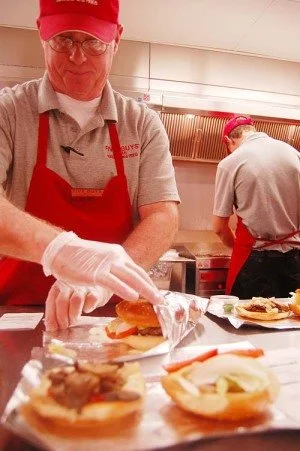
MC: The basic idea for the décor is to make sure that nothing takes attention away from the food. So it makes sense that we have an open kitchen; our cooking process is the décor! This way, we don’t have to talk about ourselves (hence the articles and quotes from others on the walls) and we don’t even have to tell you what we serve…you see it when you walk in.
Also, with our stacks of potatoes and boxes of peanut oil, along with our open kitchen, we can show guests that we are in fact making everything fresh.
MM: Have you thought about expanding your beverage and treat offerings to include milkshakes, light desserts, and the like?
MC: Besides the chili and sauerkraut, milkshakes are the third most requested item. We love milkshakes, but at this point we don’t think that we could serve the best milkshakes possible without sacrificing quality elsewhere…and we aren’t willing to do that.
MM: It has been reported that Five Guys was pursued for years by individuals who wanted to purchase franchises, but repeatedly turned them down. Can you briefly discuss why Five Guys rejected franchising offers for so long, and why Five Guys ultimately decided to franchise?
MC: The Murrells—especially the father, Jerry—didn’t want to franchise. I don’t know his exact reasoning, but I think things were going well and at the time it didn’t appeal to him. However, the boys were ultimately the ones who decided to franchise and they have done a great job focusing on what is important and not giving in to pressures to change. At the same time, we have learned a lot from our franchisees and I would say that our stores are more consistent now than ever before. Even small changes like our black ceilings and higher quality red countertops came from our franchisees.
MM: Given Five Guys’ unconventional business model, limited menu and untraditional practices, has the company faced any difficulties in attracting investors or selling franchises?
MC: Not at all. In the end, there is a reason behind everything that we do, from the way we cook our fries to the way we change our gloves, and people understand that. We do not advertise for franchisees and franchise inquiries are the highest volume of emails and calls we receive.
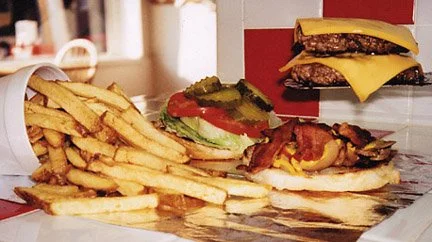
MM: I find the construction of your burgers to be artful and ingenious; can you discuss their assembly a bit? For example, why was it decided to put the bacon underneath the patties rather than on top, as is traditionally done?
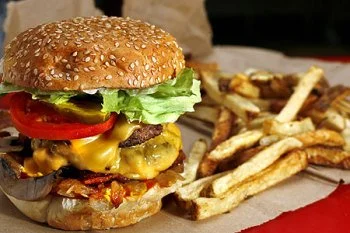
MC: The assembly, as you may have noticed, is very finely tuned. This, especially, is the area of the business that the “boys” (the Five Guys) perfected in the 15 years before they opened. The assembly is the result of a desire to give optimal flavor combinations while encouraging speed in assembling the burger. With so many toppings, each burger is unique, so we have to have a method to the madness in order to make sure we don’t forget toppings!
MM: The Murrell family’s involvement in the Five Guys business is storied: to what extent is each of the Murrells’ five sons still involved in the business?
MC: All seven (Jerry, Janie, Jim, Matt, Chad, Ben and Tyler) family members are involved in different ways. Ben focuses on franchise development and meets with each franchisee candidate. Chad focuses on training operations. Matt focuses on operations and development, Tyler works with the bakery and Jim focuses on corporate-owned stores.
MM: What is involved, financially and logistically, in securing and setting up a franchised location of Five Guys?
MC: Five Guys sells exclusive territories to franchisees. A franchisee must purchase a territory with a minimum of 5 locations, but many of our franchisees purchase the rights to open much more than that. A franchisee pays a franchise fee for each location and then pays to develop the specific sites once they find them. So a franchisee really does it all: decides where he/she wants to open locations (generally), selects specific sites (with approval from Five Guys) builds out the store, and then opens and runs it. Five Guys provides training and support along the way and throughout their life as a franchisee.
MM: Five Guys reportedly conducts very little, if any, advertising. What is the reasoning behind this strategy, and how successful has it been?
MC: You are correct: Five Guys does not spend ANY national or corporate funds on advertising. We do allow our franchisees to advertise (with approval), so there are a few local items out there. The reasoning is based both on economics and our brand. We want to be known for a great hamburger and great fries and the best form of marketing to do that is word of mouth, so we focus on that. We know that word of mouth is the most effective form of marketing, so we focus on making sure people want to talk about us because they love our burgers and fries!
Additionally, to really compete with others using advertising, you need a lot of money and we believe that we currently get the biggest bang for our buck by providing a very large employee incentive program and by word of mouth. We believe this is successful…or we wouldn’t be here now! Additionally, our new stores open with stronger and stronger sales!
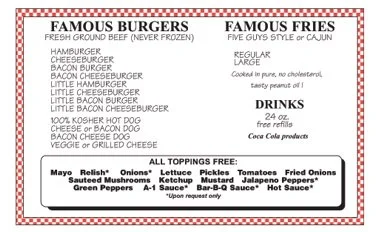
MM: How involved is the Five Guys corporate structure in the day-to-day operations of its franchise locations?
MC: Our franchisees, managers, assistant managers and crew-level employees run the true day-to-day operations. Five Guys Enterprises is involved through our District Manager program. We have District Managers who over see about 15 stores each, and they act as the liaison between franchisees and corporate. They are there to help make our franchisees successful and to protect the Five Guys brand.
MM: Have you considered adding a drive-through element to the Five Guys stores?
MC: We have opened a few locations in buildings that have drive-throughs, but we can only use them as call-ahead pickup windows. This is because it takes about 7-10 minutes for us to prepare an order and that is not fast enough for a drive through.
MM: Your pickles are heaven. How are they made and where are they from?
MC: I agree! Our pickles, like all of our toppings, are specially selected. They are Mount Olive brand kosher pickles. The “boys” (the Five Guys) are fanatical about the quality of our toppings. For example, our current mayo producer is going to stop producing the kind of mayo we use and as a result we are going to privately label mayo for our use because the boys think that this mayo has the right level of creaminess and taste for our burgers.
MM: The interior of the store I visited in Lancaster, PA was lit with fluorescent bulbs. Is this done consistently at your stores? And what other measures has Five Guys taken to minimize the restaurant's impact on the environment?
MC: Many of our stores use fluorescent bulbs (as do our corporate offices, which have the same type of lights). Our peanut oil is currently picked up by a company that uses it for various purposes, but we have researched giving/selling our used peanut oil for use in diesel cars. It is a hard process to do right now because there isn’t a national company that does that, but we have one or two stores that do give their used peanut oil to individuals who use it to power their cars. Finally, we are in the final stages of researching paper fry cups. We currently use Styrofoam, which is not as good for the environment. We hope to roll that out before the end of the year.
MM: Your organization's founder, Jerry Murrell, has been described as being “obsessed” with quality in choosing the ingredients of Five Guys' offerings. Are any of Five Guys' ingredients certified organic or antibiotic-free? If not, does Five Guys have plans to move in this direction in the future?
MC: Five Guys does not have any certified organic or antibiotic-free items. This is not necessarily intentional. Rather, “organic” and “antibiotic-free” are not synonymous with quality. You can have low quality organic items just like you can have low quality non-organic items. Our quality is focused on freshness, lack of preservatives, industry standards of quality (like peanut oil for fries) and then personal family standards. For example, we source whole heads of lettuce rather than that shredded stuff, we put 2 slices of tomatoes on a burger, and we use brand name items like Hebrew National hotdogs, Mount Olive Pickles and high quality bacon that is from a very old and established smoke house.
MM: My readers are anxious to learn what new franchise locations are planned in the southeastern Pennsylvania region: Philadelphia, Bucks, Delaware, Chester, Montgomery, Berks, and Lancaster Counties.
MC: We are opening in all of those areas although it is hard to say when as we don’t know opening dates until a few days before. My suggestion is to visit our website frequently as we add stores to the “coming soon” list every month. [Monsoon’s note: Exeter Commons Shopping Center will feature a Five Guys Burgers & Fries and a Red Robin, in addition to anchor stores Lowe’s, Giant, and Target. Rumors are swirling that a similarly-anchored shopping center planned for the area of the 222/Turnpike interchange in Denver may also attract a Five Guys!]
MM: Thank you for your time!
MC: I apologize for the delay in getting this information to you!
Monsoonian Rhapsody: Northern Lancaster County Shopping Destinations
My friends,
The time has again come for me to share with you some of my favorite things. Today I’ll be telling you about three northern Lancaster County businesses that make it a damned fine place to live.
Record Connection, 550 North Reading Road (Route 272), Ephrata, PA
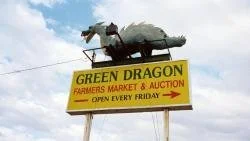
Traveling south on 222 from the Reading area, Record Connection is just beyond the intersection of Garden Spot Road and Route 272 (where the gigantic Green Dragon sign is).
Hours of operation: Monday through Friday, 10 – 8; Saturday 9 – 7; Sunday 11 – 5.
Phone: 717-733-1641
Website: http://www.recordconnectionpa.com
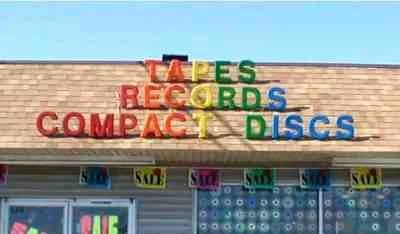
The first thing you may notice about the store—and one of the reasons for its notoriety among residents of this area—is its rainbow-colored sign composed of large letters mounted above the overhang, advertising that it sells “TAPES RECORDS COMPACT DISCS.” But as the picture below clearly illustrates, the letters are arrayed—and their colors chosen—in a peculiar manner. Specifically, the only three yellow letters, when read top to bottom, spell out “P-O-T.”
Please understand that I am neither implying that this store sells marijuana, nor am I even suggesting that the letters were intentionally arranged to convey a subliminal message encouraging the consumption of illegal drugs by unsuspecting passers-by. All I am saying is that it is damned amusing and certainly distinguishes the establishment from the more staid, conservative businesses in the area. (Though I almost had an accident the first time I passed a neighboring antique store called Mother Tucker’s, whose old sign was in an ornate script and whose T looked at passing glance very much like an F.)
But the reason I love Record Connection goes way beyond a sophomoric visual joke about weed (hey, at least the street address isn’t 420). Record Connection is a kick-ass independent record store specializing in vinyl—at a time when there are very few stores around that exclusively carry recorded music, and even fewer that either specialize in vinyl or kick ass. I remember places like Repo Records and Plastic Fantastic on the Main Line, Record Revolution in Valley Forge and Reading. They’re all gone (though Repo Records has been reborn on South Street in Philly as an overpriced used-CD shop), but Record Connection keeps going.
You see, friends, I am a vinyl superfreak. Have been ever since I can remember, raiding my dad’s staggering collection of hundreds upon hundreds of LPs and 45s, listening to everything from Blodwyn Pig and the Mahavishnu Orchestra to The Who and Jethro Tull, from the Mothers of Invention and John Mayall to Grand Funk Railroad and Miles Davis, and every conceivable style and permutation in between. I’m a connoisseur of the crackles and pops of vinyl, the electric moment when the needle touches the record, the warmth of its tones and the richness of its timbre. And with all the advances in digital sound reproduction, the prevalence of CDs and mp3s, most music still sounds a hell of a lot better to me on vinyl. (A great illustration of this is one of the finest albums ever made, Electric Ladyland by The Jimi Hendrix Experience: on vinyl, the bass throbs and the guitar pulsates in a way that even remastered CD releases of the album can’t approach.)
So I find myself pulling into this little gem of a store and losing myself for hours on end, pawing through its overwhelming array of … stuff. Record Connection doesn’t just carry LP records and 45s—which take up three entire rooms and feature pretty much every conceivable release you might ever want—it has new and used CDs, new and used cassette tapes, used VHS and DVD, posters, and much more. Record Connection stocks over 100,000 LPs, 45s and EPs at any given time, and also purchases collections. The singles room is a wonder—boxes and boxes and boxes of records, filed alphabetically, most priced at $2-$3 apiece, including comedy, novelty, and colored-vinyl 45s. There is even a turntable with headphones so you can test out your finds before purchasing them.
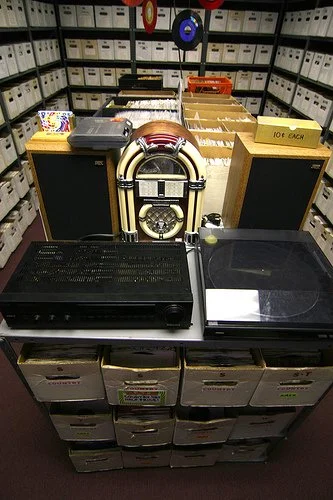
Record Connection’s inventory is strong in most genres—including jazz, reggae, soul, country/bluegrass, and comedy—but has the most comprehensive holdings in classic, psychedelic, and progressive rock.
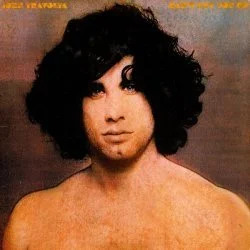
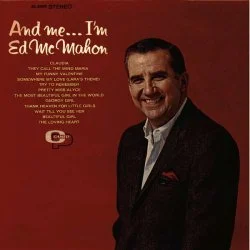
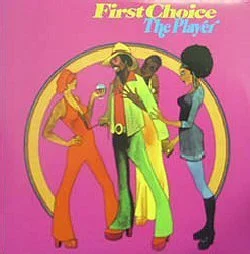
Maybe my favorite part of Record Connection is the fact that they have anywhere from 8 to 12 full crates of LPs—usually just outside the singles room—with “New Arrivals” generally priced at a mere $2 apiece. Here is where I make my most exciting finds: long-out-of-print rarities, ill-advised celebrity forays into music, K-Tel compilations, off-label bombs, hidden soul treasures, spoken-word treatises on the free market economy, children’s music, and on and on. I will sometimes buy LPs mainly because of the cover art, which I think is unique to the long-playing album and is somehow not the same on the cover of a CD booklet.
I’ve scanned in a few of my favorite finds (some for the music, some for the cover art, and some for the pure kitsch value) and picture them below, including And me…I’m Ed McMahon (you haven’t truly lived until you have heard the gravely-voiced “Tonight Show” sidekick relieve “Georgy Girl” of its kick and take “Thank Heaven for Little Girls” to creepy new depths).
Record collector Andy Kamm opened Record Connection in 1985 and, as one would expect at an independent record store, has a colorful staff—the most notable being a full-bore, 1980s-throwback, singing-along-with-the-tunes, head-banging, sometime profane, non-sequitur-spewing metalhead named Nathaniel Kinsey, who is almost too good to be true. (When I purchased several used videos last summer in the Black Belt Jones and Superfly vein, along with an Isaac Hayes LP, he said the following as he was ringing me up: “Oh yeah, gettin’ a little Blaxploitation here, huh?” and then incorporated the word into a previously unimagined death metal song called “Blaxploitation Nation” that he proceeded to sing, complete with guitar solo. It was magic.)
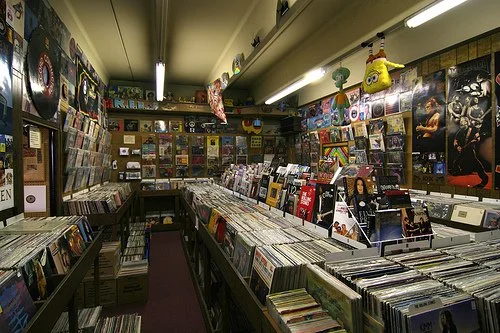
The ambiance of the place also adds to the experience. When you walk in, a motion detector sounds to alert the employees—who may be buried under stacks and stacks of LPs in a distant corner—that a customer has come in. The sound is disconcerting: a clear, doorbell-like chime followed by a distorted, death-throes tone, like an aural question mark. And once you’ve made your way in, you’ll find the aisles cramped and just as much merchandise in crates underneath the display bins as are in the bins themselves. It’s a down and dirty enterprise, but it adds to the mystique, the sense of adventure of the place. Record Connection has already gone through at least one expansion, and could easily fill a space twice its current size.
Record Connection is apparently a destination to which vinyl lovers flock from far and wide. Listening to patrons and reading internet chatter, it quickly becomes apparent that Record Connection is visited by folks from all across the US, Korea, Germany, and around the world. (An article on the RC website tells of a man from Korea who spent an entire day at the store and left with over 800 albums!) When I was visiting the store recently, and entire family from Alabama was there, having spent hours rummaging before making the trip back home.
They sell turntables and needles, too—so if you haven’t bought or played a vinyl record in 20 years and are looking to get back in the habit, they can hook you up!
Weaver Markets, Routes 272 and 897, Adamstown, PA
Hours of operation: Monday through Thursday and Saturday, 7am – 9pm; Friday 7am – 10pm; closed Sunday.
Phone: 717-484-4302
Website: http://www.weavermarkets.com
Mission Statement: To provide the customer with the best quality and value in regards to products and services and to help support and strengthen the surrounding community in every way possible.
I have a love for Weaver Markets (hereafter, and in local parlance, “Weaver’s”) that is sometimes belied by the actual quality of its goods and services, but over all this is a fantastic grocery store.
Founded in 1962 by Earl Weaver and now run by his sons Gene and Mike, Weaver’s has expanded several times and is now a 96,000-square-foot mecca of one-stop shopping and homemade goodness.
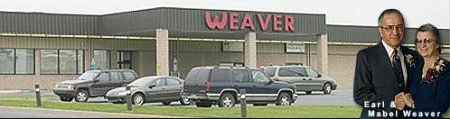
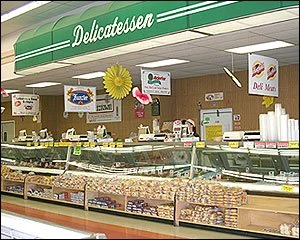
On the most basic level, Weaver’s is simply a very good grocery store, with a fine selection of grocery items (non-perishables), a very fancy new dairy section, a nice selection of meats and deli items at the lowest prices around, and a surprisingly broad assortment of organic and specialty foods, along with (less surprisingly) lots of local-made jams and the like.
(Weaver’s also has an expanded produce section that used to be its crowning glory but has, in my opinion, fallen off in recent years. Green produce like broccoli, green beans, and zucchini tend to be consistently good, but their fruits—especially apples, bananas, and strawberries—are often aged, significantly bruised, or lack basic freshness. The tomatoes at Weaver’s have been a particularly bitter source of disappointment for me: too often the very old tomatoes are left to rot inside the pile, and more than once when foraging for a fresh one I have inadvertently poked a thumb or forefinger into the putrid guts of a rotten one. Screaming like a 9-year-old girl at a Hannah Montana concert in the middle of Weaver’s produce section does nothing for my street cred, folks.)
But the produce issue is a nitpick, and I can easily satisfy my unmet produce needs at an Amish-run produce stand on Route 272 near Ephrata called Evergreen Acres, or at Weis or Giant.
It’s the peripheral things, the specialties, the personal touches that make Weaver’s a worthwhile destination:
Weaver’s has a full bakery on-site that makes all sorts of delectable confections.
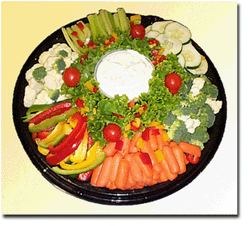
Weaver’s offers a dizzying array of party trays; most outstanding are their fruit and vegetable trays, which offer extreme freshness at very reasonable prices. Example: the veggie tray pictured below, which includes carrots, celery, broccoli, peppers, cauliflower, cucumbers, and choice of dip, is only $1.45 per person. If you need a tray for 8 people, you’re going to get out of there for under twelve bucks. Also, relating to the trays: when you’ve ordered a tray and want to pick it up, you go to Customer Service and pay for it, and then you drive around the building to Door 13 to pick it up. There’s something very clandestine about the whole process (and the fact that it’s Door 13 and not 12 or 14) that makes me feel like I’m on some sort of top-secret mission. Maybe it’s only me.
Weaver’s has a full kitchen that cooks “homemade” soups, potato and macaroni salad, and lots of other hearty dishes that can be purchased and heated later. Their soups (and pepper cabbage, and deviled eggs) are so good that I tote a load of these delicacies down to Norristown whenever I go to visit my parents.
At almost every checkout line, Weaver’s has actual baggers, actually bagging your purchases, and doing it carefully. Speaking of bagging, in addition to the traditional plastic bags, Weaver’s has brown paper bags with sturdy handles that hold plenty of food and lend themselves to myriad household uses—aside from being environmentally friendlier.
The ladies at the Customer Service desk are happy to work with customers to order an item that is not in stock or difficult to find. A couple of years ago, the stores near my father stopped carrying cans of Musselmann’s BC Orange Apricot juice, so I worked with the Customer Service desk to order cases of it for him. When the juice suddenly became unavailable, these nice women made some phone calls and learned that the item had been discontinued, forever. When they broke the news to me and I said my father would be devastated, since he had been drinking this juice since he was a child, they seemed genuinely to share in my disappointment. Now that is customer service.
The layout of Weaver’s is logical and pleasing—unlike what can be said of other local grocery stores. (In particular, whenever I make the mistake of entering a Redner’s, I am overwhelmed by the feeling that its layout was designed solely to confuse and frustrate the customer. I also question why, at places like Giant and Weis, peanut butter, jelly and bread products are found in the dairy aisle. Is it just me?)
When you call Weaver’s, an actual person answers the phone. Right away. There’s no automated system, no menu of options, no circuitous “hold” purgatory. The same can’t be said of Giant, or Weis, or Wal-Mart, or nearly any other major retail establishment I can think of. It’s a rare treat.
Weaver’s is closed on Sundays. Now, I have found this to be terribly inconvenient more than a few weekends since I’ve lived here, since it’s sometimes not until Sunday that I get my dook together and figure out what groceries we need for the coming week. But Weaver’s is run (and largely, staffed) by Mennonites, and while I don’t share their religious convictions, I have to admire their insistence on setting aside Sunday as a day of rest. I ain’t mad atcha.
Weaver’s has a bunch of “in-store entities” that I avail myself of from time to time, especially Anderson Pharmacy. There is also an Ephrata Medical Laboratory, film developing (including a new three-terminal Fuji digital photo kiosk), and a small flower shop in-store.
In the coming two years, Weaver’s will face a new challenge in the area. Final approvals have been secured for a massive new shopping center to be built just off the Turnpike exit 286 ramp between Routes 222 and 272 in Denver. Its three anchors will be a 24-hour Giant, Lowe’s, and an as-yet unnamed large anchor (I’m hoping it’s Target), along with smaller shops and restaurants. At present, the closest major grocery stores to Weaver’s are Weis and Redner’s in Ephrata (6 miles south) and Giant in West Lawn (7 miles north). The construction of a 24-hour Giant will present a level of competition Weaver’s hasn’t yet faced. I’m convinced, though, the Weaver’s blend of personal service and homemade goods, along with reasonable prices and broad selection, will make them viable well into the future; I hope my neighbors continue to support this family-owned, locally-invested business.
Clay Book Store, 2450 West Main Street, Ephrata, PA
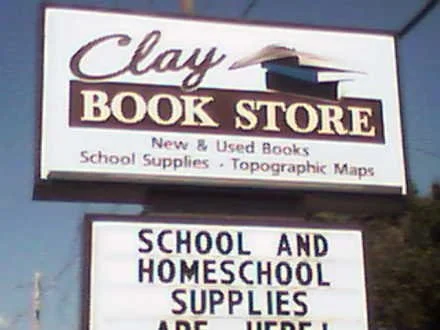
Take 272 South and pick up Route 322 West; follow this for about 4 miles until you see a sign for the Township of Clay. The bookstore will soon appear on your left (and is sporting a spiffy new sign, pictured below).
Hours of operation: Monday, Thursday, Friday, 8am – 9pm; Tuesday, Wednesday, Saturday, 8am – 5pm; closed Sunday.
Phone: 717-733-7253
Website: No internet presence. That is how they roll.
Mrs. Monsoon and I found this place when out on one of our Sunday drives (which have been curtailed significantly due to the high gas prices). Like Weaver’s, it’s owned and operated by Mennonites; like Record Connection, you could spend an entire day rummaging around here.
The variety of materials contained in this modest-sized store is incredible: maps (including Geological Survey and topographical maps, as well as road maps and atlases), school supplies (from scissors and glue to poster board and teacher planners), toys and puzzles and stickers, and of course, books.
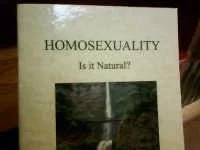
To the left when you enter the Clay Book Store is a large section of new books that is dominated by fundamentalist literature. There’s some material in this section for the secular browser (books about Amish and Mennonite culture, how-to books, Pennsylvania history and coffee-table books, and so on). But it’s heavily geared toward Anabaptist theology (Mennonites and Amish fall under the Anabaptist umbrella) and Christianity in general: hymnals, bibles, bible study books, prayer books, and guides to holy living. There is also a generous helping of Christian values literature—mostly in the form of pamphlets and short volumes—that can quickly make a self-respecting progressive type feel out of place. This includes books about the evils of abortion, the unfortunate and fiery eternal bummer awaiting nonbelievers, and of course, the travesty of homosexuality. (The book pictured below considers the question, “Homosexuality: Is it Natural?” arriving rapidly at an emphatic and biblically-justified “No!”)
Looking at some of this literature, I was reminded of a George Carlin routine about religious morality, part of which went: “Catholics and other Christians are against abortions, and they're against homosexuals. Well who has less abortions than homosexuals?! … Here is an entire class of people guaranteed never to have an abortion! And the Catholics and Christians are just tossing them aside! You'd think they'd make natural allies.”
But it’s the rear portion of the Clay Book Store that has some great stuff: that’s where the used books and magazines are. In the rear on the right side are old textbooks (mostly from the 70s and 80s or earlier) that can be used for low-cost home schooling—or, in my case, for the sole purpose of nostalgia. Remember those old music and social studies books from the 1970s—the rainbows, the bell-bottoms, the wide collars, the children wearing red tees ringed with white, in motion shots in cityscapes? The vibrant, silly illustrations in children’s literature books evocative of Schoolhouse Rock? They’re all here.
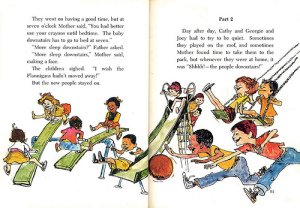
(So are textbooks specifically geared toward Christian education, which are…interesting to peruse. You’re not going to find any talk about the universe being 13 billion years old, or that most species of dinosaurs became extinct 65 million years ago, in a children’s biology textbook called God’s Marvelous Works.)
Also on the right rear are reference books, including encyclopedia sets and lots of old dictionaries (of which I’ve purchased a few: just a couple of weeks ago, I got a massive 1940s two-volume set of the New Century Dictionary in great condition for five bucks).
Moving to the rear left, there are several stacks of used religious books (remember, folks, this is run by hardcore Mennonites) but it also has nonfiction books, repair manuals, hardcover and softcover fiction, pamphlets, field guides, old copies of Reader’s Digest and National Geographic (as well as lots of other magazines)—all for dirt cheap.
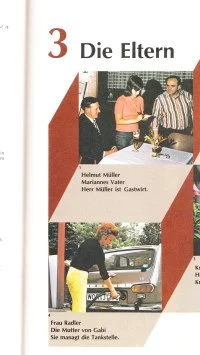
There’s even a section of foreign-language books, where I recently found a copy of the 1970s textbook we used in my late-1980s high school German class. It’s called Unsere Freunde (“Our friends”) and contains some sidesplitting pics and text.

The one that seized on our imagination was when we met the parents of the young people who were guiding us through the wonderful world of German language. Soon we met Gabi’s mother, who “managt die Tankstelle” (or “managed the gas station”). This phrase became the ultimate insult when applied to anyone else’s mother in the class. (Jeez, we were geeks.) And so, I send a shout-out to Amelia with the following allegation: Deine Mutter managt die Tankstelle!
It does not generally seem that a lot of sorting has taken place before the books (which are typically sold as collections to the store or donated) were shelved, so you should be prepared for a good, leisurely poke-around if you visit the Clay Book Store. But it can be great fun.
Enjoy!
Monsoonian Rhapsody: The Best of What’s Around
I wanted to introduce a new feature on the weblog: the Monsoonian Rhapsody. It will appear periodically and will consist of—as the tagline suggests—the best of what’s around. In these posts, I will rave about great music I’ve just heard; new television shows or movies; revolutionary, life-changing products; fantastic places to shop; and the like. It’s a little window onto the consumer delights that infuse my life with such joie de vivre.
The first installment will involve three rhapsodies: a CD, a television show, and a glorious new product. En-joie!!
Crowded House - Time on Earth
Witty, introspective songwriting, inventive instrumentation, ambient beauty and superb musicianship distinguish Time on Earth as the New Zealand/Australian band Crowded House’s finest, most coherent work.
Crowded House, formed from the shards of the very good early-80s new wave/pop band Split Enz, released its first album in 1986, which contained such popular songs as “Don’t Dream It’s Over” and “Something So Strong.” I had the cassette of this album, and listened to it so often I probably still know every word by heart. They moved on to a series of three uneven, sometimes brooding follow-up albums that produced memorable CH staples like “Better Be Home Soon,” “It’s Only Natural,” “Weather With You,” and “Distant Sun.”

After the group disbanded in 1996, lead singer and principal songwriter Neil Finn released a couple of fairly well-received (but little noticed) solo albums, collaborated with his big brother Tim (who led Split Enz and had collaborated with Crowded House periodically), and arranged for the release of CH compilations (1996’s Recurring Dream: The Very Best of Crowded House and 2000’s Afterglow, a compendium of b-sides and lost tracks, among which is one of the most gorgeous songs they have ever recorded, “Help is Coming”).
Neil Finn had been working on his third solo album when he received the news that Split Enz and CH drummer Paul Hester, who had a long history of depression and emotional volatility, had committed suicide. As a result Finn began collaborating with former CH bassist Nick Seymour on a series of songs whose underlying themes included loss and grief. They soon realized they wanted to make a new Crowded House album, and auditioned musicians to round out the group.
Released last summer in the US, Time on Earth is by no means uniformly excellent; it does have its lulls (“A Sigh,” “You Are the One to Make Me Cry”) and outright stinkers (“She Called Up,” “Transit Lounge”). But every other track on the album is outstanding, and only gets better with time. There’s the mid-tempo, guitar- and piano-driven lamentation on apathy which opens the CD, “Nobody Wants To.” There’s the upbeat, offbeat musing about GPS technology of “Don’t Stop Now,” the album’s first single and one of its strongest songs. (Its propulsive drums and dreamy melodies remind me of Smashing Pumpkins’ “1979.”)
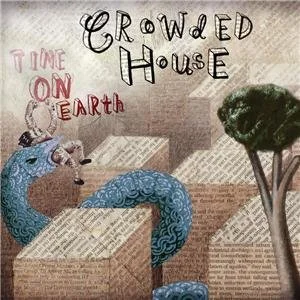
The three biggest standouts for me, though, are “Pour Le Monde,” “Heaven That I’m Making,” and “Silent House.” The first is a song of protest against the war and tells the story of a soldier wounded in action and the indifferent, cynical politicians that put him there. (“Pour Le Monde” means “For the World.”) The second is an ambient, ominous piece about stumbling upon the meaning of life. The song ends with the lyrics: “If there is hell on earth / there must be heaven too / Both in one place / And not a second to lose.” The third song listed, “Silent House,” was dedicated to the memory of Paul Hester but really deals in a broader sense with all the confused regret and nostalgia that infuses our recollections of home and family. Shockingly (to me, at least, since it’s such a good song) it was co-written by Neil Finn with the Dixie Chicks, who have their own (not shockingly, terrible) version of “Silent House” on their latest album, Taking the Long Way. This powerful, achingly evocative song begins: “These walls have eyes / Rows of photographs and faces like mine / Who do we become / Without knowing where we started from?”
Here is the Time on Earth link on amazon.com’s site , where you can listen to song samples and purchase the CD.
Here is a memorable performance of “Pour Le Monde” from the program “Austin City Limits,” which I watched late one Friday night with my sweet wife.
Primeval
A new show (to us in the US, anyway) show called “Primeval” debuted on BBC America last night, and it was a fantastic bit of fun. It’s a science fiction series involving dinosaurs rampaging through the suburbs, and the first episode was fast-paced and engaging (if marred by a few too many commercial breaks).
It seems there’s a portal that’s opened up in the Forest of Dean, in Gloucestershire, southwest England. The portal is essentially a “rip” in the fabric of the time-space continuum, allowing dinosaurs both large and small, huggable and snarling, to pass through into the present and wreak magnificent havoc in the surrounding area. The cast of characters was assembled (and their backstories introduced) rapidly: a jaded evolutionary biologist, a reptile expert, a curious young boy, a dinosaur fanatic / government conspiracy theorist, and a liaison sent by the Home Office (sort of a British FBI) to keep a lid on the whole thing. It’s frightening but not terrifying, and although the threat of horrid violence certainly looms, it’s not graphically violent thus far.
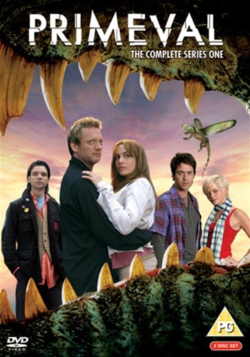
The first series (we’d call it a “season” here in the states) consisted of six episodes and originally aired on ITV in the UK beginning in February 2007; the 2nd series (7 episodes) aired in early 2008; the 3rd series (10 episodes) is currently being filmed.
Here’s a compilation of scenes from the first episode involving the menacing Gorgonopsid.
It’s on Saturday evenings at 9pm on BBC America, and it’s worth checking out!
Lysol Healthy Touch Hand Sanitizer
Despite the fact that its name seems to be pulled straight from a health-class video for elementary schoolers about protecting themselves from child predators (“Know the difference between a healthy touch and a bad touch, kids…”), this product is an absolute breakthrough for the germophobic / mysophobic community.
[Mysophobia is fear of contact with dirt and filth and is often seen in OCD sufferers; I bet you can guess what germophobes are afraid of.]
The cleanliness of my hands is something I hold very dear—I wouldn’t say I am obsessive about it to the point at which I’m washing my hands over and over and over. But I eschew dirt and soot and like to have something with me to cleanse me of such contaminants should the need arise. And in my line of work, contact with the foulnesses and pathogens emitted by children is unavoidable.
Wet-Naps and the like are useful, but often do not have the cleaning power to do the job that needs to be done. Purell and other hand gels are adept at neutralizing germs, but their high alcohol content often dries out the hands, which makes them more susceptible to further sullying and the introduction of contagions.

Into this dizzying array of products comes the one I will call The One: Lysol’s Healthy Touch Hand Sanitizer, rolled out in spring 2008. I first found it while wandering around a grocery store called Kroger in Louisville during my trip there for the Shakespeare Behind Bars program. (Hey, I had a few extra minutes before I had to meet Curt, and I find it fascinating to see how grocery stores in other places are laid out, what their prices are like, what kinds of exotic products they carry, etc. So sue me.) It turned out that Healthy Touch had been rolled out on a trial basis in Louisville as part of some test marketing, and when I returned to the Reading area I was dismayed to learn it wouldn’t be available there for several more weeks. But when it did come in, I was all over it—as were my students, who loved to use the canister of the product I had on my desk.
Here’s a commercial for Lysol Healthy Touch, which is basically like a horror film for me--albeit one with a happy ending.
It definitely has its alcohol content—it had better, considering its claim of zapping 99.9% of germs—but it also has moisturizing agents and mild fragrances to keep the hands smooth and eliminate that tacky (as in, sticky) Purell feeling. It comes in two sizes—1.58oz and 5.1oz—and coupons appear frequently in the Sunday papers for Healthy Touch. It doesn’t yet seem to be available everywhere (not at Weaver’s or Redner’s to my knowledge) but you can find them at Giant and, I think, Weis.
Getcha some!!
Monsoon Emerges from Summer Hiatus!
Hello, my friends!
It’s your old pal Monsoon, emerging from my summer hiatus to send some warm greetings out to you all. The summer has been … well, how really can one sum it up succinctly? It’s had its ups (Megan’s baby shower, Marina’s surprise party, sojourns with the wife, etc.) and downs (many of you know my summer began with a professional situation that caused—and still causes—me deep disillusionment). I’ve been watching a bit of reality television (no, not the moronic likes of “Big Brother” and “America’s Got Talent”—the latter irredeemable by the Hoff’s presence). My preference is for shows like “Intervention” on A&E, “Cash in the Attic” and “How Clean is Your House” on BBC America, and I’ve become absolutely addicted to “It Takes a Thief” on the Discovery Channel.
(A quick aside: if you’ve ever seen that show and enjoyed it, you’ve got to see this compendium of outtakes from season two , which I found on YouTube. Fair warning: it’s rife with mature language and sophomoric humor.)
I also have to confess that I watched the final two episodes of “A Shot at Love with Tila Tequila,” and I have literally felt dirty ever since. (If you haven’t seen this show, it’s an MTV production involving the impossibly foul bisexual former stripper and all-around überskank Tila Tequila, who puts sixteen lesbians and straight men through tasteless stunts and competitions to vie for a “shot at love” with her. She also pretty much has sexual contact with all of them; as a result more appropriate titles would be “A Shot at Chlamydia” or “A Shot for that VD” or the more succinct “Ick.” Anyway, it’s not pretty.)
And finally, I think my new favorite show is “The Soup” with Joel McHale, airing Friday nights at 10pm on E! It’s a snarky look at the week’s best moments in reality TV, talk shows, and pop culture over all. Here’s a clip that I enjoy for two reasons: it’s funny, and it ridicules the dopey, journalistically obtuse Ann Curry of “The Today Show.”
Took in some flicks at my new favorite theater, Penn Cinema in Lititz, which I wrote about in the spring. Most impressive was Journey to the Center of the Earth in digital 3D. Visually stunning, and a highly entertaining movie…
Oh! And we got a new computer--one that actually, you know, does things. Our previous, nine-year-old Gateway had dialup service and took seventeen hours to load one webpage (perhaps you forgot my tendency for hyperbole; and perhaps I am actually not exaggerating all that much, sadly). Our new HP laptop with D&E Jazzd service is a sleek and multitalented machine.
Anyways, to celebrate a fine summer thus far, and to reorient you all into the world of Monsoon, I thought I’d spend the next couple of weeks posting an old favorite of mine from before I started the blog: The Many Jobs of Monsoon from the autumn of 2006. This five-volume opus is—as the title suggests—a compendium of my most memorable, triumphant, cringeworthy, and downright scarring employment experiences, roughly from the late 1980s to the early 2000s.
I’ll also throw a weather report or two in there, as some of you have been complaining vociferously of my lack of forecasting activity over the past month or so.
Enjoy—and as always, I welcome your comments!
Monsoon's Penn Cinema Review
Over the holiday weekend, Mrs. Monsoon and I took in the new film Indiana Jones and the Kingdom of the Crystal Skull. It was marvelously entertaining, with real suspense, charm, and breathtaking visual treats. There are minor quibbles I have with the film—two great actors, Cate Blanchett and John Hurt, were utterly wasted in one-dimensional roles; the obnoxiously named Shia LaBeouf gave a bland performance; the film marked the unwelcome return of caricaturish Soviet stereotypes; the plot of every Indiana Jones film is based in paternalism, colonialism, and sometimes downright racism.
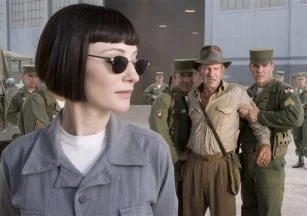
But honestly, all of this is beside the point in a very real sense: we go to see an Indiana Jones film to lose ourselves in the adventure, the wit, and (for those of us who remember going to see the original installment in the series multiple times when we were in elementary school) the nostalgia of the experience. We don’t go to interrogate its perspective and pick apart its shortcomings. It’s a thrill ride that, despite its flaws, is not to be missed.
Enough about the film, though—what I really want to tell you about is the venue where we saw it. Rather than heading to one of the three theaters in the Reading area showing Crystal Skull, we ventured south to my new favorite movie theater, Penn Cinema in Lititz. (It’s in Neffsville, technically, I believe, but whatev.)
Penn Cinema is a ten-screen theater that opened in December 2006 after a feverish six months of construction, plopped in what seems to be the middle of a field on Airport Road. (Construction is underway to add four screens by July of this year.)
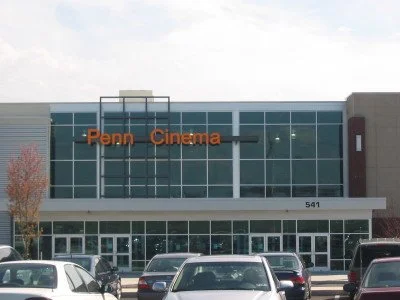
Catching a flick at Penn Cinema is a delightfully gratifying experience. (First of all, there is a dramatically lower danger of either Mrs. Monsoon or me running into one of our students either working there or attending a film, as can be a hazard at the Berks theaters; the teenagers there are from Warwick and Ephrata school districts, primarily.)
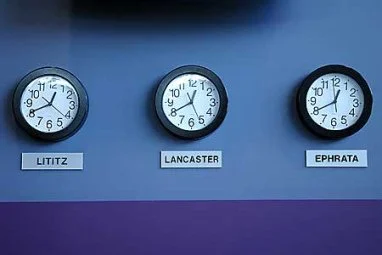
The theater is generally not that crowded, at least during the matinee hours when I tend to visit the theater. It has a large parking lot, clean facilities—there are trash receptacles on the way out of each screening room, stylishly concealed—and lovely, spacious restrooms whose fixtures are all automated to ensure minimal contact with the germs emitted by your fellow theater-goers. The food is just fine, with about-average prices, and local favorites are included in the offerings, lending the establishment a real sense of place. (Speaking of which, there's a charming touch in the theater's lobby: three clocks situated adjacent to one another all display local times in the manner of newsroom clocks with times in New York, London, Moscow, etc.)
The screening rooms themselves are top-notch, and some films are digitally projected. All theaters have stadium seating with extremely comfortable, high-backed seats and movable armrests; the use of curved screens ensures that every seat in the house will enjoy a pleasing view.
Ticket prices are very reasonable when compared with movie houses in the Berks region: evening shows are $9.00 and matinees are $6.50; Cinema Center Fairgrounds Square is $9.25 and $6.25, and Carmike Wyomissing is $9.50 and $6.75.
The real draw to Penn Cinema for me is the fact that many of the annoyances of modern filmgoing are (quite deliberately, it would seem) absented from the experience.
First, I don’t know if we’ve just gotten lucky the few times we have been to Penn Cinema, but distractions like cell phone usage, kicking chairs, crinkling bags, general tomfoolery, and the always-popular inane conversations—“What did he say?”; “Now who is that guy?”; “Hey! Isn’t that the girl who was in that other movie? No, not her, the other one…”—are gloriously absent (or at least minimally present) here.
And the moviegoer is not forced to sit through thunderous commercials for Coca-Cola, the US military, or the like, played at deafening volumes, which go on (pun intended) ad infinitum at other theaters. Allow me to share the strongly-worded pissy-pants letter I sent last year to Carmike Cinemas regarding this very issue, along with a portion of the response I received from a Carmike district manager soon thereafter.
My snotty letter:
On Saturday, December 8th, my wife and I went to the Carmike Cinema in Wyomissing, PA to see the film American Gangster (the 7:10 showing). Once the theater went semi-dark, indicating previews were about to begin, we sat through no fewer than eight commercials for various products, including a full-length music video by the band 3 Doors Down played at incredibly high volume touting the merits of the National Guard.
When the first preview appeared on the screen, we felt that showtime was finally imminent. However, we then sat through six full preview trailers for upcoming movies, all of which were once again played at ear-splitting volume. I realize that trailers are a part of the moviegoing experience, and the newspaper ads for movie theaters include the caveat “all shows include pre-feature content.”
But for this particular movie, we sat through fully 26 minutes of pre-feature content before the film began. I feel this is excessive and a horrible example of taking advantage of one's customers. Given the high ticket and concession prices, I feel it's reasonable for moviegoers to expect that they won't be forced to endure a 26-minute bombardment of noise and ads before the movie they've come to see. I hope you will take seriously into account my observations.
And a portion of the corporate jibba-jabba response I received:
As far as the pre-feature content goes, this program has been in place for the past ten years and longer. We have placed five to seven minutes of commercial advertising at the beginning of our feature to offset the increasing costs associated with doing business. In this way, we do not have to pass these costs on to our customers in the form of higher prices. In fact, theaters that do not show these ads are currently charging up to $18.00/ticket.
We follow these ads with about fifteen to twenty minutes of coming attractions, something that has been done for well over fifty years. The film distributors request these be played, if we do not comply, then it becomes very difficult at negotiation time to obtain their films. This content is generally about twenty to twenty-five minutes long. Please note that these types of ads are becoming more prevalent in all areas of entertainment.
I highlighted one sentence of the district manager’s response in boldface because it is a lie, a damn lie, and a statistic (apologies to Benjamin Disraeli), and my experience at Penn Cinema proves it.
At Penn Cinema, one enters the theater to see a scrolling series of local goods and services being advertised onscreen. The theater lights dim and two or three previews are shown—after which the room descends into a more complete darkness and the film begins. And yet far from necessitating a doubling of ticket costs, Penn’s prices are actually lower than those at Carmike Wyomissing. What now, sucka?!
The owner of my new favorite theater, Penn Ketchum, seems to go out of his way to establish an authentic relationship with his customers and with the community—unlike corporate behemoths whose ties to the community are chiefly within the consumer/business paradigm.
Penn sends out a free weekly newsletter loaded with trivia, facility updates, a few tidbits about his own life, upcoming events, movie showtimes and synopses.
The most distinctive aspect of Penn Cinema’s relationship with the community is its “The Heart of Lancaster Presents…” program. Each Monday at 7pm throughout the spring and fall, Penn Cinema screens a classic film based on customer requests, Penn’s ideas, and availability of prints. Aside from connecting with another business in the Lititz region (Heart of Lancaster is a medical center in the area), the program allows for direct interaction with customers and enables people to see some of their favorite films on the big screen again. Previous classic films screened through “The Heart of Lancaster Presents…” have included Raiders of the Lost Ark (attended by Mr. and Mrs. Monsoon), Casablanca (attended by Mrs. Monsoon and her ma), The Princess Bride, Top Gun, Star Trek: The Motion Picture, Raging Bull, The Goonies, Footloose, Citizen Kane, Caddyshack, Witness, and many others.
At a HOL screening, Penn greets the audience and welcomes them to the show, full of enthusiasm for the film. He shares tidbits about the making of the film, some historical perspective when applicable, takes questions from the audience, and gives prizes to audience members who can correctly answer his trivia questions about the movie. The HOL screenings are generally crowded and are marked by a festive atmosphere; people from all over the region are brought together by a genuine love of cinema.
The spring season of HOL has just ended (with a showing of 1989’s Batman at the end of April) but Penn is already hard at work planning the fall 2008 (September through December), spring 2009 (February through April) and subsequent seasons. He is constantly soliciting suggestions, so I’d like to offer forth this list of twenty very different movies off the top of my head that I would enjoy seeing on the “big screen” once again (or, in some cases, for the first time).
The Shawshank Redemption
The Rock
Fletch
All the President’s Men
Drop Dead Gorgeous
Poltergeist
Hoosiers
Action Jackson
The Breakfast Club
Die Hard
WarGames
Legend of Billie Jean / Turk 182! double feature
Planes, Trains, and Automobiles
Romancing the Stone
Three Amigos!
One Flew Over the Cuckoo’s Nest
The Shining
Dog Day Afternoon
Malcolm X
Please leave comments below ranking these ideas and/or offering suggestions of your own! (I think he’s looking to show films that were in original theatrical release at least ten years ago.) I will keep you posted when the next season’s offerings are announced…
Penn Cinema is only about 40 minutes from Laureldale, a half-hour from Shillington, and 25 minutes or so from A-town.
Simple directions: Take Route 222 south past the Adamstown, Denver, and Ephrata exits to the Brownstown/Rothsville exit (Route 772). Right at the end of the ramp, then an immediate left onto Route 272.
Go a bit less than 2 miles, then make a slight right onto Route 722. (There may be a slight detour here due to some road/bridge construction on 722; just follow the signs.)
After about two and half miles, make a right onto Airport Road (where you see a sign for the airport) and continue less than a half-mile; Penn Cinema is on your left.
See you at the movies!
Monsoon Martin’s Open Letter to The Roots re: Deerhoof
Dear Legendary Roots Crew,
Have you heard of “tough love”? It’s when a friend or family member sits you down, fixes a grave stare upon you, and initiates a frank discussion about some shortcoming you have or some baffling behavior you’ve engaged in.
And before we get to the “tough” part, let me—as one should in any intervention that hopes to be successful—talk about the love I have for you.
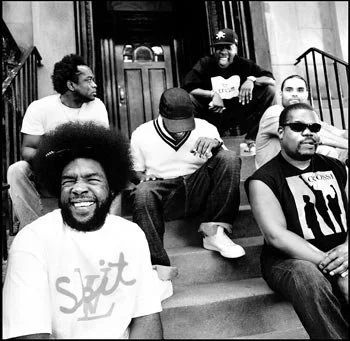
I have been a rabid fan of your Grammy-winning, authentic hip-hop selves since hearing your song “Proceed II” with jazz institution Roy Ayers on the Red Hot + Cool compilation way back in 1995. I bought your first major-label album, Do You Want More?!!!??!, and instantly loved Black Thought’s flow and witty rhymes, ?uestlove’s inventive percussion, and the organic sound of it all. At a time when hip-hop was succumbing to widespread sampling and stale, programmed backing music, The Roots burst on the scene with live instrumentation, a multiplicity of influences, and fierce talent.
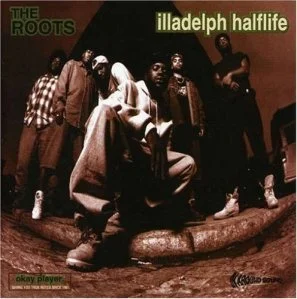
When you released your second major label album, Illadelph Halflife, I was at the release party at the now-defunct HMV Records in Philadelphia at midnight on September 24th, 1996.
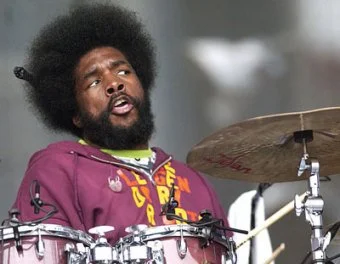
Ahmir “?uestlove” Thompson, I’m sure you recall greeting us at the door and shaking my now-wife’s hand as she gaped at your massive, Afro-topped frame—6’ 5”, with the Afro 6’ 9”, apologies to Fletch. I’m sure you also recall that I excitedly notified my then-girlfriend as we walked away, “That was a Root!” (for I was not yet a dedicated enough fan to know the name of each band member). And you might finally recall—and who could blame you?—thinking to yourself at that moment, “White people.”
You played for free that night and rocked that store off its foundation with songs like “Concerto of the Desperado” and “Clones,” among others. Rahzel, the human beat-box who was in your employ for a time, was particularly outstanding during this intimate performance.
[For those of my readers who are unfamiliar with The Roots, might I direct you to two videos on YouTube—which you’re free to explore further to find other Roots treasures—that exemplify their artistry and energy in concert. In the first they are performing the song “Game Theory” from the album of the same name; the second video is a recent performance of one of their original hits, “Mellow My Man.”]
We followed you loyally from record label to record label, through band departures (Malik B., Hub) and additions (Kamal, Captain Kirk), through awards, critical successes, and disappointing sales, and popular breakthroughs.
But Roots (here comes the tough love part), What in funkless hell is up with Deerhoof?!!!??!
Deerhoof is an avant-indie-rock band based in San Francisco and has been described by the otherwise competent and reliable music critic Ben Ratliff of The New York Times as “one of the most original rock bands to have come along in the last decade.”
I was blissfully unaware of Deerhoof before I attended my next Roots concert. Billed as “An Evening with The Roots,” the show was held on September 15th, 2005 at the Kimmel Center’s Verizon Hall. I had noticed a full roster of at least five opening acts—none of whom I had heard of—but thought little of it. I had an outstanding ticket, having splurged on a box seat, and would see The Roots in a state-of-the art venue in their (and my, sort of) hometown. I was psyched.
I arrived midway through the “lesser” opening acts, which consisted mainly of local acts, close friends of the band, and other up-and-comers. The two most prominent openers for The Roots were TV on the Radio and Deerhoof. TV on the Radio was quirky but decent, though their set went a little long, and we (along with the overwhelming majority of the crowd) were anxious to see the headliners.
And then, Deerhoof came onstage.

My friends, I like many types of music and have been known to embrace unorthodox or experimental acts in my time. I remember listening to my dad’s Mothers of Invention and Captain Beefhart albums with a perplexed awe. Some of my favorite artists of all-time—Minutemen, John Coltrane, Jethro Tull, Fela Kuti, Rage Against the Machine—are artists who are notable for having blended genres, changed the rules, taken a stand, and dared to be distinctive. I am not some kind of musical ingénue who only likes to hear three-minute pop songs or something with a good beat. I like some goofy shit that ostensibly no one else does.
But I say this to you now: Deerhoof was the most upsetting aural experience of my lifetime.
Onto the stage stepped three slender, indistinctive white dudes who looked like they could have been plucked from any suburban high school’s A/V club. Accompanying them was a short Japanese woman, who appeared from her position onstage to be the bassist and vocalist.
The drummer, Greg Saunier, stepped to the microphone and offered a brief, endearing introduction to the band that went something like: “We’re Deerhoof, and we came from California. We hope you’ll like the sounds we make for you.” It was the very last moment I felt anything but fury toward Deerhoof.
And then they began to play.
Saunier instantly became a human Herky Jerk, playing spastic runs that sounded like snippets from a free-form drum solo, never really falling into any recognizable pattern or tempo whatsoever.
The other two guys held guitars and summoned tuneless, often distorted rock chords and the occasional tortured, miserable single note from them, and looked as if they believed they were playing actual music. Their guitar sounds seldom matched the percussive seizures that were happening behind them at the drum kit, as if they were isolated in some sort of invisible soundproof room. (If only I could have found such a room at that moment.)
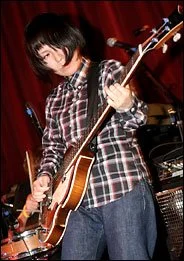
And then there was the band’s diminutive singer/bassist, Satomi Matsuzaki. Dressed in what appeared to be pajamas, the Japanese-born Matsuzaki—who apparently speaks little English—flailed away inexpertly at her bass guitar, further adding to the musical cacophony. She also sang unintelligible lyrics in a high, gibbering, childish voice devoid of any attempt at consistent pitch.
The aforementioned Ben Ratliff of The New York Times described her thus: “Ms. Matsuzaki, who also plays bass in the quartet, never sang or played an instrument before joining the group 10 years ago, and her thin voice is an acquired taste; many of the English lyrics she sings do not use stresses where normal speech puts them, which can make them nearly impossible to understand.” This is all a very learned, affected way of saying, “The singer is atrocious, but those of you who are so shallow as to demand talent from your musical groups are too unsophisticated to comprehend what Deerhoof is all about.”
What she actually sang about is anyone’s guess. At one point she seemed to be crying, “Don’t eat meat! Don’t eat meat!” as if it were some kind of vegan manifesto, but she could also have been saying “Dominate!” or “Mosley Street!” or almost anything else at all. The lyrics of a song they sang that night, entitled “Flower,” run in part: “Flower, flower, flower / Power, power, power / I come over / I take over!”
[I admit that even my purple, overwrought prose may not be able to convey the actual sounds that confronted us that night when Deerhoof performed, so here are two videos from YouTube of their live performances. The first is entitled “Panda Panda Panda” and encapsulates pretty much all that is wrong about Deerhoof; the second is a live performance of “Flower,” some of whose lyrics are transcribed above. I want you all to check out at least one of these videos, but I must also apologize in advance for the adverse reactions—skin rashes, ear bleeding, and vertigo are not out of the question—you may experience from doing so. I feel like a man who has eaten a bite of a putrid sirloin steak, turns to his dining companions and says, “There’s something hinky about this. Try it.”]

The collective effect of a Deerhoof performance is the musical equivalent of postmodern philosopher Jacques Derrida: inscrutable, pretentious, and infuriatingly obtuse. The sounds stop and start jarringly; the noise threatens fleetingly to fall into an actual meter, then veers wretchedly off into oblivion; and overlaying it all are the Minnie Mouse-like screechings of its lead vocalist, indecipherable and ridiculous.
I looked on with an ever-deepening, bewildered despair that I shall never forget as each song set new standards for unlistenability and horridness. At one point I tried to insist that even though the cumulative effect was horrific, I could tell that the drummer in particular was actually quite an accomplished musician; my companion glared at me with such betrayal in her eyes that I quickly realized any attempts to mitigate or elucidate this auditory travesty would be foolhardy.
I looked around at the diverse crowd that had assembled in Verizon Hall to hear their hip-hop heroes, The Roots: hardcore hip-hop fans; WXPN types who had been turned on to the band by their young urban professional friends; fans ranging in age from teens to fifties, easily. I saw everything from tautly polite expressions to gawping outrage, from bitter resentment to trying-to-make-sense-of-this confusion, from naked rage to blissed-out euphoria.
Wait—“blissed-out euphoria”? Yes, there they were: two art-school types, clearly dedicated Deerhoof fanatics, bopping along and gyrating to the strident din being blasted forth at the audience from the stage. They, I said to myself, and probably to my companion, are goddamned insane.
As I endured the hideous din onstage—which by now was calling to mind the irregular, heaving kecks of a vomiting mule—I fully expected one of The Roots to come onstage, halt the performance, and offer profuse apologies for its lack of quality. But unforgivably, and unforgettably, no such Root forthcame.
Deerhoof’s unceasing, blaring racket stretched on and on, seemingly for days, and I began to wonder why you, The Legendary Roots Crew, would have felt it necessary to inflict this desolate clamor upon your loyal and true fans. Have we—who came to support your joyous homecoming, your ascendancy to Philadelphia musical royalty, your acceptance by polite society—have we failed you in some fundamental way? Is this a punishment of some sort? (And if so: message received.)
The other possibility—and this one was almost more painful to consider—is that you guys actually like Deerhoof. And it’s this potentiality that brings us here to this intervention.
Roots, please hear me: Deerhoof is not, as its fans and some critics have asserted, deconstructing traditional structures and eliding the foundations and boundaries of popular music. Deerhoof is not delightfully turning the industry on its head, interrogating accepted paradigms, or meaningfully subverting compositional rules.
Deerhoof is sucking. That is all they are doing. They are sucking, and they are doing it hard. The sooner you come to terms with this, the better off you (and your fans) will be.
The one bright spot during Deerhoof’s set—aside from its eventual conclusion—occurred immediately following a rousing “tune” that featured Satomi Matsuzaki on cowbell, when a member of the audience bellowed, “More cowbell!” alluding to the “Saturday Night Live” sketch about a Blue Oyster Cult recording session.

Happily, you, the Legendary Roots Crew, played a blistering, two-and-a-half-hour set that night at Verizon Hall and I even met Black Thought—which, again, I’m sure you recall vividly—so the Deerhoof unpleasantness receded into the background of my memory. You came into the room led by a New Orleans jazz band (whose members had been displaced by Hurricane Katrina, and whom you—The Roots—had actually invited to stay at your homes), you had great guests like Dice Raw and even a surprise appearance by the incredible, incomparable Jill Scott.
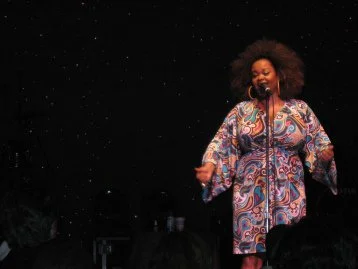
Since that night, I have tried many times to explain to my friends the horror of—and explain to myself the appeal of—Deerhoof, who evidently has quite a cult following. I have a theory I regard as strong, and—as I am anxious to put the whole Deerhoof matter behind me, as one would any trauma—I will share it here and move on with my life. Deerhoof has set itself up as a truly alternative artist in a world of supposedly “alternative” acts that sign with major labels and “sell out.” Critics have decided that Deerhoof is operating on a more complex and urbane musical level than the average person can really get his or her mind around. The net effect of all this is that music critics or indie fans are afraid to not like Deerhoof because they fear being exposed as Beyoncé-loving troglodytes who are incapable of appreciating dense, intricate music.
No one—not even their fans and fawning critics—understands Deerhoof because Deerhoof is unknowable. It is impossible to derive meaning from the nonsensical, just as it’s proverbially futile to try and get blood from a stone. Deerhoof is a stone that has been thrown at my earholes repeatedly, and I want it to stop.
And this brings me to the renewed sense of urgency that necessitated this little talk, my dear Roots.
Last month, I learned that you would be hosting The Roots Picnic at the Penn’s Landing Festival Pier in early June, which promised to be a wildly entertaining show. I was even looking forward to seeing your co-headliner, Gnarls Barkley.
But as my eyes rested on the third name on the billing for this show, I gasped (literally, audibly; I have a bit of a tendency for the dramatics): Deerhoof. And all the old questions came rushing back: Why do you, my beloved Roots, keep wreaking this dreadful band on your fans? How have we forsaken you?
Again, I understand that Deerhoof has opened for plenty of well-known bands, whose devotion to Deerhoof has been described as “evangelical”: Sonic Youth, Wilco, Radiohead, and The Flaming Lips among them. The only explanation I have for any of this is that there’s been a massive psychotic break in the music industry, and that the members of these bands—and yours—are afraid of not seeing the “genius” in Deerhoof, as I posited above. It’s the only explanation I can live with.
Legendary Roots Crew, my plea to you is this: cease and desist any association with the band Deerhoof and drop them from your June show at Penn’s Landing so that I, and legions of your true hip-hop fans, might again feel able to come and see your concerts without fearing exposure to the rancid, devoid musical stylings of Deerhoof.
Sincerely,
Monsoon's Brief "Your Mama Don't Dance" Update
Friends,
Some of you have asked about the fate of Gilbertsville’s Noelle and Doug Croner, the daughter-father duo competing on the creepily vapid (or vapidly creepy?) Lifetime series “Your Mama Don’t Dance.” The season finale aired on 4/18, the day of my original post on the matter.
Well: they won.
The Reading Eagle, of course, was all over the story with a piece appearing nearly a week later, buried on B10. (I guess profiles of old white women and their gardens, pecan pie recipes, and Eagle Scout notices really jam up the news hole.)
Noelle and Doug’s triumph even earned a disapproving nod from the E! series “The Soup” as its Clip of the Week.
The prize for winning “Your Mama Don’t Dance” was a trip for six to Aruba (with a luggage set) and a $100,000 prize. Now living the high life, a triumphant Doug promptly resigned his post as a floating substitute at Mifflin…