
Introducing ... ARMANI SPADE
Back in the early 90s, I was on the Campus Center Board (CCB) at Albright, an organization that brought comedians and recording artists to campus and set up events for the student body. We got some great young comics, including Jay Mohr (he was great, and I remember him raving about the new Beastie Boys album), Janeane Garofalo (she was rather unpleasant, and stood outside smoking until the last possible moment she had to go onstage), and Renee Hicks (she was bald, apparently by choice). We also received tons of demos, including one that stood out to me: A Recluse by a Brooklyn-based artist named Armani Spade.
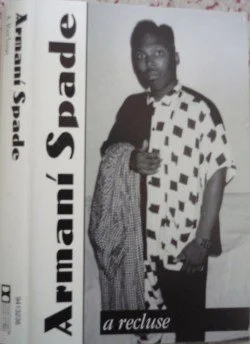
Well. To say it “stood out” is actually a dreadful understatement; it resonated with me so profoundly that I soon became an Armani Spade evangelist, playing the cassette’s hottest tracks for everyone I knew. The cassette’s three main tunes—it also includes an extended instrumental piece called “India (Meditation)” that comprises all of side A, and an instrumental version of “More About Your Eyes”—are a mélange of synthesized rhythm and melody lines, potent and poetic lyricism, and unforgettable vocals. Each song is embedded in this post—though they’re on YouTube, the only video is a still image of the cassette cover.
(Special thanks to Bill Snelling for converting the songs from cassette to CD for me, so I could share them with the world.)
Allow me to deconstruct each track here.
The best place to start is with the first song on side B, “More About Your Eyes.” The piece is a study in the tension that exists in the space between desire and attainment, that magnificent limbo from which Spade sings and raps about his amorous intentions. At 1:21, the song’s energy shifts, underscored by an ominous tone, as Spade raps, “Gettin’ next to you in latitude.” The climax follows immediately thereafter as he then wills his voice into a previously unattained tonal range and sings, “Listen to what I say! / It feels better this way / Don’t tell me to go / ‘Cause I won’t leave you no / But if I do and I got spare time / I will think about you all the while / Nothing could take my mind from you / ‘Cause you’re all I want to do.”
Once the song has reached these heights and Armani has employed a sophisticated vocal overlay, the listener is left with the pulsing swish of a heartbeat—an afterglow, if you will, befitting the emotional and romantic journey he’s just taken us on.
Though spent by the power of “Eyes,” we have no time to recover before “Could I Get A Little Closer,” which begins with a fierce warning yawp from Spade that announces his passion will not be denied. Again, the lyrics best lay bare the astuteness of this piece: “I called you up on the phone / To come to my pad, my crib, my home / To talk about the birds and the bees / The chemistry between my bed, you and me / There’s nothing else that you can say to me / ‘Cause I’m lookin’ at your body in a sexual degree.”
The chorus consists of an iteration of the title in harmonized vocal overlay, which is followed by the somewhat more direct plea, “Could I get beside you? / Could I get inside you?” The song is then dominated by an extended keyboard solo—first in a synthesized xylophone, then in a synthesized saxophone—that fully comprises the final three minutes of the piece.
Thirdly, and lastly--but most definitely not leastly--is a composition called simply “Relax,” whose refrain, “Cool cool out, cool out / Cool cool out, cool out,” will be echoing merrily through your ears for many days to come. “Relax” is the dance club hit that never was. It features a jangly riff, throbbing beat, and manic vocals that must be heard to be truly appreciated. The opening lines here, about the singer’s attempts to initiate a romantic relationship through physical gyrations, are deep and instantly grab the listener’s attention: “I remember when I was at the club / Dancin’ with a girl, tryin’ to get some / Then you walked through the door / My eyes and yours made four.” Having laid his two eyes on her two, he then proceeds to praise her physical attributes in the most flattering terms: “You’re more than a man could feed on / Skin so smooth, legs so strong.”
Into this fledgling encounter comes an apparently exotropic Cupid, looking simultaneously with one eye at Armani and with the other at Armani’s quarry. The song concludes with negligee, romance, poor dancing, barely averted fistfights, and a final exhortation to relax.
Having been so affected by this man’s music, I embarked on a more than 15-year crusade to find him, and/or more of his tuneful output. Using clues from his cassette cover (his Brooklyn address, the people he thanked, etc.), I finally tracked him down in 2009.
As it turns out, Armani Spade is just his stage name; his given name is Walde Murray. In a few brief conversations, I learnt much about how Walde became Armani. For some reason, he was surprised (but delighted) that someone wanted to talk about his music.
A Recluse was the most professionally recorded piece he did; all else that exists are snippets and unfinished songs. He can see the other songs’ potential, he said, but to someone else it might sound like nothing. “Somebody could look into Stephen King’s book and they see scratches and scribbles and things, even in a verbal sense,” he explained.
He told me that he writes “straight out, from the inside out,” eschewing any pattern or methodology. “You write it in such a way that you amaze yourself, or somebody else comes along and says, it’s not much there,” he said. “But then, something came out of it.” He likened his songwriting style to that of the late King of Pop, Michael Jackson. Recently, Jackson released an album of unfinished songs that illustrated the need for a good producer to “draw out” the music’s potential. “Let’s use a real bass guitarist, or a real piano-ist [he or she might say],” making magic from “unrefined work.”
Armani Spade received “great responses” to the cassette when it was released. However, he had no luck taking his tracks to radio stations and asking them to play his music. “If it had been a known star,” he observed, “it would have been played.”
Walde Murray has spent the past nine years in the US Army, which does not afford him the time or resources to continue his music dreams. While it’s important to “follow your heart,” it’s also important to make a decent living, he said. However, when he retires to the reserve, he plans to renew his pursuit of music stardom, as he is still formulating ideas and writing songs. “I’m keeping my head into the up-to-date stuff” as a way to stay in tune with modern musical sensibilities, he said.
“I need to keep my eye on the ball,” he said, “and the ball is music.”
Monsoon's Newseum Review and Television Debut
If, as Jean-Paul Sartre wrote, hell is other people, then people in their hordes and crowds and maundering packs of listlessness must constitute a new circle in Dante’s Inferno. Trying to have a meaningful museum-going experience amidst the sweaty multitudes is a nearly fruitless pursuit. Dodging visor-and-fanny-pack-bedecked tourists, restless adolescent Boy Scouts and their harried scoutmasters, giggling imps, and fusty society ladies can take all the magic out of taking a look at some nice-assed art.
Seeing a large wooden track for homemade model cars bisecting a portrait gallery in the Smithsonian (it was some sort of Scouting and crafts weekend) was as disheartening as it was shocking.
Surely a museum of that magnitude can be appreciated by patrons of all ages simply on the basis of its cultural and artistic merits without being turned into a Night at the Museum come to life. Judging from the Scouting chaos, the little girl who almost knocked over a statue (prevented from doing so by my alarmed yawp, after which her parents ushered the stunned toddler from the gallery), the disinterested tweens texting obsessively, and the brazenly loud cellphone conversations carried on unapologetically in front of artistic treasures, the answer to that question is a resounding no.
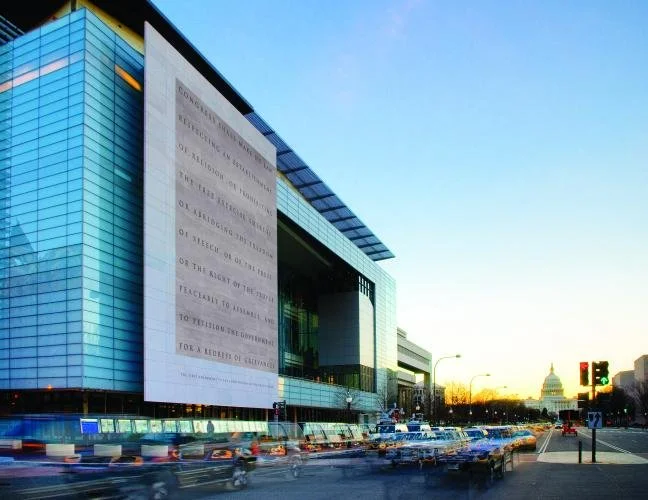
But truly and sincerely, the Newseum was well worth the effort of enduring the inappropriateness, insensitivity, lack of museum etiquette and just plain presence of other people—teeming, snorting, prating, obstructing, farting, shuffling people.
As a person who teaches a journalism elective course, has worked briefly in journalism, and harbors a long-standing interest in the field, I have been excited about the Newseum since it was reported in its planning stages.
The Newseum is on Pennsylvania Avenue between 5th and 6th Streets, and is open 9 to 5 daily (closed only on Thanksgiving, Christmas, and New Year’s Day). Unlike the Smithsonian museums, which are free, it costs $19.95 for adult admission. Let me hit some of the highlights of this museum; my recollections are by no means intended to be exhaustive, though by the end of this post you may feel much as I do when my mother says “to make a long story short” well into a longwinded saga.
Into the façade of the Newseum is etched the so-called Establishment Clause from the First Amendment, and the length of the building is lined with the current front pages of newspapers around the country and (on the sixth floor) world.
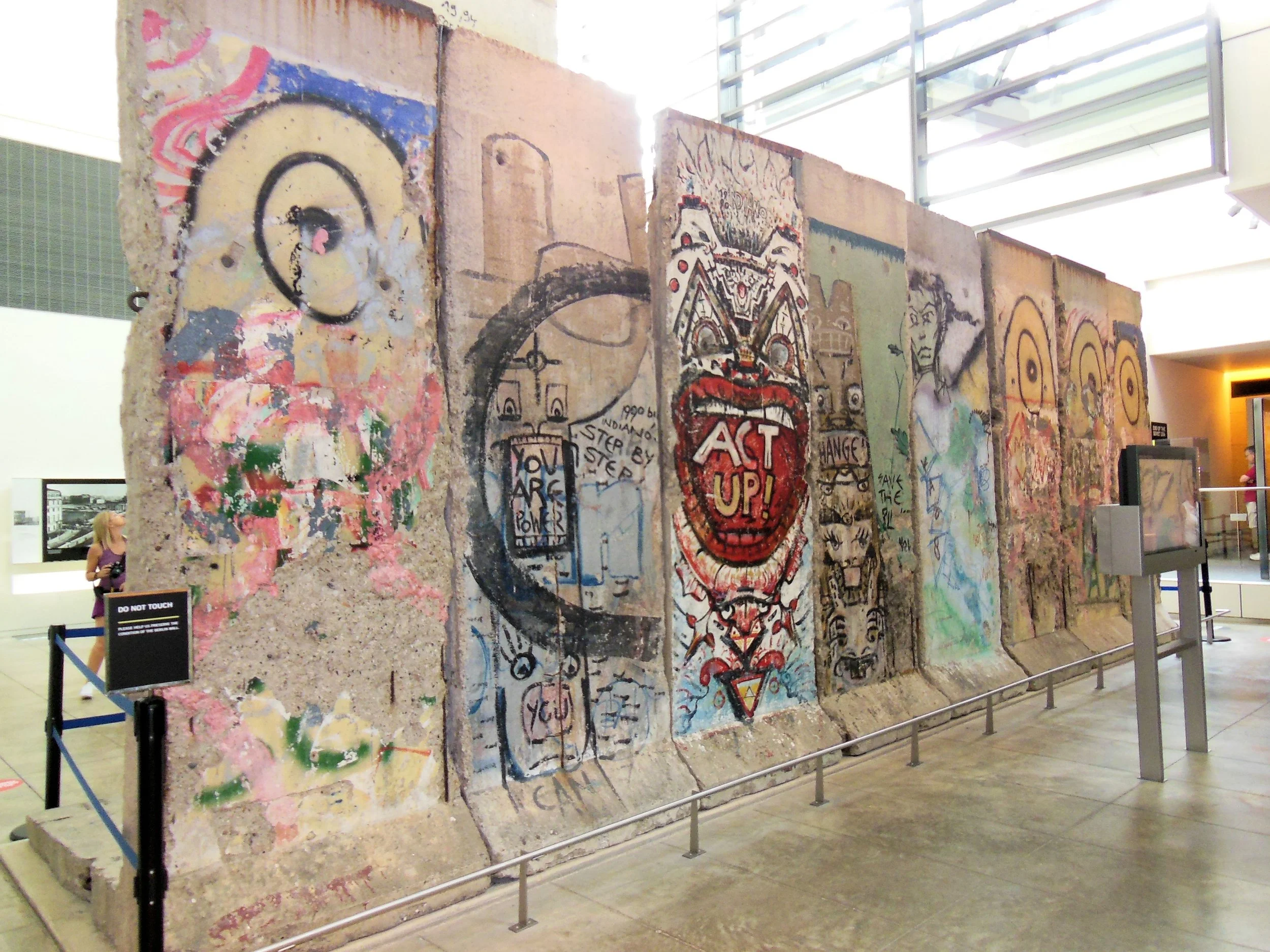
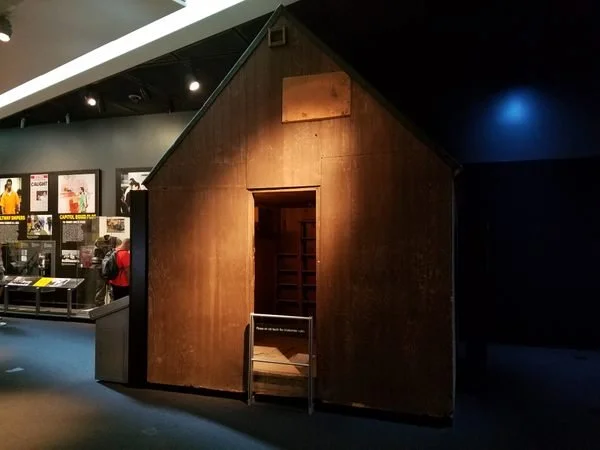
We began on the concourse level, one of the highlights of which was the largest hunk of the Berlin Wall outside Germany (including guard tower), which was supplemented with many informative placards and interactive touchscreens. (The Newseum, like most museums, integrates new technologies and media into its exhibits; however, unlike in many other places, the incorporation of these tools is seamless and overwhelmingly effective.) Another concourse highlight was the changing exhibit “G-Men and Journalists: Top News Stories from the FBI’s First Century,” which included powerful artifacts relating to the Oklahoma City bombing, the DC sniper case, the Branch Davidian compound siege, the fight against hate groups, and the Unabomber case (including Ted Kaczynski’s actual cabin).
From there we were whisked up a hydraulic glass elevator, past the gigantic LCD monitor and up to the 6th floor, which wasn’t great. (This is the recommended path for exploring the Newseum—concourse, then 6th floor and work your way down—and we followed it.) From the 6th floor we could see down to the 4th floor, which is dominated by a 9/11 exhibit that focused too much on the outrage of the American people and not enough on journalism’s role in covering the attacks.
The 5th floor, though—once we got there (it was a little difficult to figure out how to access it)—was staggering. Visitors are just overwhelmed by the sheer magnitude of information: News History traces the history of news-gathering in the US from its earliest examples through its transformations and milestones and vicissitudes. The room is dominated by rows of drawers containing glass-encased newspapers and magazines, chronicling not only the story of us as a people, but journalism as a field. Ringing the room are interactive pieces focusing on various major topics—satire, plagiarism, Watergate, tabloids, the publishing barons, etc. All contain a masterfully conceived admixture of actual artifacts, news items, video clips, and more. There are also several small theaters on the outer edge of the room—and, in fact, throughout the entire museum—showcasing issues in journalism, exploring ethics and news values, discussing photojournalism, etc.
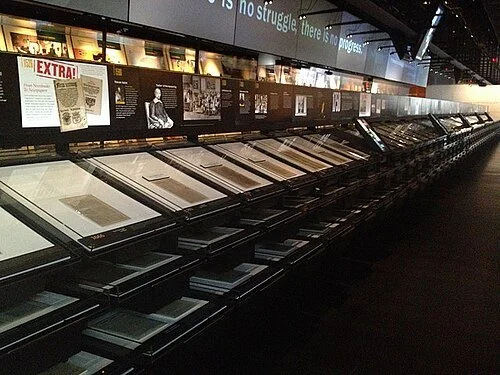
My only complaint for the 5th floor was that the lighting was too dim to read beyond the headlines, and the arrangement of the drawers at knee-level and in vertical columns meant that closer examination—to say nothing of sharing material with another museumgoer—was impractical. But really, these are comparatively minor quibbles.
The 3rd floor was a’ight: stuff about Edward R. Murrow, internet news, and a memorial to journalists killed while covering the news. It should be noted that throughout the Newseum are actual pieces of journalistic history that go beyond the newspapers and typewriters: news vans and helicopters, studio cameras, satellite dishes, and the like.
Friends, on the 2nd floor, I became a child again. The 2nd floor is home to the Interactive Newsroom, where one can queue up and become part of an actual “newscast”! To be honest, the opportunity was seized mainly by children, but I could not resist even the fleeting fulfillment of a longtime dream: to be a weatherman.
The results:
Mrs. Monsoon can be heard near the end of the video laughing loudly at my inexplicable antics: the saucy delivery, the tentative, pointless gestures, and just the obvious glee I took in being in front of the camera. Your comments are, always, welcome.
Finally on the first floor are the 4D theater (skipped it), the gift shop, and one of the most moving exhibits I’ve ever seen. The gift shop has lots of what you would expect—key chains, magnets, pencils, shot glasses, and more emblazoned with the Newseum name. It also has some great DVDs, mugs that read “Not tonight dear … I’m on deadline” and—the pièce de résistance —a book called Correct Me if I’m Wrong. This slim volume collects the best selections from the Columbia Journalism Review’s popular feature “The Lower Case,” which reproduces unintentionally funny headlines and press blunders. Some examples—which are also printed on tiles in the Newseum’s bathrooms—include:
Nuns forgive break-in, assault suspect
Crack in toilet bowl leads to 3 arrests
Literarcy week observed
Parking lot floods when man bursts
Drunk gets nine months in violin case
Farmer Bill Dies In House
…and my personal favorite…
Johnson Teacher Talks Very Slow
The first floor is also home to the permanent exhibition of Pulitzer Prize winning photographs. All of the winners are reproduced in small prints, but there are 30-40 enlarged photographs, each with a bit about the context of the piece and a reflective comment from the photojournalist responsible for the image. I had not seen some of these photographs, but even with the ones with which I was familiar—the execution of a Viet Cong prisoner in Saigon, the iconic image of a firefighter carrying an injured infant after the Oklahoma City bombing, the famous photo in the aftermath of the Kent State massacre—seeing them in a gallery setting, presented not just as photojournalism but really as art, was profoundly affecting. Many museum visitors were moved to tears by some of the photographs. I marveled at how impactful, how intense a photograph can be—far more moving and eloquent, in many cases, than a video of the same event, or an eyewitness account.
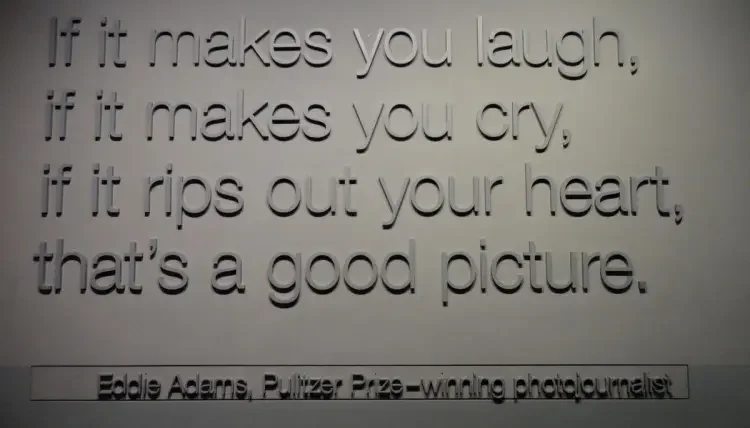
Not to be missed, and never to be forgotten.
Monsoonian Rhapsody: Kyma Seafood Grill
Saying there’s a great seafood restaurant to be found in Lancaster County is a bit like suggesting that it’s feasible to get an authentic cheesesteak in Mississippi, or that a white person can look good with dreadlocks. Well, Topher, let your natty dreads fly and get your cracker ass down to Biloxi to order “one, widout,” because there is a great seafood restaurant in Lancaster County.
It’s called Kyma Seafood Grill (pronounced KEY-muh, from the Greek word for wave), and it opened on June 30th, 2009. Locale is 1640 North Reading Road (Route 272) in Denver at the former site of the Silk City Diner, in the same building as Johnny’s Steakhouse, which is located downstairs and is accessed at the rear of the building.

Brothers Nick and George Barakos, who own both Johnny’s and Kyma, basically gutted both the drab, pedestrian interior and the mediocre, family-restaurant menu of the Silk City Diner, leaving only the footprint of the former eatery. The result is a sleek, modern décor with upscale touches: neon blue and red strip lights lining the top edge of the main dining room, wave murals and a dynamic, wave-inspired logo, and lots of dark wood. The brightly-lit bar area is contrasted by more moderately lighted seating areas—booths and tables—accommodating about 160 patrons.
But it’s the fresh, masterfully prepared food at Kyma that will make us go back for more. Kyma’s single-page, oversized menu includes both cold and hot appetizers, all in the $10 price range, as well as a variety of salads (in the $10-$15 range). Kyma offers specialty drinks as well as more traditional fare, both alcoholic and non-alcoholic. (Mrs. Monsoon recommends the Fallen Mermaid martini—and making sure you have a ride home.) Most impressive to me is the fact that they use Pepsi fountain products; most restaurants, to their detriment, use Coca-Cola or concoct their own, vaguely cola-like travesties.
The entrées include seafood and steaks—most of which are in the $15-$20 range, with some $25 or a bit more, depending on market price. Check the menu for details, but entrée offerings include ahi tuna, halibut, tilapia, steak & lobster tail, and various shrimp and crab dishes. Kyma is particularly known for its Colossal Crab Cake, if online reviews are to be believed. The steaks are the same that are served at Johnny’s Steakhouse downstairs, so the quality and preparation are outstanding. In addition, entrées come with choice of soup or salad and one side; sides include fries, roasted garlic mashed potato, steam veggies, rice pilaf, and more.

We visited Kyma on Saturday night, arriving at about 5:15. We were greeted immediately and seated in a small side room that offered privacy but did not leave us feeling “cut off” from the rest of the patrons. (We did not have to wait, but the place got crowded pretty quickly. On our way out, we noticed several parties waiting to be seated.) Our waitress, Madeline, was exceptional, offering drink and entrée ideas, answering questions, and chatting amiably about her own background and preferences. The timing of salad and soup, then entrée, was exquisite. She was also snappy with a Pepsi refill, bringing a replacement before I even had to ask. The ambiance and professionalism of the staff left the impression of a popular dining spot in the city rather than a restaurant along a mostly industrial stretch of 272.
After the obligatory bread and butter, Mrs. Monsoon and I settled in and made our choices: I would have the Snow Crab Legs (1 ½ lbs. steamed, with butter, $22), with a cup of the Chesapeake Crab soup and a side of fries; she would have the Chilean Sea Bass ($25) with the roasted garlic mashed potato and a side salad.
Friends, yum. The house vinaigrette on the side salad was very good; the thick-cut sea bass was grilled lightly and cooked to perfection. The crab soup had a bit of “bite” to it, but I have a lightweight palate for hot n’ spicy fare, and I was just fine.
The crab legs were freaking delicious. They’d been “scored” and steamed flawlessly, so the shells cracked easily and yielded large chunks of succulent meat. There was a little side of melted butter, too, but the sweet crab scarcely needed it. The fries were out of this world—batter-dipped, crispy, and flavorful.
The food at Kyma is prepared just the way the menu indicates, with no unnecessary ingredients or culinary-school flourishes. It is not fussy or pretentious, and the cook had not smeared old bay seasoning over everything. Those who know me can vouch for my persnickety-hood, and have probably seen a minor hissy-fit or two when an otherwise palatable food is unexpectedly slathered with a Hollandaise mushroom gravy. No such histrionics were needed at Kyma.
The food is well worth the money, but prices at Kyma are not cheap, so it’s not a place we’ll be able to afford on a regular basis. (A couple should expect a check in the $60-$70 range, before gratuity.) But I would highly recommend a visit for its delectable seafood and excellent service.
Kyma is open Tuesday through Tuesday from 4 to 10pm; Friday and Saturday from 4 to 10:30pm; and Sunday from 4 to 9pm; it is closed Mondays. Reservations are only accepted during the week and may be made by calling 717-335-3833.
Directions can be MapQuested from their website, but here are the basics…
From Reading, take 222 South to the Pennsylvania Turnpike/Denver exit. Make a right at the light at the end of the ramp. At the next light, turn left onto 272 South. Kyma will be on your right after about a mile.
From Lancaster, take 222 North to the Pennsylvania Turnpike/Denver exit. Make a left at the light at the end of the ramp. At the second light, turn left onto 272 South. Kyma will be on your right after about a mile.
From Philadelphia and suburban points, take the Pennsylvania Turnpike west to exit 286. After the toll plaza, continue straight for about a mile to the third traffic light. Turn left onto 272 South. Kyma will be on your right after about a mile.
Monsoon Martin's Desert Island Discs, Vol. 2
Well, I’m back to share my top tier Desert Island Discs with you (the ten absolutely essential albums I’d need to have with me in the case of sudden stranding).To remind you: I limited myself to studio albums, eliminating live recordings, greatest hits packages, and the like.
Before I reveal the top tier, though, we have a winner in the contest announced in the last posting!There were several good entries, but one reader in particular emerged well ahead of the pack.This reader correctly guessed two albums in the list below—and three of the other guesses named the correct artist, but the wrong album. Impressive, Megan King! You have now earned the right to select one CD to receive free from among my 20 Desert Island Discs.
[I can’t resist listing the albums that almost made the cut for my 20 D.I.D.s: The Who, Who’s Next; Cream, Disraeli Gears; Stevie Wonder, Innervisions; Miles Davis, Kind of Blue; Sly & the Family Stone, A Whole New Thing.]
Alright, without further ado...
John Coltrane – Africa/Brass, Volumes 1 and 2 (1961)
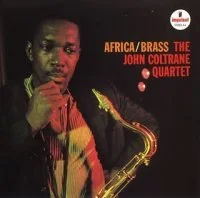
Coltrane’s first release for the Impulse! label is also the most searing and accomplished of his career.For the album, Coltrane’s backing quartet—which included McCoy Tyner (piano), Elvin Jones (percussion), Reggie Workman (bass), and Art Davis (bass)—was joined by a fifteen-piece brass section that included such luminaries as trumpeter Freddie Hubbard, trombonist Britt Woodman, and Eric Dolphy on the reeds.The compositions were arranged by Tyner and Dolphy, which contributes to the staccato (Tyner) and avant-garde (Dolphy) quality of the music.
In the liner notes for Africa/Brass (Volume 2 was released posthumously, and included alternate takes and an unreleased track), Dom Cerulli wrote, “John Coltrane is a quiet, powerfully-built young man who plays tenor saxophone quite unlike anyone in all of jazz.His style has been described as ‘sheets of sound’ or as ‘flurries of melody.’But, despite the accuracy, or lack of accuracy, of such descriptions, it is a fact that Coltrane’s style is wholly original and of growing influence among new tenor players.”
The notes go on to describe Coltrane as a restless artist, always seeking to expand his musical palette and explore his influences—Cerulli remarks that Coltrane had immersed himself in the rhythmic character of Africa and had been studying folk musical traditions as well, and on Africa/Brass this is wholly evident.Two of the cuts are Coltrane/Tyner arrangements of traditional songs: “Greensleeves” and the elaborated Black Code spiritual, “Song of the Underground Railroad.”In the first, Coltrane uses a languid time signature to create plenty of space for the saxes and piano to open up; the latter becomes a propulsive hard-bop masterpiece, with goosebump-inducing brass swells and interplay between Tyner and Coltrane.
The Coltrane originals in the Africa/Brass sessions are “Blues Minor” and “Africa.”The former is solid but unremarkable in the Coltrane canon, but the latter is breathtaking.In “Africa,” John Coltrane takes full advantage of everything before him in the studio—the brass section, the work of Tyner in adapting his piano voicings for the orchestra, Dolphy’s artistry, and his own fearless improvisation, not to mention his own tireless investigation of African rhythms, aided by Nigerian percussionist Babatunde Olatunji—and brings it to bear.The music is by turns austere and florid, as Dolphy’s reed work seems to mimic human wails and joyful noise.And while listening to Africa/Brass, I can never shake the neatness of this fact: Coltrane sought to incorporate African musical elements into an art form that itself had already incorporated so many of those elements—jazz.
Crowded House – Time on Earth (2007)
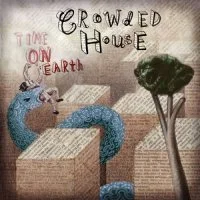
I wrote about this outstanding album in a review post last summer, so I’ll just direct you to that page on my weblog for the details—standout songs, a bit about the band, and more.
The album has only grown more appealing since I wrote that piece.What is most remarkable about this fact, going back to my introductory remarks in Vol. 1, is that the album hangs together as a coherent musical statement despite the fact that part of it was conceived as a Neil Finn album and part for Crowded House.
The Jimi Hendrix Experience – Electric Ladyland (1968)
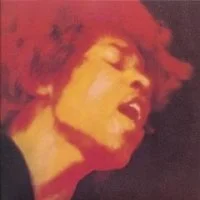
This is the one.On the BBC Radio show, the host typically asks the guest to name the one album (of the eight Desert Island Discs) he or she would select if only one could be taken.For me, the last album released by The Jimi Hendrix Experience would be that one disc.
The recording of Electric Ladyland began in fits and starts during the summer of 1967, but wrapped up in earnest during the spring and summer of 1968; the double album was released in September 1968, two years before Hendrix’s death of an apparent drug overdose.
The Electric Ladyland sessions are the stuff of legend, not only in their scope and the number of guest performers/devotees/hangers-on that packed the studio, but also in terms of Hendrix’s perfectionism.Not only did he record take after take of each song—“Gypsy Eyes” is said to have run through more than 40 takes before Hendrix could be convinced that the song was album-ready—but he also laid down the bass tracks (using a right-handed guitar) on the frequent occasions that Noel Redding became frustrated at the pace of things and stormed out to have a pint.The recording process is the subject of a documentary in the Classic Albums series and countless articles.In short, it’s been done.So let me more on and tell you a little bit about why I love this album so much.
First, the liner notes (or “Letter to the Room Full of Mirrors”) by Hendrix are a study in psychedelia (or more to the point, psychotropia) that can’t help but make one wonder what kinds of narcotics may have helped him envision this sonic landscape and make it a reality. A sample: “That sound was from those cellophane typewriters—exactly, constantly from the south side of those carpets.”It sounds profound, almost poetic, until one realizes that it doesn’t make a damned bit of sense.
The first cut is the trippy instrumental piece “...And the Gods Made Love,” replete with backward vocals, reverb, echo, and speed-release effects that Hendrix himself called “a 90-second sound-painting of the heavens.”This song is followed by the lovely title track, which sounds like a somewhat more fully realized version of “Little Wing,” and for which Hendrix himself performed both the lead and backing vocal parts.After the disarmingly straight ahead (but in reality, marvelously multilayered) “Crosstown Traffic,” Side A concludes with the 15-minute blues jam “Voodoo Chile.”Much of the track consists of an electrifying musical interplay between Hendrix’s guitar wizardry and Stevie Winwood of Traffic on the Hammond organ.It’s one of those perfect creations that demands the listener’s full attention.I can remember taking my dad’s copy of the album over to Mark Shewchuk’s house and playing this song; we just sat in dumb awe as every last second of “Voodoo Chile” washed over us.
Here’s a video of a performance the JHE at BBC in 1969.
[A note: I am a proponent of the vinyl experience in general, but for most music, there’s little discernible difference to the casual listener. I’m telling you, though: you haven’t heard Electric Ladyland—not really—until you’ve heard it on vinyl.It’s like the difference between seeing a very good color reproduction of Thomas Eakins’ The Gross Clinic and seeing the piece—with its brushstrokes, its subtle shadings, its minutest details—in person, as I did a couple of years back after it was acquired by the Philadelphia Museum of Art. It’s worth the effort.]
I could go on, and on. Other standouts on this double album include the melancholy “Burning of the Midnight Lamp” and “1983 (A Merman I Should Turn To Be)”; the reprises of “Rainy Day, Dream Away” and “1983”; and a furious reimagining of Bob Dylan’s “All Along the Watchtower.”Side D closes with “Voodoo Child (Slight Return),” a composition that calls to mind indigenous creation stories and may connect to Hendrix’s own part-Cherokee heritage.“Voodoo Child” begins with liberal use of the wah-wah pedal and intersperses spare, iterant lyrics with Hendrix’s taut solos, which veer from the left audio channel to the right and back again: “Well, I stand up next to a mountain / And I chop it down with the edge of my hand / Well I pick up all the pieces and make an island / Might even raise a little sand.”
Jethro Tull – Stand Up (1969)
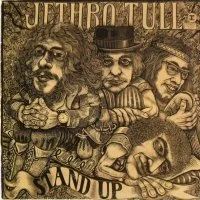
“Some new songs for you.”So ran the opening of the spare liner notes for the band’s second album, written by bandleader, principal songwriter, flutist, organist, mandolineer, and lead vocalist Ian Anderson.Stand Up was Tull’s first release with its most accomplished lineup—Anderson; Martin Barre on guitar; Clive Bunker on drums; Glenn Cornick on bass—and marked a revolutionary moment in rock.
[A note: I almost selected Tull’s Aqualung for the list, but ultimately decided that Stand Up is the stronger album, and the one I return to more often.And there just seemed to be something a little bit hinky about having a work that begins with the lyrics “Sitting on a park bench / Eyeing little girls with bad intent” on my D.I.D. list...]
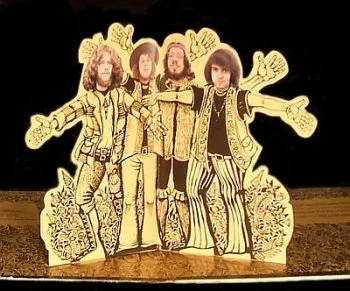
The album kicks off with the propulsive blues “A New Day Yesterday,” which mixes Barre’s guitar artistry with Cornick’s progressive drum signatures and Anderson’s trademark flute.Other standouts on the release—whose original gatefold cover revealed a “pop-up” image of the band’s members—are “Bourée,” a reimagining of Bach’s classic piece; and “We Used to Know,” a minor-key rock ballad that reportedly inspired the Eagles’ “Hotel California.”
Two folk-inflected ballads, though, are the real centerpieces of this album.First, “Reasons for Waiting” is a celebration of love and how, in the best of cases, it can transcend space: “Came a thousand miles / Just to catch you while you’re smiling.”
“Look into the Sun” is one of the most evocative songs ever written, and is actually my dad’s favorite of all time.Its lyrics are an astonishing balance of loss and hope, bitterness and circumspection: “I had waited for time to change her / The only change that came was over me / She pretended not to want to love / I hope she was only fooling me / So when you look into the sun / Look for the pleasures nearly won...”
[Here’s Jethro Tull performing “Nothing is Easy” at the Isle of Wight, 1970.]
Branford Marsalis – Royal Garden Blues (1985)
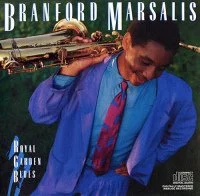
When one hears the name “Branford Marsalis,” one might think of his membership in a famed New Orleans musical family; the pretensions of his older brother Wynton, self-appointed guardian of jazz authenticity; or Branford’s brief stints as a member of Sting’s group or as bandleader on Jay Leno’s “The Tonight Show.”But the criminally underrated Branford Marsalis is one of the most exciting saxophonists working today, and has a mean body of work to back it up.
On his second solo album—the first was the very good “Scenes in the City,” built around a reworking of the kaleidoscopic title track by Charles Mingus—Branford stuck to the classics while paying homage to the Crescent City that gave him musical life.It opens with the taut “Swingin’ at the Haven,” with Branford’s father Ellis—the composer of the tune many years back—on piano. Here’s a video (audio only) of that track.
The two most moving tunes on this warm, accomplished album are ballads composed by pianists. Larry Willis’ “Shadows” (on which he also plays piano) ebbs and flows and features a brush-wielding Smitty Smith playing at his most restrained. But it’s Kenny Kirkland’s “Dienda,” one of my favorite songs ever, which truly sets the album apart.
I always end up feeling some kind of way when I listen to this song, as I am doing now.It’s not sad, exactly—it’s wistful, reflective.Branford’s soprano saxophone takes the melody laid down in Kirkland’s piano intro and imbues it with new depth and color.It’s one of the most terribly beautiful songs I have ever heard.
Rest in peace, Kenny.
[Here’s a 1987 performance of “Dienda” – the video and audio are slightly out of sync, but it is a fantastic rendition.]
Minutemen – The Punch Line (1981)
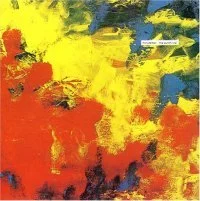
For those unfamiliar with the peculiar post-punk stylings of the Minutemen, the best place to start is probably the 1998 compilation Introducing the Minutemen, a 35-track retrospective covering much of the band’s roughly five-year career (which ended following the death of lead singer and guitarist D. Boon is a van accident).But its finest single release is not the uneven, somewhat meandering Double Nickels on the Dime—though there are great songs like “Corona” and “History Lesson – Part II” on that double-album—but the trio’s debut LP, The Punch Line.
An outstanding documentary about the band’s history was produced a few years ago. It’s called We Jam Econo (in reference to the band’s penchant for reusing recording tape and recording songs in the order in which they’d appear on an album, as they reportedly did on The Punch Line) and the film includes interviews with contemporaries as well as both Watt and Hurley.
The Minutemen’s sound is difficult to describe: Mike Watt’s two-fingered bass plucking and husky-voiced singing, George Hurley’s frenetic drumming, D. Boon’s high-treble guitar and hollered lyrics.At least at the beginning of the band’s career, few Minutemen songs reached beyond a minute, but the band could pack more insight and authenticity into 40 seconds than many bands could squeeze out of an entire album.
Here’s a video to acquaint you with this incredible band: it’s the Minutemen performing “Joe McCarthy’s Ghost” in 1983.
Indeed, the album’s 18 songs clock in at little more than 15 minutes, and each of the three members sings vocals on the album, though in later years only Boon and Watt handled the vocals.Standouts include the instrumental “Song for El Salvador,” “Straight Jacket,” “Tension,” and “Static.”
The best song on The Punch Line is the title track, a deliciously revisionist account of Custer’s Last Stand: “I believe when they found the body of George A. Custer / Quilled like a porcupine with Indian arrows / He didn’t die with any honor, dignity or valor / I believe when they found the body of George A. Custer / American general, patriot, and Indian fighter / That he died with shit in his pants.” Here’s a video (audio only) of this song being played live in 1981.
Ozomatli – Ozomatli (1998)
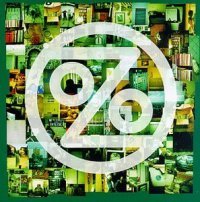
“O-zo-mat-li / Ya se fue / Ya se fue!”So goes the chant as Ozomatli leaves the stage at the end of one of its live shows (it means “Ozomatli have left”) and continue to play as the band members wend their way through the crowd.The best way to experience this multicultural Latin/funk/hip-hop collective from Los Angeles is live, in concert, during one of its rare appearances on the east coast.Mrs. Monsoon and I have seen them six times—once with Jon and Megan, once with just Megan (what what!), both at the World Café Live—and I’ve been lucky enough to meet some of the band’s members.
Ozomatli’s constantly evolving lineup finds as few as eight or as many as twelve musicians onstage, but the “original six” (who have been with the band since its formation in 1995) are Asdru Sierra (vocals, trumpet); Wil-Dog Abers (bass, vocals); Ulises Bella (reeds, guitars, vocals); Justin “Niño” Porée (percussion, rap vocals); Raúl Pacheco (guitar, vocals); and Jiro Yamaguchi (percussion).
The band’s members met through their involvement with the Peace and Justice Center in L.A., and Ozo continues to be politically engaged on behalf of the rights of indigenous peoples, eradicating racism, and other causes.(Wil-Dog just sent me information through Facebook about an L.A.-based organization called Encompass, which develops and implements programs to eliminate homophobic bias from school classrooms.)
Ozomatli has released four studio albums, but its self-titled debut still stands as its sharpest and most engaging.Ozomatli is built around the band’s seamless blend of cumbia, funk, rock, hip-hop, reggae, and Middle Eastern elements, with Spanish and English lyrics—sometimes in the same song.Many of the cuts are punctuated by sections rapped by Chali 2na, who left the group after this album to join the hip-hop collective Jurassic 5 (but recently rejoined Ozo for its autumn and spring tours).There’s not a weak cut on the disc, but highlights include the infectious “Cumbia de los Muertos”; the strident “Chota,” a Spanish-language song of resistance to police brutality; and “Aquí No Sera,” which is a remake of Enrique Ramirez’s protest song against U.S. intervention in El Salvador.
[Here are two videos from the BBC show “Later with Jools Holland,” both of which are performances by Ozomatli from 1998, the year Ozomatli was released. In the first video, they perform “Como Ves”; in the second, they perform “Super Bowl Sundae.”]
The Roots – Do You Want More?!!!??! (1995)
Back in May 2008, I wrote an open letter to The Roots asking them to reconsider their championship of the noise-rock outfit Deerhoof.
While The Roots regrettably ignored my pleas, I received plenty of feedback from those who also attended An Evening with The Roots or The Roots Picnic and wondered what in sunny hell they had done to earn the aural assault of Deerhoof.Now, sadly, it’s too late.The Roots’ downfall happened more rapidly than even I anticipated: as of March 2009, The Legendary Roots Crew has been working as the “house band” for Jimmy Fallon’s late-night talk show.Yes, Black Thought is now a third-rate Doc Severinsen. (Breathtakingly afroed drummer Ahmir “Questlove” Thompson playing in and out of commercial breaks on an after-midnight chat show is a little like Miles Davis sitting in a corner and playing the “Jeopardy” theme while the contestants record their responses during Final Jeopardy.It hurts just to talk about it.)Hip-hop is dead.Not to be dramatic or anything.
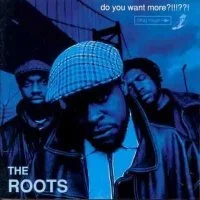
But hey! Let’s talk about what The Roots accomplished during a 15-year recording career before they sold out.Their strongest album is The Roots’ major label debut, Do You Want More?!!!??!Though 2002’s Phrenology and 2004’s The Tipping Point came close, ultimately I had to choose Do You Want More?!!!??! for my Desert Island Discs list.
Again here, I am drawn to The Roots because they bend and blend genres deftly, as did A Tribe Called Quest in the same era.Present on this album are the boastful rhymes, beat-boxing, and heavy beats one would expect to find on a hip-hop release—but what listeners also found were a jazz sensibility; live instrumentation; bagpipes (!) on the title track; and the graphic, uncompromising spoken-word poetry of Philadelphian Ursula Rucker.The album begins with Black Thought’s announcement that “You are all about to witness some organic hip-hop jazz,” and the listener is transported from there.
It’s an unforgettable and impressive album from beginning to end.Outstanding tracks include “Proceed” and “Distortion to Static.”“Silent Treatment,” a lost-love lament, is superior even to later, more well-known Roots songs of that ilk like “You Got Me” and “The Hypnotic.”Longtime Roots collaborator Dice Raw makes his debut (at the tender age of 15) on “The Lesson, Pt. 1.”
[Check out The Roots’ first music video, for the song “Proceed.”]
U2 – The Joshua Tree (1987)
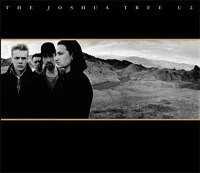
Each U2 album—particularly through to the early 1990s—has its own tone, its own heart, so it was difficult to select one for my D.I.D. list.In the end, the roots majesty of The Joshua Tree beat out the atmospheric anthems of The Unforgettable Fire and jaded reinvention of Achtung Baby.
The Joshua Tree was bigger than an album; it was a phenomenon. It made the world take notice of U2 and turned even casual popular music fans into devotees of the quartet from Dublin.
In a post earlier this year, I wrote extensively about this album specifically, and in general about my love for this band.There’s not really a whole lot I can add to that, as there’s not much that hasn’t already been said or written about The Joshua Tree.It’s a masterwork.
Incidentally, I consider the seven songs on B-sides to the “I Still Haven’t Found What I’m Looking For,” “With or Without You,” and “Where the Streets Have No Name” 45-rpm singles to be legitimately part of The Joshua Tree, as the album was originally conceived to be released as a double album.I’m just saying.
Every single song is great, and the songs themselves are really hard to consider outside the context of the entire album—a testament to its cohesion.The album as a whole is quite a bit darker than one might realize at first: its songs deal with heroin addiction (“Running to Stand Still”), bellicose U.S. foreign policy (“Bullet the Blue Sky”), and death squads in San Salvador (“Mothers of the Disappeared”).The words that most haunt me, though, are at the conclusion of the swelling, shattering “Exit,” the tale of a desperate man driven to violence by his own demons: “The hands that build / Can also pull down / The hands of love.”
Here’s a video (audio only) of one of my favorite b-sides from this era: “Walk to the Water.”
Bunny Wailer – Blackheart Man (1976)
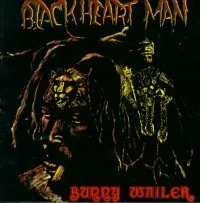
The lilting strains of Tommy McCook’s flute on the opening title track welcome the listener deep into the Jamaican hillside, and one feels instantly transported to a back-to-nature Rastafarian commune. Blackheart Man is the first solo album by Neville Livingston, aka Bunny Wailer, one of the original Wailers (with his half-brother Bob Marley, as well as Peter Tosh). Following the international success of the Wailers, Bunny began to feel marginalized as Bob’s was featured more prominently as the leader of the band—he also disliked leaving his homeland and became more entrenched in the Rastafari faith—and so both Bunny and Peter left in 1974 to begin successful solo careers.
Blackheart Man is a masterpiece, and surely one of the finest reggae albums of all time.Subtitled on the album jacket The Ten Messages, its ten songs elaborate on mystical Rasta teachings, Biblical messages of deliverance, and on the struggles of the African diaspora against oppression.Bunny is backed by most of the Wailers band, not to mention Peter Tosh on rhythm guitar and backing vocals and the Skatalites’ Tommy McCook on horns and woodwinds.Bob Marley even shows up to contribute backing vocals on the album’s richest, most redolent track, “Dreamland,” a fantasy of African repatriation: “We’ll get our breakfast from the tree / We’ll get our honey from the bee / We’ll take a ride on the waterfalls / And all the glories, we’ll have them all...”
[Here’s the song “Dreamland” as uploaded to YouTube—no video, just the song and a series of still images of Bunny Wailer.]
____________________________________________________________
Whew.This list of Desert Island Discs was more difficult to write than I’d anticipated.It’s hard to articulate why I love something that reaches me on such a pre-verbal level.Why does Edge’s guitar leave me in awe?Why does Coltrane’s “Song of the Underground Railroad” make the hairs on my arm stand up?Why do I well up sometimes when I hear “Dienda”?These are matters of emotion, of subconscious association, and it’s best just to accept them and enjoy.
I’ve had lots of musical mentors throughout my life—Mark, Amy, Rob, Dave, and others—who have introduced me to new bands discovered great music with me.
But I might not have so deep an appreciation for music—nor would it likely be such an integral part of my life that it’s impossible to imaging existing without it—if not for my dad.From the time I was very young, his massive record collection and patient indulgence of my curiosity have guided me in discovering my own musical preferences.He has never been hemmed in by labels and has never confined himself to one specific genre; his record collection includes classic and progressive rock, jazz, bluegrass, comedy, classical, fusion, blues, folk, metal, and so much more.The extent of his musical palate continues to amaze me to this day.
I always caution my students to avoid ending their work with someone else’s words, but in this case, I’ll break my own rule.In the last scene of the must-see film Almost Famous, fifteen-year-old William Miller finally gets an interview with lead guitarist Russell Hammond after following his band, Stillwater, around on tour.Sitting in William’s bedroom at the end of a poignant exchange, Miller thrusts a tape-recorder microphone at the rock star and asks, “So Russell ... what do you love about music?”Russell considers the question, settles in for a long response, and says, “To begin with ... everything.”
Desert Island Discs Contest Deadline Approaching
Hey, people...
Just wanted to remind you about the contest and approaching deadline. Here's the deal:
I have selected all of my 20 Desert Island Discs and posted the "second tier" 10. To enter the contest, email me your predictions for what albums I will include in my "top tier" 10 Desert Island Discs, to be posted on the weblog this weekend. Deadline to enter is tonight, Friday 6/26, at midnight EDT. Winner (the person with the most correct guesses) gets a free CD of his or her choice from among the 20 D.I.D.s on my list.
No purchase necessary. See weblog for details. One entry per reader. Consult your physician to see if Monsoon is right for you. Avoid driving a car or operating heavy machinery until you are sure how Monsoon will affect you. All rights reserved. ¡Si, se puede!
Monsoon Martin's Desert Island Discs, Vol. 1
The Desert Island Discs list is a concept that dates back to the 1940s, when it was created by Roy Plomley on BBC Radio—and still runs to this day (though Plomley is now shuffling around on that great Desert Island in the sky).Public figures are asked to name the eight pieces of music they consider indispensible, and at the end of the hour, they are also asked to name one book and one luxury item they’d take with them.
So here’s my spin—no pun intended—on the Desert Island Discs format.
First, whereas the participants on the BBC show often chose pieces of music or individual songs, I will confine myself to entire studio albums.I realize that the studio album is an endangered format in the age of iPods, when so many music lovers can simply buy individual songs rather than having to get a whole album.But I would argue that the studio album, as a coherent, fully-fledged musical statement, is inherently valuable.On an album, an artist can draw in a listener with a single straight-ahead rock and roll tune, for example, and then expose him or her to blues, to folk, to bluegrass.An album lets the artist explore a range of influences and experiment, to engage the listener with more expansive ideas and expound upon musical themes.
The album is really a creation of the 1960s, and the heyday of vinyl platters lasted into the 1980s, when cassette tapes, and later CDs, supplanted records as the dominant format.Technology actually broadened what could be offered on one release—albums can generally hold 25 minutes or so per side without loss of sound quality, while CDs can hold more than 70 minutes of data—and now, with low-cost mp3 files, has truncated what most music fans hear from a single artist.
The changes in format are quite staggering to consider: since I became aware of (and in love with) music in the early 1980s, the way music is consumed has undergone several major transmutations.I can think of albums, like U2’s War, that I purchased in vinyl format, then got the cassette because it was more convenient and portable, then got the CD because it was supposed to be clearer and more durable (meanwhile, I still insist that vinyl usually has the fullest sound, but that’s a rant for another time), and now I’m ripping the tracks off the CD and onto my computer in mp3 format in anticipation of the purchase (someday) of an iPod.
Because I believe in the primacy of the studio album, I have limited myself further: no “greatest hits” or “top singles” compilations (eliminating the work of such artists as Bill Withers, Dionne Warwick, and the Commodores, which I would like to have with me on the island, but their strongest output was scattered throughout their careers rather than on a single album.Maybe another series of posts will focus on my favorite songs of all time).In addition, I considered no posthumous collections of unfinished or unreleased material, which eliminates more than half the catalogues of artists like Jimi Hendrix and Tupac Shakur.
And I have decided to eschew live performance albums, so Live by Bob Marley and the Wailers, the Rolling Stones’ Get Yer Ya-Yas Out, and even comedic masterpieces recorded live, like Richard Pryor’s Is It Something I Said? or Bicentennial Nigger, must be removed from consideration.
Other favorites of mine that didn’t quite make the cut include Living Colour, G. Love & Special Sauce, Robert Cray, and the Dave Matthews Band.The Skatalites aren’t here because they primarily released singles and backed some of the greats of ska and rock steady in the germinal days of Jamaican reggae; Neil Diamond isn’t here, and neither is David Hasselhoff, because their greatness really transcends one album, one list—or one career, for that matter.Not sure what that means, but we’ll forge ahead.
Lastly, I realize the whole Desert Island Discs notion is a conceit—if I am stranded on a deserted island, I am overwhelmingly unlikely to lack the electricity and the equipment necessary to enjoy these discs, in whatever format.(The D.I.D. show began talking about phonograph records, of course, and modern participants are generally referring to compact discs.)And furthermore, anyone who knows me at all understands that if I were actually stranded on a deserted island, I would not be sitting around thinking about which CDs I wish I had brought; I would be alternately curled up in the fetal position, screaming for Wet-Naps to combat the ubiquitous sand, and bemoaning the fact that the only thing to eat or drink is coconut, which is about my least favorite thing on earth.So do me a favor, folks, when it comes to the D.I.D. thing: just go with it.
I’ve ditched Plomley’s eight D.I.D. selections in favor of 20.(I know, I know.When have you ever known me to be disciplined, or precise?But I’ve divided that number into two lists: second-tier D.I.D.—included in today’s post—and top-tier D.I.D., which will be posted next week.)
Before I reveal the second tier, I want to unveil a Monsoon Martin contest: email me at monsoonmartin@gmail.com with the list of albums you think I will include on my D.I.D. top tier next week; the person with the most correct guesses will win one CD of his or her choosing from my D.I.D. list.Deadline for entries is Friday, June 26th, 2009, at midnight EDT; winner will be published in the next posting...
Here goes the second tier, in alphabetical order by artist...
The Black Crowes – Amorica (1994)

The Crowes have always seemed a bit anachronistic—a group of southern-fried hippies making music that would not have seemed out of place alongside the Allman Brothers, The Band, or even Little Feat in the early 1970s.And yet there is a modernity to the Black Crowes in its employment of Middle Eastern influences, its inventive blending of seemingly disparate guitar lines and rhythm time.Chris Robinson’s souful, smoke-wrapped vocals are deeply evocative, and among the most recognizable in rock; his brother Rich turns in piercing, wickedly effective lead guitar work.
The first thing one may notice about Amorica is its cover—and many hand-wringers, so-called patriots, and inveterate prudes surely did.As the illustration shows, the cover depicts a woman wearing a skimpy, stars-and-stripes thong while wisps of pubic hair poke out of the top of the draws. It’s actually from a bicentennial issue of the magazine Hustler, and the record company capitulated to complaints by cropping the skin and hair around the flag image.
Here on Amorica, the Crowes more completely explore the heartbreak of “She Talks to Angels” (from their debut album) and tighten the arrangement evident on such messy, seemingly slapdash songs like “Thorn in My Pride” and “Sometimes Salvation” from 1992’s The Southern Harmony and Musical Companion.Standout tracks include “A Conspiracy” and the sweeping double-ballad, “Ballad in Urgency” / “Wiser Time.”The album’s concluding track, “Descending,” is a dirge for the addict’s helpless repetition of mistakes—a plea for steadfastness and against sanctimony in the face of self-destruction: “No sermons on ascending / No verdict on deceit / No selfish memorandum / No confusion for me.”
Here’s a sumptuous live rendition of the album’s closing track, “Descending.” Eddie Harsch’s piano here is equal parts gorgeous and heartbreaking.
Dead Kennedys – Fresh Fruit for Rotting Vegetables (1980)
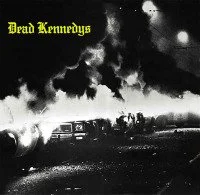
The early and mid 1980s were my punk/hardcore period, and I still listen to a couple of artists from that period whose greatness transcends any genre or craze: The Minutemen and the Dead Kennedys.The nimble, furious guitars of East Bay Ray and the uncompromising, manic vocals of Jello Biafra are unnerving and enthralling.The Dead Kennedys’ influences are as diverse as the Ramones and the Mothers of Invention.
I will admit that song titles like “I Kill Children” and “Let’s Lynch the Landlord” were jarring for my parents, and that I only gradually came to appreciate in Biafra’s deft lyrics the irony he had clearly intended.With an unmistakable wink to Jonathan Swift’s A Modest Proposal, in which he suggested that the Irish address their financial dire straits by selling their children to by eaten by the UK’s rich, Biafra wrote lyrics that sought to question United States foreign and domestic policies from the far left; this was particularly meaningful during the Reagan administration.
One of my favorite DK songs is on this album; it’s called “Kill the Poor” and centers around the notion that the U.S. could deploy nuclear bombs domestically to address its poverty crisis: “The sun beams down on a brand new day / No more welfare tax to pay / Unsightly slums gone up in flashing light / Jobless millions whisked away / At last we have more room to play / All systems go to kill the poor tonight.”
Here’s a video that weaves together various live performances of this song.
Jello Biafra continues to disseminate his trademark satirical wit and storytelling prowess via a series of spoken-word albums with such titles as I Blow Minds for a Living.
Digable Planets – Blowout Comb (1994)
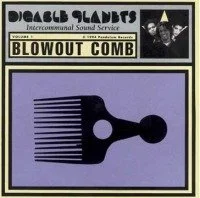
Doodlebug, Ladybug Mecca, and Butterfly had a brief run (they released only two albums, of which Blowout was the second), but their impact on hip-hop is immeasurable.Digable Planets burst onto the scene in 1993 with the single “Rebirth of Slick (Cool Like Dat),” which featured a walking bass line with a sly beat and lounge horns.The rapping was self-assured, but also understated: the rhymes were floated to rather than spit at the listener.Their debut album also included the masterful pro-choice study called “La Femme Fetal.”
Expectations were high for the Digables’ 1994 follow-up, and the resulting masterpiece was disappointing only in the commercial sense.The album instantly immersed the listener in an aural landscape that recalled spy movie soundtracks from the 1960s, blending jazz and political hip-hop in ever more sophisticated ways: the opening lyrics of the first song are “One time for your mind / Two times for Mumia’s saint crew.”
[Check out the music video of "9th Wonder (Blackitolism)" from this album.]
Digable Planets also revolutionized the nature of sampling; while rap artists had been sampling the likes of James Brown and Curtis Mayfield since the genre began in the late 1970s, the Digables sampled from jazz greats like Roy Ayers and Miles Davis, hip-hop pioneers The Last Poets, and funk/soul stalwarts like The Crusaders and The Ohio Players. All of this was reimagined in an urgent, incisive, and fiercely independent creation.The resultant work, Blowout Comb, is remarkably seamless and compelling.
Isaac Hayes – Hot Buttered Soul (1969)
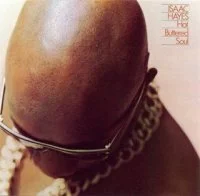
Isaac Hayes began his career as a songwriter for the legendary Stax records, where he and writing partner David Porter turned out a string of hits that included “Soul Man” and “When Something is Wrong with my Baby.”Hayes was invited to record an album for the label, but his first effort resulted in commercial and critical failure.He decided to reinvent his music and his image for the next album—while insisting on complete creative control in its recording—and the results were wildly successful.
Hot Buttered Soul turned Isaac Hayes from an unknown songwriter to an African American icon—who would become known as the “Black Moses”—in just a few short years.The arresting album cover, which featured a bird’s-eye shot of Hayes’ clean-shaven head and the thick gold chain that graced his neck, was as instrumental in creating the Isaac Hayes mythos as were its contents.The album itself contained only four tracks, starting with a half-time, orchestral, rhythm-heavy reimagining of Burt Bacharach’s “Walk On By.”The next track is an original, “Hyperbolicsyllabicsesquedalymistic,” a blistering up-tempo funk ensemble piece propelled by a repeated wah-wah guitar and Hayes’ breathy bass vocal.His backing band, the Bar-Kays, really shine here.
Side B (remember, this was the time of vinyl platters, folks) begins with a rather pedestrian ballad about love and loss, yet what makes the song work is Hayes’ admixture of vulnerability and toughness.The album closes with a reinterpretation of the country classic “By the Time I Get to Phoenix,” a song which opens with a seemingly ad-libbed monologue and builds to a crescendo of lament.Hayes, of course, is known for his starring appearance at Wattstax, but may be more well-known by today’s audiences for his role as Chef on TV’s “South Park.”But Hot Buttered Soul is where the legend began.
Check out the song “Hyperbolicsyllabicsesquedalymistic,” here in this audio-only video.
Linton Kwesi Johnson – Tings an’ Times (1991)
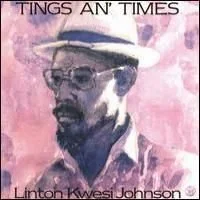
LKJ pioneered the “dub poetry” genre of reggae music, which consists of speaking over a dub, or reggae track.His first albums, Dread Beat an’ Blood and Forces of Victory from the late 1970s, are his most well-known, and dealt with racist police brutality in Britain and the struggle for autonomy among the African diaspora.Johnson’s work paved the way for other well-known practitioners of dub poetry like Oku Onuora and Mutabaruka.
His 1991 release on Shanachie Records, Tings an’ Times, redefined the genre.The album features his most sophisticated musical arrangements and his most biting, accomplished lyrics.Musically, the dub of longtime collaborator Dennis Bovell hinges mostly on a mid-tempo rock-steady beat, but also includes such disparate instruments as accordion, flute, and violin to provide a foil for the urgency of LKJ’s lyrics, delivered in a measured Jamaican patois.
The best song here is “Sense Outa Nansense.”In this cut, LKJ ponders the difference between the innocent and the fool: “Di innocent an di fool could pass for twin / ... / Yet di two a dem in common share someting / Dem is often confused an get used / Dem is often criticized an compromised / Dem is often vilified an reviled / Dem is often foun guilty witout being tried / One ting set di two a dem far apart, though / Di innocent can harbor doubt, check things out, and maybe find out / But di fool ... tsk!”
Led Zeppelin – Led Zeppelin IV (1971)
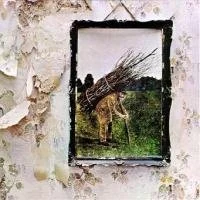
Sometime in the early 1980s, when I was 9 or 10, we were visiting my uncle and his family up in Red Hill (where my dad grew up) and I was hanging out with my cousin Troy, who was a couple of years older than I.To say we were opposites would be a gross understatement: he liked to ride dirt bikes in the mud, while I felt bitchin’ jumping my Huffy over a low curb; he liked to play army games in the marshes and creeks near his house, and I liked to organize my baseball cards or arrange my Star Wars “people” into dramatic battle scenes; he and his friends liked to make me ride up to the McDonald’s drive-thru window and try to place an order, then laugh hysterically when I was informed that sort of thing is not allowed, and I liked to avoid any such potentially embarrassing situations.(Come to think of it, he was kind of a dick.)
Anywho, on the aforementioned visit he turned on some AC/DC and when I did not readily begin nodding my head in approval, he asked, “Don’t you like AC/DC?!”Having only heard the racket he was playing, and seen their videos on MTV in which the guitar player bobbed his frizzy mop so insistently that I took to asking questions of the screen—“Are you a jerk? Does your music suck?”—and he would just keep nodding in the affirmative, I said no.“Well, who’s your favorite band, then?” he asked.“The Pointer Sisters,” I heard myself reply.
Now, I was a little dork, to be sure, but even in that moment I knew that was not going to go over well.I mean, the Pointer Sisters?It’s the first thing that popped into my head.At least he didn’t ask me what my favorite song was, or I might have blurted out “Slow Hand” or “He’s So Shy” and sent him into another paroxysm of derisive laughter.As it was, Troy now felt it was his duty to introduce me to music he found acceptable.And so, a few years later, he yanked me out of our grandmother’s funeral as it was wrapping up, took me to his older brother’s car, and played a cassette recording of the song “Stairway to Heaven.”
Putting aside the obvious inappropriateness of my cousin playing me a hard rock epic about drug abuse while I was mourning my Nannie’s death, the song did stay with me, and before long I sought it out among my dad’s massive record collection.
I could have easily selected Led Zeppelin I or Led Zeppelin II here—and almost did—but Led Zeppelin IV is really the supergroup’s most accomplished and well-crafted album.Obviously the cut I mentioned above is hauntingly beautiful and one of the most popular and enduring hard rock songs of all time, but the album has so much more: the ethereal “Battle of Evermore,” the fierce, straight-ahead “Black Dog,” the plodding blues “When the Levee Breaks.”Led Zep co-opted the motifs, the arrangements, and sometimes even the lyrics of its blues and soul heroes, but the band always paid tribute to these influences. Led Zeppelin IV represents the band at its most consistent, incorporating the best of the sonic experimentation, exploration of American musical traditions, and impeccable musicianship of its first three albums.
A close Led Zep runner-up was Physical Graffiti, their 1975 double album featuring epic tracks like “In My Time of Dying,” “Ten Years Gone,” and “Kashmir.”
Here’s the band performing “Black Dog” at Madison Square Garden in 1973.
Meshell Ndegeocello – Bitter (1999)
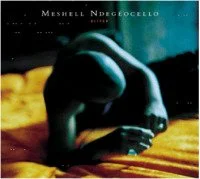
Neo-soul icon Meshell Ndegeocello has experimented with dance, drum-and-bass, spoken-word, R&B/funk, ambient, rap, hard rock, and much more in a mesmerizing oeuvre that now spans more than a decade.But her most coherent release is the gorgeous Bitter.It is an album of spare, folk- and soul-inflected arrangements, orchestral accompaniments, and sweeping emotional turmoil.The songs center on the themes of love and loss, trust, loyalty, and faith; and the austere, seemingly simplistic lyrics belie a depth and insight that is revealed by Ndegeocello’s deep, versatile voice.
The album’s crowning achievement is the closing pair of songs, “Wasted Time” and “Grace.”On the former, Ndegeocello sings an unconventional duet with indie artist Joe Henry (though for all these years, I could have sworn it was Marianne Faithfull singing with her).“Wasted Time” is a five-minute lament of unrequited love set over orchestral flourishes, steel guitar, and an insistent, dirge-like beat: “You rarely notice but I hang on your every word / Everything you say / You’re much too busy to notice me / You turn and walk away / Into another’s arms, hopeless ashamed / I wish I could hold you that way / Brokenhearted I dream for you to notice me.”
When it ends in the middle of a word (they don’t quite get out the words “broken-hearted” in a later verse), the song “Grace” begins.Over an acoustic arrangement and a metronomic beat, Ndegeocello ends the album with a statement of renewed hope in finding love: “Your love’s my only saving grace / You caress my heart, kiss my face.”
Here’s an audio-only video of the closing song from this album, “Grace.”
Augustus Pablo – East of the River Nile (1977)
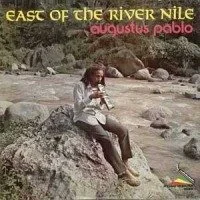
Augustus Pablo (born Horace Swaby) was a progenitor of dub reggae, and one of the first (and only) musicians to prominently feature the melodica—an instrument which is basically a combination harmonica and keyboard and had theretofore been used primarily to teach music to young school children.Pablo’s albums typically consisted of instrumental explorations of Rastafarian truths set in an almost trance-like sonic milieu.The “dub” label meant that echoes, reverberations, loops, and cut-outs (abrupt removal of certain instruments) were used liberally while emphasizing rhythmic elements to create a composition that is both unpredictable and fluid.
East of the River Nile was no different, and yet it ascended to new heights in terms of its melodic structure and continuity.Produced by the great King Tubby, it featured Pablo not only on his trademark melodica, but also on organ, clavinet, synthesizer, and other keyboards.Also included were some of the greats of Jamaican musicianship, such as Family Man Barrett and his brother Carlie; the Soul Syndicate’s Chinna Smith; and Robbie Shakespeare (one-half of the celebrated dub/production team Sly & Robbie).The songs are imbued with Pablo’s “far-east” style, an eclectic blend of Asian influences and dub reggae.The album’s best song is the title track, a crucial, atmospheric track propelled by a nimble bass line, exhibiting these Asian inflections.
On a personal note, listening to this album is like entering an ancient dimension.For a long time I would only listen to the album when it was raining (seriously) and at one point in my early teens I even had a nature sounds cassette (“Thundering Rainstorm,” I believe it was called) that I would play at the same time in my dual-cassette stereo. Dweeb.
Rage Against the Machine – The Battle of Los Angeles (1999)
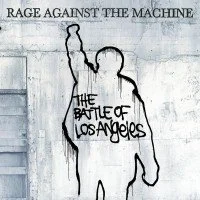
Rage burst on the hard-rock scene in the early 1990s with such iconoclastic anthems as “Killing in the Name” and “Bullet in the Head,” boasting the guitar pyrotechnics of Tom Morello and the relentless, politically charged lyrics of Zack de la Rocha, who hollered his words with anarchic abandon.The band had both deepened its ideas and broadened its sonic palette by the release of its third studio album—and its last featuring original material—The Battle of Los Angeles.Named after the infamous 1942 incident a few months after Pearl Harbor when Los Angelinos were awakened by air-raid sirens and a barrage of anti-aircraft artillery—only to later find out it was a paranoia-induced false alarm—the release explores the abuses of U.S. power, the efficacy of protest, heritage and the plight of illegal immigrants.
Here on Los Angeles, the creative tensions that ultimately undid them—the band broke up in the late 1990s, unforgivably going on hiatus during the criminal Bush administration, when we needed them most—are laid bare, with thrilling results.This is perhaps nowhere so evident as on tracks like “Mic Check,” which skews heavily toward de la Rocha’s hip-hop preferences, and “Sleep Now in the Fire,” a straight-ahead rock song that reflects Morello’s hard rock inclinations. The almost hymn-like “Voice of the Voiceless” pays tribute to Philadelphia journalist and cause célèbre Mumia Abu-Jamal, but the most biting comments about Abu-Jamal’s case appear in the song “Calm Like a Bomb”: “There’s a widow pig parrot / A rebel to tame / A whitehooded judge / A syringe and a vein / And the riot be the rhyme of the unheard.”
Rage put on one of the most electrifying live shows I have ever seen (circa 1997, in Camden). I think what appeals to me most about RATM is that they are uncompromising and direct in their criticism of government, of industry, of the justice system, of religion. Most people with strong opinions are forced to tone them down, make them more palatable, sugarcoat them. Rage is a release, a furious cry against these stultifying forces.
Check out this audio-only video of one of the most resonant songs on this album, entitled “Maria.”
Red Hot Chili Peppers – Freaky Styley (1985)
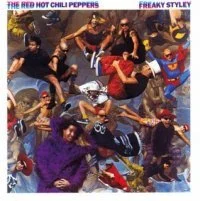
This remains the best album—even better than 1991’s breakthrough Blood Sugar Sex Magik or 1999’s Californication—by one of my favorite bands ever, Red Hot Chili Peppers. After their self-titled debut album failed to capture “the groove of who we were all the way,” the Chili Peppers decided they needed a producer who could harness the seemingly disparate musical directions the band seemed to want to take: punk and funk.Soon the band had its answer in George Clinton, the legendary architect of Parliament-Funkadelic, whose musical sensibilities could help the boys achieve maximum funkitude while staying true to their hardcore/punk roots and indefatigable energy.
The result is Freaky Styley, a loosey-goosey funk masterpiece distinguished by Flea’s snapping bass lines and the wah-wahs and nimble harmonics of guitarist Hillel Slovak (who died of a heroin overdose a few years later).I remember back in 1985 when the album came out, my friend Mark Shewchuk played the album for me, and I was immediately hooked.The music fell into a hypnotizing groove, but also wore its eccentricities (off-time beats, psychedelic guitar diversions, affected vocalization) proudly.This is apparent even on the outstanding covers that appear on the album, the Meters’ “Africa” and Sly Stone’s “If You Want Me to Stay.”
[Check out the music video for "Jungle Man." Be warned that there is brief nudity; it seems the boys' penchant for performing nude with only sweat socks covering their genitals dates back to this period.]
Maybe the most recognizable aspect of Freaky Styley—aside from George Clinton’s knob-twirling—is Anthony Kiedis’ employment of gleefully bawdy lyrics: one relatively mild example from “Sex Rap” runs “I can tell you’re like a horny bloodhound / Feel the bass line hump the ground.”The most amusing lyrical story here, though, might actually be the one surrounding the song “Yertle the Turtle.”The song itself is a languid interpretation of the Dr. Seuss book bearing the same name, but the truly incredible part comes at the beginning and throughout the song, when George Clinton’s drug dealer says, “Look at the turtle go, bro.”Yes, that’s right: Clinton owed money to his drug dealer but couldn’t pay up, so offered him a part on the Chili Peppers’ album.
_____________________________________________________________
Well, that marks the end of my “second-tier” Desert Island Discs, with the top tier forthcoming.Remember to send in your guesses about what albums might grace that list; the winner gets a choice of any of the 20 D.I.D.s...
Monsoon's New U2 Album Review
As U2 releases its latest studio album, No Line on the Horizon, tomorrow, I got to thinking about how long I’ve been a fan of the band.It turns out it was spring 1984 when I first heard and saw them—it was a clip from Under a Blood Red Sky, their concert film.I was immediately hooked, and have been a devotee for 25 years now.
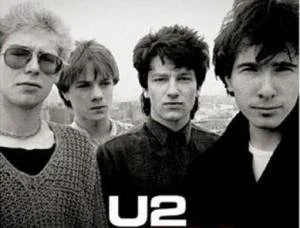
Twenty-five years.In that time—more than two-thirds of my life—U2 has been there with me for events great and small.(Perspective: only a handful of the very first students I taught were alive when I became a U2 fan.)In the 80s I purchased my U2 albums on cassette (supplemented by vinyl records), and in the 90s I bought it all (including what I’d previously gotten on cassette) on CD.Now I’m in the process of ripping the CDs to mp3 files for the computer and (someday) an iPod.
Before I provide a brief review of their new album, I thought I’d share some reminiscences of how U2 has impacted my life...
I heard “Pride (in the Name of Love)” when it was released in 1984, and was changed.It wasn’t just the music—soaring, sweeping, passionate—it was the discovery.Thanks to my dad and his legendary vinyl collection, I had already been steeped in the music of the 1950s and 1960s in myriad genres: from the Beatles to the Mothers of Invention, from Cream to Captain Beefheart, from Black Sabbath to Jethro Tull, from Jimi Hendrix to the Mahavishnu Orchestra.And my friend Mark Shewchuk had begun getting me into the Red Hot Chili Peppers and punk bands like Black Flag and the Dead Kennedys.But U2 was, for me, a discovery.I felt as though I had stumbled onto something truly unique, something transformative.In a middle school Industrial Arts class during a printmaking unit, when we had to choose a mast to print at the top of a notepad, I blocked out “U2 – Bono Vox.”My teacher, Mr. Eckel, was as perplexed then as he was when I just couldn’t seem to figure out how to make a goddamned jewelry box.
I bought The Unforgettable Fire as soon as it came out in late 1984 and was captivated by its moody soundscapes, interspersed with epic compositions like “Pride,” “Bad,” and “A Sort of Homecoming.”I listened to the cassette constantly, and I can vividly remember sitting alone on the balcony of our motel in Ocean City, NJ in the summer of 1985, looking out at the sea on a gloomy day, listening to the album’s atmospheric, instrumental cuts on my Walkman as though something heavy was on my mind.I was emo before there was emo, baby.
When The Joshua Tree was released in 1987 to rave reviews, wild popularity, and eventually a Best Album Grammy award, I was ecstatic.It was like a brilliant, talented friend had finally gotten the recognition he deserved.I consumed every bit of U2-alia I could: magazines, books, interviews, b-sides.(The b-side singles released with this album are among the best b-sides I’ve ever heard—songs like “Spanish Eyes,” “Silver and Gold,” and “Walk to the Water” could have made on The Joshua Tree or even Rattle & Hum.)The album is not only the best in U2’s impressive catalog, it’s one of the best ever made—the deepest, the most resonant.Two of my favorite songs from the album are lesser-known: “Red Hill Mining Town” and “Trip Through Your Wires.”The former is special because I remember excitedly playing the song for my father—who grew up in Red Hill, PA, though the song is about a Red Hill in Ireland—during a particularly difficult time for our family.And I remember stating with absolute certainty while playing the latter for my mom, “This is the first U2 song to ever feature harmonica.”(I think that’s so, but still—what a dork.)
In 1988 when U2 released the Rattle & Hum album, I remember going to the movie theater with a huge group of people to see the film.It was like a concert, with people singing along and hanging around for a long while afterward.
U2 left the stage for a few years to, in Bono’s words, “dream it all up again.”In 1991 they released the long-awaited Achtung Baby.My new roommate at Albright, Dave, and I had bonded over our mutual love for U2, so we hurried out to the record store on the day it was released (I believe it was Record Revolution in Reading, R.I.P.) and brought it back to the dorm room to give it a listen.From the first treble-heavy, feedbacking guitar riffs, we knew we were in for something different.We looked at each other quizzically as we forwarded from track to track to track, searching for something familiar, something that was instantly recognizable as U2.The only song that was instantly palatable to both of us was one of the great U2 songs of all-time, “One.”
Soon, though, we both came to love the album for its daring cosmopolitan flavor, and went to see them in concert (with the Trabants hanging from the rafters).Dave “slept out” for tickets at Boscov’s with his girlfriend at the time.Four of us went to the concert—Dave and his girlfriend, and her friend, and me.(I was already “attached” to my beloved by then, so it wasn’t a double date.)I remember that the four tickets we got were in different parts of the same section—two here, two there.Instead of sitting with his girlfriend, Dave sat with me, leaving his girlfriend and her friend to spend the concert in bewildered exile in another part of the section while Dave and I belted out song after song side by side, basking in each other’s friendship and the headiness of the night.
Subsequently, U2 had some strange experiments (Zooropa; Passengers) that had as many moments of self-indulgent bombast as they had moments of brilliance.They went back to straight-ahead rock in 2000’s All That You Can’t Leave Behind and 2004’s How to Dismantle an Atomic Bomb, the stronger of which, by far, was Atomic Bomb.
U2 has been there, marking life—its passage, its meaning, its milestones—in many more ways, ways I haven’t even considered.Sure, I’ve sometimes cringed a bit when Bono seems to linger a bit too long in his superhero tights.But for twenty-five years, I have found them to be the most captivating band there is.(That, and I think I would honestly pee in my pants and scream like a little girl if I ever met Bono.)
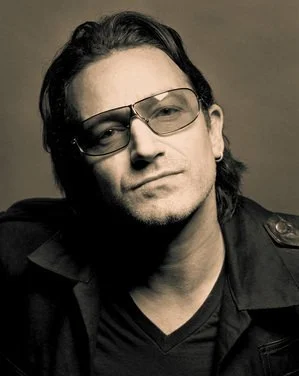
A little “brush with greatness” tale with a twist: a few years back my mother-in-law returned from Hershey, where she had traveled for a conference and stayed in a nice hotel. She said, “Oh yeah, hey, I rode up the elevator with that guy you like.What’s his name—Boner?”I don’t recall if I ever peeled myself off the ceiling long enough to explain this to her, so: Con, it’s “Bono” (nee Paul Hewson) and he’s only the lead singer of the greatest band in the world!!!
For now, allow me to present my exclusive Monsoon Martin ranking of the U2 oeuvre from most accomplished to least (and the lowest U2 album is still better than most of the rest of what’s around):
1. The Joshua Tree (1987) – as I said above, this is one of the best albums of all-time.From the first chiming notes of “Where the Streets Have No Name” to the furious “Bullet the Blue Sky” (which has only gotten better in concert), from the rueful “Running to Stand Still” to the infectious “In God’s Country,” this is a classic.
2. Achtung Baby (1991) – Bono was at his peak lyrically here, and the band took chances by incorporating sparer compositions and more distortion of the instruments. The risks paid off, with some of their greatest songs: “One,” “Love is Blindness,” “Mysterious Ways,” “Until the End of the World,” and on.
3. War (1983) – it was close for second place between Achtung and War.This album saw the lads find their voice as rockers with a conscience.Best songs are, of course, “Sunday Bloody Sunday” and “New Year’s Day,” but lesser-known but no less accomplished are “Drowning Man” and “Two Hearts Beat as One.” There’s not a stinker in the bunch.
4. Boy (1980) – U2’s first studio album; best songs, “Out of Control,” a celebration of youthful exuberance, and “Shadows and Tall Trees,” which takes its name from a chapter in William Golding’s Lord of the Flies.
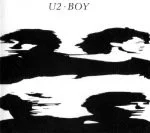
5. The Unforgettable Fire (1984) – it was critically panned, but I liked it, and still do—mainly because it’s the first studio album of theirs I bought.It’s when they first collaborated with Brian Eno to expand their sonic landscape, and the effect was uneven, but tremendous.There are well-known cuts from their catalog like “Bad” and “Pride,” but songs like “Homecoming,” the title track, and “Indian Summer Sky” stand the test of time too.(The 1985 EP Wide Awake in America had nice live versions of a couple of Unforgettable songs, as well as two very good b-sides, “Love Comes Tumbling” and “The Three Sunrises.”)
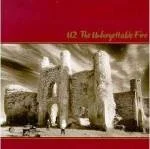
6. How to Dismantle an Atomic Bomb (2004) – this album is a burst of furious energy—creative, musical, lyrical—from a band that had been together already for 25 years.“Sometimes You Can’t Make It on Your Own” is a moving, riveting song; “City of Blinding Lights” was used by the Obama campaign right after his nomination speech; “Miracle Drug” and “One Step Closer” are other standouts.Even rollicking flirtations with 100+ beats per minute like “Vertigo” and “All Because of You” are gratifying.And the concert I attended (again with Dave) when they were touring in support of this album is one of the best I’ve ever seen.

7. No Line on the Horizon (2009) – see review below.
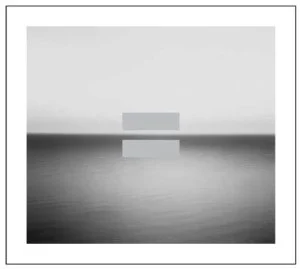
8. Rattle & Hum (1988) – it came off as too self-congratulatory and redundant to be a classic U2 album, but there are highlights here.“Van Diemen’s Land” showcases the Edge’s strong (and underused) tenor, and live versions of “Silver and Gold” and “All Along the Watchtower” are stirring.“Angel of Harlem” is a nice one, too.And two of my favorite U2 songs of all-time are “Heartland” and “All I Want is You,” either of which would have been right at home on The Joshua Tree.
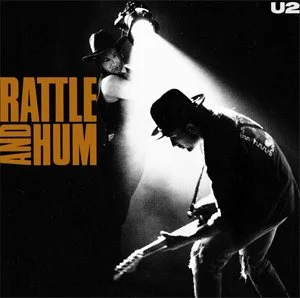
9. Zooropa (1993) – this bit of euro-trash contains the only U2 song I always fast-forward past: “The Wanderer” featuring Johnny Cash. It also contains Bono’s ill-advised extended foray into falsetto (“Lemon”) and the silly, monotone “Numb.” High points include “Dirty Day,” “The First Time,” “Stay (Faraway, So Close!)” and the title track.
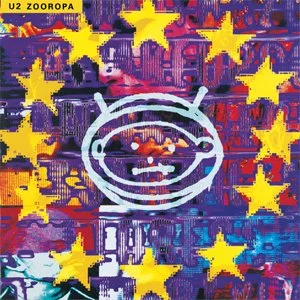
10. Pop (1998) – this is the nadir of the band’s glitzy Mephisto period, and on this tour they emerged from a giant, mirrored lemon onstage.They’d lost control of their own caricatures.There are some high points—“Gone” and “Do You Feel Loved” among them—and some interesting ideas like “Miami” and “Please,” but over all, they blew it.(I’ll also comment here on Passengers: Original Soundtracks I, which was an avant-garde release that contained music predominantly by U2.I remember reading somewhere that drummer Larry Mullen was particularly peeved about this foray into Eno-land.There are a couple of good songs—“Miss Sarajevo” and “Your Blue Room”—but otherwise it’s an amorphous, incoherent waste of time.)
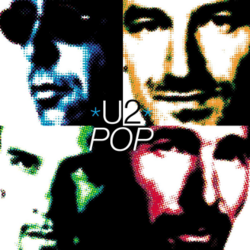
11. October (1981) – this album was a rush job during a turbulent period for the members of the band—spiritually and interpersonally.Best songs are “I Threw a Brick through a Window,” “Tomorrow,” and the sparse piano-and-vocals piece “October.” Almost every U2 song has a special place in my memory, but you can safely skip “I Fall Down” and “Is That All,” which are subpar.
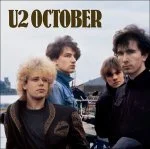
12. All That You Can’t Leave Behind (2000) – I can’t really explain what I don’t like about this album.It does have its finer points, like “Beautiful Day” (in moderation) and “Walk On” (there’s a remix that’s better than the album version).But for an album that was, according to Bono, U2’s application for the job of “best band in the world,” it felt a little forced and designed for broader appeal.Songs like “Wild Honey,” “Kite,” and “Grace” seem intentionally harmless and lack the “bite” of the best U2 work.
The new album, No Line on the Horizon, is an interesting departure of sorts for the band.On the one hand, it’s very different from the taut, straight-ahead commercialism of the previous two albums this decade.On the other hand, its elements are unmistakably U2, just bent in a different direction.There are high and low points, as with any album. The ridiculously titled “I’ll Go Crazy If I Don’t Go Crazy Tonight” and “Get on Your Boots” are subpar, with too modern and derivative a sound, and they're almost out of place on this mostly meditative, sweeping album.“Stand Up Comedy” is a delightful surprise with witty lyrics like “stop helping God across the road like a little old lady.”“Fez – Being Born” begins with sound samples and little too much Eno, but becomes something lovely and piano-driven (like a lot of this album).The title track marries the guitar riff from “The Fly” with the slinky philosophy of Atomic Bomb’s “Original of the Species” to interesting effect.
But the best four songs on the album are the ambitious, lovely “Magnificent”; “Unknown Caller,” which sounds as though it could have been lifted from October but with a sharper, distorted guitar; the spare, folk-inflected, Mark Knopfler-esque “White as Snow”; and “Cedars of Lebanon,” the almost spoken-word final song describing the life of a journalist in a war-torn area.The lyric “this shitty world sometimes produces a rose” is at first blush heavy-handed, but has a resonance in this song that delves beneath the hackneyed.It also contains what might be Bono’s best lyric of the decade: “The worst of us are a long, drawn-out confession / The best of us are geniuses of compression.”
So am I recommending No Line on the Horizon? Of course; it’s a U2 album. Which edition—the digipak, the CD only, the magazine, the box set? It’s all bells and whistles. Just get the bonus tracks and skip the DVD film by the pretentious, overblown Phil Joanou (I haven’t seen it, but he directed Rattle & Hum, so one can only imagine). The cover image alone—by Japanese artist Hiroshi Sugimoto—is a gorgeous, minimalist achievement.
Enjoy!
Flashback: Monsoon Martin's "Change Up, Gentlemen!" Forecast
Dear readers,
I wanted to share this selection from the early days of my forecasting/writing, well before I was a "blogger"--I just sent out my ruminations and prognostications via email. This one's from October 2005, and it's all about one of my favorite teachers/coaches of all time, Joe Scott. Please to enjoy.
Monsoon Martin’s “Change Up, Gentlemen!” Forecast
Tuesday, 11 October 2005
Quite a lot of rain we got Friday and Saturday, huh?Whoo-ee!Adamstown received nine and a half inches of rain, widespread flooding in Lancaster and Berks Counties.And I’m sorry to report that we’ve got more rain on the way this week—but fortunately, not in the amounts we saw over the past weekend.It looks like we’ll be drying out toward next weekend, but stay tuned.I’ll keep you posted on the vicissitudes of the weather...
That word—vicissitudes—takes me back to a time of cracking voices, growth spurts, the discovery of acne, the emergence of the first precious wisps of hair under the arms and on the upper lip, and all holy hell breaking loose with the reproductive system.Yes, my friends, I speak of puberty.And this blossoming wonderment begins in that hormone petri dish known as middle school.
“Vicissitudes” was a favorite word Mr. Joe Scott used to embody the mutability of life, the ups and downs, the inevitable changes that characterize any of our experiences.And through these vicissitudes (I can’t stop using it, so deep is my affection for the word), Mr. Scott was our anchor, our mentor: our gym teacher.
Each day we would arrive at the gymnasium of A. D. Eisenhower Middle School in Norristown, and we would encounter a sign on the locker room door: “Change Up, Gentlemen!” This was an indication that we were to retire immediately to the locker room and don our gym uniforms of blue shorts and a white short (blue and white being the school colors; our mascot, the Eagle). After changing, we’d repair to the gymnasium, where we were greeted by large pieces of paper hung high on the walls, hand-lettered by Mr. Scott. The one that stands out in my mind’s eye is “Do Unto Others As You Would Have Them Do Unto You!” (He always capitalized, and frequently used exclamation points: such was the urgency of his message.)
[Eisenhower Middle School, where Monsoon spent his sixth, seventh, and eighth grade years. The building is shown here as Eisenhower Senior High School, from which Monsoon’s mother graduated.]
Once inside the gym we’d arrange ourselves into rows, in Squad Sitting Position, indicating that we were ready to begin class.Squad Sitting Position was a manner of seating that seemed designed to maximize the pain delivered to the buttocks.We would sit with our legs out in front of us, half-bent, knees together, as if we’d just completed a sit-up.And until Mr. Scott took attendance (“Mr. Martin?”“Present.”“Mr. White?”“Unh.”“Mr. White?Is Mr. White here?”“Present.”), we would remain in Squad Sitting Position.
What strikes me about Mr. Scott’s gym classes is the fact that he addressed us by our last names, and as a group we were “gentlemen.”We weren’t merely a bunch of kids named Kendall and Andy and Glen running around and getting sweaty in gym; we were Mr. Meade, Mr. Talone, and Mr. Martin—mature gentlemen engaging in purposeful athletic pursuits.It lent an air of gentility and respect to the proceedings.
As luck would have it, Mr. Joe Scott wore many hats in his position at Eisenhower Middle School.Not only was he the gym teacher; he was also the health teacher, the basketball coach, and the baseball coach.In Health, we twelve-year-olds swaggered in, flush with the dawning of a new physiological day, and Mr. Scott guided us in our first tentative steps toward understanding our bodies.(There was no fifth-grade assembly for boys explaining the havoc that would be wrought on every aspect of our young selves, so we were grateful for any information that came our way—legitimate or otherwise—in middle school.)In addition to the Our Changing Bodies theme of the class, Mr. Scott also injected some life lessons into the mix.Most vividly I remember him admonishing us to avoid the fate of some, who end up “sitting on the street corner, drinking wine and eating Jolly Rogers.”Uproarious laughter greeted that little gem, but I think the message sank in.To this day, I don’t know what Jolly Rogers are, and I don’t want to know.Not much of a wine connoisseur either.Street corners make me nervous, too...
Occasionally in gym class, we’d take to the field outside and play a friendly game of soccer.Inevitably there would be some infraction or another committed, and Mr. Joe Scott would come striding across the field—his center of gravity when running was so low as to make this activity look almost comical—blowing his whistle and declaring that a “free kick” would be attempted.Now, if you’re not familiar with soccer (soccer buffs, feel free to correct me), a free kick is when a player from the opposing team sets up the ball at the corner of a box in front of the goal area.In between this player and the other team’s goal and goalie stand several (four? six?) players from the goalie’s team, trying to make it more difficult for the opposing player to score.Putting them directly in the line of fire of a kicked soccer ball. Mr. Scott had sage advice for those unlucky fellows chosen for this free kick “wall”: “Protect the head and genitals at all times, gentlemen!Protect the head and genitals!” And he would lock one arm—fist clenched in vigilance—in place in front of his face, the other arm locked in front of his genitals.It was a ridiculous pose, but not one boy on that wall balked at conscientiously mimicking this stance.
[These soccer players are approximating Mr. Joe Scott’s strategy of protecting the head and genitals—evidently having decided that their genitals are more precious and irreplaceable than their faces.]
As I mentioned earlier, Mr. Joe Scott was the middle school baseball and basketball coach as well, so I decided to avail myself of his mentorship by participating in these interscholastic pursuits in both seventh and eighth grades.And what disparate experiences these turned out to be.In basketball, we had an excellent team and compiled a winning record in 1985-86, then went undefeated in the 1986-87 season.As the only non-African American player on that team, I recall making every effort to be accepted.Some of the efforts that come to mind: singing and dancing along to “Brass Monkey” by the Beastie Boys in the locker room; making pitiful attempts at break dancing (I could plant my hand on the ground, and perfected the final pose, but everything in between was a tragic floundering of knees and feet, lacking as it did the fluidity and grace of my peers’ performances); and having my number (20) shaved into the back of my head.
In baseball, however, our team realized somewhat less success.More specifically, we did not win a single game in either the 1986 or the 1987 season.Painfully often, the “mercy rule” was applied, which dictates that if one team is leading the other by ten runs by a certain point in the game, it was (mercifully, hence the name) stopped to stanch the suffering.We were—as we had decided all we could do was embrace our record of futility—“defeated,” since we had won no games.I remember playing a great many positions for that team, including pitcher, and given our record, it should be obvious that my basketball prowess far outpaced my abilities on the baseball diamond.(See our 1987 team photo, below.)
I also remember a teammate of mine named Dave Borzillo. Quirky kid. Used to break out in a single refrain time and again, at idle moments during practice or game, and no one knew if what he was singing was actually a song: "God damnnn this traffic jam! How I hate to be late ... hurts my motor to go so slowwwww." In my research for this forecast, I actually confirmed that the song does exist. It's a very bad song by the normally reliably good James Taylor called "Traffic Jam." So Dave wasn't crazy, he just had questionable taste.
And admirably, Mr. Joe Scott's coaching methods were not measurably different for the undefeated basketball team and the "defeated" baseball team. If we had tried our best, he taught us, we could be satisfied with the outcome. (Now that I think about it, we couldn't really say we had given it our "all" after some of the baseball games. But it's the message that matters.) And Mr. Scott's problem-solving was, like him, simple and kind. Once I was struck in the upper thigh (OK, groin) by a baseball. Mr. Scott was instantly striding toward me, low to the ground, cat-like, dispensing the same advice he offered for any injury: "Rub the area gently, Mr. Martin! Rub the area gently!"
[Eisenhower Middle School's "defeated" baseball team, Spring 1987. From top left: Joe Scott, Eddie Carr, Monsoon, David Borzillo, Tony Womack. Regrettably, Monsoon cannot recall anyone else's name. Update in 2026: Oh! #98 is Dave Wingate.]
Protect the head and genitals!