
Flashback Friday: Monsoon’s Hoff to Summer Vacation Forecast (June 5, 2007) - Part One
And now that the forecast is out of the way, let me get to the real man-meat of my forecast: it is time for me to deconstruct, explicate, summarize, excerpt, and gushingly review the David Hasselhoff book, Don’t Hassel the Hoff: The Autobiography (released in Europe as Making Waves).
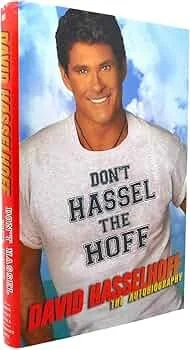
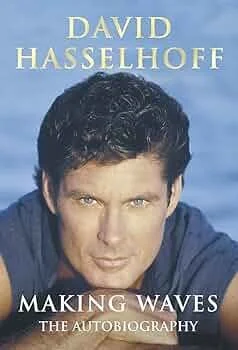
Sir Beefcake of Hasselhovia is gearing up for a second season of “America’s Got Talent,” which boasts two new cast members: Sharon Osbourne replaces the witless Brandy from last season; and Jerry Springer replaces the genial but stiff Regis Philbin. The show is bound to be screamingly awful—but it might just be awful enough that it veers into the realm of watchability…
About the autobiography, let me say this to begin: it was all I could have hoped it would be. In a sense, I’m doing you a favor here; I am going to tell you all you need to know about this book, saving each of you the $24.95 you would surely have spent on the tome yourselves. You are welcome. And, you can remit these funds to my attention at the high school.

BONUS CONTENT: This is an image of the Hasselhoff Homestead (what I call the place where Hoff grew up), at 3631 Kimble Rd. in Baltimore (right near the site of the old Memorial Stadium) taken by Monsoon in 2024. Yes, I went there. Incredibly, I did not have to fight my way through hordes of adoring fans gathered at the property.
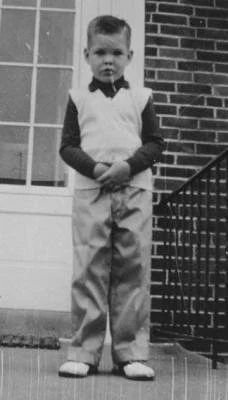
The book is rather typical of any show-biz autobiography: it’s got details about producers and budgets and other production minutae that would put the average person to sleep; it’s got plenty of glossy photos of the star with co-stars and associates (Hoff as a child; Hoff’s parents; Hoff as Garthe Knight; Hoff with Simon Cowell; Hoff and Pam with the Clintons at the White House, etc.); droll recollections about growing up; struggles with alcohol abuse; and the like.
But the real “guts” of the work can be roughly split into seven categories:
Cliché (but seemingly profound) statements, trite platitudes, and idiotic turns of phrase
Sexist and ribald comments, claims of being a sex machine
Racist and borderline bigoted statements
Self-congratulatory drivel about touching the future and his dedication to visiting/inspiring/curing sick children
An alarming number of instances in which he denies being homosexual, seems to inadvertently arouse suspicion that he is gay, or comments on the homosexuality of another
Bold actions, funny situations, and embarrassing moments, some of which involve his singing career
Name-dropping to associate himself with those whose wealth, fame, and/or talent eclipse his own
I will tackle each category in a manner that seeks to both convey the sense of his statements in that regard, and maintains a conciseeness so as not to bore you all to death.
Cliché (but seemingly profound) statements, trite platitudes, and idiotic turns of phrase
“From the age of nine, I had blind faith that I was going to make it. I never doubted I would be a star. ‘Yes I can’ were the words I lived by then – and still live by today.”
About his father, Joe Hasselhoff: “He’s still my best friend, my mentor and my guide; to this day, we see each other or talk on the phone every day. His positive attitude and sense of humour have always seen me through rough times. He is The Man.” This was heartwarming until he called his dad “The Man.” That’s the best he could come up with?
“I was clued-up and had a certain amount of Southern charm that could get us into clubs and parties.” “Clued-up”? Clued-in, maybe, or hopped up?
“Catherine and I were beautiful California people living in a mansion in the Hollywood Hills with a pool, Jacuzzi, screening-room and four dogs and three parrots.”
Regarding the actor who played his son on “Baywatch”: “Jeremy Jackson got the part because of his every-boy innocence and because he was like the son I never had.”
On one page, he claims to have had a premonition before the San Francisco earthquake. Almost unthinkably, the earthquake still had the temerity to occur.
The admixture of understatement and the ridiculous in the following passage is intoxicating: “Baywatch might not have been the show Shakespeare would have written if he’d lived in Malibu, but we covered a third of the world’s surface – and the rest was water.”
“I was high up in the Wasatch Range of the Rocky Mountains, and as far as I could see there were peaks, some snow-covered, some green, some covered in mist. I cried out: ‘I get it. I get it.’ I was looking at my destiny.”
Arianna Hoffington claims that the majority of his supporters come from “red states” rather than “blue states” – say it ain’t so, Hoff!
He ends the book’s Epilogue in this way, and I swear I am not making this up: “As the song goes, ‘I’ve been looking for freedom, I’ve been looking so long …’ Now I’ve finally found it. I’ll see you around. I’ll be there somewhere, making waves. The best is yet to come … see you in Vegas.” He managed to squeeze in references to three of his songs, and plug his stint in Mel Brooks’ “The Producers” in Las Vegas in one closing, cliché-ridden paragraph. Astounding.
Sexist and ribald comments, claims of being a sex machine
This category is, as you might suspect, the most extensive of them all. Brace yourselves.
About “Baywatch”: “Every week we had a girl coming to work with a different breast size, or a different tattoo that had to be covered up, or a different personal crisis that had to be resolved. … I’d look out of my trailer when the assistant director shouted, ‘Rolling!’ and the girls would drop their towels and I’d go, ‘Thank you, God.’”
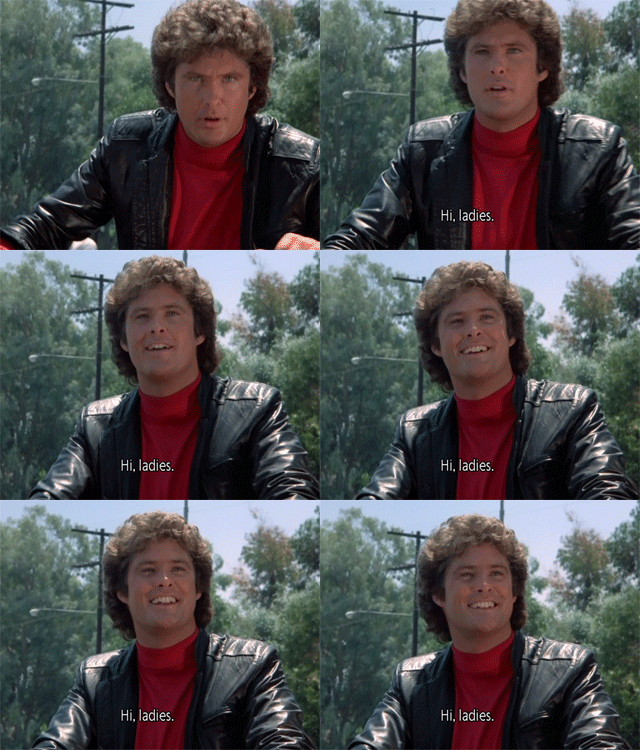
About a relationship early in his career: “It was a dramatic relationship, very wild and passionate. We were young and free and full of young hormones.”
The first time he laid eyes on his future first wife, Catherine Hickland: “At the Emmy party, about twenty guys were hitting on a beautiful blonde in a cowboy hat. She was a picture of lust – mine.”
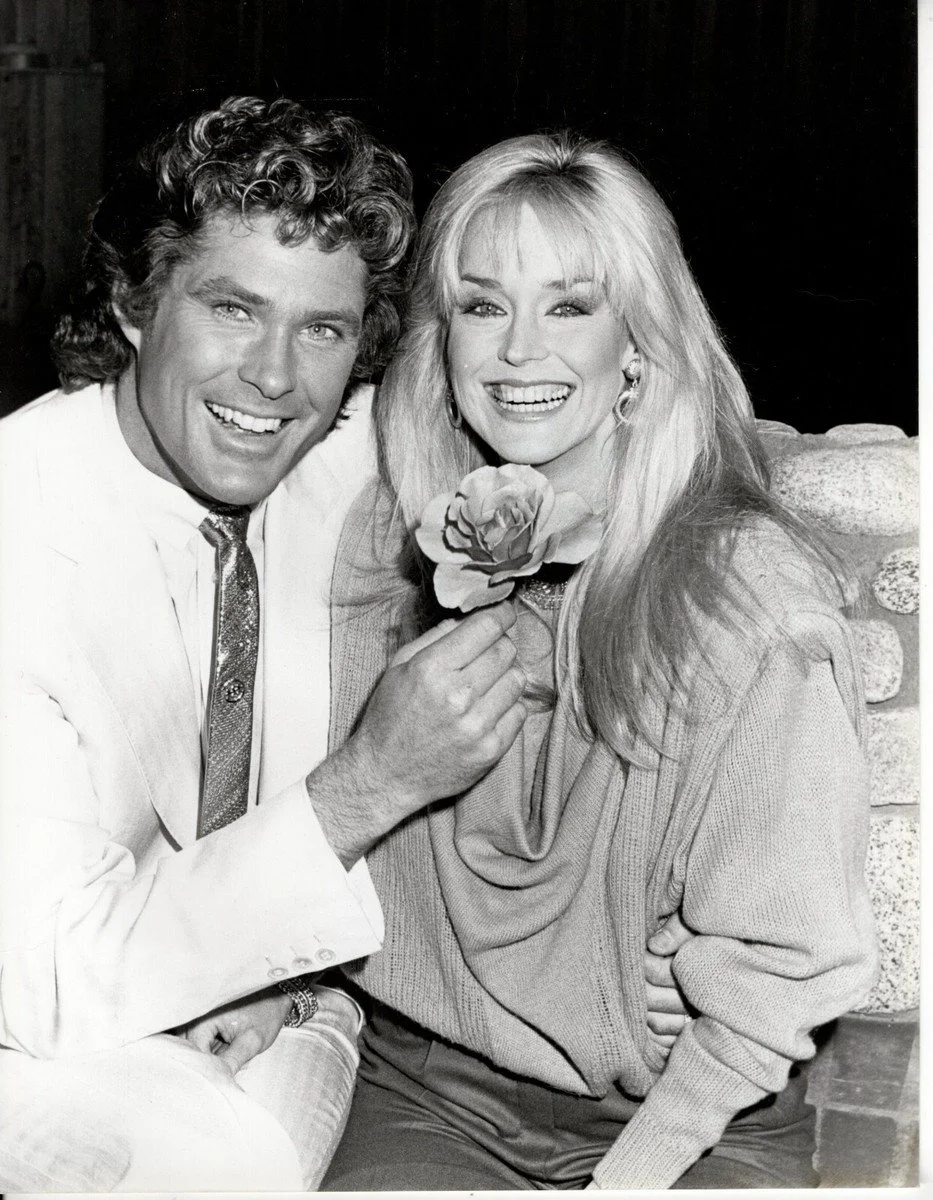
One time he was on a plane that hit some turbulence; he was wearing pants with many zippers, and each one contained funds from a “Knight Rider” merchandising trip. “‘If this plane goes down,’ I told the girl sitting next to me on the flight back to Los Angeles, ‘and I don’t make it, grab my pants – it’s not what’s in the pants but what’s in the pockets that matters.’”
He was feeling sorry for himself after his first marriage ended: “Suddenly, I decided to go to a pet store and buy a wiener dog – I’d always wanted a wiener and I bought one. I brought him home and said, ‘Well, Wiener, it’s you and me against the world.’” Some jokes just make themselves.
About the opening sequence of the first episode of “Baywatch” ever aired: “After just five seconds … the first blonde appears on the screen and precisely three seconds later the camera lingers on the first cleavage in a close-up of a sunbathing bikini girl in a straw hat.” The first of many…
His first meeting with Pamela Bach, who would later become his second wife: “she was beautiful and, as she liked to say, ‘all girl.’”
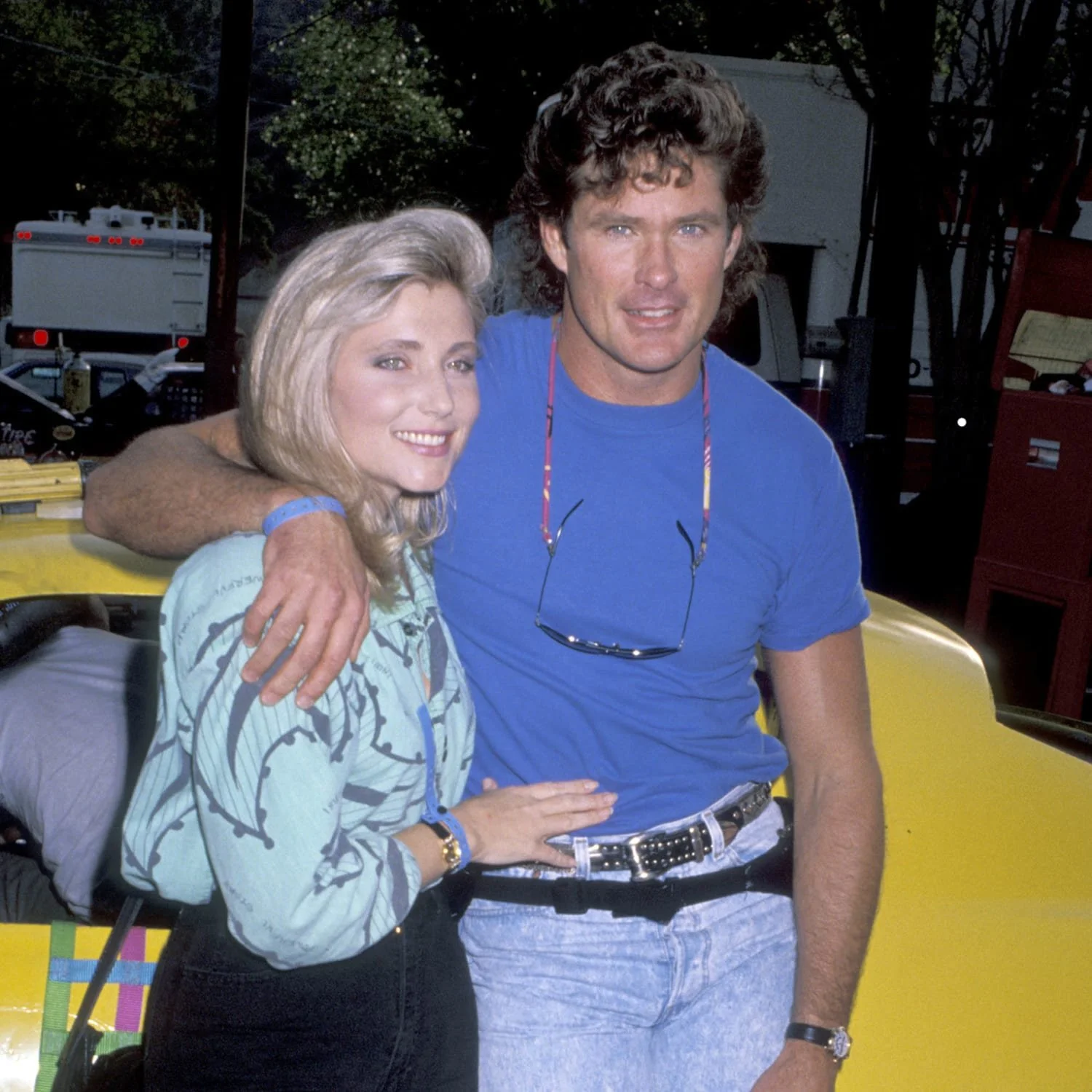
Quoting himself from an interview that he gave at the height of “Baywatch’s” popularity: “Turn on MTV and you’ll see true garbage – Baywatch is kindergarten stuff compared with today’s music videos. Look at Madonna – she makes videos about getting laid in hotels and these are shown to twelve-year-old girls.” Shame!
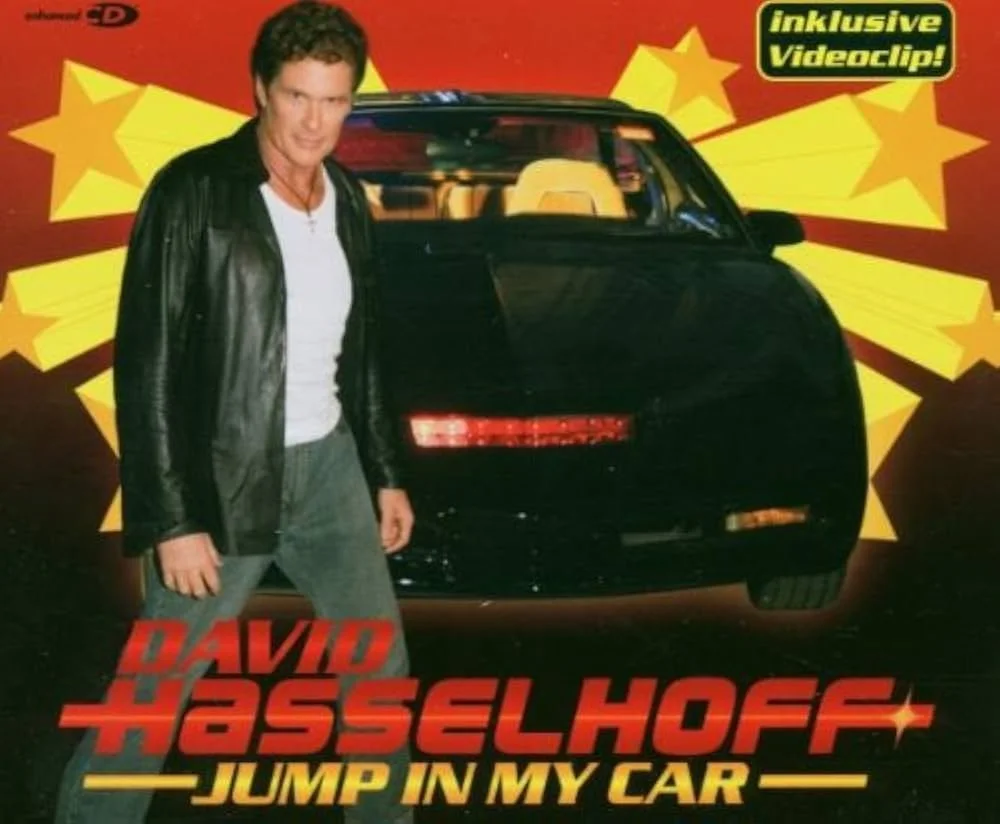
At times, the Hoff seems to veer into feminist territory, making a statement or taking a stand that shockingly aligns him with the likes of Gloria Steinem or Andrea Dworkin. One such instance involves the Hoff standing up to his production partners: “I told my partners, ‘If I see another gratuitous shot of a girl’s crotch, I’m out of here. We don’t need that – there’s a way to shoot women without exploiting them.’” Several pages later, though, he seems to revert back to his knuckle-dragging, Neanderthal views of women, when he describes Pam Anderson’s screen test for “Baywatch”: “Pamela was wearing a halter top and skirt. When we asked her to read a page of the script, she stood up, stripped off her top and skirt to reveal a swimsuit underneath. The guys couldn’t take their eyes off her breasts because they were beautiful and they were real.” First of all, so much for evaluating an actor on her acting ability; second of all, as has been well-documented, no, they are not real!! He also refers to Pam as “Venus in Spandex” in one of his more memorable turns of phrase.
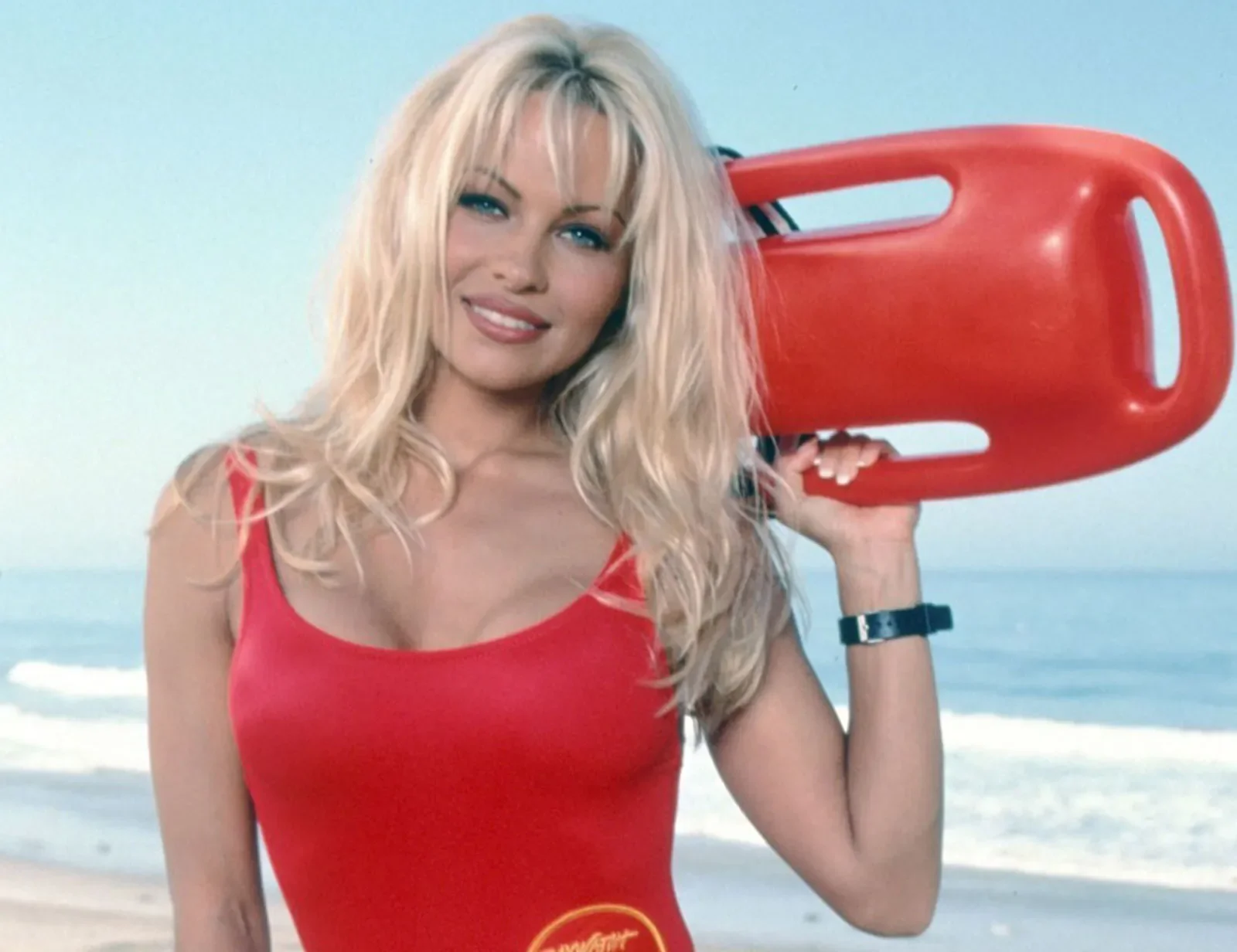
Several pages later, he seems to be back to his bra-burning self, as he describes Alexandra Paul, who was hired to play the role of Stephanie Holden, an old flame of Mitch Buchannon’s on “Baywatch”: “Built like a tall gazelle, she was an eco-warrior and an American triathlete. In a world of double-D cups, she was proud of her athleticism and the fact that she had small breasts.” I can only assume the “world” to which he’s referring here is the make-believe world of mammarical plenty known as “Baywatch.”
Soon, however, the Hoff Dawg is back as he recounts his performance and participation in the Miss Universe pageant one year in Australia (a reminder here that he was very much married at the time). One evening he filled his Rolls-Royce with contestants: “After a few cocktails, my companions suddenly changed from sweet little princesses into vixens whose one intention was to party and find men. We ended up in a bar called the Cauldron. … Later that night I decided to see how many countries I could visit. I visited Canada, then I visited South Africa. I told Miss South Africa that I’d be right back and headed off to see Miss Canada again. Unfortunately, I had some of Miss South Africa’s lipstick on my cheek and Miss Canada punched me out.”
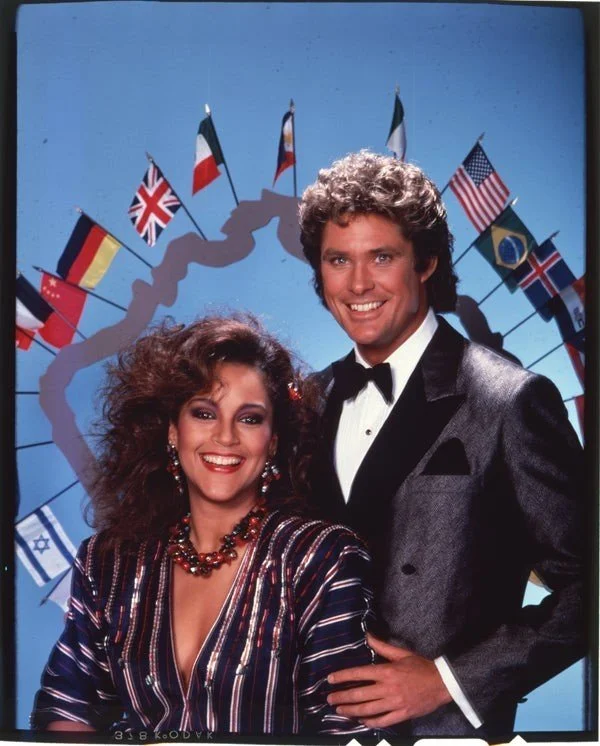
Jayne Kennedy and David Hasselhoff host the 1985 Most Beautiful Girl in the World pageant, Sydney, Australia
The pièce de résistance in this category occurs when the Ambassador Hoff of Hirsutopia was jogging with President Clinton in a park: “So what did the President say to me while we were jogging in that park? He said, ‘Did you ever think Baywatch would be as big as this?’ I replied, ‘I never thought a President of the United States would utter the two syllables Baywatch.’ Bill Clinton liked Baywatch. Wonder why?”
Racist and borderline bigoted statements
This is one of the smaller categories, but it’s one of my favorites; those who know me well are aware of my connoisseurship of racism—racism and intolerance of a bold and forthright manner that are not often seen in these days of veiled and institutional bigotry cloaked in polite language.
He lived and enrolled in an acting school in Detroit, “a racially tense area.” “My abiding memory is how angry the blacks were with their lot in a white-dominated society.” “The blacks”? He might as well have said “Those people”!
On a trip to South Africa—which he’d undertaken in defiance of the UN sanctions against that country, which was still under Apartheid—he insisted on going to see Soweto for himself. “I said, ‘Get me five black armed guards – I’m definitely going.’” Once he reached the townships, he was struck by the humanity of the people. “Yet despite living in these disease-ridden slums, the people were beautifully dressed and were singing harmoniously as they set off for work. It was an inspiring sight. I realized this was where Motown began.” They’re enduring unimaginable poverty and oppression—but they’re happy! What a simple jackass.
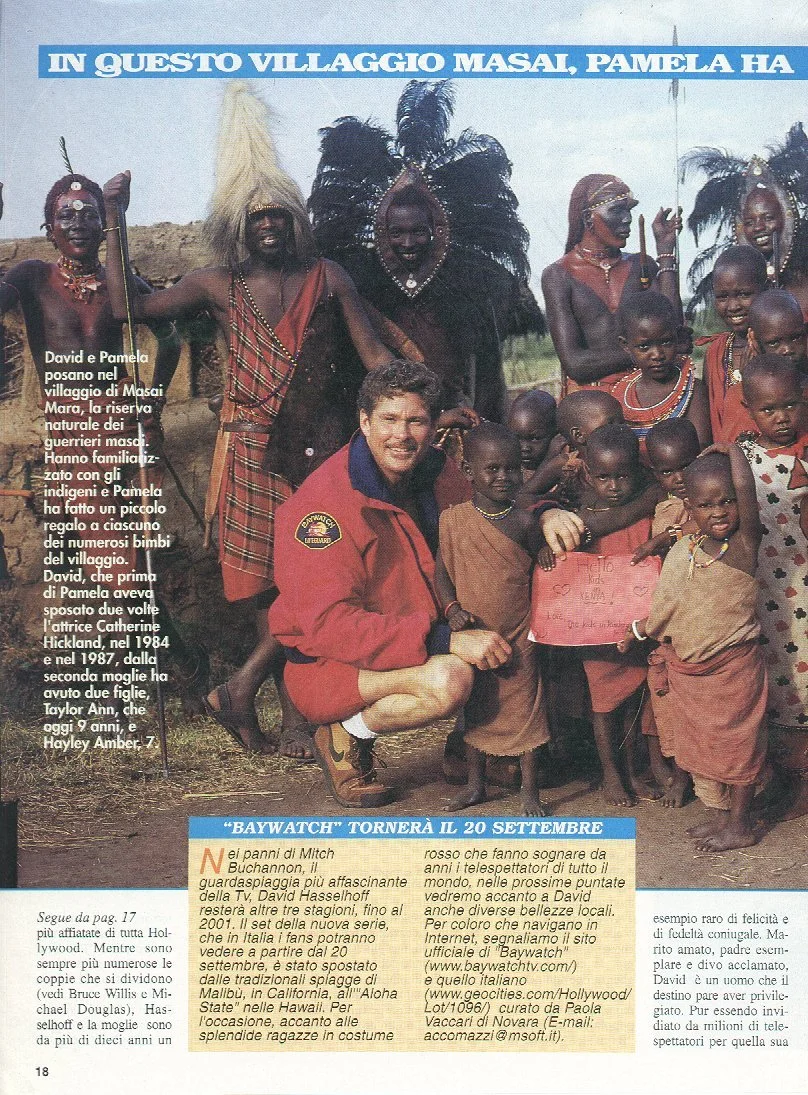
On another trip to South Africa, this time to shoot a movie, he went “to a Zulu village in Natal to was a tribal dance” and became aware that some of the Zulus had seen him on the chief’s TV as Michael Knight: “As a gag, I looked down at my watch and shouted, ‘Hey KITT, come pick me up.’ In the middle of the dance, every Zulu head swiveled to the right to see if the Knight Rider car was coming. I laughed and laughed.” Those gullible natives! A similar scene is recounted when Hoff is on safari with his family in Kenya, and he keeps pestering the Masai about whether they have ever heard of him.
In at least one instance, though—as with the quasi-feminist dabblings noted above—he seems sympathetic to the complaints of Greg-Alan Williams, the lone black actor on “Baywatch,” who “complained that we hired only blond, blue-eyed Aryans so that European viewers would identify with the show.” His response was to add Traci Bingham as the show’s first Black lifeguard, but he took no further steps to remedy the apparent racial disparity.
Part Two will be released shortly.
