
Flashback Friday: Monsoon’s Hoff to Summer Vacation Forecast (June 5, 2007) - Part Two
And now, the exciting conclusion to the previous post, in which I began explicating DH’s autobiography.
Self-congratulatory drivel about touching the future and his dedication to visiting/inspiring/curing sick children
David, King hoff Self-Promotion, never misses an opportunity to mention how his work as an actor and singer has meant the world to a sick child—or just children in general. Now, I was a kid when “Knight Rider” was on, and meeting him would have rocked my world. But his perceived power to change the lives of ailing youngsters is undeniably delusional and egocentric. He can seldom mention his trip to another city or country without noting a digression to a pediatric cancer ward or involvement in Race for Life or Make-a-Wish Foundation programs. To wit:
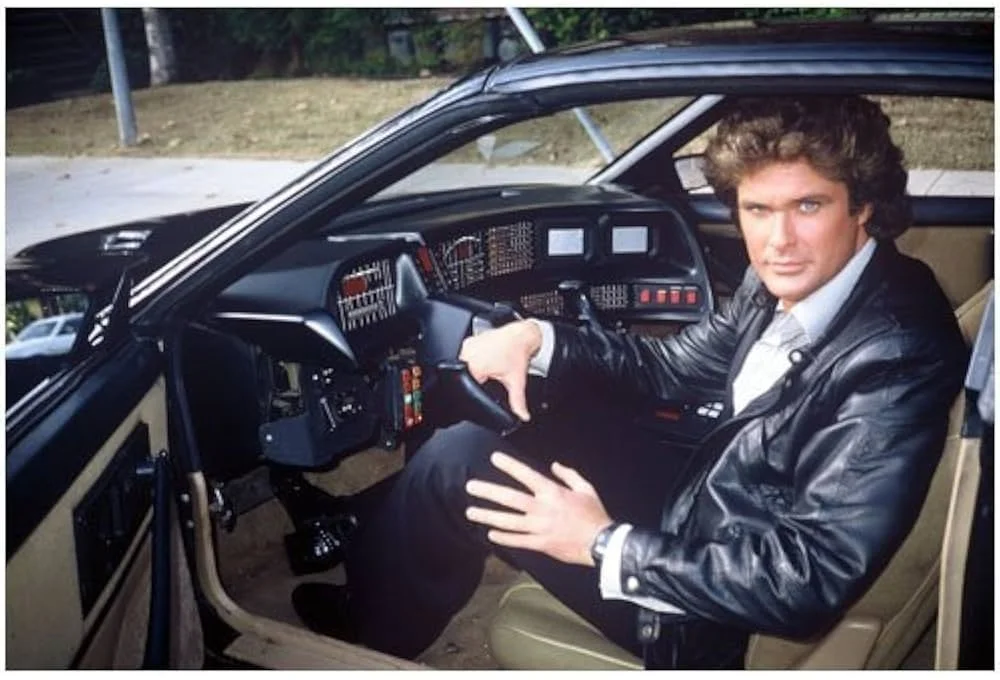
“Kids ran up to me and wrapped their arms around my legs and refused to let go. ‘KITT is like ET to children,’ I told one reporter. ‘He’s a source of non-stop love and affection – and a protector.’”
David of Nazareth was once riding in an elevator in Vancouver when he greeted a mother and her teenage daughter; the daughter began “freaking out” and days later, the Hoff of Perpetual Healing got a letter from the mother stating that her daughter had attempted suicide the very morning they’d seen him in the elevator, and that she vowed never to make such an attempt again “because I believe that he was sent to me for a reason.” He wraps this episode up neatly by proclaiming that “God does send angels and sometimes we are his angels.”
While delivering wheelchairs to Vietnamese children as part of Wheels for Humanity: “We handed the chairs over to children suffering from cerebral palsy. It was a small thing for me to do, but it made a world of difference to the children. I loved making people happy. Life should be about love, about being happy.”
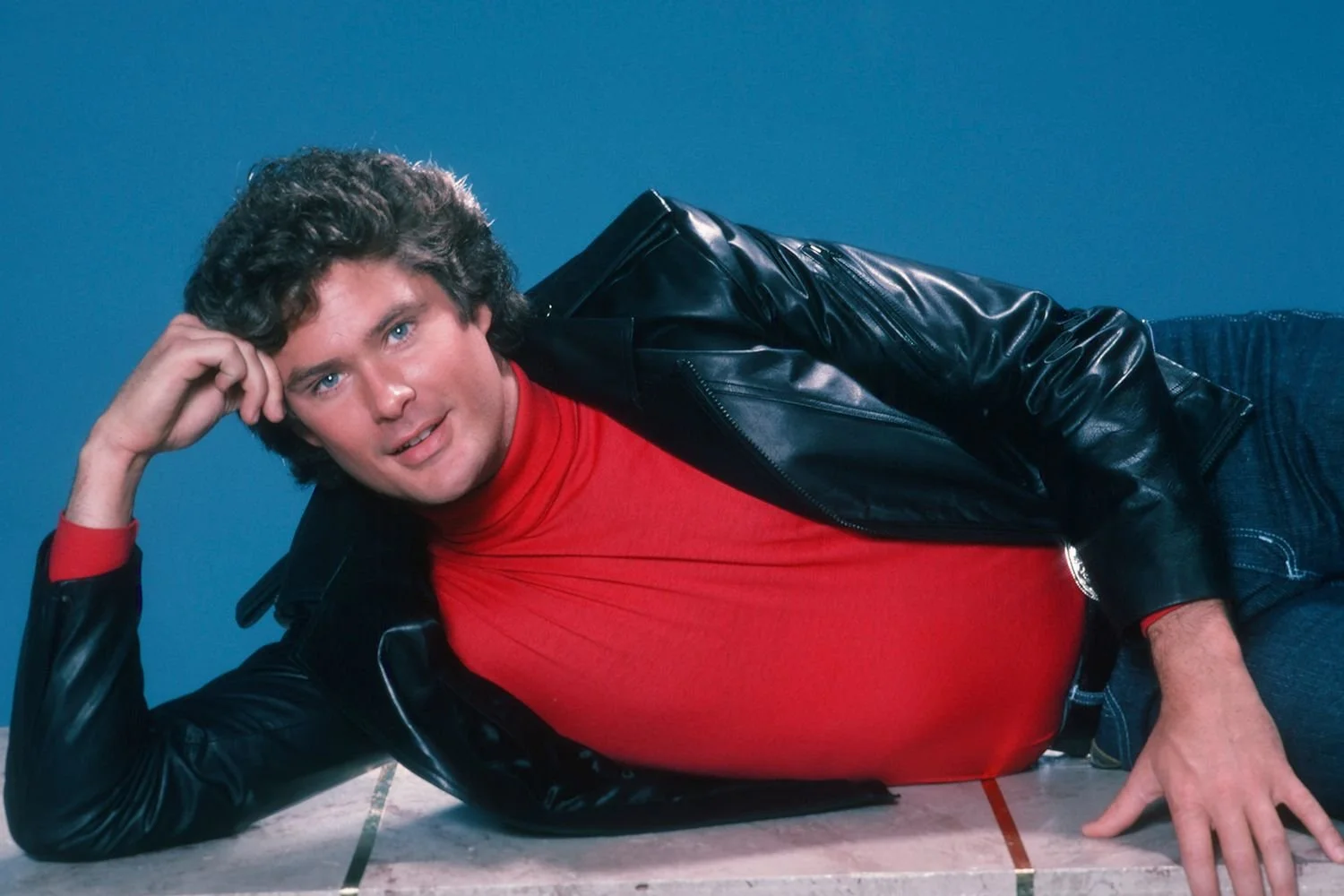
About the child who visited the “Knight Rider” set and initiated his commitment to sick children: “Randy, the boy who showed me that my true purpose in life wasn’t fame or money but helping less fortunate people, is still my wingman to this day.” Wingman? I think that means something different from what he thinks it means.
Reading over this section it occurs to me that I may be taking a slightly cynical view of DH’s charitable work. Perhaps so. But jeez, we get it already—you are a good guy who apparently never passed up an opportunity to spread your Hoffing Light across the globe…
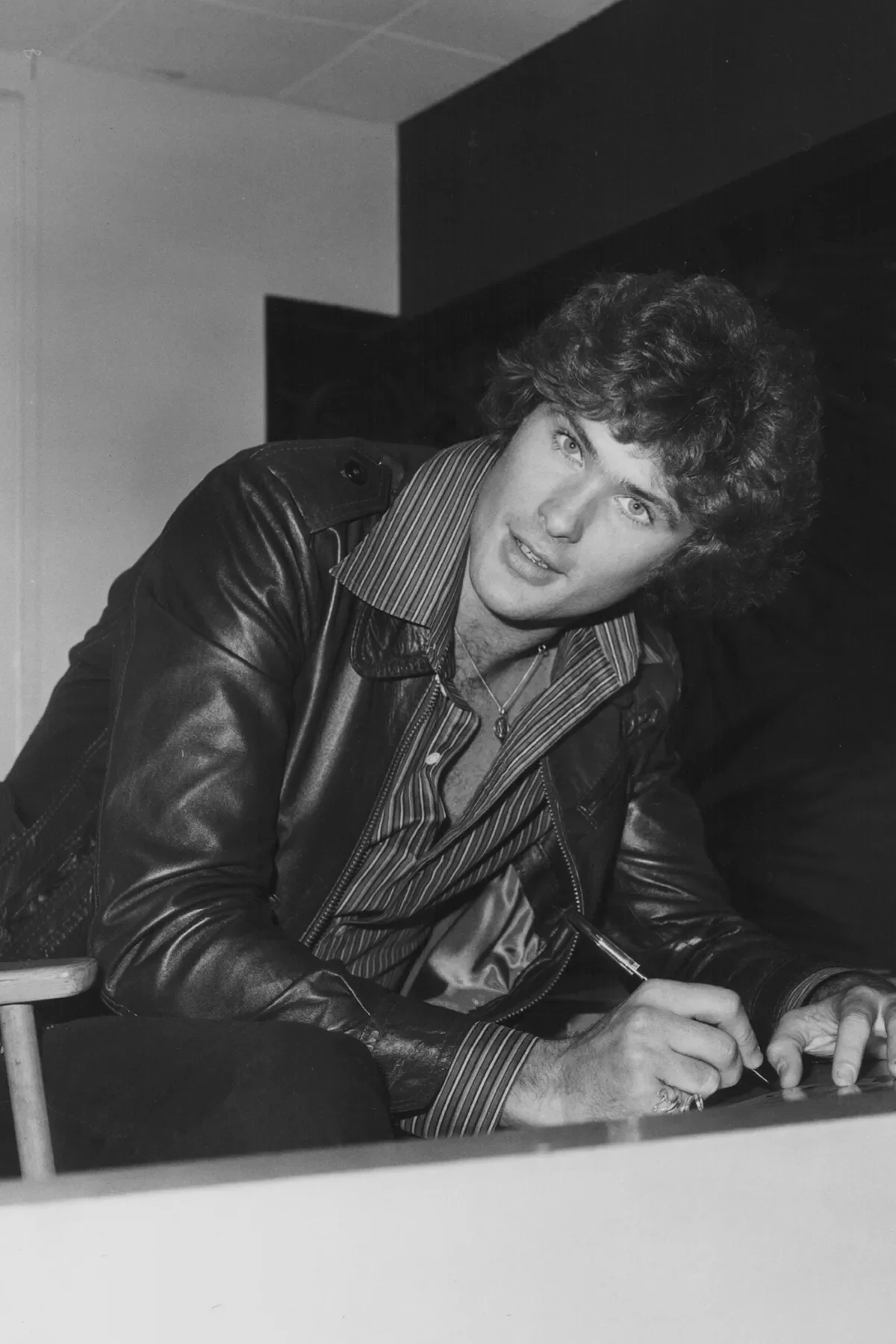
An alarming number of instances in which he denies being homosexual, seems to inadvertently arouse suspicion that he is gay, or comments on the homosexuality of another
The sheer volume and virulence of David’s insistences that he is not gay, and dalliances with gay individuals, falls into the category of “The lady doth protest too much, methinks.”
On his sensitivity: “My daughters are always saying, ‘Dad, are you gay?’ I say, ‘No, why?’ They say, ‘You cry at everything.’ It’s true: I cry at game shows. A new car? – I break down.” He later defends his emotional demonstrativeness when discussing the fact that he got misty-eyed in the audience of the American Idol 5 finale: “Why is it regarded as a sign of weakness in America for a heterosexual male to cry? If you’ve ever seen the final of soccer’s World Cup, you’ve seen grown men sob like babies because they’ve lost—and you’ve seen the other side crying tears of joy because they’ve won. It’s a perfectly natural reaction and I’m not ashamed of it at all.”
When he saw his girlfriend after having been away at college: “Next time I came back to Chicago I had grown a moustache and had an Afro haircut. Sandy, who had gone to a very conservative university, thought I was either gay or out of my mind on drugs. I was neither – I had just turned into a long-haired thespian who loved blacks, greasers and hippies.” It’s unclear whether by “greasers” he means 1950s street gangs or he is using a derogatory term for Mexicans; neither would particularly surprise me. Whatever the case, you don’t get much better than that for ridiculous statements.
Soon thereafter: “I traveled to Manhattan and stayed with an actor friend who was pursuing his dreams on Broadway. On my first night, he informed me that he was gay and took me to a gay bar, the Pickle Barrel, to meet his buddies.”
Der Ladykiller and his friend Buddy were in New Zealand boogieing the night away: “Buddy and I went off to a nightclub and were having a few drinks when a good-looking girl started flirting with me. Buddy pulled me to one side. ‘David, it’s a guy.’ ‘She’s really cute, Buddy.’ ‘David, it’s a guy.’ ‘No, it’s not a guy.’ ‘Yes it is, David, look at her shoes.’ I looked down and said to Buddy, ‘Get me out of here!’ ‘She’ was wearing open-toed shoes which revealed big thick masculine toes.”

Poor, luckless Buddy had another brush with mistaken identity when an amorous kangaroo thought he saw the look of love in Buddy’s eyes during a trip to a Sydney zoo: “The kangaroo had taken a fancy to him and before he could duck out of the way, it got up on its hind legs, placed its paws on his shoulders and started making sexual advances to him. I dragged the roo’s claws off Buddy, but the beast had got so excited that he sprayed sperm all over him. He became known as ‘the Gay Roo’ and Buddy turned seven shades of red.” I wonder at least two things after reading this: first, given the unclear use of pronouns in the second and third sentences, it is unclear which “beast” was doing the spraying, and which became known as the Gay Roo; second, considering the fairly tactless nature of his description, I can only imagine what the first draft of this little anecdote sounded like!
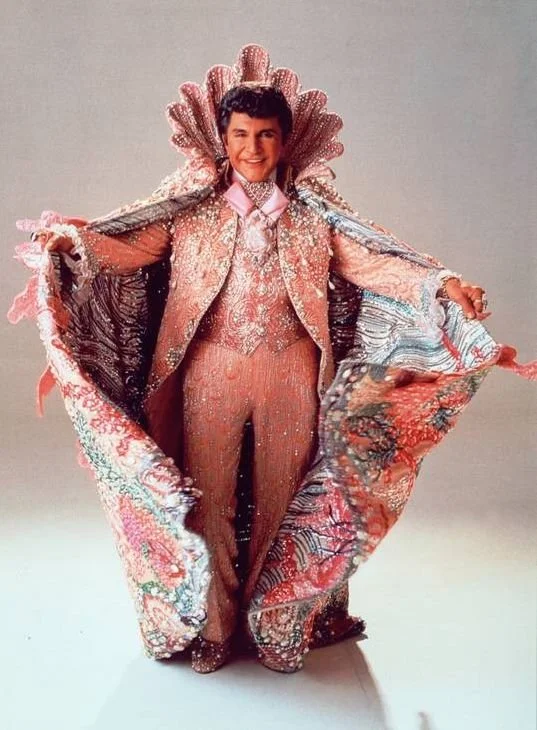
Finally, there is his longtime friendship with the fabulously, flagrantly flamboyant pianist Liberace – not that there’s anything wrong with that.
Bold actions, funny situations, and embarrassing moments, some of which involve his singing career
As a young teenager, Hornyhoff finds that he finds the strangest situations arousing: “In church, I became aroused every time I kneeled down prior to taking communion. It was incredibly embarrassing. I wore long blue pants, shirt and tie and I’d try to arrange my clothing so no one noticed. Luckily, this only lasted for a short time, but I missed a lot of communions.” Now…why would you decide to put this in your autobiography? It’s more creepy and inappropriate than it is amusing and endearing!
Davey Boy relates some close calls: once, he invited a young lover to move into his San Fernando Valley home and he woke up one morning with her perched above him with a knife, saying “I could have killed you in your sleep.”
He relates tales of his great stardom abroad, his first concert tour in which he emerged from backstage in a KITT replica, and of course the American Pay-Per-View concert that was foiled by the O.J. Simpson Bronco chase: “The slow-speed chase was the most widely watched event in American television history, bigger even than the Moon landing. O.J. got 90 million viewers. I got 30,000. I had paid and nobody viewed. It cost us $1.5 million.” In my more honest moments, I think it’s rather quaint that he thinks the O.J. chase was the sole reason he didn’t hit it big with his Pay-Per-View special. His vocal chops are, however, vetted by a professional vocal coach: “My voice coach [for Jekyll and Hyde] was Trish McCaffrey, who had coached many Metropolitan Opera artists. Trish told me I was a born singer who, had I been classically trained, would have made a great opera singer.” By the same token, I, Monsoon, would have been a great basketball player, had I been taller and been gifted with athletic ability, quickness, and court vision.

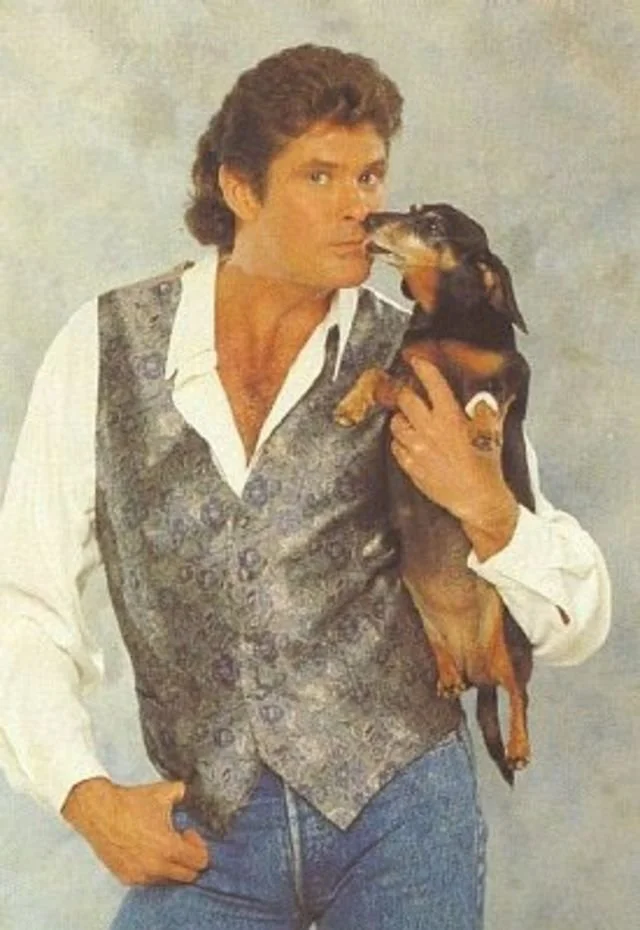
The context of the following quote is irrelevant; just enjoy its linguistic poetry and the tragically inescapable imagery: “Next morning, with my wiener dogs in tow, I walked down the drive of my home in my underpants to get the newspapers. I picked up Variety magazine and read that Susan Lynne had been surprisingly fired after the read-through of News to Me. I looked down at my wiener dogs and said, ‘This isn’t a good sign.’”
The Hoff wrestles a 25-foot-long eel for an episode of “Baywatch.” He finds himself at a cock fight in the Philippines, inadvertently bidding on the action when he waves at spectators whom he believes to be fans. Tussles with Brandy on the set of “America’s Got Talent” when he professes to hate rap music. Nearly comes to blows on the same show when Piers Morgan “made an offensive joke about my singing. I told him, ‘You don’t want to do that again.’”

Name-dropping to associate himself with those whose wealth, fame, and/or talent eclipse his own
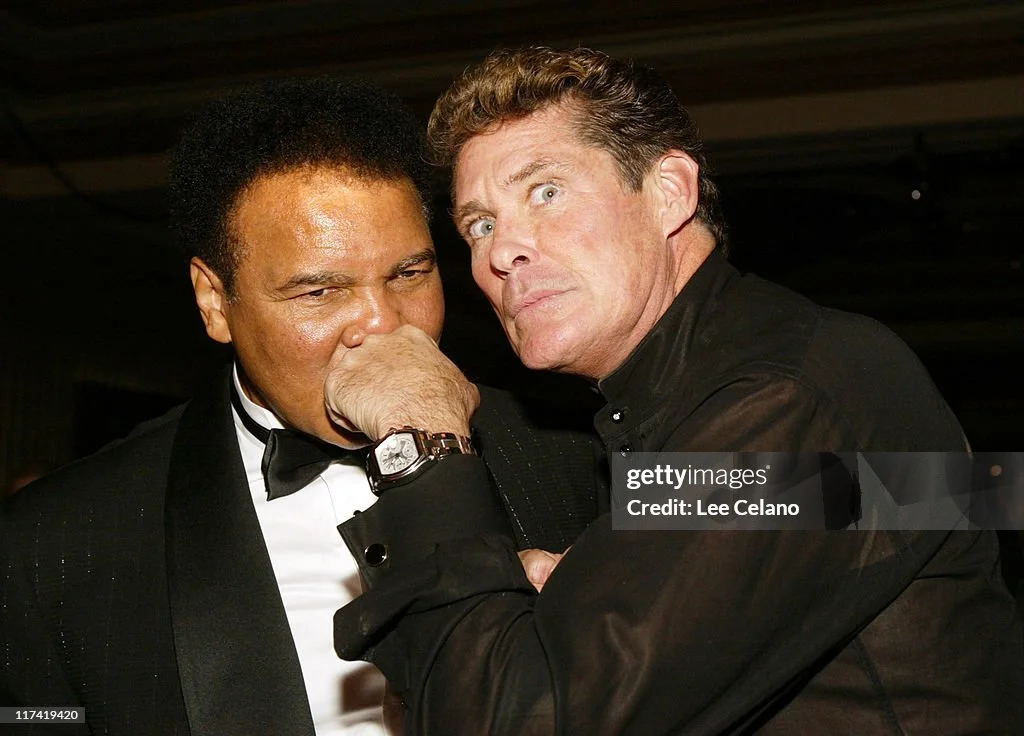
Name-dropping is a favorite pastime of the insecure and the grandiose, and it would appear that Mr. Hasselhoff qualifies in both respects. Paula Abdul and Sandra Bullock were both rejected for the role of C.J. Parker on “Baywatch” that eventually went to Pam Anderson. Hobnobbed with Russell Crowe in South Africa, where the latter was making Gladiator. Was slapped during a scene by Telly Savalas, who was seeking to teach the Hoff the importance of listening to another actor. Leonardo DiCaprio, who was turned down for the role of Mitch’s son on “Baywatch.” The Clintons. Lou Rawls. Nancy Reagan. Muhammad Ali, who greeted him with “You’re pretty Knight Rider, but you’re not as pretty as me.”
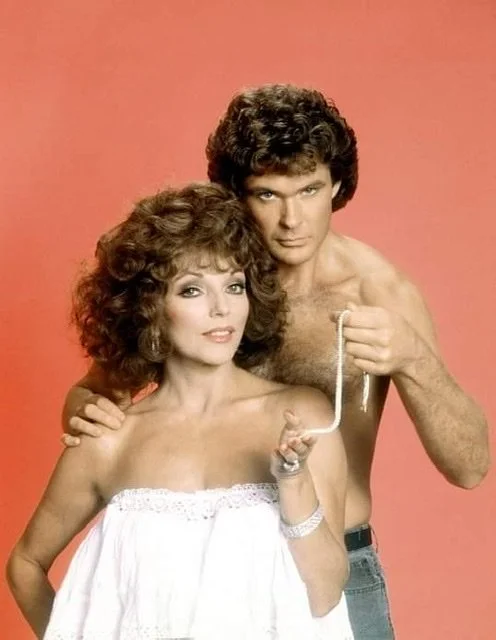
I have saved what I feel are two of the most baffling, memorable, goofy—Hoffabulous, in other words—passages in the book for last. First is his description of a role he played in between “Knight Rider” seasons opposite Joan Collins, whom he had heard was an egomaniac who demanded the sexual attentions of her male co-stars. The made-for-television film was called The Cartier Affair, and in the film, they are lovers. Take it away, Cyrano:
“The only way I could overcome my nervousness was to go on the offensive. I knocked on her dressing-room door and walked in, carrying a bottle of champagne and a couple of glasses. I slammed the champagne down and said: ‘I hear you’re a bitch but I love your work and I respect you and I’m terrified.’ She just roared. ‘Oh, I like you!’ she said. ‘Sit down and pop that cork.’”
And finally—His Royal Pomposity claims that Princess Diana flirted with him during a meeting in 1993: “‘You look good with your clothes on,’ she said to me. ‘And so do you,’ I replied. Diana laughed, blushed and then looked coy. It wasn’t my imagination – she was flirting with me. … Then she introduced me and I walked on stage. ‘Do I curtsy or kiss you?’ ‘Do whatever you want.’ So I gave her a big kiss. She smiled and blushed and sat to one side with her hands on her knees and a pert look on her face. The Princess was perspiring, her bosom heaving with desire, as she sat like a sex-crazed leopard watching my speech hungrily from the edge of the stage.” OK—I wrote the last sentence. But the rest of it is all Hoff.
My friends, thank you for indulging my prattlings and twaddlings for yet another year. Have a safe and happy summer vacation. Remember—if you’re heading on a trip and want the straight dope on what to pack, drop me a line in advance and I’ll try to give you some idea of what to expect!
Flashback Friday: Monsoon’s Hoff to Summer Vacation Forecast (June 5, 2007) - Part One
And now that the forecast is out of the way, let me get to the real man-meat of my forecast: it is time for me to deconstruct, explicate, summarize, excerpt, and gushingly review the David Hasselhoff book, Don’t Hassel the Hoff: The Autobiography (released in Europe as Making Waves).
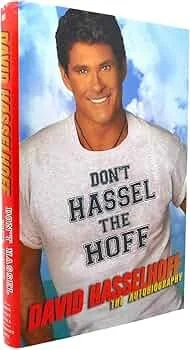
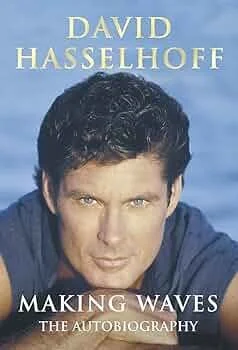
Sir Beefcake of Hasselhovia is gearing up for a second season of “America’s Got Talent,” which boasts two new cast members: Sharon Osbourne replaces the witless Brandy from last season; and Jerry Springer replaces the genial but stiff Regis Philbin. The show is bound to be screamingly awful—but it might just be awful enough that it veers into the realm of watchability…
About the autobiography, let me say this to begin: it was all I could have hoped it would be. In a sense, I’m doing you a favor here; I am going to tell you all you need to know about this book, saving each of you the $24.95 you would surely have spent on the tome yourselves. You are welcome. And, you can remit these funds to my attention at the high school.

BONUS CONTENT: This is an image of the Hasselhoff Homestead (what I call the place where Hoff grew up), at 3631 Kimble Rd. in Baltimore (right near the site of the old Memorial Stadium) taken by Monsoon in 2024. Yes, I went there. Incredibly, I did not have to fight my way through hordes of adoring fans gathered at the property.
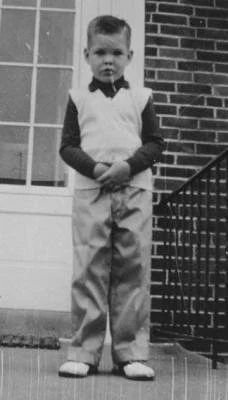
The book is rather typical of any show-biz autobiography: it’s got details about producers and budgets and other production minutae that would put the average person to sleep; it’s got plenty of glossy photos of the star with co-stars and associates (Hoff as a child; Hoff’s parents; Hoff as Garthe Knight; Hoff with Simon Cowell; Hoff and Pam with the Clintons at the White House, etc.); droll recollections about growing up; struggles with alcohol abuse; and the like.
But the real “guts” of the work can be roughly split into seven categories:
Cliché (but seemingly profound) statements, trite platitudes, and idiotic turns of phrase
Sexist and ribald comments, claims of being a sex machine
Racist and borderline bigoted statements
Self-congratulatory drivel about touching the future and his dedication to visiting/inspiring/curing sick children
An alarming number of instances in which he denies being homosexual, seems to inadvertently arouse suspicion that he is gay, or comments on the homosexuality of another
Bold actions, funny situations, and embarrassing moments, some of which involve his singing career
Name-dropping to associate himself with those whose wealth, fame, and/or talent eclipse his own
I will tackle each category in a manner that seeks to both convey the sense of his statements in that regard, and maintains a conciseeness so as not to bore you all to death.
Cliché (but seemingly profound) statements, trite platitudes, and idiotic turns of phrase
“From the age of nine, I had blind faith that I was going to make it. I never doubted I would be a star. ‘Yes I can’ were the words I lived by then – and still live by today.”
About his father, Joe Hasselhoff: “He’s still my best friend, my mentor and my guide; to this day, we see each other or talk on the phone every day. His positive attitude and sense of humour have always seen me through rough times. He is The Man.” This was heartwarming until he called his dad “The Man.” That’s the best he could come up with?
“I was clued-up and had a certain amount of Southern charm that could get us into clubs and parties.” “Clued-up”? Clued-in, maybe, or hopped up?
“Catherine and I were beautiful California people living in a mansion in the Hollywood Hills with a pool, Jacuzzi, screening-room and four dogs and three parrots.”
Regarding the actor who played his son on “Baywatch”: “Jeremy Jackson got the part because of his every-boy innocence and because he was like the son I never had.”
On one page, he claims to have had a premonition before the San Francisco earthquake. Almost unthinkably, the earthquake still had the temerity to occur.
The admixture of understatement and the ridiculous in the following passage is intoxicating: “Baywatch might not have been the show Shakespeare would have written if he’d lived in Malibu, but we covered a third of the world’s surface – and the rest was water.”
“I was high up in the Wasatch Range of the Rocky Mountains, and as far as I could see there were peaks, some snow-covered, some green, some covered in mist. I cried out: ‘I get it. I get it.’ I was looking at my destiny.”
Arianna Hoffington claims that the majority of his supporters come from “red states” rather than “blue states” – say it ain’t so, Hoff!
He ends the book’s Epilogue in this way, and I swear I am not making this up: “As the song goes, ‘I’ve been looking for freedom, I’ve been looking so long …’ Now I’ve finally found it. I’ll see you around. I’ll be there somewhere, making waves. The best is yet to come … see you in Vegas.” He managed to squeeze in references to three of his songs, and plug his stint in Mel Brooks’ “The Producers” in Las Vegas in one closing, cliché-ridden paragraph. Astounding.
Sexist and ribald comments, claims of being a sex machine
This category is, as you might suspect, the most extensive of them all. Brace yourselves.
About “Baywatch”: “Every week we had a girl coming to work with a different breast size, or a different tattoo that had to be covered up, or a different personal crisis that had to be resolved. … I’d look out of my trailer when the assistant director shouted, ‘Rolling!’ and the girls would drop their towels and I’d go, ‘Thank you, God.’”
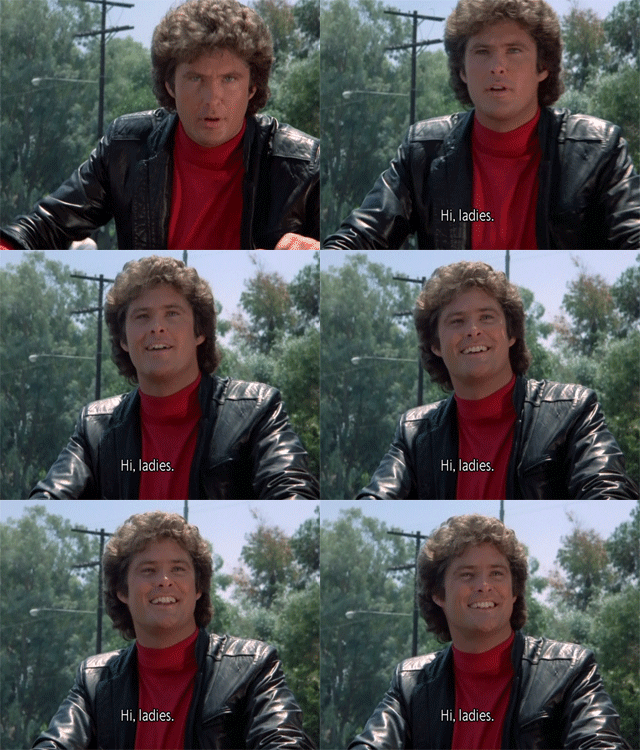
About a relationship early in his career: “It was a dramatic relationship, very wild and passionate. We were young and free and full of young hormones.”
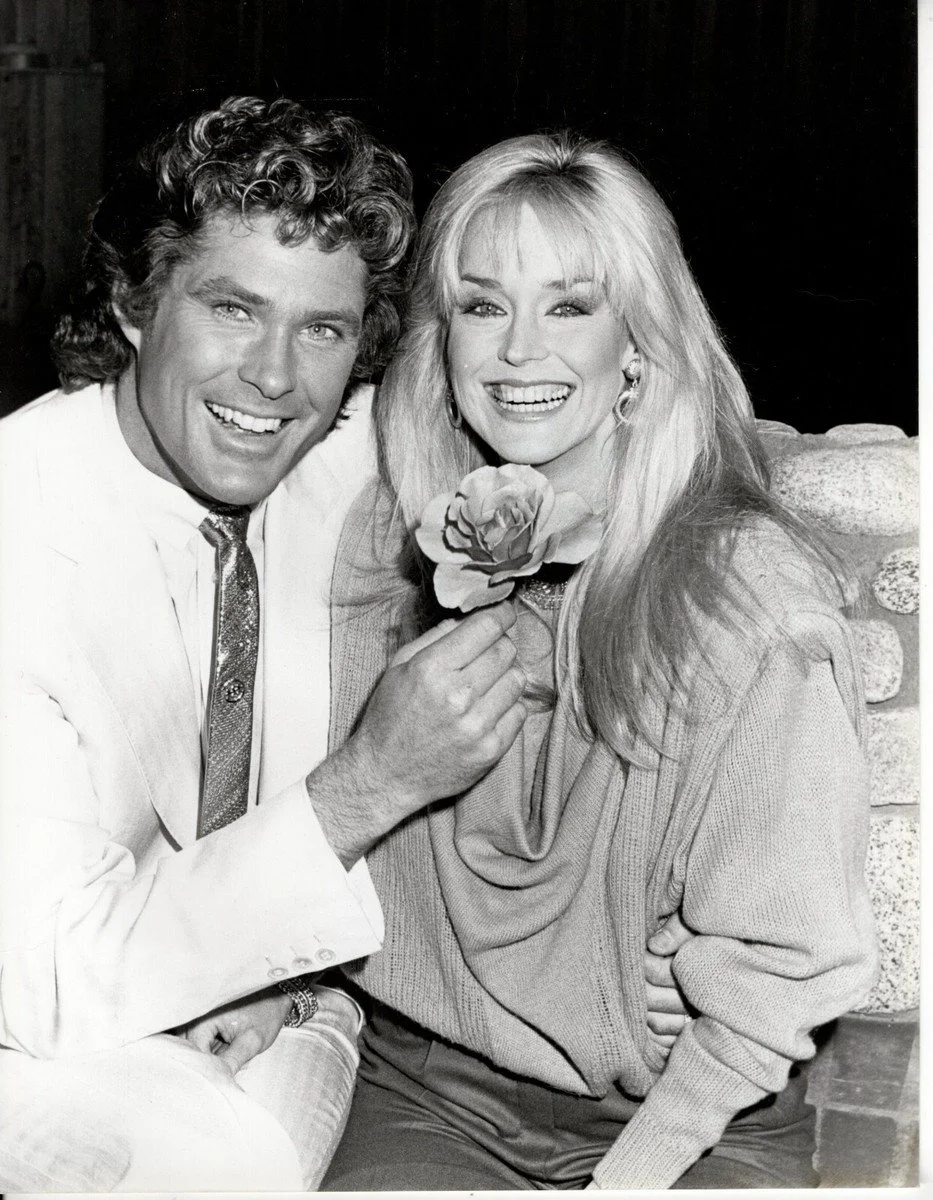
The first time he laid eyes on his future first wife, Catherine Hickland: “At the Emmy party, about twenty guys were hitting on a beautiful blonde in a cowboy hat. She was a picture of lust – mine.”
One time he was on a plane that hit some turbulence; he was wearing pants with many zippers, and each one contained funds from a “Knight Rider” merchandising trip. “‘If this plane goes down,’ I told the girl sitting next to me on the flight back to Los Angeles, ‘and I don’t make it, grab my pants – it’s not what’s in the pants but what’s in the pockets that matters.’”
He was feeling sorry for himself after his first marriage ended: “Suddenly, I decided to go to a pet store and buy a wiener dog – I’d always wanted a wiener and I bought one. I brought him home and said, ‘Well, Wiener, it’s you and me against the world.’” Some jokes just make themselves.
About the opening sequence of the first episode of “Baywatch” ever aired: “After just five seconds … the first blonde appears on the screen and precisely three seconds later the camera lingers on the first cleavage in a close-up of a sunbathing bikini girl in a straw hat.” The first of many…
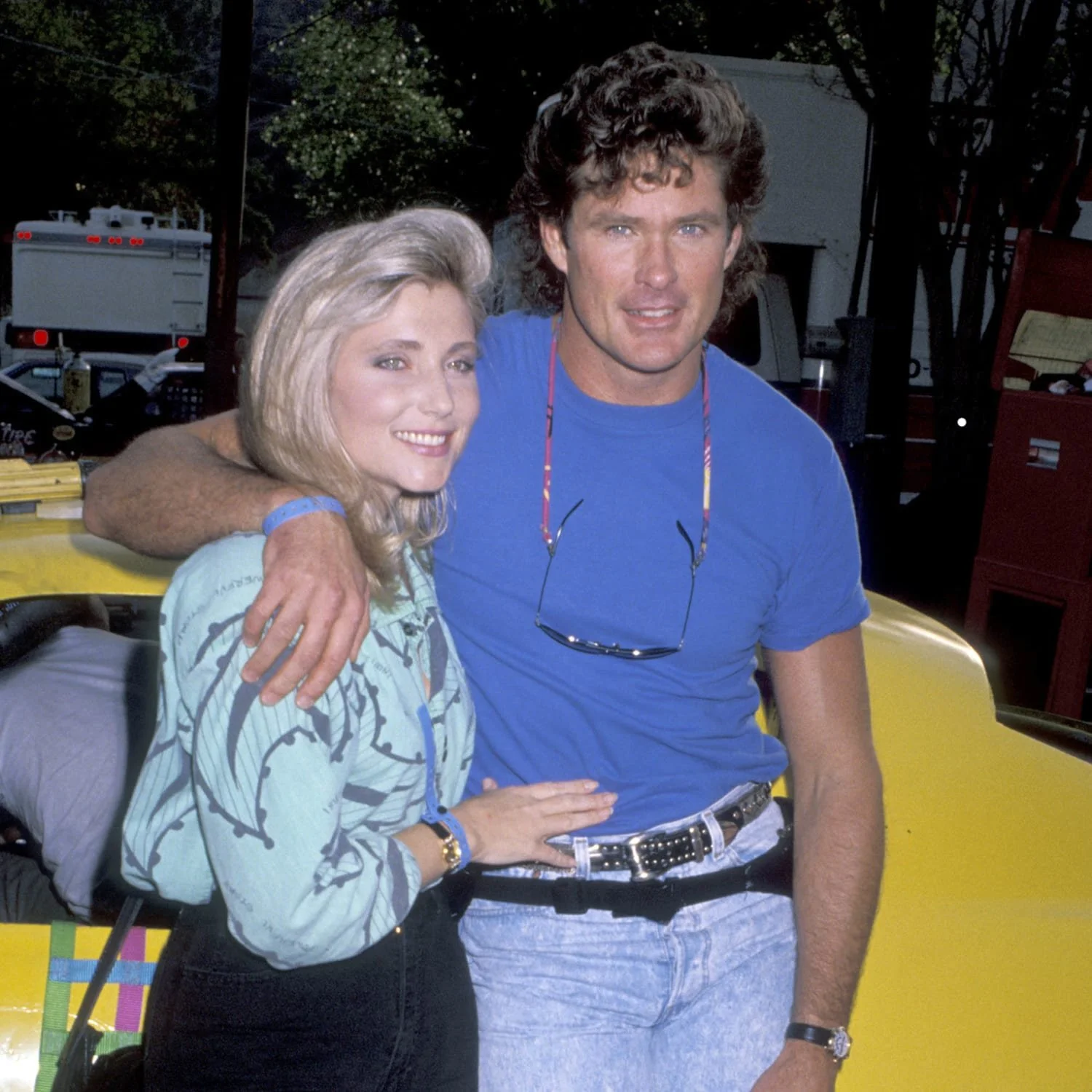
His first meeting with Pamela Bach, who would later become his second wife: “she was beautiful and, as she liked to say, ‘all girl.’”
Quoting himself from an interview that he gave at the height of “Baywatch’s” popularity: “Turn on MTV and you’ll see true garbage – Baywatch is kindergarten stuff compared with today’s music videos. Look at Madonna – she makes videos about getting laid in hotels and these are shown to twelve-year-old girls.” Shame!
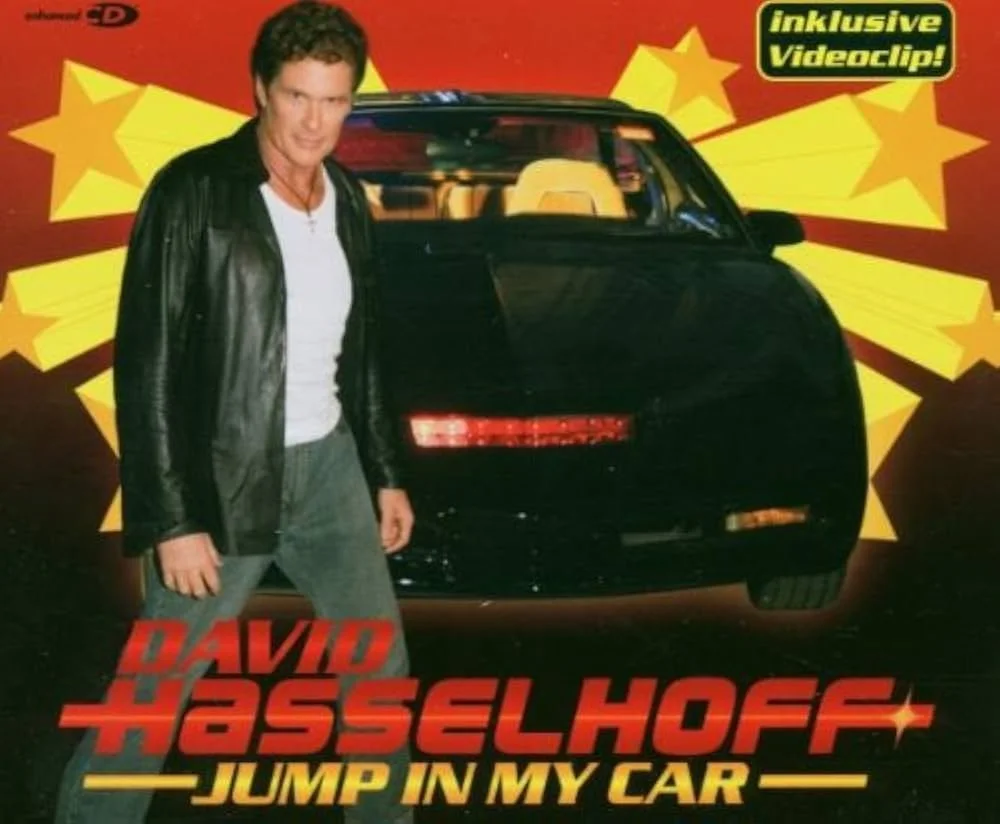
At times, the Hoff seems to veer into feminist territory, making a statement or taking a stand that shockingly aligns him with the likes of Gloria Steinem or Andrea Dworkin. One such instance involves the Hoff standing up to his production partners: “I told my partners, ‘If I see another gratuitous shot of a girl’s crotch, I’m out of here. We don’t need that – there’s a way to shoot women without exploiting them.’” Several pages later, though, he seems to revert back to his knuckle-dragging, Neanderthal views of women, when he describes Pam Anderson’s screen test for “Baywatch”: “Pamela was wearing a halter top and skirt. When we asked her to read a page of the script, she stood up, stripped off her top and skirt to reveal a swimsuit underneath. The guys couldn’t take their eyes off her breasts because they were beautiful and they were real.” First of all, so much for evaluating an actor on her acting ability; second of all, as has been well-documented, no, they are not real!! He also refers to Pam as “Venus in Spandex” in one of his more memorable turns of phrase.
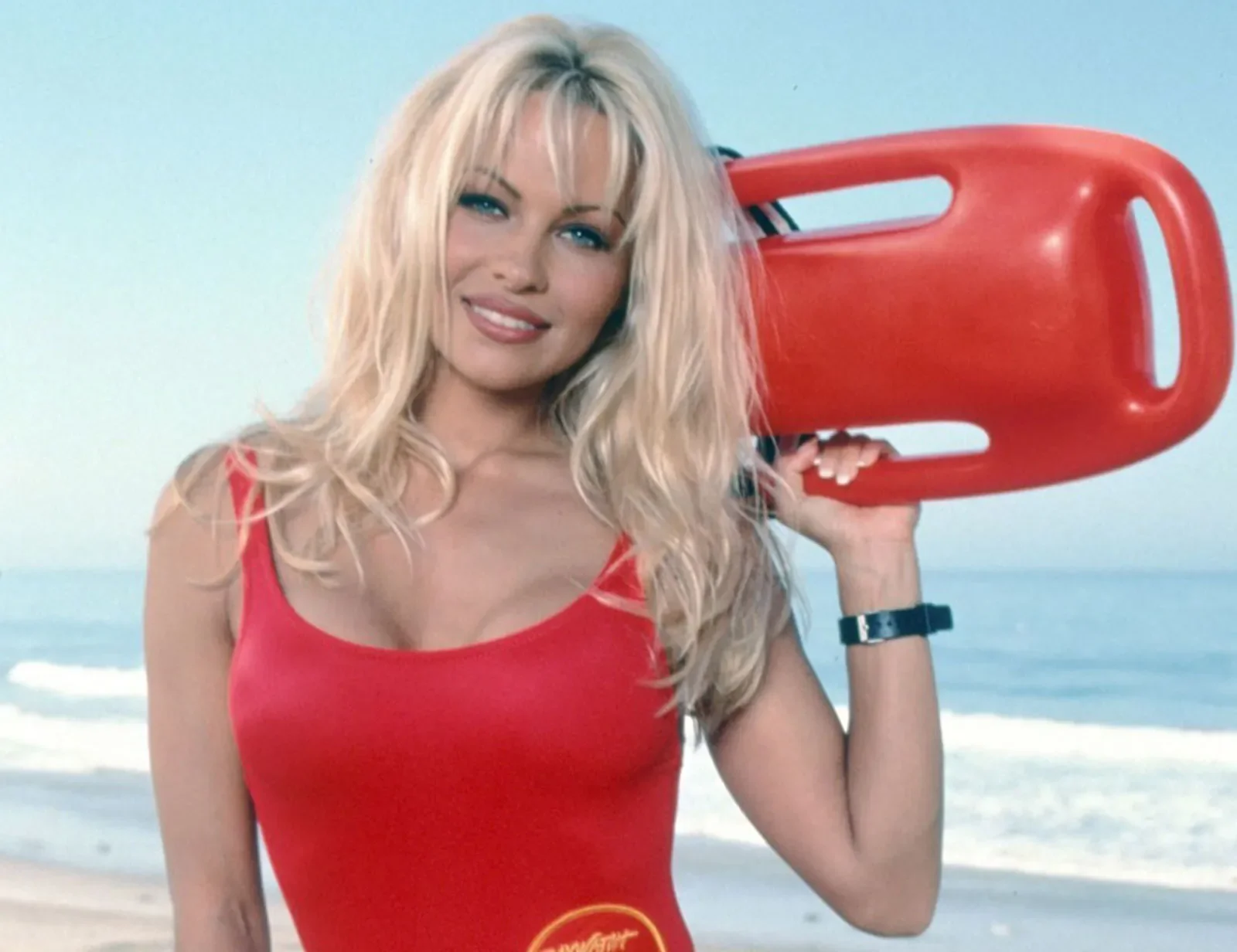
Several pages later, he seems to be back to his bra-burning self, as he describes Alexandra Paul, who was hired to play the role of Stephanie Holden, an old flame of Mitch Buchannon’s on “Baywatch”: “Built like a tall gazelle, she was an eco-warrior and an American triathlete. In a world of double-D cups, she was proud of her athleticism and the fact that she had small breasts.” I can only assume the “world” to which he’s referring here is the make-believe world of mammarical plenty known as “Baywatch.”
Soon, however, the Hoff Dawg is back as he recounts his performance and participation in the Miss Universe pageant one year in Australia (a reminder here that he was very much married at the time). One evening he filled his Rolls-Royce with contestants: “After a few cocktails, my companions suddenly changed from sweet little princesses into vixens whose one intention was to party and find men. We ended up in a bar called the Cauldron. … Later that night I decided to see how many countries I could visit. I visited Canada, then I visited South Africa. I told Miss South Africa that I’d be right back and headed off to see Miss Canada again. Unfortunately, I had some of Miss South Africa’s lipstick on my cheek and Miss Canada punched me out.”
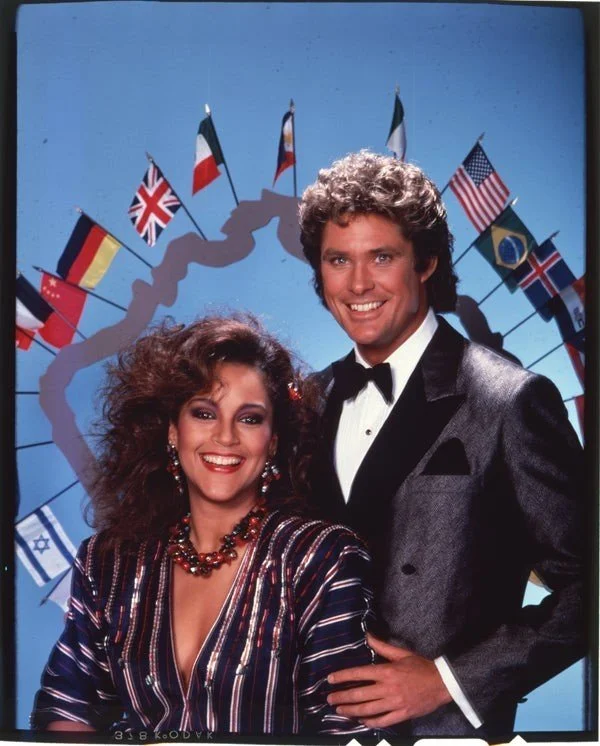
Jayne Kennedy and David Hasselhoff host the 1985 Most Beautiful Girl in the World pageant, Sydney, Australia
The pièce de résistance in this category occurs when the Ambassador Hoff of Hirsutopia was jogging with President Clinton in a park: “So what did the President say to me while we were jogging in that park? He said, ‘Did you ever think Baywatch would be as big as this?’ I replied, ‘I never thought a President of the United States would utter the two syllables Baywatch.’ Bill Clinton liked Baywatch. Wonder why?”
Racist and borderline bigoted statements
This is one of the smaller categories, but it’s one of my favorites; those who know me well are aware of my connoisseurship of racism—racism and intolerance of a bold and forthright manner that are not often seen in these days of veiled and institutional bigotry cloaked in polite language.
He lived and enrolled in an acting school in Detroit, “a racially tense area.” “My abiding memory is how angry the blacks were with their lot in a white-dominated society.” “The blacks”? He might as well have said “Those people”!
On a trip to South Africa—which he’d undertaken in defiance of the UN sanctions against that country, which was still under Apartheid—he insisted on going to see Soweto for himself. “I said, ‘Get me five black armed guards – I’m definitely going.’” Once he reached the townships, he was struck by the humanity of the people. “Yet despite living in these disease-ridden slums, the people were beautifully dressed and were singing harmoniously as they set off for work. It was an inspiring sight. I realized this was where Motown began.” They’re enduring unimaginable poverty and oppression—but they’re happy! What a simple jackass.
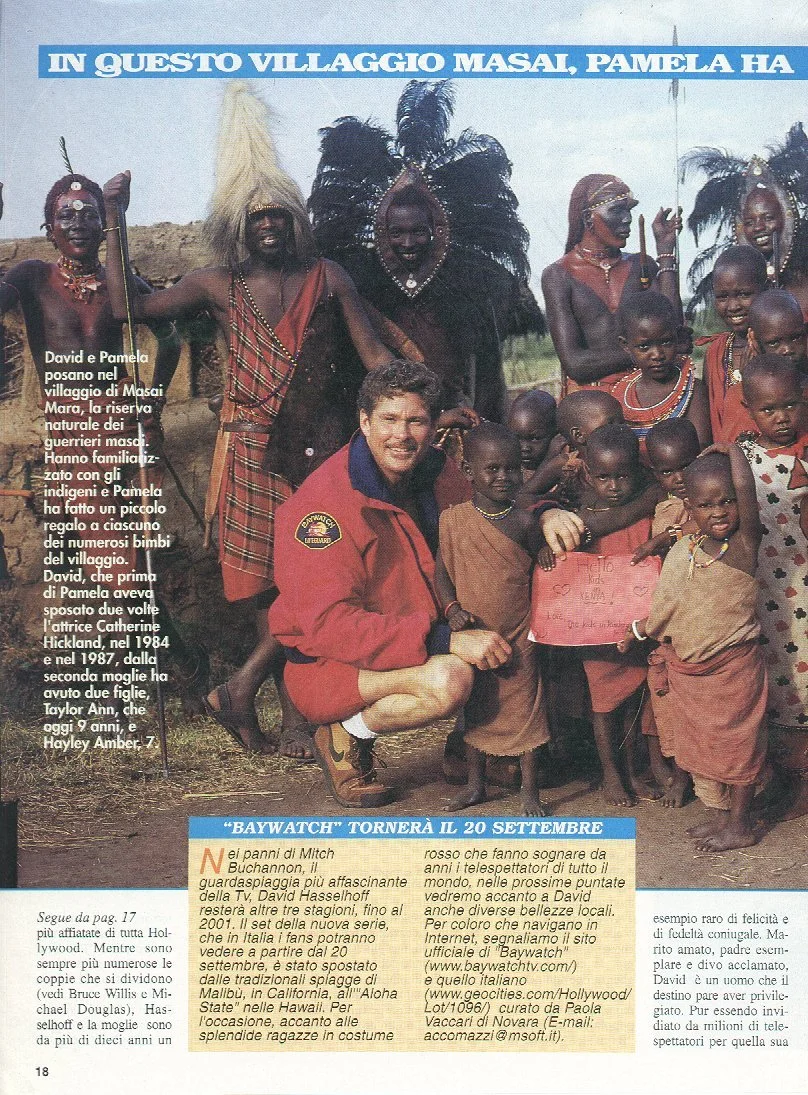
On another trip to South Africa, this time to shoot a movie, he went “to a Zulu village in Natal to was a tribal dance” and became aware that some of the Zulus had seen him on the chief’s TV as Michael Knight: “As a gag, I looked down at my watch and shouted, ‘Hey KITT, come pick me up.’ In the middle of the dance, every Zulu head swiveled to the right to see if the Knight Rider car was coming. I laughed and laughed.” Those gullible natives! A similar scene is recounted when Hoff is on safari with his family in Kenya, and he keeps pestering the Masai about whether they have ever heard of him.
In at least one instance, though—as with the quasi-feminist dabblings noted above—he seems sympathetic to the complaints of Greg-Alan Williams, the lone black actor on “Baywatch,” who “complained that we hired only blond, blue-eyed Aryans so that European viewers would identify with the show.” His response was to add Traci Bingham as the show’s first Black lifeguard, but he took no further steps to remedy the apparent racial disparity.
Part Two will be released shortly.
Monsoon's Newseum Review and Television Debut
If, as Jean-Paul Sartre wrote, hell is other people, then people in their hordes and crowds and maundering packs of listlessness must constitute a new circle in Dante’s Inferno. Trying to have a meaningful museum-going experience amidst the sweaty multitudes is a nearly fruitless pursuit. Dodging visor-and-fanny-pack-bedecked tourists, restless adolescent Boy Scouts and their harried scoutmasters, giggling imps, and fusty society ladies can take all the magic out of taking a look at some nice-assed art.
Seeing a large wooden track for homemade model cars bisecting a portrait gallery in the Smithsonian (it was some sort of Scouting and crafts weekend) was as disheartening as it was shocking.
Surely a museum of that magnitude can be appreciated by patrons of all ages simply on the basis of its cultural and artistic merits without being turned into a Night at the Museum come to life. Judging from the Scouting chaos, the little girl who almost knocked over a statue (prevented from doing so by my alarmed yawp, after which her parents ushered the stunned toddler from the gallery), the disinterested tweens texting obsessively, and the brazenly loud cellphone conversations carried on unapologetically in front of artistic treasures, the answer to that question is a resounding no.
But truly and sincerely, the Newseum was well worth the effort of enduring the inappropriateness, insensitivity, lack of museum etiquette and just plain presence of other people—teeming, snorting, prating, obstructing, farting, shuffling people.
As a person who teaches a journalism elective course, has worked briefly in journalism, and harbors a long-standing interest in the field, I have been excited about the Newseum since it was reported in its planning stages.
The Newseum is on Pennsylvania Avenue between 5th and 6th Streets, and is open 9 to 5 daily (closed only on Thanksgiving, Christmas, and New Year’s Day). Unlike the Smithsonian museums, which are free, it costs $19.95 for adult admission. Let me hit some of the highlights of this museum; my recollections are by no means intended to be exhaustive, though by the end of this post you may feel much as I do when my mother says “to make a long story short” well into a longwinded saga.
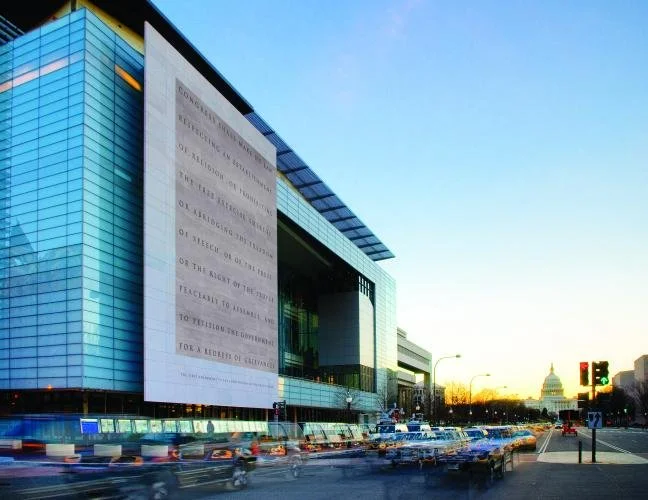
Into the façade of the Newseum is etched the so-called Establishment Clause from the First Amendment, and the length of the building is lined with the current front pages of newspapers around the country and (on the sixth floor) world.
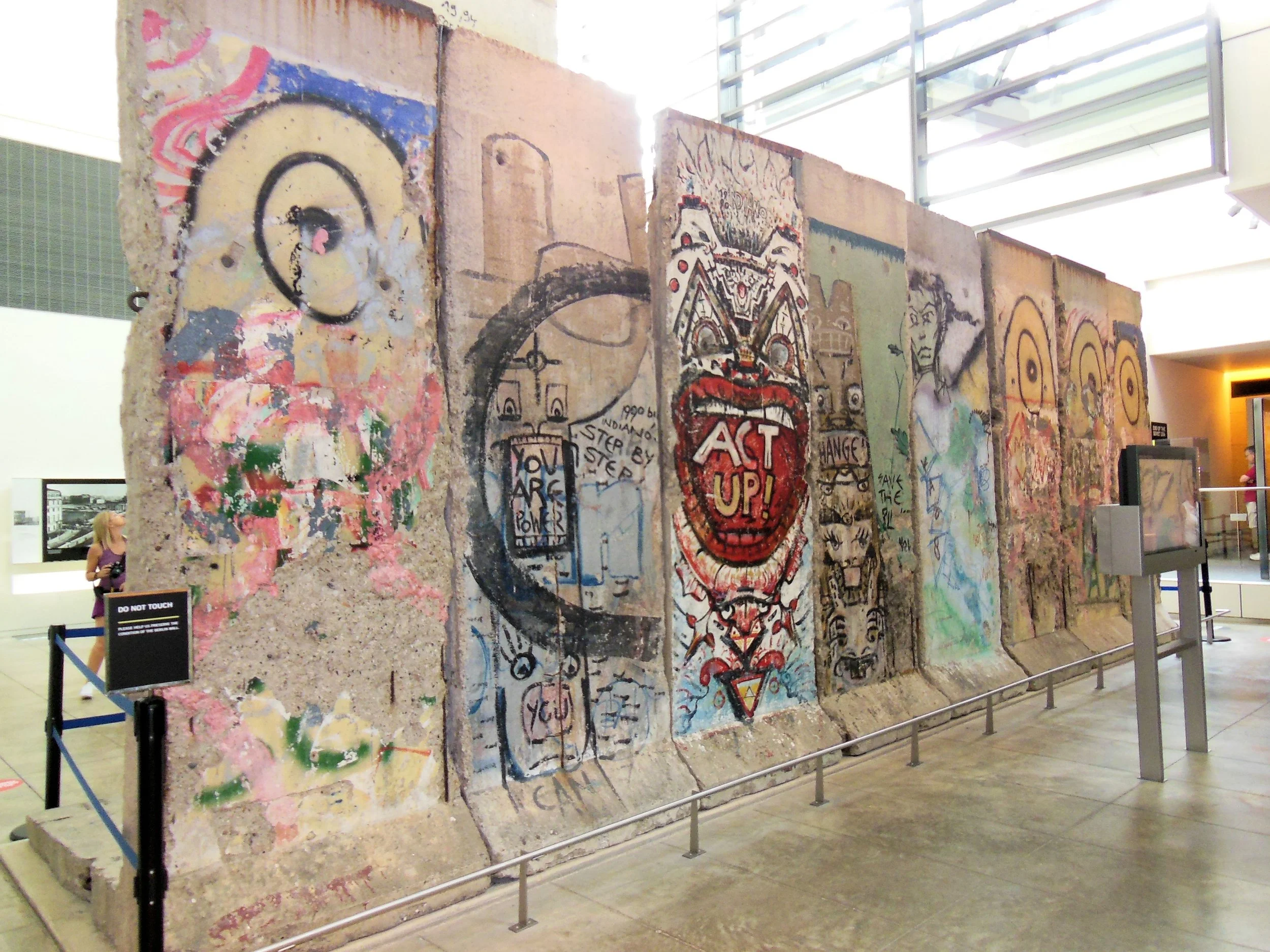
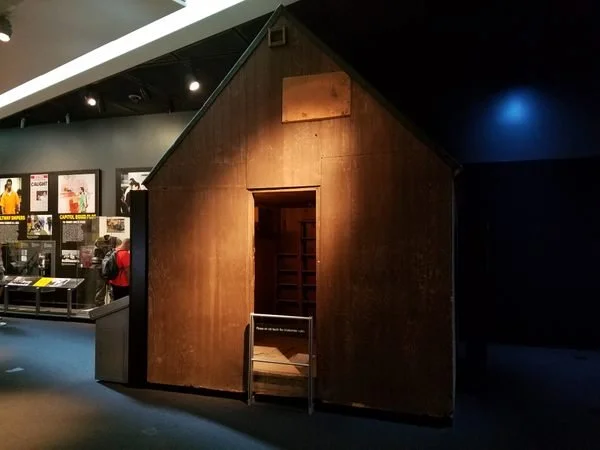
We began on the concourse level, one of the highlights of which was the largest hunk of the Berlin Wall outside Germany (including guard tower), which was supplemented with many informative placards and interactive touchscreens. (The Newseum, like most museums, integrates new technologies and media into its exhibits; however, unlike in many other places, the incorporation of these tools is seamless and overwhelmingly effective.) Another concourse highlight was the changing exhibit “G-Men and Journalists: Top News Stories from the FBI’s First Century,” which included powerful artifacts relating to the Oklahoma City bombing, the DC sniper case, the Branch Davidian compound siege, the fight against hate groups, and the Unabomber case (including Ted Kaczynski’s actual cabin).
From there we were whisked up a hydraulic glass elevator, past the gigantic LCD monitor and up to the 6th floor, which wasn’t great. (This is the recommended path for exploring the Newseum—concourse, then 6th floor and work your way down—and we followed it.) From the 6th floor we could see down to the 4th floor, which is dominated by a 9/11 exhibit that focused too much on the outrage of the American people and not enough on journalism’s role in covering the attacks.
The 5th floor, though—once we got there (it was a little difficult to figure out how to access it)—was staggering. Visitors are just overwhelmed by the sheer magnitude of information: News History traces the history of news-gathering in the US from its earliest examples through its transformations and milestones and vicissitudes. The room is dominated by rows of drawers containing glass-encased newspapers and magazines, chronicling not only the story of us as a people, but journalism as a field. Ringing the room are interactive pieces focusing on various major topics—satire, plagiarism, Watergate, tabloids, the publishing barons, etc. All contain a masterfully conceived admixture of actual artifacts, news items, video clips, and more. There are also several small theaters on the outer edge of the room—and, in fact, throughout the entire museum—showcasing issues in journalism, exploring ethics and news values, discussing photojournalism, etc.
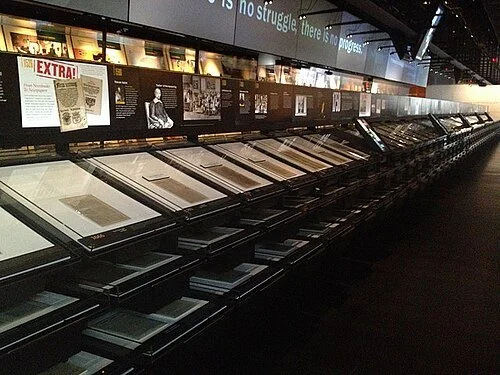
My only complaint for the 5th floor was that the lighting was too dim to read beyond the headlines, and the arrangement of the drawers at knee-level and in vertical columns meant that closer examination—to say nothing of sharing material with another museumgoer—was impractical. But really, these are comparatively minor quibbles.
The 3rd floor was a’ight: stuff about Edward R. Murrow, internet news, and a memorial to journalists killed while covering the news. It should be noted that throughout the Newseum are actual pieces of journalistic history that go beyond the newspapers and typewriters: news vans and helicopters, studio cameras, satellite dishes, and the like.
Friends, on the 2nd floor, I became a child again. The 2nd floor is home to the Interactive Newsroom, where one can queue up and become part of an actual “newscast”! To be honest, the opportunity was seized mainly by children, but I could not resist even the fleeting fulfillment of a longtime dream: to be a weatherman.
The results:
Mrs. Monsoon can be heard near the end of the video laughing loudly at my inexplicable antics: the saucy delivery, the tentative, pointless gestures, and just the obvious glee I took in being in front of the camera. Your comments are, always, welcome.
Finally on the first floor are the 4D theater (skipped it), the gift shop, and one of the most moving exhibits I’ve ever seen. The gift shop has lots of what you would expect—key chains, magnets, pencils, shot glasses, and more emblazoned with the Newseum name. It also has some great DVDs, mugs that read “Not tonight dear … I’m on deadline” and—the pièce de résistance —a book called Correct Me if I’m Wrong. This slim volume collects the best selections from the Columbia Journalism Review’s popular feature “The Lower Case,” which reproduces unintentionally funny headlines and press blunders. Some examples—which are also printed on tiles in the Newseum’s bathrooms—include:
Nuns forgive break-in, assault suspect
Crack in toilet bowl leads to 3 arrests
Literarcy week observed
Parking lot floods when man bursts
Drunk gets nine months in violin case
Farmer Bill Dies In House
…and my personal favorite…
Johnson Teacher Talks Very Slow
The first floor is also home to the permanent exhibition of Pulitzer Prize winning photographs. All of the winners are reproduced in small prints, but there are 30-40 enlarged photographs, each with a bit about the context of the piece and a reflective comment from the photojournalist responsible for the image. I had not seen some of these photographs, but even with the ones with which I was familiar—the execution of a Viet Cong prisoner in Saigon, the iconic image of a firefighter carrying an injured infant after the Oklahoma City bombing, the famous photo in the aftermath of the Kent State massacre—seeing them in a gallery setting, presented not just as photojournalism but really as art, was profoundly affecting. Many museum visitors were moved to tears by some of the photographs. I marveled at how impactful, how intense a photograph can be—far more moving and eloquent, in many cases, than a video of the same event, or an eyewitness account.
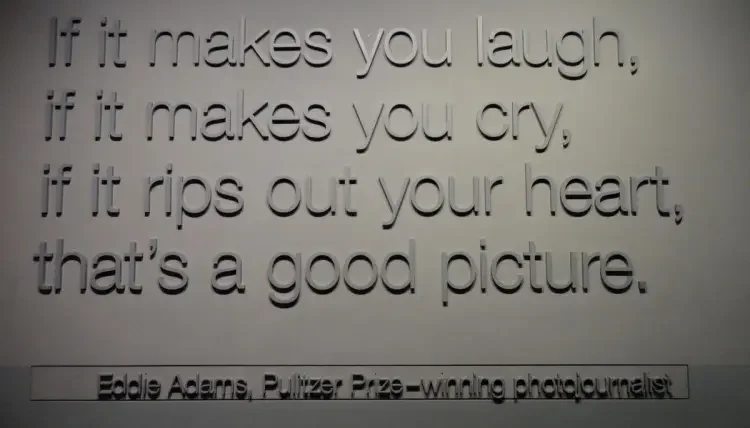
Not to be missed, and never to be forgotten.
Flashback: Monsoon Hasselhoff's "Looking for Freedom" Forecast
My good people...
In the description of this weblog, you have been promised "Forecasting, Minutae, Jibba-Jabba, and Hoffophilia." In the first two years of its existence, there has been a glut of the first three and a regrettable dearth of Hasselhovian content.
That is about to change.
In anticipation of a post currently in the works following the jouncing pecs of The Hoff's life and career, here is one of the first pieces in which I declared my strange love for Sir Chisel of Hairwicke. It's from April 25, 2005 and was disseminated via email, in the old-school fashion, years prior to this weblog's genesis. And it follows below, enhanced with weblinks.
----------------------------------------------------------------------------------------------
Monsoon Hasselhoff’s “Looking for Freedom” Forecast
Monday, 25 April 2005
The entertainment dynamo known simply as The Hoff was born David Michael Hasselhoff born July 17, 1952 in Baltimore, Maryland.
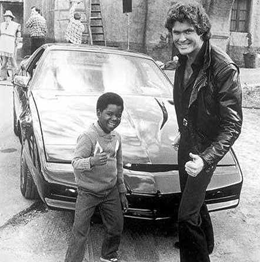
The Greatest Photo Ever Taken; foreground, L to R, Gary Coleman and David Hasselhoff; background, KITT
David Hasselhoff, of course, is a multifaceted, multitalented conquistador of stage, small screen, and song. His distinguished television career has been distinguished (so far) by three unforgettable roles: Dr. Snapper Foster on “The Young and the Restless” in the 1970s; Michael Knight (and a memorable turn as the goateed evil twin Garthe Knight) on “Knight Rider” in the 1980s; and Mitch Buchannon on “Baywatch” in the late 1980s to early 90s (Mitch was also spun off onto the underappreciated early-90s adventure drama “Baywatch Nights,” co-starring Gregalan Williams, Angie Harmon and Lou Rawls).
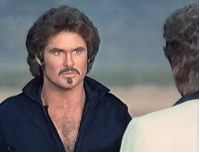
Hoff as Garthe Knight; Garthe once growled: “Michael Knight is a living, breathing insult to my existence.”
His theatre career has recently included roles in the American production of “Jekyll and Hyde” and a leading role in the London production of “Chicago.”
But it is The Hoff’s music career that truly sets him apart as a triple-threat and one of the seminal artists of our time. He busted onto the scene with 1985’s Night Rocker (“I am the night rocker; I wanna rock you in my song.”). He has since released more than a dozen albums in Germany, the only place his true greatness has been acknowledged. The David has achieved the popularity of a Michael Jackson or Tom Jones in Germany. Most recently he released David Hasselhoff Sings America in 2004 and The Night Before Christmas this past November.
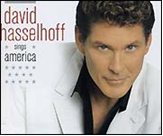
From “Flying on the Wings of Tenderness”:
We’re flying on the wings of tenderness
Riding the rivers of gentleness
Into the garden of love we’ll flow and watch it grow together
We’ll build a castle out of honesty
Fill every room with the harmony
Seeing the world trough each other’s eyes
We’ll live our lives together…
In 1994 His Hoffness decided to make a run at the musical stardom that had so eluded him in his homeland. He released a self-titled American “debut” album and hooked up a sweet Pay-Per-View star-studded concert event.
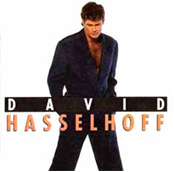
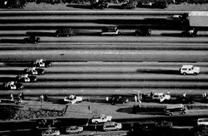
Based on eyewitness accounts (and the opinion of the Hoff himself), he rocked. I mean—he rocked the house like the house had not theretofore been rocked. He left the stage, though, and members of his management team inexplicably wore long faces. “What gives? I rocked it hard,” intoned the breathless David, who had truly “left it all onstage.” It was then that he saw a television—tuned to the live O.J. Simpson white bronco chase. Alas, while the hirsute Hoffmeister was delivering a mind-blowing concert to signal his triumphant emergence onto the American music stage, America was watching a slow-speed chase that would kick off the “trial of the century”—and not his performance. Ach!
His Bemulleted Grace played “Looking for Freedom” at Berlin Wall, New Year’s Eve 1989, to celebrate its crumbling. Hasselhoff himself feels his popularity in Germany was instrumental in bringing down the Berlin Wall and ending the Cold War: “I find it a bit sad that there is no photo of my hanging on the walls in the Berlin Museum at Checkpoint Charlie.”
It was rumored that he was going to release a rap album with Ice-T, but these rumors, tantalizing though they were, proved to be false.
The Hoff once gushed about one of his wildly popular projects: “Beyond its entertainment value, ‘Baywatch’ has enriched and, in many cases, helped save lives. I'm looking forward to the opportunity to continue with a project which has had such a significance for so many.”
On a similar note, commenting on the monumental impact his worldwide stardom—nay, superstardom—has had on children: “There are many dying children out there whose last wish is to meet me.”
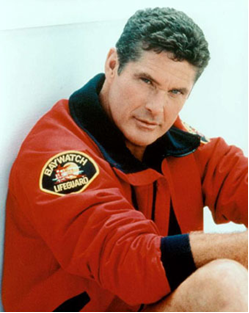
Regarding his cameo in the film Spongebob Squarepants: “I've gone from talking to a car to swimming with Pamela Anderson to starring with a sponge.” The David also had a cameo in the film Dodgeball as a German soccer coach.
And finally, in the following oft-repeated quote, The Buff One manages to cram an astounding four clichés into one statement: “Keep smiling! Believe in yourself and never give up; dreams will come true.” And indeed they have: In 1996, His Hairiness received a star on Hollywood’s Walk of Fame.
One of Der Hoff’s most well-known and finely-crafted songs is the German language “Du”—a portion of which I have included (and translated) here for you all:
Du bist alles, was ich habe auf der welt,
Du bist alles, was ich will.
Du, du allein kannst mich versteh’n,
Du, du darfst nie mehr von mir geh’n.
Du, ich will dir etwas sagen
Was ich noch zu keinem anderen mädchen gesagt habe,
Ich hab’ dich lieb, ja ich hab’ dich lieb
Und ich will dich immer lieb haben
Immer, immer nur dich.
*******************************
You are all I have in this world,
You are all I want.
You! You alone can understand me,
You! You may never go away from me.
You…I will say something to you
That I have said to no other girl,
I love you; yes, I love you
And I will always love you
Always, always for only you.
-------------------------------------------------------------------------------------------