
"The Wire" notes and analysis for Episode 58
“The Wire” notes and analysis for Episode 58 – “Clarifications”
Please note that this episode is available only at HBO On Demand and has not yet aired; it will premiere on HBO on Sunday, February 23rd. Also be forewarned that as “The Wire” contains adult language and themes, my post will reflect these elements; reader discretion is advised.
Finally, this post contains spoilers about episode 58; please do not read further if you have not yet seen it and do not want details about this episode.
S
P
O
I
L
E
R
S
P
A
C
E
Episode 58, “Clarifications,” takes it name from the “Corrections and Clarifications” that appear in the newspaper, usually on an inside page, addressing errors or omissions from previous editions. Here, the word refers to individuals clarifying their actions or intentions (McNulty to Kima, McNulty to Beadie, Scott to Gus), clarifying their futures (Carcetti, Duquan), or unexpectedly bringing clarity to an otherwise muddy and frustrating situation (Sydnor, Kennard, Bunk). It had some shocking content, so I’ll say again that if you don’t want to know, stop reading now.
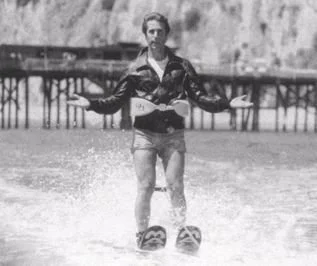
[A note: on the Wire message board early today, it was alleged that as of this episode, “The Wire” had “jumped the shark.” This phrase, derived from the “Happy Days” episode when Fonzie literally jumped the shark on waterskis, refers to the moment when a previously hip or outstanding program becomes irretrievably cheesy or poor. I’m not sure why folks may be feeling this way, though a couple of developments in this episode will be upsetting to many. A show like this, which depends on a vast ensemble of writers, directors, crew, and actors, cannot easily “jump the shark.” I think there have been plot contrivances that stretch credulity (homeless murders, among others) but over all it’s been a solid season and has not diminished my love for the program.
In fact, in another strain of discussion on the message boards, someone brought up the question of how “The Wire” stacks up against the greatest works of literature in the history of human expression. It’s apples and oranges to get into comparing “The Wire” with Richard Wright’s Native Son, or any written work, really. But I think the thing about the show that gets people thinking along these lines is its universality. “The Wire” is about Baltimore, but it could be about any city—or really, any time, or any place. It’s about hypocrisy, cynicism, thirst for power, change, violence, incompetence, passion, apathy, corruption, despair. It’s about life, and the skill with which it’s all wrought places it in the pantheon of artistic achievement for me.]
Episode 58 opens with McNulty briefing an array of police brass, including Rawls and Daniels, as well as Carcetti. Though he is clearly nervous—nearly everything he has to tell them, after all, is a fabrication—he handles himself pretty well. Rawls has a nice little snarky comment: “I mean, I’m all for a little kinky shit now and then, but chewin’ on a homeless fella?” The ensuing laughter seems a little knowing—as if some in the room may actually know that Rawls really is “all for a little kinky shit.” McNulty takes his opportunity to ask for surveillance teams (organized by Carver) to keep an eye on the “persons of interest” questioned at Pier 5, as well as sex offenders.
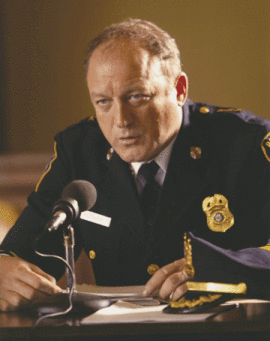
Carcetti asks, “What are we doing to protect people?” and McNulty further sees his opening to ask for undercover cars, since the fleet they have is not being repaired in a timely manner. Carcetti’s response as he leaves the room is, “Go to Avis if you have to … Hertz. I don’t give a shit. People are disappearing—they’re dying, for chrissakes. You do what you have to do.” We get the sense that now Lester is going to finally get the sustained surveillance he needs to crack Marlo’s code.
Rawls closes the meeting after Carcetti’s departure with another of his wry observations: “Bad news, gentlemen, is that we’re actually gonna have to catch this motherfucker. Good news is, the mayor finally needs a police department more than he needs a school system.”
Opening credits roll (I still don’t like Steve Earle’s version of “Way Down in the Hole” and fast-forward through it); tagline is “A lie ain’t a side of the story. It’s just a lie.” – Terry Hanning. Hanning, the homeless Marine that Scott profiled in The Sun, will make an angry return later in the episode.
But the tagline calls to mind one of the great fallacies of journalism: the “both sides” approach. Since news reporting is always supposed to be objective—free from bias or agenda of any kind—it is often said that a reporter must represent “both sides” of an issue equally (presenting pro-life and pro-choice viewpoints in an article about abortion laws, for example). But there are two problems, as I see it, with this approach. First, it assumes that both sides of an issue are equally valid, and that reporters have no right or ability to favor the more reasonable or widely held of the two. (This is the case in articles about the so-called “intelligent design” theory of biology, which is but a baby step beyond creationism. When some religious zealots begin pushing ID on a school district, as they did in nearby Dover School District in York, PA, the attendant coverage is obsessively “fair” in covering both the ID and evolution “sides” of the issue. But evolution is widely accepted and supported by overwhelming evidence, while ID is a trick of fantasy supported by no evidence, but rather by faith. When a reporter, in seeking to be “objective,” affords equal coverage to both evolution and ID, he or she lends undue credence to the weaker of the two positions.) The other problem with the “both sides” approach is that it implicitly assumes that there are only two sides to any given story. This is a short-sighted and parochial point of view that limits the breadth of coverage that can be applied to an issue or event.
Back to the episode, though…we see Duquan wandering around the city throughout the episode inquiring if any positions are open and coming up mostly empty. His first stop is Foot Locker, where he encounters Malik “Poot” Carr (Tray Chaney), who has apparently given up slinging for the black-and-white stripes. “Yeah, I just got tired, you know?” Poot explains of his decision to ultimately leave the game. “Shit got old.” Duquan’s turned down repeatedly throughout the episode until finally he sees a junkman, helps him out, and lands $10—it’s not the best prospect he’ll have, and it certainly doesn’t utilize his brainpower, but it’s keep him out of a drug game for which he’s sorely underequipped, and he seems like a weight has been lifted from his shoulders.
On to McNulty, who is obviously the feature player this season. It’s been nice to see him back at the center of the Wire universe after being a peripheral player last season. He’s meeting with Carver about the surveillance he needs, and when he closes the door conspiratorially, I think at first he’s going to spill everything to a sergeant, which would be a wildly risky move. Carver predicts that it’s going to be “some fucked-up McNulty shit,” but McNulty limits his disclosure, telling Carver only that so much has been allocated to the homeless murders, McNulty can’t use it all. Carver seems uneasy at first, but eventually admires (what he knows of) McNulty’s ability to work the system. When Carver asks about vehicles, McNulty replies, “Departmental account at Enterprise downtown.” We later see some detectives in a new rental car on surveillance, fiddling with the GPS unit and satellite radio like kids in a candy store.
Health Care for the Homeless (an actual organization that’s been around for more than 20 years, as we’d expect from “The Wire,” built as it is on authenticity) has asked the mayor’s office for permission to use city hall’s steps for a candlelight vigil for the homeless victims of the serial killer, and to raise awareness of homelessness in general. The mayor’s office agrees, on one condition: that Hizzoner can then use the event for political gain, giving a speech during the vigil.

Carcetti is running into trouble from “P.G.” (mostly black Prince George’s County) because he has not been meeting with black leaders; now an African American contender or two may be emerging for the Democratic gubernatorial nomination. “I gotta kiss a ring, don’t I?” Carcetti asks Norman, who replies with a grin, “More than a ring, actually.” Later in the episode Carcetti finds himself meeting with Nerese and Clay Davis, damn near begging for their support. “Maurice Dobey? For governor? Of my state?” demands Clay. “Sheeeeeeeeeit. That’s some cynical politics right there.” Clay also laments the “shameful” fact that Dobey was playing the “race card,” a statement whose irony is so thick it scarcely needs comment.
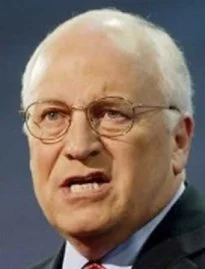
Out by the loading docks of The Sun, Gus is having a smoke with Bill Zorzi and Jeff Price (Todd Scofield). “It’s weird shit, I gotta say,” Zorzi muses to Gus. “Talking to a psychopath like that.” Price quips, “I interviewed Dick Cheney once.”—great line.
Zorzi asks Gus, “Are we hyping this thing, or is Templeton writing it as it lays?” His question derives from a golf term “to play it as it lays,” meaning to hit the ball based on where it lands, and not where you might have liked it to land. He’s asking whether Scott may have been massaging the facts or inciting some of the events, but Gus, despite the reservations we know he has, says it all plays pretty well. “I guess we’ll have homeless stories till December,” Zorzi says. When Price asks why they’ll stop in December, Gus reminds him (surely he’d already know this, having been to journalism school) that Pulitzer Prize submissions are for the calendar year. “Anything a newspaper cares about at Christmas, they give a fuck about by New Year’s,” Gus cynically observes.
Michael is seen meeting with Chris and Snoop; he’s clearly anxious about Omar’s rampage and still reeling from his narrow escape in the confrontation on the stoop in the previous episode. Chris and Snoop are preoccupied by Omar’s actions and even seem a bit worried, as is evidenced by their snippy responses to Michael’s questions. “That nigga gonna get got,” Snoop assures him, but there seems to be more anger than confidence in her voice.
Omar , for his part, is continuing his campaign of upsetting Marlo’s world by raiding his corners, his stash houses, and dropping the drugs down the sewer. He even approaches a surveillance team (sitting in a rented car) and tells them the location of the drugs and money at a corner down the block. “You workin’ a Stanfield corner,” he shouts at one point after chasing away the corner boys and robbing the stash house, “which means you workin’ for a straight-up punk. You feel me?” But no matter how vociferously Omar tries to call out Marlo, it doesn’t seem likely that Marlo will respond.
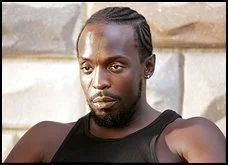
While Omar walks through a vacant lot, we see (but he hardly seems to notice) a group of boys apparently torturing an alley cat. As the boys see Omar, they all scatter—all except Kenard (Thuliso Dingwall), who gives Omar the stinkeye as he continues to pour an unidentified substance on the yowling cat. After last episode, which Kenard was clearly unimpressed with the mythical Omar, this seems like further foreshadowing that Kenard may go after Omar.
Back in the Homicide unit, Bunk prepares paperwork for DNA analysis of the murder of Michael’s father and presents it to McNulty for his signature—he’s finally going to avail himself of the glut of resources being thrown at a nonexistent case. He’s clearly not happy he has to resort to this, which is clear when McNulty grins sheepishly—but triumphantly—up at him. “Just sign the motherfucker and shut the fuck up,” he says. Soon he’s down to the medical examiner’s office asking for Lowenthal and presenting him with the order for DNA analysis. Near the end of the later scene, Bunk’s phone rings, and the ringtone is “You’ll Never Find (Another Love Like Mine)” by Lou Rawls, whose voice is actually rather similar to Bunk’s. I love these revealing little touches on “The Wire.”
In the next scene, we see Omar buying a pack of Newports (“soft pack”) at a Korean-run grocery store. The pedestrian nature of the scene gives it a sense of foreboding—why else would we need to watch him buy cigarettes? And then it happens: Kenard comes in (obviously dismissed with barely a glance by Omar, who only sees a little kid) and drops Omar with one shot to the back of the head. Kenard, who seems shaken by what he’s done, drops the gun and flees at the Korean shopkeeper screams desperately. Omar is gone. (And the internet rumors, based on an apparently leaked video clip, were right in both the timing and manner of his death.)
I gasped and froze when Omar was shot—it just didn’t seem possible. As I digest it, I wonder if he had to die in the service of the story (and we know that “The Wire” and David Simon have always elevated story over character, hence the earlier deaths of popular characters like D’Angelo and Stringer). His reckless pursuit of vengeance against Marlo certainly cried out for repercussions. Flushing drugs down the toilet and dropping them down the sewer is not going to affect Marlo; he controls the flow of drugs to all of Baltimore now. And Marlo is too smart and well-insulated to allow himself to be drawn down into a street battle with Omar. But I so enjoyed him driving off into the sunset with Reynaldo last season. Perhaps he could have hobbled into the path of Lester or McNulty and helped bring Marlo down (which he still might, from the grave). As much as I am devastated by Omar’s death, I can see why it happened—and why it happened the way it did.
In terms of upsetting scenes in the history of “The Wire,” I would put it just below Wallace’s murder at the end of the first season. Omar, after all, had dodged this fate with increasing improbability throughout the series; Wallace was a relative innocent, a child, and it was one of the first murders of a character on “The Wire” we had gotten to know well.
After Bunk gets the news of Omar’s death, we head to the paper’s conference room and a meeting between Terry Hanning (the homeless Marine who had been the subject of Scott’s article) and Scott, moderated by Gus. Hanning insists that Templeton invented additional details about a firefight surrounding the circumstances of Hanning’s story in Fallujah. Scott, who is getting quite agitated, asks to be permitted to tell his side of the story. “A lie ain’t a side of the story,” Hanning corrects him, providing the show’s tagline. “It’s just a lie.” Scott tries to mollify Hanning by saying, “I believe that you believe,” but his attempt at conciliation is nakedly patronizing. “I wrote what Mr. Hanning told me,” Scott tells Gus.
Outside the meeting room, Gus tells Scott to call Hanning’s Marine unit, reach out to the guys he served with and see what can be confirmed. “If it went down the way you said, we’ll let it be,” meaning his original piece will stand. “But if not, we’ll chalk it up as a misunderstanding.” Despite his suspicions, Gus is admirably protecting his reporter. But he’s also protecting his own ass, and the collective ass of The Sun: either way, the paper will print a correction. Scott is incredulous.
Bunk, who has been summoned to the crime scene by Norris and Crutchfield because Bunk “knew this mope,” is intrigued by the killing. He seems to well up as he looks at Omar’s body, and when watching this I was reminded of the two really powerful scenes Omar and Bunk shared in previous seasons. Bunk has to be feeling like everything is changing—two fixtures of the game, Prop Joe and Omar, have now died, his best friend Jimmy has gone apeshit and made up a serial killer, and even the level-headed Lester has gotten himself involved. According to the Korean shopkeeper, Omar was shot by a “short little fella with a big gun.” Bunk pulls a list out of Omar’s hand—why hadn’t it been taken by the area hoppers who raided his body looking for souvenirs?—of members of Marlo’s crew. Each name—Marlo, Chris, Monk, Cheese, Snoop, O-Dog, Cherry, and Vincent—was accompanied by an intersection. “On the hunt again, were you,” Bunk mutters.
The next scene illustrates how much can be accomplished with the right equipment and manpower: Sydnor gives instructions to a group of eight or nine police, each of whom will be assigned (some in pairs) to various members of Marlo’s crew.
Marlo summons Chris and Snoop to a meet, and when the two arrive, Marlo is all smiles. “I thought you were going to tell me,” he says. Omar is “bagged up.” Chris and Snoop, for their part, are stunned.
Gus is hard at work line editing Fletch’s homeless article (“in at 30 inches”). On his computer is taped a headline: “Many are Trapped for Hours in Darkness and Confusion.” It’s a headline that was used for an article about the 1993 World Trade Center bombing, but it’s unclear why he has the headline taped there; perhaps it’s to remember an event he covered when he was a reporter, and perhaps it’s because it describes the climate of the newsroom on many days. Fletch talks to Gus about his “tour guide” under the bridge, who is named Reginald Cousins (and nicknamed “Bubs”). It’s strange to know his full name, but it is hopefully a sign of good things to come for him. Fletch feels as though Bubs is the story, and he wants to do a profile on him. This has the potential to make Fletch’s emerging career and at the same time allow Bubs to purge some of his guilt and shame about Sherrod’s death and move on with his life.
Gus is wrapping up the Metro Digest, an area in the Metro section in which several briefs (blurbs of three or four paragraphs each) appear, usually focusing on mayhem (fires, traffic accidents, murders, robberies, etc.). He calls to Dave Ettlin (a former Sun reporter playing himself, apparently) that “we’re shy one brief in the Metro Digest. Four paragraphs should do it.” Due to space restrictions, the murder of a 34-year-old black male in a convenience store will be scratched. Despite being the talk of the Black community—and despite its importance to city and us, the viewers—Omar’s death will likely never merit even a passing mention in The Sun.
Kima and McNulty have traveled to Quantico to discuss the personality profile on their serial killer. On the way, they talk about their respective relationships, and Kima admits that it was her own fault that the relationship died, not Cheryl’s. Kima also says she’s got “too much dawg” in her to settle down!
The scene in which the FBI agent reviews his profile is a classic. The serial killer is a white male in his late 20s to late 30s who “has never been to college, but feels nonetheless superior to those with advanced education.” He is “likely employed by a bureaucratic entity” like civil or public service, has a problem with authority, and harbors a “deep-seated resentment of those who he feels have impeded his progress professionally.” Finally, he has a problem developing lasting relationships and is probably a high-functioning alcoholic. Jimmy is openly squirming during this litany, since it actually describes him with cutting precision. As they’re leaving, Kima asks McNulty what he thinks of the profile. “They’re in the ballpark,” he says, unnerved.
Speaking of McNulty’s character flaws, he comes home to a note from Beadie, who has taken the kids and left him. Her note reads: “Jimmy – One possible future. Be back tomorrow or the next day. Or not. Think about it. B.” He’s upset by this—but could he reasonably be surprised? His own out-of-control actions, he obfuscations, his absences have virtually guaranteed this result.
Dismayed at the relative ease with which Clay Davis slipped the charges brought and prosecuted by Bond, Lester takes the case to the FBI hoping for a Federal prosecution. He runs into the FBI special prosecutor who’d had a run-in with Carcetti earlier in the season, who says, “After you city sons of bitches have managed in a single week to transform Clay Fucking Davis into Martin Luther King Jr., you now come to me with this?” A “whiter” jury in a Federal case would likely have been less readily swayed by Clay’s playing of the “race card,” but his answer in an unequivocal no. Lester will have to “come at” Clay another way.
Speaking of coming at things a different way, Bunk’s DNA analysis is back—and Chris Partlow’s blood is all over the crime scene in the killing of Michael’s stepfather. Bunk shares this news with McNulty and also gives him the paper listing Marlo’s people found on Omar. Could Omar actually end of helping to catch Marlo and his crew posthumously? In the coming attractions, Marlo appears to be in the “box,” so it could be so. (I’m staying away from spoilers and rumors on Ain’t It Cool News and other online locations that purport to have definitive information about the last two episodes. This is the last time I’m ever going to have the opportunity to be surprised, shocked, and moved by new “Wire” episodes, and I’m going to leave that potential intact.)
Kima has gathered information about sex offenders and is about to review their case files and begin canvassing—work that will take her away from her own triple murder for days. McNulty, who cannot bear to see this happen, takes her into the “box” and tells her about what he’s done. “It ain’t right,” she tells him. “You can’t do this,” she says several times. She is clearly not fine with any of this. Coupled with a scene later when she chastises Lester and Sydnor for going along with McNulty’s fabrication, I’m beginning to wonder if her conscience may prod her to reveal this to someone.
On the flip side, as Sydnor orchestrates his far-flung surveillance, he has to consult a Baltimore city atlas (or is it southern Maryland, since it includes places outside Baltimore?). While looking up a street, he breaks the code Marlo and his crew have been using to communicate. On the clock faces, the second hands represent the page of the map (for example, 35 seconds is the east side, and indicates that Cheese will be involved in the meet), while the hands correspond to the points on the grid where the meet will take place.
At the Health Care for the Homeless vigil, Carcetti gives an incendiary speech about the scourge of homelessness and how it demands our attention. As a result of the current Republican gubernatorial administration and its policies, he asserts, “more and more of our fellow citizens found themselves living life at the broken edges, in the street.” The connection is clear, and wholly benefits his gubernatorial campaign: the current governor doesn’t care about ordinary folks. “Well I say that this is not only tragic, it is unforgivable,” he adds to thundering applause as we see Scott Templeton taking notes. The homeless, Carcetti insists, will no longer be invisible.
Lester sees Clay in a bar-restaurant and decides to blackmail the senator with the threat of a Federal probe Lester knows is never going to materialize. It seems Lester is hoping Clay will either provide further information that will enable Lester to bring him down, or—more likely—that Clay will lead Lester “up the chain” to see who is really behind all the dirty dealings.
Meanwhile at the newsroom, Scott has filed his piece covering the homeless vigil and Gus is discussing Scott’s lead with Metro editor Steve Luxenberg (Robert Poletick). Both Gus and Steve agree that Scott’s anecdotal lead is inappropriate, and Gus calls Scott over to tell him that he’s “spiking” (deleting, reworking completely) the lead because it contains anecdotal material attributed to an anonymous source. At such an event, where the homeless in attendance have come voluntarily and could reasonably expect media coverage, Gus argues that there should have been plenty of homeless individuals who would have allowed The Sun to use their names. But “it’s a perfect quote,” Scott whines. “Better than I could ask for, and that’s my concern at this point,” Gus replies.
When an editor is seeing perfect quotes over and over—polished, insightful, and succinct—from anonymous sources, an editor has every good reason to worry. The vast majority of real quotes a reporter gets from real people are in some way inarticulate, meandering, or coarse, but Scott’s a spot-on every time, fitting wonderfully into the narrative strain he’s created.
Scott angrily replies, “To hell with you if you think I made it up.” Gus, who remains calm and eminently reasonable throughout the exchange, states, “We have a standard that we follow here. And I’m gonna follow it.” Scott stomps back to his desk and punches his desk chair, which attracts the attention of the fawning Managing Editor, Thomas Klebanow (David Costabile). Soon Klebanow is heading over to Gus to demand answers: “You’re retopping Scott’s vigil piece?” he asks, referring to Gus’ planned replacement of Scott’s lead. “Anonymous attribution in a public setting – there’s no need for it,” Gus says, as if he’s reading out of The Sun’s style manual. “We have a sourcing policy here and I know it, and I do not feel comfortable bending the rules in this instance,” he informs a silenced Klebanow as Gus gathers his things and leaves for the evening. Those in the newsroom who resent Scott’s hot-shot style, the favoritism shown by the editors toward him, and the suspicious elements of his work, are impressed with Gus’s outburst. The matter is unresolved as the scene ends, and the viewer is left to assume that once again, Klebanow will move to support Scott and reinstate the anecdotal lead.
At Beadie’s house, Beadie finally comes home and informs McNulty on her doorstep that next time he’s out, because after all it’s her house. She asks him who is going to be at his wake—surely not the buddies he drinks with or the women he sleeps with, since they don’t know his last name. It’s family that’s most important, she says. She’s clearly gotten to him because he tries feebly to explain himself, then blurts out that he made up the homeless serial killer. His meandering explanation of this indefensible act mentions his uncontrollable anger, the good it’s doing in diverting resources to other departments, etc. “How dare you?” asks Beadie. “This is my life too.” McNulty stammers, “You start to tell the story, you think you’re the hero; and then when you get done talking, you—” and he’s cut off by Beadie, who has gone inside and slammed the door.
The show’s final scene is a bit cryptic, but I think what happened is this: someone in the morgue notices that the ID tags on Omar’s body and that of an older white man who died have been mixed up, and corrects the error. Omar Little’s body bag is zipped up, and that chapter of “Wire” history is closed, or seemingly so.
It may have been deliberate, but when Beadie asked McNulty who would come to his wake, that question lingered with me when I was watching Omar be zipped into the body bag in the morgue. Who will come to his funeral? Butchie and Donnie are dead, having been killed by Marlo’s crew. Reynaldo? It’s not clear where he is. Who else does he have? I’d say it’s a sure bet that Bunk will be there, and it’s bound to be a poignant scene.
The previews for Episode 59 look pretty intense, and everything’s coming to a head. Does Michael commit a murder? Is that Marlo in the box?
Speaking of speculation—which I’ll engage in more fully before the final episode—I recall hearing at some point during production that there was a police funeral near the end of the season, perhaps in the last episode. (If anyone else recalls hearing that, let me know.) I’ve been wondering who that could be—McNulty, particularly given what Beadie said to him about his wake? Bunk, brought down somehow mistakenly by McNulty’s bullshit case, and McNulty has to live with that? Kima, same thing?
I can’t wait for the final two episodes…
END OF EPISODE 58 NOTES
Monsoon's Quick Weather Update for 15 February 2008
Today will be mostly sunny, breezy and milder early; temperatures will fall dramatically later on tonight. High 46, low 23.
Saturday will feature plenty of sunshine and very cold temperatures. High 30, low 18.
Sunday brings our next chance for precipitation, but I think it’s going to warm up enough that it will be all (or very nearly all) rain. Becoming cloudy and rather windy as the rain begins sometime around Sunday evening. High 40, low 34.
Rain will continue into Monday morning; skies will clear and milder temperatures will prevail. High 47, low 30.
Tuesday is looking cooler again with partly cloudy skies and breezy conditions. High 36, low 21.
Look for clear, breezy and rather cold conditions on Wednesday. High 35, low 22.
Thursday will still be cold, but temperatures will begin to rise overnight. High 34, low 27.
Friday through Sunday is a potentially turbulent period in terms of winter weather with two systems poised to deliver precipitation on Friday evening 2/22, Saturday evening 2/23, and throughout the day Sunday 2/24—though there are indications that conditions will be milder by the end of the weekend, making much of this rain. Stay tuned for updates.
As we reach the last few days of February, I think we’re looking at the last real cold snap of the season, along with a real chance for snowfall. I’ve got my eye on Tuesday the 26th and Friday the 29th in terms of wintry precipitation, with highs in the 30s and lows in the teens or 20s.
Have a great holiday weekend!
Monsoon
Monsoon's In-Storm Update - Wednesday 13 February 2008
Hey friends,
Most of us had school delayed this morning, then cancelled--I suspect due to the icy sidewalks and back roads, power outages, and perhaps even the imminent flooding. Let me give you an idea of what to expect in the next few days...
On Wednesday, rain will continue, heavy at times, into the mid afternoon, when it will begin to taper. There's the outside chance of some flurries or brief snow showers as the storm moves away, particularly tonight, but these will not result in any additional accumulation. Winds will kick up too, particularly overnight. The problems many of us are dealing with include:
-
sidewalks and driveways that are like skating rinks, and are difficult to clear. Because temperatures have hovered around freezing or just above for many hours now, much of the precipitation that's fallen has been freezing rain. Many places have an inch or more of ice on top of the snow that had fallen earlier.
-
ice has coated power lines (and branches, bringing them down on power lines) and resulted in widespread power outages, which will only increase, I hate to say, with the strong winds forecast for tonight.
-
many streets are closed due to flooding due to the volume of rainfall we're getting, coupled with the fact that our slushly ice/snow accumulation is blocking typical drainage paths. Some roads, especially those in higher elevations or seldom-traveled ones, are coated with a treacherous slurry of ice and slush.
And finally, my good people, much of this mucky mess will likely freeze overnight, posing problems for the morning commute. This is a nasty ice storm--ironic, perhaps, given that most of us are seeing what looks to be plain rain outside. [I've covered this before, I think, but freezing rain is simply "regular" rain that freezes on surfaces; sleet consists of already-frozen pellets falling from the sky and is somewhat less common.]
High today 36, low 22.
Predictions for school scheduling on Thursday, February 14th: delay 65%; cancellation 25%.
On Thursday we'll see mainly sunny conditions and moderate winds with a high of 38 and a low of 24.
Friday brings the chance for more wintry precipitation, but I think this is going to amount to little of concern. Afternoon rain showers are possible, then a steadier rain late may mix with snow; this clears out overnight. High 46, low 27.
Saturday is sunny and colder with a high of 35 and a low of 19.
And on Sunday look for snow developing late and continuing into Monday. I'm thinking this is a nuisance snowfall right now (an inch or two at most) and certainly won't include icing of the sort we're dealing with now. I'll update you all if anything seems to have changed on this event. Highs Sunday and Monday in the mid 30s, lows in the low 20s.
Happy Snow Day!
Monsoon
Monsoon's "The Wire" notes and analysis for Episode 57
“The Wire” notes and analysis – episode 57, “Took”
Please note that this episode is available only at HBO On Demand and has not yet aired; it will premiere on HBO on Sunday, February 16th. Also be forewarned that as “The Wire” contains adult language and themes, my post will reflect these elements; reader discretion is advised.
Finally, this post contains spoilers about episode 57; please do not read further if you have not yet seen it and do not want details about this episode.
S
P
O
I
L
E
R
S
P
A
C
E
This episode (Tagline: “They don’t teach it in law school.” – Pearlman) was directed ably by Dominic West and features a few surprises and even a rare “Wire” throwaway cameo, but mainly bridges previous and future episodes, building suspense for the final three installments of the series.
Episode 57 opens with Lester connecting some wires and whispering conspiratorially with McNulty. It soon becomes clear that McNulty, with the help of voice modulation equipment, is poised to place his first call to Scott Templeton at The Sun from the “serial killer.” McNulty delivers a rambling statement (he’s been admonished by Lester to “stick to the script”; I can only imagine the twisted fun the two of them had coming up with it) about biting and the like to a flummoxed Scott, who bumbles through the office in search of witnesses and guidance. (After all, this is the first actual call he’s gotten from the “killer.”) A picture message is then sent through of the old homeless man (his real name is Lawrence Butler, I believe), with a red ribbon tied around his wrist.
In the ensuing meeting, Scott is genuinely shaken by the call he’s received—real life tends to be jarring when it intrudes upon our carefully crafted and maintained fantasies—as he is briefed on what to do next. “Oh Christ, that was … that was him,” he stammers, and hastily adds, “again.”
Meantime out by Pier 5, Sydnor stands with the cell phone that actually placed the call, rerouted through Lester’s sham wiretap in a manner I do not even fully comprehend. Soon police have converged on the area after the signal is traced, confiscated cell phones and demanding cooperation of folks enjoying a leisurely afternoon on the waterfront. The camera pans back to reveal that a helicopter and a boat have also joined the hunt for the killer. It’s a brilliant shot—unusual for “The Wire,” which typically focuses on the minutae and leaves us to construct the broader picture in our own heads—and underscores the scope of the fraud that’s been perpetrated by McNulty. The media, the mayor’s office, the police have all been taken—or, in the colloquial construction of the episode’s title, “took”—by an elaborate ruse that’s by now spiraling out of control.
A great McNulty moment happens when Landsman and the detective who was present when the call came through, along with some six or seven others, are having an animated discussion about what to do next. A supposedly unknowing McNulty looks wide-eyed at the flurry of activity and asks, “Hey—what’d I miss?”
The Clay Davis fiasco turns in another brilliant bit of guest casting when Clay goes to see Billy Murphy, the prominent and controversial Baltimore criminal defense attorney who has been referred to as “Johnny Cochran east” by admirers and detractors. He’s well-known for successfully defending boxing promoter Don King in a Federal fraud trial and winning multimillion-dollar verdicts for (frequently African American) clients suing the likes of Wachovia. More recently he sued the city of Baltimore on behalf of an African American man who was paralyzed while in police custody when his head was slammed into a wall, winning the largest police brutality verdict—$44 million—in American history.
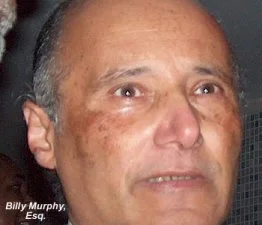
In the “Wire” universe, Clay is begging Murphy to represent him. Murphy insists on a $200K fee and, well knowing his new client’s slippery reputation, warns Clay, “Don’t fuck me.” Clay opines that for all the front-page coverage Murphy’s firm will get should make him jump at the chance to represent Clay: “For all that profile, sheeeit partner, you should be payin’ me.”
Back in the conference room of the newspaper, McNulty is there again, this time meeting with Whiting, Klebanow, Gus, the publisher, and Scott Templeton. McNulty asks Scott, “Was it the same voice as before?” Scott replies, “Oh, right – yeah. No, actually. I mean yeah, it was the same, but this time I noticed he had a real thick Balmore accent—real thick.” Gus looks sidelong at Scott, seeming to note how odd it is that Scott, who was relatively blasé about his first contact with the killer, seems shaken to his core by this, supposedly the second contact. Klebanow wants to run the photo sent by the “killer,” which plays right into McNulty’s game. Before he leaves, Jimmy tries to reassure Scott: “I wouldn’t worry—he’s just using you. He needs you.” Scott says, “I kinda resent that, actually.” McNulty takes a subtle, winking jab at the cookery in which he knows the self-aggrandizing Scott has been engaging: “I don’t know – it’s workin’ out pretty well for both of you, right?”
Omar makes several appearances in this episode, some with his crutch, and some without. In his first “appearance,” he doesn’t actually appear, but two of Marlo’s soldiers stumble upon Manny and Vince in the stash house. Manny seems to have been killed, but Vince (I think that was the name I heard; I think he’s from the rims shop) was merely tied up and given another message to relay to Marlo: That Omar will not rest until he successfully calls out Marlo to the streets. Omar also flushes lots of the product (was it four kilos?) down the toilet to punctuate the notion that it’s not about money anymore.
Carcetti is busy making fundraising calls for his gubernatorial campaign and seems to be raising record cash. Soon Norman rains on his parade by informing him of the call that came in to The Sun from the purported serial killer; Carcetti springs into action, determined not to let the opportunity embodied in this story pass him by.
Judge Phelan authorizes the additional computers so picture messages can be tapped, and so McNulty’s charade rolls on.
As the mayor gets involved, it quickly becomes clear that it’s a full “red ball”—Balwmer police lingo for a top priority case that has everyone available working on it. Bunk refuses Landsman’s order to go meet with Daniels about the case, and his rage about McNulty’s shenanigans is close to boiling, as it does a bit toward his boss. I’m beginning to see the possibility of Bunk reaching a point at which he must “blow the whistle” on what Jimmy and Lester are doing. Later, while Lester and McNulty are discussing the case and Bunk learns that Kima has again been pulled off her triple murder, he hisses, “Shame on y’all, I mean it.”
The ensuing scenes are fascinating in the way that they are intercut: Daniels addresses 15-20 Homicide detectives and other officers while Gus Haynes addresses some 12 to 15 reporters in the newsroom. Gus says that Alma will stay with the investigation and that Scott should not “go home before checking for updates before the e-dot and double-dot editions.” (These are the next-to-last and final editions, as noted in an earlier post discussing Episode 51.) In additon to Alma and Scott, Mike Olesker will be writing a column on the case, Fletch will be in charge of homeless react (reaction quotes and reporting from the homeless regarding the case) as well as “interviewing advocates and experts talking up the problem.” Melody is to get “on the phone with the white coats at Clifton T. Perkins or some place” for a sidebar about “why a wack job would kill people” and then talk to a reporter about it. Perkins is a mental hospital outside Baltimore. A sidebar is a smaller article that accompanies a larger piece and explains some aspect of the topic, providing context or elaboration where needed. For example, an article about a man who was killed after being stung 100 times by bees might well feature a sidebar about beesting allergies, how common they are, and how they work.
As for Scott, Gus acknowledges that he’s “in the middle of this” because the killer is contacting him, and Alma will be interviewing Scott for a separate piece. As such, Scott’s article will necessarily be in the first person (i.e., using words like “I,” “me,” and “my” that would typically be absent from a straight news piece). Gus concludes by emphasizing that the reporters “need to be on the street” and that doing reporting by phone “won’t cut it.” “For once I am assured that they resources we need to work this story will be there for us. So let’s surround this mess and report the hell out of it.” Scott remarks to Alma as they scramble to work, “This one’s got legs.”
Daniels in the squad room is echoing what Gus says in a typically self-conscious “Wire”-ish attempt at parallelism: they need to be out on the streets, canvassing; McNulty will be heading things up and choosing staff; keep the media as part of the equation; and investigate thoroughly to make sure it’s not a hoax (at which point McNulty looks around nervously). He ends with a statement that, according to the mayor, there will be “no overtime restrictions or staffing limits on this.” Kima remarks to McNulty as they’re dismissed, “Police work – whaddaya know?” The key here with both settings is that this single case is galvanizing the institutions that had been falling apart, cutting back, and making excuses. The dramatic irony (which occurs in the theater when the audience has information certain characters do not) is that this is all being brought about thanks to the prevarications and manipulations of two men, primarily: Jimmy McNulty and Scott Templeton.
Duquan has seemingly given up trying to fit in on the corners and is scouring the classified section of The Sun for jobs, only half-jokingly. Carver swings by to pick up Michael Lee, who is delivered to Bunk for questioning in the murder of Michael’s stepfather. Bunk ushers Michael in to the first interrogation room and shows him photos of his stepfather’s badly beaten face, which we know was carried out in a blind rage by Chris (with Snoop looking on, mystified). Michael is stoic, though, and refuses to give Bunk anything useful.
Next we see Kima arriving at the home of one of the “murder” victims, outisde of which broadcast media outlets are set up. “Vultures,” she mutters. Inside, Kima conducts one of many interviews with the parents of the “murder” victims. They had let their son go because of his persistent problems, but were horrified to learn what had happened to him. Later in the program, Kima returns to the office exhausted and demoralized after having completed interviews with all of the families of the “murdered” homeless men. As she describes the turmoil these families are undergoing, these parents who have often been estranged from their troubled children, McNulty’s face reveals that he realizes what he’s done—despite all the “good” that has come from his charade, like fully funded policing, he’s inflicted needless harm on families who otherwise would have learned the truth about their loved ones’ deaths. His actions, though unintentional, were careless, and the burden of that is clearly beginning to weigh heavily on him. Based on the previews of Episode 58, it seems that McNulty may ultimately be forced to bring Kima in on his charade—I wonder how Kima will react to all that?
Fletch (full name Mike Fletcher, played by Brandon Young) is reviewing his piece with Gus and acknowledges that there’s a formulaic quality to it: “anecdotal lead, nut graph, desk quote.” An anecdotal lead is often used in a complex feature article as a way to lure the reader in. It shares a brief story, personalizing the issue, then gets into the “meat” of the story by presenting the nut graph or a sentence or two containing the main idea. In a “hard news” piece the nut graph and lead are often one and the same, but anecdotal leads are used as alternatives to this formula. I’m not sure about “desk quote”; I might have heard him wrong…
Gus urges Fletch, a young, eager reporter he has clearly taken under his wing, to spend time with his topic without always looking for quotes or anecdotes. “Sometimes the weakest stuff in a story is the shit with quotation marks around it.” He wants Fletch to learn to “tell the story in moments” and get to the essence of the subject. “I’m not interested in what can be quoted … I’m interested in what feels true.” Meanwhile Alma’s produced 30 column-inches and Scott, who tells Gus he’ll have his copy ready in five mintes, is warned of the approaching first-edition deadline and adjusts the time frame to three. The newsroom is humming, people are working on a story with “legs,” and Gus is clearly invigorated by all this activity.
Soon, though, Gus seems deflated by the extent to which Scott seems intent on placing himself at the center of the story—and the extent to which Klebanow and Whiting seem to be congenitally unable to find fault with anything Scott turns in. “First person is one thing,” Gus concedes as he scans Templeton’s copy, but he’s bothered by Scott’s implication that he’s “sharing the darkest corners with [the homeless].” Whiting corrects Gus that “he’s writing more as an essayist.” This signals a dangerous blurring of the lines in journalism—is he a reporter, a columnist, a memoirist, or what? Though it hasn’t been mentioned, sales of The Sun have to be experiencing a significant jump since the homeless serial killer story broke, and Whiting giddily allows his star reporter—now nationally known—to shine as brightly as he cares to.
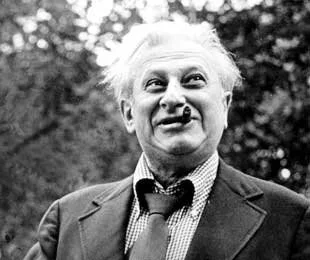
“We’ve got a column from Olesker,” Gus insists, that will be on the front page of the Metro section. “It’s pretty powerful without being purple.” Purple prose is writing that is overly sentimental or manipulative in its use of pathos or flowery language. The implied contrast he’s drawing here is that Scott’s piece is, in fact, purple. “But this stuff that Scott’s written … makes it sound like he’s been living with the homeless for weeks,” when in reality he spent an evening talking to them, and an afternoon at a soup kitchen, Gus notes. “It ain’t exactly Studs Terkel,” he remarks dryly. Studs Terkel, of course, is the broadcaster and folk historian who is most readily associated with his work in compiling massive, sprawling oral histories by exhaustively interviewing people who had experienced the Great Depression.
Gus’s problem with Scott’s article is that the reporter is too much in it, implying that he’s been pounding the volatile streets of Baltimore mining for these stories. “This is my city,” Gus insists, “not Beirut,” referring to the war-torn capital of Lebanon. Klebanow says he “respects” Gus’s opinions—when your boss tells you that, he’s about to overrule you—and says he’ll take personal responsibility for editing it. He’s going to run it “as is.”
Later, when Gus sees Scott’s piece in the paper, he is utterly disaffected. The article, featured on the front page above the fold, is headlined “To walk among them…” and has a subhead of “The street odyssey of the reporter who has provoked the rage of a serial killer.” It’s accompanied by a picture of Scott. The phrasing here—“among them”—is particularly demeaning, insinuating that “we” (the comfortable readers of The Sun) and “them” (the homeless) might as well be two different species. Gus tosses the paper in the trash.
Next we see Daniels and Pearlman at home; Rhonda is going over the Clay Davis case file to make sure she can support the state’s attorney, Rupert Bond (Dion Graham) in court. It’s a brief scene, but it’s nice to see that the two of them are still together, and apparently happy; it also shows us the extent to which Rhonda takes here job home with her—literally.
At the trial, it’s evident from the start that it’s going to be a circus. Clay steps out of his car with Billy Murphy in tow. Bill Zorzi from The Sun is covering the trial and spots a book in Clay’s hand. He asks, “What are you reading, Senator?” and touches off a response that I think is one of the funniest scenes ever on the show. Clay, who is conspicuously holding the book Prometheus Bound (that’s pronounced pro-ME-thee-us) written by Greek dramatist Aeschylus (that’s ESS-ke-lus) about 2500 years ago, replies that he’s reading Promathis Bound (as he pronounces it) and explains, “This book by Asillyus is about a simple man horrifically punished by the powers that be for the terrible crime of trying to bring light to the common people. I cannot tell you how much consolation I find in these slim pages.” Clay finally pronounces the moral of the tale to be—as if he’s quoting directly from the text—“No good deed goes unpunished.” Clearly this would depend on the perspective, and an oversimplification of the moral here. (This martyrish statement, by the way, is attributed to twentieth-century politician and socialite Clare Booth Luce.) Zorzi looks on, amused.
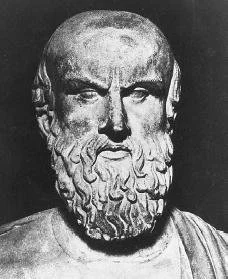
Prometheus was a titan, and an exceedingly clever deity who, in Aeschylus’ version of the tale, stole fire from the gods and gave it to man. Zeus, who had forbidden that humans be given fire, chained Prometheus to the rocks as a result of what the titan had done. Though he knew well what he was doing was a transgression, he argues strongly that this punishment is excessive considering the crime. The implication here is clear: Clay Davis was simply taking money from the wealthy and distributing it to his people, and he’s being persecuted for it. This line of thinking clearly informed their defense as well.
McNulty is anxiously talking with Lester in the illegal wiretap room again, fretting about how unwieldy the case has become. Other homicide detectives have gotten wind that McNulty’s case has brought in a windfall of manpower, resources, and overtime—more than he could possibly use for the homeless case. At first, Jimmy is pleased to share the wealth and help detectives bring in real cases; soon, though, the demands wear on him and he begins to resent it. “This thing’s bigger’n I ever thought it would be,” McNulty laments, then implores Lester, “Get me out of this, Lester. As fast as you can.” The first message Lester intercepts from Marlo’s phone is a picture of an analog clock set to 5:50. He sends Sydnor out to observe Monk’s movements at that time, but comes up with nothing. Later in Episode 57, Lester is seen with an array of pictures taken from Marlo’s cell—all analog clocks set to varying times. Lester is determined to crack the code, but the image symbolically stresses the fact that the little ruse he and McNulty have been enacting is quickly running out of time—and they may be running out of luck.
Back to Fletch, who is visiting the soup kitchen where Bubs works, just as Scott did. Bubs strikes up a conversation with the young reporter and seems genuinely interested in helping him. It was thrilling when he introduced himself to Fletch—like two pieces of the puzzle just fit together, and the outcome can only be good. After Bubs takes Fletch to talk with some homeless folks he knows, Fletch offers to pay Bubs for his help, but Bubs refuses. “It ain’t about that. Just … write it like it feels.” Meant to echo Gus’s advice (“what feels true”), Bubs’ guidance here is both gentle and prodding, and the viewer is left with a strong sense of hope that Fletch is becoming the kind of reporter the entire community can be proud of.
At a local bar, we’re treated to a cameo by Munch (Richard Belzer), who has now played the character in eight different television series since originating on “Homicide: Life on the Street.” As amusing as it was to see Munch chastising the bartender and talking about how he used to own a bar, it also kind of shatters the “Wire” illusion: the show is such a hermetic little universe that a throwaway cameo endangers its mystique.
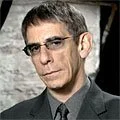
The real reason for the scene is Gus’s chat with Mello (he’s Carver’s boss, Lieutenant Dennis Mello, played by the “real” Jay Landsman) as Gus begins to unravel Scott’s lies.
Toward the end of the episode, Omar sends another series of messages, this time stronger. First he limps up to Savino (Chris Clanton) who is one of Marlo’s “muscle,” and has a brief but vital conversation with him. Savino, whom Omar recalls from Savino’s days with the Barksdale organization, assures Omar that he wasn’t there when Butchie was killed, but Omar asks him what he would have done if he had been there. When he hesitates, Omar—who had been simply planning to send another message for Marlo—decides to pop Savino. It seems Omar is becoming more reckless in “calling out” Marlo.
In his final Episode 57 scene, Omar hobbles (this time using a crutch) up to Michael’s corner and plants his gun in the nape of Michael’s neck. It’s striking that Omar still induces fear even when clearly debilitated by a severe injury from his fall. His message this time is, “I’ma drop all his muscle” and that he wants to confront Marlo one-on-one, which Marlo is unlikely to allow to happen. (It’s also worth noting that “Ayo,” a Baltimore house tune by Bossman that appears on the “Wire” soundtrack CD, plays in the background in this scene.) When Omar leaves, Michael is relieved that Omar did not recognize him from the apartment shootout; otherwise, Michael may have been his next victim. Kennard, the little, foul-mouthed hopper, though, is unimpressed by the mythical Omar. “That’s Omar?” he asks incredulously (but quietly) as Omar approaches Michael. As Omar walks away, Kennard derisively observes to the others—still clearly shaken by Omar’s visit—that Omar is “gimpy as a mu’fucker.”
But the real surprise of the show, and one I didn’t necessarily see coming, is the trial of Clay Davis. I should have known something was awry when Lester testified about Clay’s transactions on the stand but Murphy declined to cross-examine him. When Clay gets on the stand, he is a virtuoso, portraying himself as a community hero, a man of the people. The money he gets from a variety of sources goes to individuals in the community who need help with everyday expenses, he insists, and it’s impossible to account accurately for all that. He says that when he leaves his office with cash, by the time he’s made it through the neighborhoods he represents, his pockets are empty (which he illustrates by standing up and turning them inside out, causing a minor uproar). At the end of his slippery testimony, Clay receives applause from those observing the trial in the courtroom, and is quickly acquitted by the jury on all charges. As a broadly smiling Clay emerges from the courthouse to address his loving supporters, Pearlman and Bond stand to the side, agape. Bond asks, shellshocked, “What the fuck just happened?” Pearlman’s reply—for she seems far more savvy than he, but still surprised—provides the show’s tagline: “Whatever it was, they don’t teach it in law school.”
The very next scene is Gus in the newsroom gleefully sending the article he’s copyedited—presumably Zorzi’s—to the desk: “45 inches of Clay Davis playing not just the race card but the whole deck, coming atcha!” Gus sees things for what the truly are and seems less and less able to be surprised. A female reporter (or is she a copyeditor?) comes by his desk to commiserate on Scott’s above-the-fold article. Gus laments, “I understand the hype, but I just can’t trust the guy” and she wonders if Scott is manipulating his information to “make a story better than it ought to be.” Gus can’t shake the feeling that Scott’s article about the African American kid sitting outside Camden Yards in a wheelchair just doesn’t add up—he’s a fan of baseball, not basketball; he only gave a nickname. But Gus insists, and I believe, that “I don’t want to call another reporter a liar. … I really don’t.” Gus still views himself as a reporter and has the utmost loyalty for those who ply his trade, even when he suspects they’re unethical. When considering the previews of Episode 58, in which Scott’s article about the homeless former Marine seems to fall under scrutiny, it seems obvious that things are heating up for the serial fabricator.
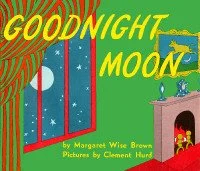
This frenetically paced episode concludes with a touching and reflective scene in which Kima holds Elijah, who can’t sleep. “Let’s say goodnight,” she says as the look out the window. The lazy litany begins much as Margaret Wise Brown’s classic children’s book, but quickly takes a turn that makes it both more poignant and more authentic:
Goodnight moon…
Goodnight stars…
[a squad car, sirens blazing, drives by]
Goodnight po-pos…
Goodnight fiends…
Goodnight hoppers…
Goodnight hustlers…
Goodnight scammers…
Goodnight to everybody…
Goodnight to one and all…
END OF EPISODE 57 NOTES
Monsoon's Winter Storm Update - Monday evening 2-11-08
Hey friends...
The storm has come into clearer focus and accelerated a bit, so I thought I'd share an update...
Tonight: clear and cold with a low of 10.
Tuesday 2/12: Clouding up throughout the morning with some flurries possible by late morning. Snowfall will not begin in earnest until at least 2 or 3pm, though. Snow will become steadier at times throughout the evening, mixing with sleet and changing to freezing rain sometime overnight. (Some models have the rain changeover sooner, but given the extremely low surface temps and weak low, I'm not buying it. I think the frozen precipitation predominates in this storm.) High 28, low 24.
Wednesday 2/13: The freezing rain and sleet should change over to plain rain by mid morning, but accumulations of snow and sleet--and ice-coated power lines, branches, and roads--will still hamper travel. Some mixed precipitation may sneak in as the precipitation tapers off in the afternoon. High 38, low 21.
Accumulations: I'm sticking with 2-3 inches of snow and ice, perhaps a bit less in southern Berks and northern Lancaster Counties, making travel extremely dangerous and ill-advised on Tuesday evening and Wednesday morning.
School schedule: Chance of early dismissal Tuesday 20%; chance of delay Wednesday 85%; chance of cancellation Wednesday 40%.
As always, I remind you humbly that I am but an amateur meteorologist, and implore you to be gentle in judging my errors...
Monsoon
Monsoon Martin’s Deep Freeze Weather Update for Monday, 11 February 2008
After a deep freeze this morning—it got down to 5 degrees this morning at my home—five!—we’re looking at a warm-up (at least to less arctic temperatures) by mid-week. I’ve also got my eye on a system that could bring us a delay or cancellation on Wednesday and a few more interesting longer-term issues.
Monday 2/11: Sunny and extremely cold. High 22, low 14.
Tuesday 2/12: Cloudy with light snow showers or flurries developing by the late afternoon; steadier snowfall is likely in the evening, so limit your travel. As warmer air mixes in aloft, look for sleet to mix in with the snow by around midnight, then gradually change over to freezing rain thereafter. High 31, low 28.
Wednesday 2/13: Freezing rain will continue through mid-morning, after which periods of regular old rain will fall. Precipitation will taper throughout the afternoon. High 37, low 21.
Forecast models: There is significant disagreement in terms of storm track and timing among the various forecast models, but I’m favoring a slower-moving system with significant precipitation, much of which will be wintry.
Accumulations: I’m thinking 2 to 3 inches of accumulated snow and ice here, with locally higher amounts in northern Berks and lower in Lancaster and Chester Counties. Heaviest accumulations will be in northeast Pennsylvania and north Jersey. As noted above, much will depend on the timing and exact track of this storm; as such, I will be updating the situation tomorrow.
Driving hazards: The commute home from school or work on Tuesday will be affected very little, but again, use extreme caution if you need to be out and about Tuesday evening. The worst time for driving will be overnight Tuesday into Wednesday and Wednesday morning’s commute. Rain thereafter will wash everything away and improve conditions dramatically.
School scheduling changes: PSSA testing is this week, which means that administrators are going to be loath to wreck their best-laid plans for a few slippery roads. That said, my predictions for now are
Chance of early dismissal Tuesday: 10%
Chance of delay Wednesday: 70%
Chance of cancellation Wednesday: 35%
Thursday 2/14: Partly cloudy and milder. High 41, low 26.
Friday 2/15: Mostly cloudy and rather breezy. High 44, low 27.
Next weekend: A bit cooler with highs in the mid 30s and lows in the low 20s; snow is possible on Sunday the 17th.
The following week: More of the same—highs in the low to mid 30s and lows in the upper teens and low 20s. Look for a possible winter weather event on Wednesday the 20th. Things warm up a bit toward the end of next week.
Beyond: Trending milder, but this is the season for Nor’easters and surprise storms. Last year we received our most significant snowfall on February 15th and March 15th. Stay tuned…
Monsoon
Monsoon Martin Announces Endorsement in 2008 Presidential Race

I think anyone who knows me at all understands implicitly that none of the Republican candidates is in danger of receiving my endorsement, so at this point it’s rather obviously a matter of choosing between Senators Barack Obama (D-IL) and Hillary Clinton (D-NY).
(Speaking of the Republicans, though, it is amusing to watch them implode after enjoying roughly 14 years of power in national government, foisting their closed-minded, pro-corporate, and jingoistic policies on the country. Soulless right-wing pundit Ann Coulter has said of the insufficiently conservative senator John McCain (R-AZ) that if he wins the Republican nomination for President—which seems more and more likely with every passing primary—she will actually campaign for Hillary Clinton!)
To date in the Democratic Presidential primary, Obama has racked up endorsements from The Chicago Tribune, Philadelphia Inquirer, and Los Angeles Times, as well as Caroline Kennedy, The Oprah, MoveOn.org, author Toni Morrison, George Clooney and Matt Damon; Hillary Clinton has been endorsed by TheNew York Times, Kansas City Star, Denver Post, along with the National Organization for Women (NOW), Steven Spielberg, Jack Nicholson, Ed Rendell, Maya Angelou, and Billie Jean King. When it comes to endorsements, though, none is more coveted, more ballyhooed, than the Monsoon Martin weblog endorsement.
Before I get to the endorsement, I’ll dispense with the historical platitudes: the election for the 44th President will mark the first time either an African American or female candidate has secured the nomination of a major party in this country. It is certainly noteworthy that for the first time in history, there is a really good chance that the United States will have a President that is not white and male.
But to take a step back from all this barrier-breaking delirium: it will be a hollow victory indeed for feminists and/or people of color if the person elected to the White House does not faithfully represent the views and needs of all of his or her constituents. A perfect case in point is Condoleezza Rice, who is the first African American woman to hold the post of United States Secretary of State. This would seem to be cause for celebration, if not for the fact that she is a truth-muddying Bush sycophant whose stints as National Security Advisor and Secretary of State have advanced some of the most wrongheaded, brutal, and hawkish foreign policies this country has even seen. William Fletcher of the TransAfrica Forum once famously called Rice “very cold and distant and only black by accident,” and she has been accused by Rep. Nancy Pelosi and many others of being a master of obfuscation and misdirection in her servile allegiance to the Bush administration’s policies. In short, despite having secured her status an a “first,” will not be mentioned with the likes of Harriet Tubman, Mary McLeod Bethune, Shirley Chisolm, and Marian Wright Edelman in the pantheon of great African American female leaders.
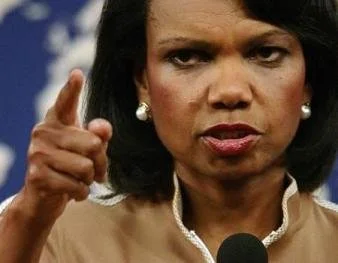
The point of such a long digression is simply to assert that, as much as the sexism and racism of those on the right who oppose these candidates is repugnant and makes us feel like leaping to their defense, we have just a deep a responsibility to evaluate them on their merits, their opinions, and their records.
It is with this in mind that I hereby endorse Barack Obama to be the Democratic nominee for President of the United States.
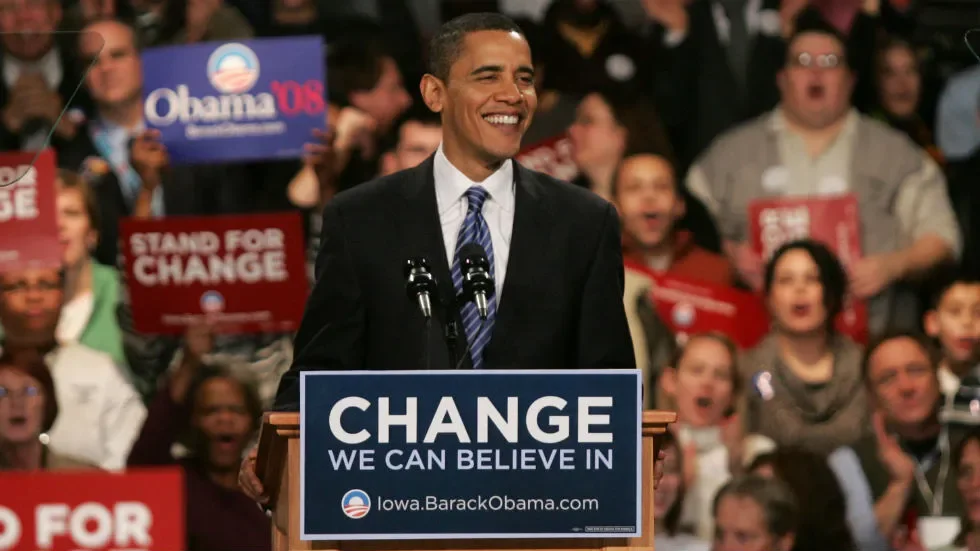
I believe he has the vision, the experience, and the conviction to breathe new life into the executive branch of our government. I will try to be as succinct as possible in laying out my reasons for supporting him, but those of you who have been reading my work for some time now realize what an empty promise that could turn out to be. And finally, all of the information about candidates Obama and Clinton I have included here is correct to the best of my knowledge. I have included citations where possible, but much of the information comes from television reports, newspaper articles, and other sources that are now lost to me. I very much welcome corrections and rebuttals to my ideas; use the “post a comment” feature below this post to record your thoughts.
First, the positive aspects of Obama and his candidacy:
Having worked as a community organizer, he has shown an ability to build a coalition that would include progressives, moderates, and even conservatives in the national conversation about how to progress beyond the tired, old political games.
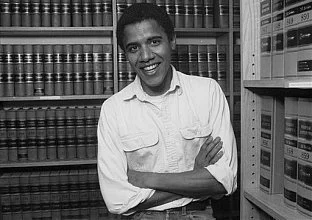
He worked a civil rights attorney, so he is attuned to the problems of discrimination, inequitable opportunities, and workers’ rights.
He is strongly against the failed, ridiculous, and dangerous policy of “don’t ask, don’t tell” regarding homosexuals in the military.
He was against the Iraq invasion from before the United States waged unprovoked war on that sovereign nation; he spoke at a massive anti-war rally in Chicago in March 2003 well before he was elected to the U.S. Senate in 2004.
Obama states that upon entering office he’ll establish a timetable for the withdrawal of combat troops within 16 months.
He has stated unequivocally that a new era of corporate responsibility is desperately needed, focusing on the issues of exorbitant CEO pay, living wages, union busting, curtailing of outsourcing, and environmental stewardship.
Obama’s stance on the oft-criticized and underfunded educational initiative known as “No Child Left Behind” is generally amenable to the problems teachers have long had with the legislation. He says it needs to be completely reevaluated (though it would be more comforting to hear that he wants to scrap it altogether and start over), and that any initiatives need to be fully funded. Also on education, he wants to raise teacher salaries—which would seem like a difficult task, since they are set by individual school districts—and help defray some of the costs of student loans, since many college students graduate having incurred mountains of debt.
I like the fact that he’s lived many places and gathered many experiences, increasing the likelihood that he can be genuinely empathetic about global crises and foreign policy. I also can’t deny that the prospect of someone who has had the experienced of being a Black man in American occupying the Oval Office is thrilling. (Of course, he’s no Angela Davis, who would be my all-time first choice for President, but it’s exciting nonetheless.)
Obama has an encouragingly progressive record in the Illinois legislature—which includes introducing bills monitoring racial profiling, ensuring a living wage for workers, and child care.
There are a few negatives in evaluating Obama that I’d be remiss if I glossed over:
Though he stood firmly against the war in 2003 and his initial Senate votes reflected this, by 2005 and 2006 he supported unconditional funding for the ongoing military action.
Though he took a balanced approach to the Israeli-Palestinian conflict earlier in his career, in recent years he has been moving toward nearly unreserved support of the hard-line Israeli government’s often brutal policies.
Obama supports same-sex unions with all the rights of traditional marriage, but does not believe that individuals of the same gender should be allowed to marry (he thinks it should be left up to the individual houses of worship whether to sanction such unions).
An optimistic view of Obama’s drift toward the center since 2005 would posit that he was playing down his progressivism a bit to appeal to a broader cross-section of voters, but will return to his core values when he becomes President.
My decision to endorse Barack Obama for the Democratic nomination has mostly to do with my belief that he will be a good President, but also has a bit to do with what I see as serious weaknesses in his opponent’s record.
There are positives in Hillary’s campaign, to be sure, and I wholly agree with some of her statements and stances; for example, Hillary has been stronger in saying NCLB relies too heavily on testing, and wants a “student borrowers’ bill of rights” to keep interest rates under control and eliminate predatory lending, and favors universal preschool. And some of her policies have similarities to Obama’s. But there are lots of negatives that make me ultimately unable to offer her my support:
She is divisive, having long been hated by lots of conservatives—though for mostly sexist and invalid reasons.
Hillary Clinton introduced a bill in 2005 that would have banned flag burning; this move was an obvious pander to the right-wing patriotic types she knew she’d need to court in her Presidential bid. As a member of the ACLU, I value my First Amendment rights rather highly.
She is extremely hawkish on foreign policy, having voted for the initial Iraq war authorization and all subsequent funding packages; she still refuses to acknowledge her initial vote as a mistake, saying that flawed intelligence and poor planning led to the Iraq quagmire. But plenty of people—including Obama, though perhaps not in these terms—saw Iraq for what it was from the beginning: a dishonest, cruel and criminal undertaking perpetrated against the world which has taken hundreds of thousands of Iraqi lives and killed nearly 4,000 US servicemembers.
Clinton has said she will “immediately” convene the Joint Chiefs to begin withdrawing the troops, but has set no timetable for actual withdrawal.
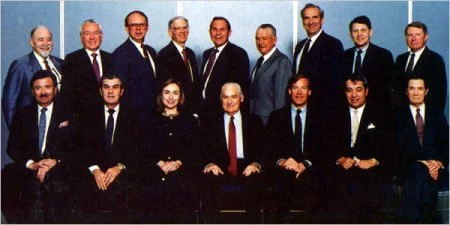
Clinton served on the Board of Directors of Wal-Mart (pictured below) for six years prior to her husband’s run for the presidency. Despite reports that she tried to get the retail behemoth to hire more women in management positions, all evidence points to the fact that she had no effect on this corporation and its anti-union, immigrant labor-exploiting, sexist and bullying tactics. In addition, she worked for the Rose Law Firm, a prestigious gang of corporate lawyers that specialized in union-busting. There was also a scandal in which she allegedly overbilled clients and continued working for the firm (of which the state of Arkansas was a client) while her husband was the state’s governor, raising questions of impropriety.
Clinton has shown an eagerness to engage in sleazy tactics. Of the many extant examples already is a New Hampshire mailing prior to the primary implying that Obama would not be a friend to pro-choice activists because he’d voted “present” on some legislative issues relating to reproductive rights. But the fact that this had been part of a Planned Parenthood legislative strategy—an organization he strongly supports—was never mentioned.
She supports Israel’s military assaults in the region and the nation’s primacy in the Middle East unquestioningly.
Hillary Clinton, in sum, is the establishment candidate. Her centrist tendencies are well-documented, while Obama’s progressive history at least leaves room for hope.
Much has been made of Obama’s purported lack of experience, or “electability,” but as one of the articles below illustrates, it all depends on how one quantifies “experience” and what kind of experience is important. Hillary Clinton is the candidate of the past, reflecting the supremacy of the Democratic Leadership Council (DLC) and of government through equivocation. After eight years of disastrous consequences courtesy of the Bush administration, do we really want to return to the previous eight years of the Clinton administration’s betrayals, unfulfilled promises, and duplicity?
Barack Obama is the candidate of the future, and even if some of his rhetoric turns out to be overblown, I think we’ll be in far better shape as a country under his leadership.
Monsoon
More here on Obama and the evolution of his policy on the Middle East:
http://www.commondreams.org/archive/2008/01/11/6312/
More here on Hillary Clinton’s pandering flag burning bill: http://www.washingtonpost.com/wp-dyn/content/article/2005/12/14/AR2005121401887.html
More here on Hillary Clinton’s propensity for dirty campaign tactics: http://www.commondreams.org/archive/2008/01/18/6468/
More here on Hillary Clinton and Wal-Mart: http://www.commondreams.org/views06/0207-34.htm
More here on the supposed gulf between Hillary Clinton’s and Barack Obama’s experience: http://doubledemon.newsvine.com/_news/2008/02/06/1282777-obamas-experience-vs-clintons-experience
Monsoon's Weather Update for Wednesday, 6 February 2008
Wednesday 2/6: Scattered showers this morning, followed by steady rain—potentially heavy at times with gusty winds—this afternoon and evening. A thunderstorm can’t be ruled out in the late afternoon or evening as a strong front moves through. Tapering to drizzle late, but clouds will persist overnight. High 62, low 44 (perhaps approaching the record of 65 in Reading).
Thursday 2/7: Somewhat colder; partly cloudy with rather breezy conditions. High 44, low 30.
Friday 2/8: Partly sunny and cold, but still mild for the season. High 43, low 28.
Saturday 2/9: Overcast and somewhat windy with rain or drizzle early, followed by snow showers at night. Right now it doesn’t look like significant accumulations will result from this system. High 41, low 24.
Sunday 2/10: Windy, partly cloudy and much colder with some flurries or brief snow showers possible. High 27, low 14.
Monday 2/11: partly sunny and a bit breezy. High 29, low 17.
Tuesday 2/12: Cloudy and a bit milder with snow showers possible. High 38, low 26.
The rest of next week (2/13 through 2/15): Highs in the lower 40s and lows in the upper 20s to low 30s for the most part; snow or a mixed event is possible on Friday the 15th.
Next weekend (2/16 and 2/17): Colder with highs at or just below freezing and lows in the teens.
Beyond: I’m keeping an eye on a system that could affect our area with significant snowfall on Monday 2/18 to Tuesday 2/19.
Monsoon